Why Getting Wine Fridge Temperature Right Changes Everything
Wine fridge temperature is the make-or-break factor that determines whether your wine collection ages gracefully or turns into expensive cooking wine. The difference between proper storage at 55°F and room temperature storage can mean the difference between a $50 bottle tasting amazing or awful.
Quick Answer for Wine Fridge Temperature:
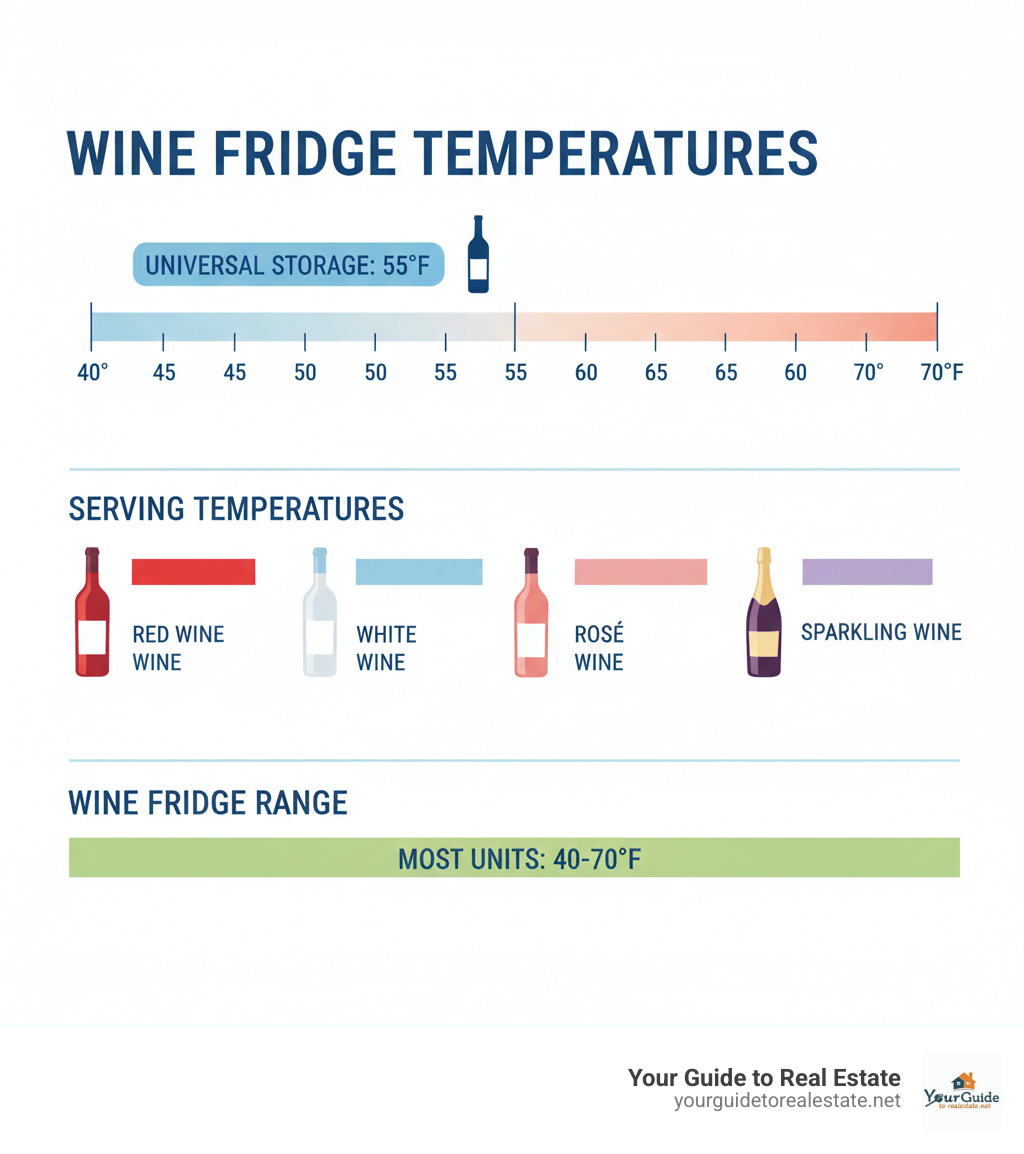
- Universal Storage Temperature: 55°F (13°C) for all wine types
- Red Wine Serving: 55-65°F (13-18°C)
- White Wine Serving: 45-55°F (7-13°C)
- Sparkling Wine Serving: 40-50°F (4-10°C)
- Wine Fridge Range: Most units operate between 40-70°F (4-21°C)
Wine is surprisingly fragile. Store it too warm, and chemical reactions speed up, creating what experts call “cooked” wine – flat, lifeless, and bitter. Store it too cold, and the aging process stalls while flavors become muted and harsh.
The stakes are higher than you might think. Research shows that temperatures above 70°F can permanently damage wine in just hours. Meanwhile, a standard refrigerator at 35°F is far too cold, essentially putting your wine’s development on pause and making tannins taste harsh and unpleasant.
For homeowners investing in wine storage – whether it’s a small countertop unit or a built-in cellar – understanding temperature control isn’t just about preserving your collection. It’s about maximizing your investment and ensuring every bottle reaches its full potential.
Easy wine fridge temperature glossary:
Why Temperature Matters: The Science of Wine Storage
Wine is essentially a living, breathing collection of complex chemical compounds that are constantly evolving. These delicate reactions create the flavors and aromas we love – but they’re incredibly sensitive to temperature changes. Think of temperature as the master control for your wine’s development.
When wine fridge temperature gets too warm – anything above 70°F (21°C) – those chemical reactions go into overdrive. It’s like hitting fast-forward on a movie: everything happens too quickly and you miss the good parts. The wine literally gets “cooked,” developing flat, lifeless flavors that taste like stewed fruit or burnt sugar.
Red wines suffer particularly badly from heat damage. Their tannins become bitter and harsh, while their complex flavor profiles collapse into something one-dimensional. White wines lose their crisp acidity and fresh fruit flavors, becoming flabby and dull. Rosé wines lose their delicate balance, and sparkling wines can actually lose their bubbles entirely.
But cold storage has its own problems too. When your wine fridge temperature drops below 40°F (4°C), the aging process slows to a crawl or stops completely. Flavors become muted, aromas disappear, and red wine tannins taste harsh and unpleasant. It’s like putting your wine’s development on pause – not ideal for building complexity.
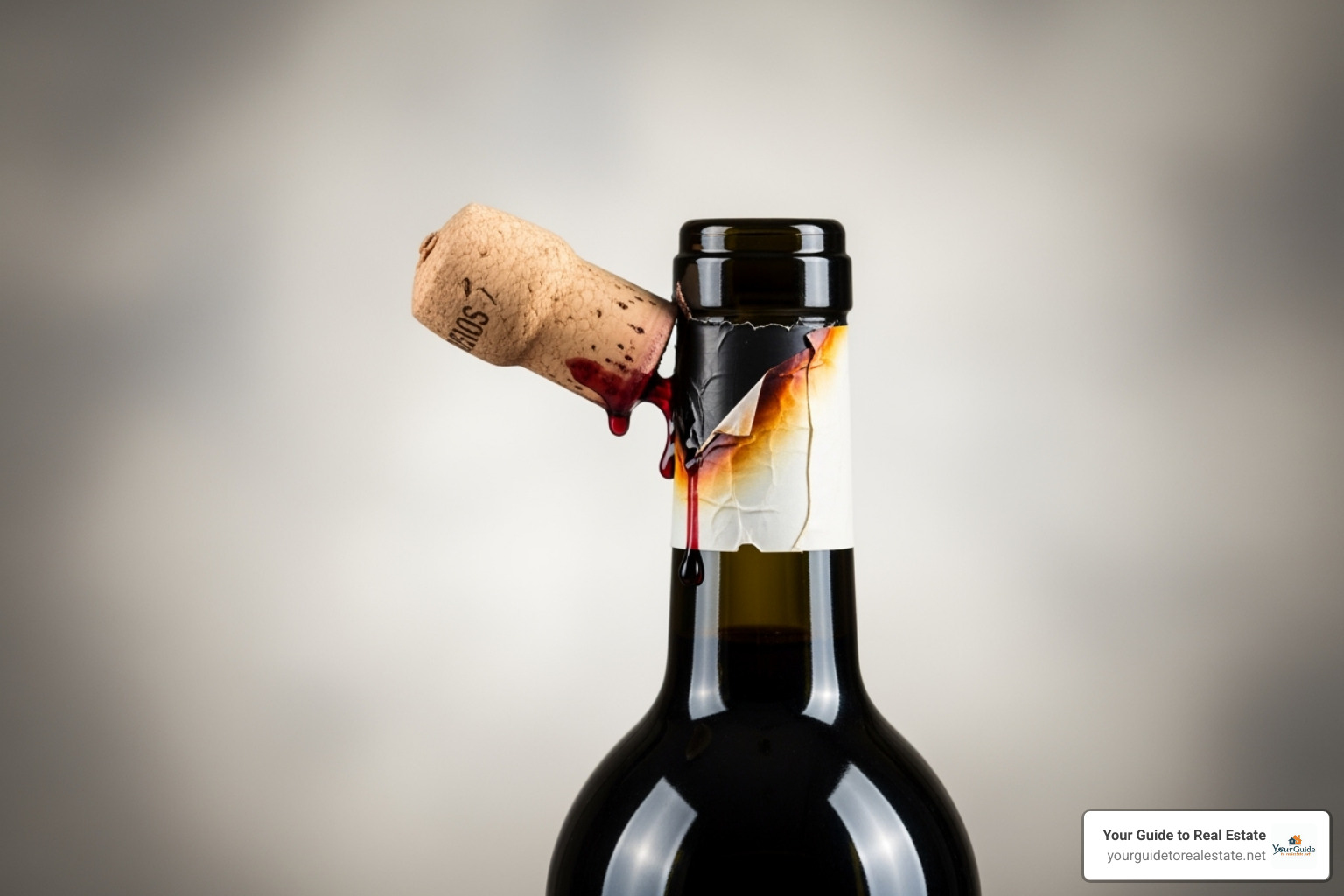
The real danger lies in temperature fluctuations. When wine heats up and cools down repeatedly, it expands and contracts inside the bottle. This movement can push the cork out or create gaps that let oxygen seep in. Too much oxygen turns your prized bottle into expensive vinegar – a heartbreaking waste.
Oxidation is every wine lover’s nightmare. Even small temperature swings can compromise the cork’s seal, allowing air to slowly ruin your wine. This is exactly why maintaining a stable wine fridge temperature is so crucial for protecting your investment.
Wine Fridge vs. Regular Refrigerator
Your kitchen refrigerator might seem like a convenient wine storage solution, but it’s actually designed for completely different purposes. Here’s why a dedicated wine fridge makes such a difference:
Temperature stability is where wine fridges really shine. Kitchen refrigerators constantly cycle on and off, creating temperature swings that stress your wine. Wine fridges maintain much more consistent temperatures, typically varying by only 1-2 degrees.
Humidity control is another game-changer. Regular refrigerators are designed to remove moisture, which can dry out wine corks over time. Wine fridges maintain optimal humidity levels around 50-70%, keeping corks properly sealed.
UV protection matters more than most people realize. Wine fridges typically feature UV-resistant glass doors, while kitchen refrigerators often have clear glass or are opened frequently, exposing wine to harmful light.
Vibration differences are subtle but important. Kitchen refrigerators have powerful compressors that create vibrations, potentially disturbing wine sediment and aging processes. Many wine fridges use quieter thermoelectric cooling or vibration-dampening technology.
Odor contamination is a real concern in kitchen refrigerators. Wine corks are porous and can absorb strong food odors over time, affecting the wine’s taste. Wine fridges provide a clean, odor-free environment.
| Feature | Wine Refrigerator | Standard Refrigerator |
|---|---|---|
| Temperature Range | 40-70°F (4-21°C) | 35-38°F (2-3°C) |
| Temperature Stability | ±1-2°F variation | ±5-10°F variation |
| Humidity Control | 50-70% maintained | Low humidity (dehumidifying) |
| UV Protection | UV-resistant glass | Clear glass or frequent opening |
| Vibration | Minimal/dampened | High from compressor |
| Odor Control | Sealed wine environment | Mixed food odors |
The Dangers of Improper Storage
Cooked wine is probably the most common storage disaster. When temperatures consistently exceed 75°F, wine develops that telltale “cooked” flavor – flat, jammy, and lacking the bright acidity that makes wine enjoyable. Once wine is cooked, there’s no going back.
Premature aging happens when wine is stored too warm for extended periods. A bottle that should age gracefully over 10 years might peak in just 2-3 years, then rapidly decline. You’re literally watching your investment deteriorate faster than it should.
Cork damage from temperature fluctuations is insidious because it happens gradually. As wine expands and contracts, it slowly pushes against the cork, eventually compromising the seal. By the time you notice, significant oxidation may have already occurred.
Flavor loss from improper storage is heartbreaking for wine enthusiasts. Those complex notes you paid for – the subtle hints of vanilla, the bright fruit flavors, the neat finish – can all disappear when wine isn’t stored at proper temperatures.
Just like investing in your property, proper wine storage is about protecting and enhancing your investment over time. The right storage conditions ensure your wine collection maintains its value and continues to improve with age.
ARTICLE OUTLINE:
Introduction
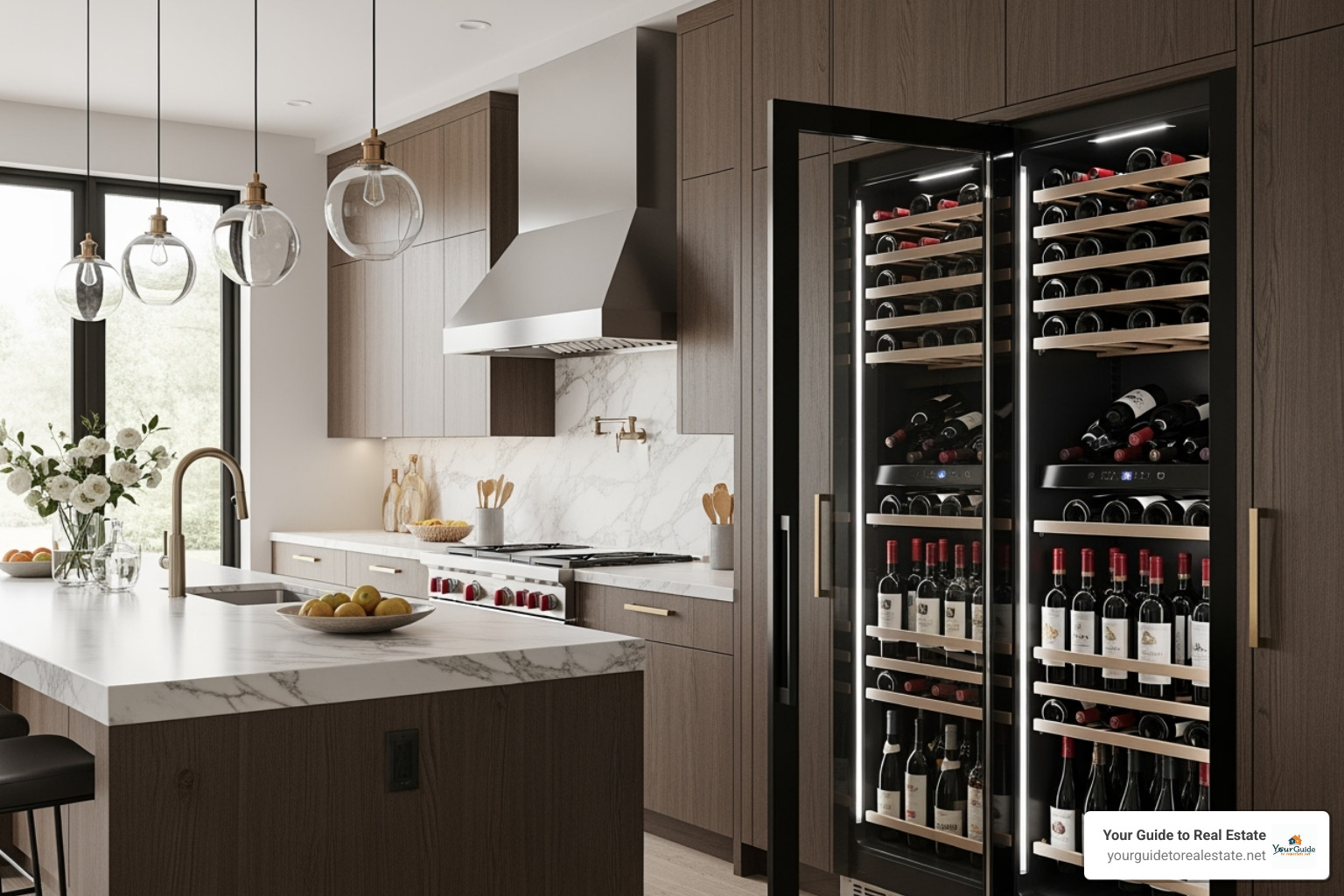
Why Getting Wine Fridge Temperature Right Changes Everything
Picture this: you’ve just uncorked that special bottle you’ve been saving for months, only to find it tastes flat and lifeless. The culprit? Wine fridge temperature gone wrong. It’s heartbreaking, and unfortunately, it happens more often than you’d think.
Here’s the reality – wine fridge temperature is absolutely critical to your wine’s survival and enjoyment. Store your bottles at the right temperature, and they’ll develop beautiful, complex flavors over time. Get it wrong, and even expensive wines can turn into disappointing, bitter disappointments.
Quick Answer for Wine Fridge Temperature:
- Universal Storage Temperature: 55°F (13°C) for all wine types
- Red Wine Serving: 55-65°F (13-18°C)
- White Wine Serving: 45-55°F (7-13°C)
- Sparkling Wine Serving: 40-50°F (4-10°C)
- Wine Fridge Range: Most units operate between 40-70°F (4-21°C)
Wine might seem robust in its glass bottle, but it’s actually quite delicate. When temperatures climb too high, the wine essentially starts “cooking” from the inside out. Those beautiful fruit flavors turn into something that tastes more like stewed fruit or burnt jam. Not exactly what you want from your prized Cabernet.
On the flip side, store wine too cold and you’re hitting the pause button on its development. The flavors become muted, the aromas disappear, and red wines develop harsh, unpleasant tannins that make your mouth pucker in all the wrong ways.
The science behind this is fascinating. Research shows that temperatures above 70°F can permanently damage wine in just a few hours. Meanwhile, your regular kitchen refrigerator at 35°F is far too cold, essentially freezing your wine’s aging process and stripping away the very characteristics that make each bottle special.
For homeowners looking to protect their wine investment – whether it’s a modest collection or an extensive cellar – understanding wine fridge temperature isn’t just about preservation. It’s about ensuring every bottle you open delivers the experience the winemaker intended. After all, there’s nothing quite like the satisfaction of perfectly stored wine that tastes exactly as it should.
Easy wine fridge temperature glossary:
Why Temperature Matters: The Science of Wine Storage
Think of wine as a living, breathing entity. Inside every bottle, hundreds of complex chemical compounds are quietly dancing together, creating the flavors and aromas that make each sip special. Wine fridge temperature acts like the choreographer of this delicate dance – get it wrong, and the whole performance falls apart.
When temperatures climb above 70°F (21°C), those chemical reactions go into overdrive. It’s like fast-forwarding a movie – everything happens too quickly to be enjoyable. The wine literally “cooks” from the inside out, developing that flat, stewed-fruit taste that screams “expensive mistake.” Red wines lose their neat structure and develop harsh, bitter tannins. White wines become flabby and lose their refreshing acidity. Rosé transforms from crisp and bright to dull and lifeless. Even sparkling wines can lose their precious bubbles and vibrant character.
On the flip side, storing wine too cold (below 40°F) is like putting it in suspended animation. The aging process grinds to a halt, flavors hide behind a wall of cold, and tannins become unpleasantly harsh. Your expensive Bordeaux tastes more like grape juice with an attitude problem.
Here’s what really keeps wine lovers up at night: temperature fluctuations. When wine heats up and cools down repeatedly, it expands and contracts like a tiny accordion inside the bottle. This movement can push the cork out slightly or create gaps that let oxygen sneak in. Once oxygen crashes the party, your wine quickly turns into very expensive vinegar.
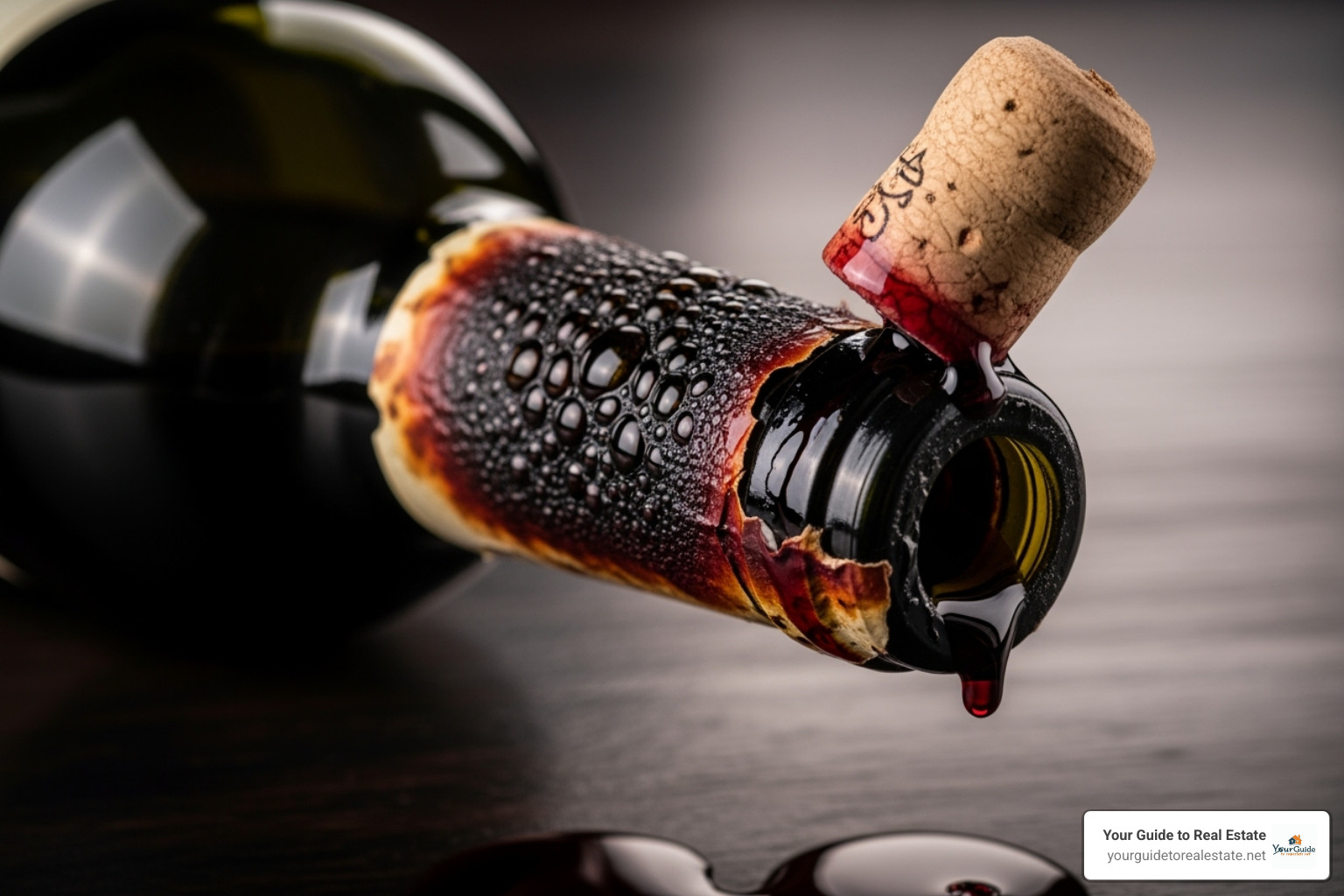
Wine Fridge vs. Regular Refrigerator
Your kitchen refrigerator seems like the obvious choice for wine storage, right? After all, it’s cold, convenient, and already plugged in. Unfortunately, that innocent-looking appliance is actually a wine’s worst nightmare disguised as a helpful friend.
A dedicated wine fridge maintains steady temperatures between 45-65°F, while your kitchen fridge runs at a teeth-chattering 35-38°F. That’s cold enough to shock your wine into flavor hibernation. But temperature is just the beginning of the problem.
Temperature stability is where wine fridges really shine. While your regular fridge temperature swings wildly every time you grab milk or leftovers, wine refrigerators maintain rock-steady conditions. Humidity control is another game-changer – wine fridges keep humidity around 50-70%, preventing corks from drying out and letting oxygen infiltrate your bottles.
Then there’s the vibration issue. Your kitchen fridge rumbles and shakes like a small earthquake every time the compressor kicks in. Wine hates being jostled around – it disturbs the sediment and can actually affect the aging process. Wine fridges use specialized vibration-reduction technology to keep things perfectly still.
Don’t even get me started on odor contamination. Wine corks are surprisingly porous, and your bottles can actually absorb flavors from nearby foods. Nobody wants their vintage Cabernet tasting like last night’s fish dinner. Wine fridges feature activated charcoal filters to keep the air pure and odor-free.
UV protection is the final nail in the regular refrigerator’s coffin. That bright interior light might help you find the mustard, but it’s slowly degrading your wine’s delicate compounds. Wine fridges use UV-filtered glass doors that let you admire your collection without damaging it.
The Dangers of Improper Storage
Poor wine storage doesn’t just disappoint – it destroys. When wine gets “cooked” by excessive heat, you’re not just dealing with bad flavors. You’re looking at premature aging that can turn a wine meant to age gracefully for decades into something that tastes old and tired within months.
Cork damage is another expensive consequence of temperature abuse. When corks dry out from improper humidity or get pushed out by expanding wine, your entire collection becomes vulnerable. Even slight cork compromise can lead to oxidation that ruins bottles worth hundreds of dollars.
The flavor loss from improper storage isn’t subtle – it’s dramatic and irreversible. Wines lose their varietal character, their balance, and their aging potential. What should have been a memorable experience becomes a reminder of money poorly spent.
For homeowners serious about wine collecting, proper storage isn’t just about enjoyment – it’s about investing in your property. A well-designed wine storage system can actually add significant value to your home while protecting your investment in fine wines.
Why Temperature Matters: The Science of Wine Storage
Wine is a delicate elixir, a complex symphony of chemical compounds that evolve over time. The rate at which these compounds interact and transform, leading to the nuanced flavors and aromas we cherish, is profoundly influenced by temperature. Think of temperature as the conductor of this symphony: too fast, and the music becomes a jumbled mess; too slow, and it loses its vibrancy.
When wine is stored too warm, typically above 70°F (21°C), those delicate chemical reactions accelerate. This rapid aging can “cook” the wine, leading to a flat, lifeless taste, often described as stewed fruit or burnt sugar. The wine loses its freshness, its acidity can become unbalanced, and its vibrant aromas simply evaporate. In red wines, high temperatures can reduce potency and produce more bitter tannins. For white wines, too much warmth strips away freshness and acidity. Rosé loses its crispness, and sparkling wine risks losing its precious bubbles.
Conversely, if the wine fridge temperature is too cold, below 40°F (4°C), the aging process slows down significantly, sometimes to a halt. Flavors become muted, aromas are suppressed, and the wine’s character can fail to develop. Tannins in red wines can taste harsh and unpleasant. For sparkling wines, while cold is good, extreme cold can actually freeze the wine, causing it to expand, push out the cork, or even shatter the bottle. This leads to oxidation, spoiling the wine.
Oxidation is another critical concern. Temperature fluctuations, especially rapid ones, can cause the wine inside the bottle to expand and contract. This movement can push out or pull in the cork, compromising its seal and allowing oxygen to seep in. Too much oxygen, and your wine quickly turns vinegary. This is why a stable, consistent wine fridge temperature is paramount for long-term preservation and enjoyment.
Wine Fridge vs. Regular Refrigerator
You might wonder if your kitchen refrigerator can do the job. While convenient, a standard refrigerator is simply not designed for optimal wine storage. Here’s why a dedicated wine fridge is a superior choice:
| Feature | Wine Refrigerator Wine is surprisingly fragile. Store it too warm, and chemical reactions speed up, creating what experts call “cooked” wine – flat, lifeless, and bitter. Store it too cold, and the aging process stalls while flavors become muted and harsh.
The stakes are higher than you might think. Research shows that temperatures above 70°F can permanently damage wine in just hours. Meanwhile, a standard refrigerator at 35°F is far too cold, essentially putting your wine’s development on pause and making tannins taste harsh and unpleasant.
For homeowners investing in wine storage – whether it’s a small countertop unit or a built-in cellar – understanding temperature control isn’t just about preserving your collection. It’s about maximizing your investment and ensuring every bottle reaches its full potential.
Easy wine fridge temperature glossary:
Why Temperature Matters: The Science of Wine Storage
Wine is a delicate elixir, a complex symphony of chemical compounds that evolve over time. The rate at which these compounds interact and transform, leading to the nuanced flavors and aromas we cherish, is profoundly influenced by temperature. Think of temperature as the conductor of this symphony: too fast, and the music becomes a jumbled mess; too slow, and it loses its vibrancy.
When wine is stored too warm, typically above 70°F (21°C), those delicate chemical reactions accelerate. This rapid aging can “cook” the wine, leading to a flat, lifeless taste, often described as stewed fruit or burnt sugar. The wine loses its freshness, its acidity can become unbalanced, and its vibrant aromas simply evaporate. In red wines, high temperatures can reduce potency and produce more bitter tannins. For white wines, too much warmth strips away freshness and acidity. Rosé loses its crispness, and sparkling wine risks losing its precious bubbles.
Conversely, if the wine fridge temperature is too cold, below 40°F (4°C), the aging process slows down significantly, sometimes to a halt. Flavors become muted, aromas are suppressed, and the wine’s character can fail to develop. Tannins in red wines can taste harsh and unpleasant. For sparkling wines, while cold is good, extreme cold can actually freeze the wine, causing it to expand, push out the cork, or even shatter the bottle. This leads to oxidation, spoiling the wine.
Oxidation is another critical concern. Temperature fluctuations, especially rapid ones, can cause the wine inside the bottle to expand and contract. This movement can push out or pull in the cork, compromising its seal and allowing oxygen to seep in. Too much oxygen, and your wine quickly turns vinegary. This is why a stable, consistent wine fridge temperature is paramount for long-term preservation and enjoyment.
Wine Fridge vs. Regular Refrigerator
You might wonder if your kitchen refrigerator can do the job. While convenient, a standard refrigerator is simply not designed for optimal wine storage. Here’s why a dedicated wine fridge is a superior choice:
| Feature | Wine Refrigerator “`
ThisThis research report provides a comprehensive examination of wine fridge temperatures, exploring their critical role in preserving wine quality, influencing aging, and ensuring optimal serving experiences. We dig into specific temperature recommendations for various wine types, detail the functions of single-zone and dual-zone wine refrigerators, and discuss key features to consider when purchasing such appliances. Furthermore, we address the consequences of improper temperature storage, compare wine fridges with standard refrigerators, and offer practical advice for maintaining a stable environment for your wine collection. This guide aims to equip wine enthusiasts with the knowledge to make informed decisions, ultimately enhancing their enjoyment and protecting their investment in fine wines.
ARTICLE OUTLINE:
Introduction
Why Getting Wine Fridge Temperature Right Changes Everything
Picture this: you’ve invested in a beautiful bottle of wine, carefully selected for a special occasion. You store it in your kitchen, thinking nothing of it. Months later, when you finally uncork it, the wine tastes flat, bitter, and completely lifeless. What went wrong? The answer is simple yet heartbreaking: wine fridge temperature.
Wine fridge temperature is truly the make-or-break factor that determines whether your wine collection ages like fine art or deteriorates into expensive cooking wine. The difference between proper storage at 55°F and room temperature storage can literally mean the difference between a $50 bottle tasting amazing or absolutely awful.
Here’s what you need to know right away:
Quick Answer for Wine Fridge Temperature:
- Universal Storage Temperature: 55°F (13°C) for all wine types
- Red Wine Serving: 55-65°F (13-18°C)
- White Wine Serving: 45-55°F (7-13°C)
- Sparkling Wine Serving: 40-50°F (4-10°C)
- Wine Fridge Range: Most units operate between 40-70°F (4-21°C)
Wine is surprisingly fragile – much more delicate than most people realize. When you store it too warm, those complex chemical reactions inside the bottle start racing like a car with a stuck accelerator. This creates what wine experts call “cooked” wine, and trust me, it tastes exactly as unappetizing as it sounds: flat, lifeless, and bitter.
On the flip side, store your wine too cold, and you’re essentially hitting the pause button on its development. The aging process stalls, flavors become muted and harsh, and those beautiful tannins that make red wine so enjoyable turn unpleasantly bitter.
The stakes are genuinely higher than you might think. Research shows that temperatures above 70°F can permanently damage wine in just hours. Meanwhile, that standard refrigerator humming away in your kitchen at 35°F is far too cold, essentially putting your wine’s development on ice and making tannins taste harsh and unpleasant.
For homeowners investing in wine storage – whether you’re considering a small countertop unit or dreaming of a built-in cellar – understanding temperature control isn’t just about preserving your collection. It’s about maximizing your investment and ensuring every single bottle reaches its full, glorious potential.
Think of it this way: proper wine fridge temperature is like giving your wine the perfect environment to flourish, just like creating the right conditions for any valuable investment to grow and mature beautifully.
Easy wine fridge temperature glossary:
Why Temperature Matters: The Science of Wine Storage
Wine is a delicate elixir, a complex symphony of chemical compounds that evolve over time. The rate at which these compounds interact and transform, leading to the nuanced flavors and aromas we cherish, is profoundly influenced by temperature. Think of temperature as the conductor of this symphony: too fast, and the music becomes a jumbled mess; too slow, and it loses its vibrancy.
When wine is stored too warm, typically above 70°F (21°C), those delicate chemical reactions accelerate. This rapid aging can “cook” the wine, leading to a flat, lifeless taste, often described as stewed fruit or burnt sugar. The wine loses its freshness, its acidity can become unbalanced, and its vibrant aromas simply evaporate. In red wines, high temperatures can reduce potency and produce more bitter tannins. For white wines, too much warmth strips away freshness and acidity. Rosé loses its crispness, and sparkling wine risks losing its precious bubbles.
Conversely, if the wine fridge temperature is too cold, below 40°F (4°C), the aging process slows down significantly, sometimes to a halt. Flavors become muted, aromas are suppressed, and the wine’s character can fail to develop. Tannins in red wines can taste harsh and unpleasant. For sparkling wines, while cold is good, extreme cold can actually freeze the wine, causing it to expand, push out the cork, or even shatter the bottle. This leads to oxidation, spoiling the wine.
Oxidation is another critical concern. Temperature fluctuations, especially rapid ones, can cause the wine inside the bottle to expand and contract. This movement can push out or pull in the cork, compromising its seal and allowing oxygen to seep in. Too much oxygen, and your wine quickly turns vinegary. This is why a stable, consistent wine fridge temperature is paramount for long-term preservation and enjoyment.
Wine Fridge vs. Regular Refrigerator
You might wonder if your kitchen refrigerator can do the job. While convenient, a standard refrigerator is simply not designed for optimal wine storage. Here’s why a dedicated wine fridge is a superior choice:
| Feature | Wine Refrigerator “`