Why Understanding Wicker vs Rattan Matters for Your Home
Wicker vs rattan is one of the most common sources of confusion when shopping for furniture—and for good reason. Most people use these terms interchangeably, but they’re actually describing two completely different things. Whether you’re staging your home for sale, furnishing a sunroom, or choosing patio furniture that will last, understanding this distinction can save you money and disappointment.
Quick Answer:
- Rattan = A natural material (the stems of a tropical palm vine)
- Wicker = A weaving technique (the method used to create woven furniture)
- Key Insight: You can have wicker furniture made from rattan, but you can also have wicker made from bamboo, willow, reeds, or even synthetic materials like resin
Here’s why this matters: rattan is known for its strength and durability, lasting 10-30 years with proper care. It’s a solid, flexible vine that makes excellent furniture frames. Wicker, on the other hand, is just the style of weaving—and what it’s woven from determines whether it can go outdoors, how long it will last, and how much maintenance it needs.
If you’re choosing furniture that improves your home’s value and appeal, this distinction is critical. Natural rattan furniture typically works best indoors, while synthetic wicker excels outdoors. Natural wicker made from materials like willow only lasts 5-15 years, while synthetic wicker can endure 10-20 years of weather exposure.
The confusion between these terms dates back thousands of years—wicker weaving was found in ancient Egyptian tombs, and rattan has been harvested from Southeast Asian rainforests for centuries. Today, with both natural and synthetic options flooding the market, knowing the difference helps you make smarter choices for your space.
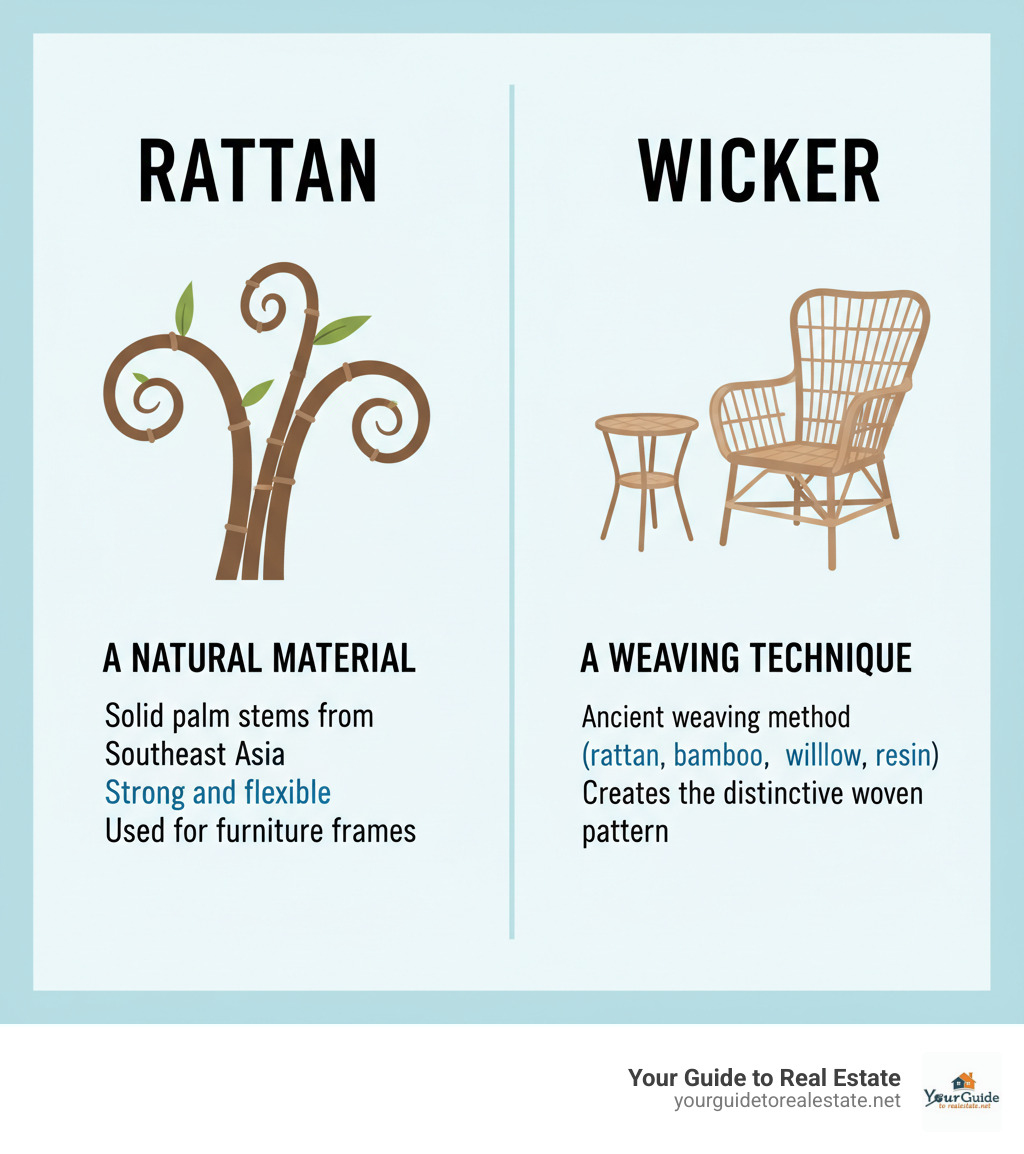
Simple guide to wicker vs rattan:
What is Rattan? The Strong & Natural Material

When people shop for furniture and wonder about wicker vs rattan, understanding what rattan actually is clears up half the confusion right away. Rattan isn’t a style—it’s a material. Picture a thick, sturdy vine climbing through a tropical rainforest, and you’ve got the right idea.
Rattan is a type of climbing palm that grows primarily in the rainforests of Southeast Asia, particularly Indonesia and Vietnam. You’ll also find it across parts of Africa, Asia, and Australia. There are over 600 species of rattan palm, though only about 13 are commonly used for furniture manufacturing. These remarkable vines can grow several hundred feet long—sometimes reaching 30 meters or more—with stems typically measuring between ¾ inches and 2 inches in diameter.
What makes rattan so perfect for furniture? It all comes down to three key characteristics. First, rattan has a solid core. Unlike bamboo, which is hollow inside, rattan is solid all the way through. This gives it incredible structural strength for building furniture frames.
Second, it’s both strong and flexible. When steamed, rattan can be bent into beautiful curves and shapes without breaking. This combination of toughness and pliability is rare in natural materials, making rattan ideal for everything from chair frames to decorative accents.
Third, rattan is surprisingly lightweight. Despite its strength, rattan furniture is easy to move around. Want to rearrange your sunroom? No problem. This makes it perfect for spaces where you like to refresh the layout regularly.
Rattan is also one of the world’s fastest-growing materials, second only to willow. This makes it a renewable resource—good for your home and better for the planet. The natural golden color of the outer skin, called cane, brings warmth to any room, while the inner cores range from natural white to rich brown tones depending on the species.
Rattan Components
The rattan vine gets processed into different parts, each with its own purpose. The outer skin, known as cane, is the shiny, durable layer you see on many woven pieces. It’s incredibly resistant to damage and mold, which is why it’s often peeled off and used for weaving seat bottoms, binding furniture joints, or creating intricate woven patterns.
Once that outer layer is removed, you’re left with the core—the solid inner part of the stem. This core gets split into strands of varying thicknesses, typically 2-10 mm in diameter. These strands are perfect for weaving baskets, trays, lampshades, planters, and even pet houses.
The whole rattan cane—the harvested stem with its sheaths removed—serves yet another purpose. Larger diameter canes become the structural frames for furniture, while smaller ones are shaped into decorative items.
Best Use Cases for Rattan
Natural rattan truly shines indoors. Its strength makes it excellent for furniture frames—think chairs, sofas, headboards, and tables that need to support weight while looking beautiful. The solid core construction means these pieces can last 10-30 years with proper care.
For indoor statement pieces, rattan brings an organic, sophisticated vibe to living rooms and bedrooms. It works beautifully in sunrooms and covered patios too, as long as it’s protected from direct rain and harsh sun exposure. Natural rattan isn’t waterproof, so it needs shelter from the elements.
Beyond furniture, rattan appears in countless homewares—baskets for storage and decluttering, decorative planters, serving trays, and woven lampshades. These smaller pieces add natural texture without overwhelming a space.
If you’re staging a home for sale, rattan furniture can be a smart choice. It creates that warm, inviting first impression buyers are looking for while tapping into the current trend toward natural, earthy aesthetics. A well-placed rattan chair or basket tells potential buyers: this home is both stylish and comfortable.
Understanding that rattan is the material itself—not the weaving style—is the first step in making informed choices about the wicker vs rattan debate. Next, we’ll look at wicker and how these two concepts work together.
What is Wicker? The Ancient Weaving Technique

Here’s where the wicker vs rattan mystery really starts to solve. Unlike rattan, which is a specific plant material, wicker is not a material at all—it’s a weaving technique. Think of it this way: you wouldn’t say a sweater is made of “knitting,” right? Wicker works the same way. It’s the craft, the method, the ancient art of bending and weaving flexible materials into beautiful patterns.
This weaving technique has been around for thousands of years. Archaeologists finded wicker furniture, baskets, and chests in ancient Egyptian tombs dating back to 3,000 B.C. The ancient Romans loved wicker too—the scholar Pliny the Elder wrote about it, and beautifully preserved wicker pieces were found in the ruins of Pompeii. Fast forward to the Victorian Era, and wicker experienced a massive comeback, becoming a staple in neat homes across Europe and America.
Design Versatility and Weave Patterns
What makes wicker so enduringly popular? Its incredible versatility. Because it’s a technique rather than a single material, wicker can adapt to any style you can imagine—modern minimalism, classic elegance, contemporary chic, or vintage charm. The weaving process creates those distinctive lattice-like patterns we all recognize, adding texture and visual depth to everything from chairs to storage baskets.
Materials Used in Wicker Weaving
Here’s the game-changer: wicker can be woven from almost any flexible material. This is why understanding what your wicker furniture is actually made from matters so much for how long it will last and where you can use it.
Natural materials have been the traditional choice for centuries. Rattan is one of the most popular—yes, that same strong palm vine we discussed earlier makes excellent wicker furniture! Bamboo, with its hollow stems and distinctive look, creates a lighter aesthetic. Willow branches offer incredible flexibility, perfect for intricate weaving patterns. Reed, often the inner core of rattan, provides excellent malleability for furniture construction. You’ll also find wicker woven from seagrass, straw, water hyacinth, and jute—each bringing its own unique texture and color to the finished piece.
Synthetic materials have revolutionized outdoor wicker furniture. These engineered options mimic the look of natural fibers while standing up to weather that would destroy natural materials. Resin wicker uses plastic compounds to create durable, weather-resistant pieces. Vinyl offers similar resilience with a slightly different finish. The star of outdoor furniture is polyethylene (HDPE)—high-density polyethylene creates what manufacturers call “all-weather wicker” or “poly rattan.” This material can handle rain, sun, humidity, and temperature swings without cracking, fading, or rotting.
For home staging and organization, wicker baskets are absolute lifesavers. They’re perfect for decluttering spaces before showings, tucking away toys, magazines, or blankets while adding warmth and texture to a room. A well-placed wicker basket or chair can make a space feel more inviting and thoughtfully designed—exactly what potential buyers respond to when they walk through a home.
The Ultimate Comparison: Wicker vs Rattan
Now that we understand the fundamental difference—rattan is a material and wicker is a weaving technique—let’s put them side by side to help you make the smartest choice for your home. Whether you’re furnishing your own space or staging a property for sale, knowing how these options compare in real-world use makes all the difference.
| Feature | Rattan (Natural Material) | Natural Wicker (Weaving from other natural materials like willow, reed, bamboo) | Synthetic Wicker (Weaving from resin, vinyl, HDPE) |
|---|---|---|---|
| Material Type | Solid vine from a tropical palm | Various natural fibers (e.g., willow, bamboo, reed, seagrass) | Man-made plastic fibers (e.g., polyethylene, resin, vinyl) |
| Durability | Very durable, strong, flexible | Less durable than rattan, can be fragile | Highly durable, very robust, weather-resistant |
| Lifespan | 10-30 years (up to 40-50 for high-quality, well-maintained) | 5-15 years (with proper care) | 10-20 years (even when stored outside) |
| Best Use | Primarily Indoor (or protected outdoor/sunrooms) | Indoor only (decorative items, light furniture) | Outdoor (patios, decks, pool areas) |
| Maintenance | Regular dusting, spot clean, annual protectant | Regular dusting, keep dry, avoid direct sun/moisture | Easy to clean (hose down), seasonal UV protectant |
| Average Cost | Often higher due to complex harvesting/processing | Varies, generally mid-range | Generally more budget-friendly, but high-end options exist |
Durability and Lifespan: Which Lasts Longer?
When you’re investing in furniture—especially if you’re staging a home for sale or furnishing your own space—you want pieces that will stand the test of time. The lifespan difference in the wicker vs rattan debate depends entirely on what the furniture is actually made from.
Natural rattan furniture is impressively durable thanks to that solid core we talked about earlier. A well-constructed rattan piece can easily last 10 to 30 years, and if you really take care of it, some high-quality pieces have been known to serve families for 40-50 years before needing replacement. That’s a serious investment that pays off over time.
Natural wicker furniture made from materials like willow, bamboo, or thinner reeds typically has a shorter lifespan. You can expect these pieces to last around 5-15 years with proper care. They’re beautiful and add wonderful texture to a space, but they’re inherently more delicate than solid rattan.
Here’s where things get interesting for outdoor furniture: synthetic wicker is built to last in ways that natural materials simply can’t match. Made from engineered materials like high-density polyethylene (HDPE), synthetic wicker can endure 10-20 years even when left outside year-round, exposed to sun, rain, and temperature swings.
Of course, the actual lifespan of any furniture depends on three key factors: the build quality when it’s manufactured, the climate it lives in, and most importantly, the maintenance it receives. A well-made piece that’s properly cared for will always outlast a cheap alternative, regardless of material.
Maintenance and Care for Wicker vs Rattan Furniture
The care your furniture needs varies dramatically depending on what it’s made from. Let’s break down what each type requires to stay beautiful and functional.
Caring for natural rattan isn’t complicated, but it does require consistency. Dust your rattan pieces frequently with a soft cloth or duster—this prevents grime from building up in the weave. When spills happen (and they will), spot clean immediately with mild soap and water, then dry thoroughly to prevent staining or water damage. The most important maintenance step? Apply a protective coating formulated specifically for rattan 1-2 times per year. This helps shield the material from both moisture and UV rays. Avoid harsh chemicals, bleach, or abrasive cleaners—they’ll damage the natural fibers. Once a year, give your rattan furniture a deep clean with mild soap, rinse thoroughly, and reapply that protectant.
Natural wicker furniture requires even gentler treatment. These pieces are more delicate and really belong indoors only. Keep them away from direct sunlight, high humidity, and any wet conditions—exposure to these elements can cause warping, cracking, or mildew. Regular dusting with a soft brush or vacuum attachment is usually all you need for routine maintenance.
Synthetic wicker is where life gets easy, especially for outdoor pieces. This material is designed to be weather-resistant, so maintenance is minimal. Vacuum regularly to remove dirt and debris. For outdoor furniture, you can literally hose it down with water, let it dry, and you’re done. Tougher stains might need a mild detergent, but that’s about it. To keep it looking great longer, apply an all-weather protectant with UV protection every 6 months—this prevents fading and extends the life of your furniture. Like rattan, avoid abrasive cleaners or bleach. A seasonal deep cleaning with an all-purpose cleaner gets into those crevices and keeps everything fresh.
Outdoor Use: Choosing the Best Patio Furniture
If you’re furnishing a patio, deck, or poolside area, the wicker vs rattan choice becomes crystal clear—and it’s all about understanding each material’s limitations.
Natural rattan is beautiful, but it has serious limitations for outdoor use. It’s not waterproof—in fact, moisture is rattan’s enemy. Water exposure causes swelling, warping, and creates the perfect conditions for mold and mildew. Direct sunlight isn’t much better—prolonged UV exposure makes rattan crack, fade, and turn brittle. This is why natural rattan works best indoors or in very well-protected outdoor spaces like enclosed sunrooms or fully covered porches where it’s completely shielded from weather. If you absolutely must use it outdoors, it needs a protective lacquer coating and a waterproof cover whenever it’s not in use—and even then, it’s risky.
Synthetic wicker is purpose-built for outdoor living, and it’s honestly the clear winner for any space exposed to the elements. It’s specifically engineered to handle everything nature throws at it: weather-resistant to rain and humidity, UV-protected to prevent fading and brittleness, and durable enough to resist moisture, stains, cracks, and general wear. You can leave synthetic wicker outside year-round without worry. Plus, as we mentioned, it’s incredibly easy to clean—often just a quick rinse with the hose.
When you’re helping clients understand their furniture choices—or making decisions for your own home—this distinction matters enormously. The right material in the right space not only looks better but actually improves your home’s value and appeal. For true outdoor areas, synthetic wicker offers the perfect blend of style and practicality, while natural rattan brings warmth and organic beauty to indoor spaces where it can truly shine.
Frequently Asked Questions about Wicker and Rattan
We often hear similar questions from homeowners and real estate enthusiasts alike regarding these materials. Let’s address some of the most common ones to clear up any lingering confusion about wicker vs rattan.
Is rattan furniture waterproof?
This is probably the most important question we get asked, especially when people are considering outdoor placement. The simple answer for natural rattan is no, it is not waterproof. Here’s why that matters:
Natural rattan is a plant material, and like most natural fibers, it absorbs moisture. When it gets wet, the rattan fibers swell, warp, and weaken over time. Even worse, trapped moisture creates the perfect environment for mold and mildew to grow, leading to discoloration, unpleasant odors, and eventually the deterioration of your beautiful furniture. And it’s not just rain we need to worry about—direct and prolonged sunlight can dry out natural rattan, making it brittle, prone to cracking, and causing its color to fade.
So if you have natural rattan furniture, it’s best kept indoors or in a fully protected outdoor area like a sunroom or covered porch, away from direct rain and harsh sun.
Now, if you encounter “rattan furniture” marketed as outdoor-friendly, it’s almost certainly synthetic rattan (often made from materials like polyethylene, resin, or vinyl). This material is indeed water-resistant and specifically designed for outdoor use. It mimics the look of natural rattan without any of its vulnerabilities to the elements, making it ideal for patios, decks, and pool areas.
What is cane and how is it different from rattan?
The terms “rattan,” “wicker,” and “cane” are often thrown around interchangeably, adding to the confusion! Let’s clarify what cane actually is:
Cane is the outer bark or skin of the rattan vine. Think of it as a specific part of the rattan plant, much like bark is a part of a tree. Rattan, on the other hand, refers to the entire vine or stem. After the rattan vine is harvested, the outer layer is peeled off. This strong, flexible, and slightly glossy strip is what we call cane (or rattan peel).
Cane is primarily used for weaving and binding. Its strength and flexibility make it ideal for creating intricate patterns, like the classic cane webbing you’ve probably seen on chair seats and cabinet doors. It’s also used to bind joints in furniture construction, adding both strength and a decorative touch.
While rattan is used for the structural framework—the solid poles that form the frame—cane is typically used for the woven panels or decorative wraps. So you can have a rattan chair with a cane seat or back! It’s all part of the same plant family, just used in different ways.
Cane furniture itself, particularly pieces with delicate cane webbing, is generally intended for indoor use. Severe heat and rain can damage it, making it unsuitable for outdoor patios.
Can you paint rattan and wicker furniture?
Yes, you absolutely can paint both natural rattan and wicker furniture to give them a fresh new look or to match a changing decor scheme! Painting is a fantastic way to update older pieces and extend their aesthetic life, which is especially helpful when staging a home or refreshing your own space.
Before anything else, clean the furniture thoroughly. Remove all dust, dirt, and grime. For natural pieces, a damp cloth with mild soap (and drying thoroughly) works well. For synthetic wicker, a good scrub and rinse are usually fine.
Proper preparation is key to a professional-looking finish. For natural rattan or wicker, a light sanding with fine-grit sandpaper helps the paint adhere better, especially if there’s an existing finish. We always recommend using a good quality primer, particularly one designed for difficult surfaces or outdoor use if the piece will be exposed to elements. Primer ensures better paint adhesion and a more even final color.
For the intricate weaves and nooks of rattan and wicker, spray paint is often the easiest and most effective method to achieve even coverage without brush marks. Look for paints suitable for wood or plastic, depending on your material. For larger, flatter rattan surfaces, a brush or small roller can be used, but you’ll need to be diligent about getting into all the crevices.
Apply several thin coats rather than one thick coat to prevent drips and ensure a smooth finish. Allow each coat to dry completely before applying the next. For natural pieces, especially if they might experience some wear, a clear topcoat sealant can add an extra layer of protection.
Painting is a wonderful way to personalize your furniture and ensure it complements your home’s aesthetic, which is a key element in effective home staging and creating an appealing living environment.
Conclusion: Making the Right Choice for Your Home
We’ve explored the fascinating world of natural materials and ancient weaving techniques together, and I hope the wicker vs rattan mystery has finally been solved! The truth is beautifully simple: rattan is a strong, flexible vine—a material harvested from tropical palms—while wicker is a weaving technique that can use all sorts of materials, including rattan itself.
This distinction might seem small, but it makes all the difference when we’re choosing furniture that will serve us well for years to come. When you understand what you’re actually buying, you can select pieces that perfectly match your needs, your space, and your lifestyle.
So, let’s bring it all together. If you’re furnishing indoor spaces—your living room, bedroom, or that sunny corner you’ve been wanting to transform—natural rattan furniture is an excellent choice. Its solid core and inherent strength mean it can handle daily use beautifully. Plus, that warm, organic aesthetic brings an effortless elegance that makes any room feel more inviting. For those of us staging homes or simply wanting to create a space that feels both stylish and welcoming, rattan delivers on both fronts.
When it comes to wicker pieces made from other natural materials like willow or bamboo, these work wonderfully as indoor decorative accents. Think wicker baskets for organizing throw blankets, small side tables, or accent chairs in protected spaces. They add texture and charm, though they’re generally more delicate than solid rattan pieces.
Now, if you’re looking at outdoor spaces—patios, decks, poolside areas, or anywhere exposed to the elements—synthetic wicker is hands-down the winner. Made from engineered materials like high-density polyethylene, it gives you the classic woven look without the vulnerability to rain, sun, and humidity. It’s weather-resistant, UV-protected, and remarkably durable, often lasting 10-20 years even when left outside year-round. For outdoor living spaces, synthetic wicker offers the best combination of beauty and practicality.
At Your Guide to Real Estate, we know that every detail in your home matters. Smart furnishing choices don’t just make your space more comfortable—they can genuinely improve your home’s appeal and value. Whether you’re preparing to sell, staging for buyers, or simply creating a home you love, understanding these material differences helps you invest wisely.
And here’s something we’ve learned through years in real estate: just as choosing the right material matters for your home, selecting the right professional is crucial for your real estate journey. If you’re navigating the complexities of buying or selling, having expert guidance makes all the difference. Learn more in our guide to choosing a real estate broker.
The bottom line? Wicker is the weave, rattan is the material. Keep natural rattan indoors where it can shine, and choose synthetic wicker for spaces that face the weather. With this knowledge, you’re ready to make choices that look great and last—exactly what we want for every part of our homes.