
Why a Real Estate License Opens More Doors Than You Think
What can you do with a real estate license beyond the typical agent role? While many think it only qualifies you to sell houses, a license actually opens doors to numerous career paths.
A real estate license is your gateway to a diverse range of careers, including:
- Traditional Sales: Work as an agent, broker, or assistant.
- Property Management: Oversee rental properties and tenant relations.
- Real Estate Investment: Buy, flip, or develop properties for profit.
- Specialized Services: Become an appraiser, mortgage loan officer, or foreclosure specialist.
- Education & Consulting: Teach courses or coach other agents.
- Personal Financial Benefits: Save thousands on your own property transactions.
The versatility is remarkable. You could work a 9-to-5 job as a property manager, pursue high-stakes development projects, or build a brokerage empire. The license provides credibility, market access, and legal authority, but what you do with that foundation is up to you.
Simple what can you do with a real estate license glossary:
- how to become a real estate agent
- how long does it take to become a real estate agent
- realtor reviews
First, Get Your License: A Quick Guide (Texas Example)
Before exploring what can you do with a real estate license, you need to get one. The process is straightforward, though requirements vary by state. We’ll use Texas as an example.

Legal & Educational Requirements
In Texas, you must be at least 18, a U.S. citizen or lawfully admitted alien, and meet the Texas Real Estate Commission’s (TREC) standards for honesty and integrity. If you have concerns about your eligibility, you can use the optional Fitness Determination form before investing in courses.
The main requirement is completing 180 hours of state-approved real estate education. These courses cover Principles of Real Estate, Law of Agency, Law of Contracts, and Real Estate Finance, providing a solid foundation for your career.
The Licensing Process Step-by-Step
- Complete Education: Finish your 180 hours of coursework, often available online.
- Submit Application: Apply through the TREC website with your course completion certificates.
- Get Fingerprinted: Complete a background check to verify you meet integrity standards.
- Pass the Exam: The state exam has national and state-specific portions. Prepare well, as failing three times requires additional education.
- Find a Sponsoring Broker: You must have a licensed broker to supervise you before your license becomes active. Start interviewing brokers early.
- Activate Your License: Once a broker sponsors you, your active license is issued.
You can check current processing times on the TREC website.
Associated Costs & Renewal
Expect upfront costs for education ($980-$1,698), application fees (~$205), the exam (~$43), and fingerprinting (~$42). Many also invest in exam prep courses (~$250).
After licensing, you’ll need to complete 90 hours of Sales Apprentice Education for your first renewal. Subsequently, you’ll need 18 hours of continuing education every two years. Biennial renewal fees and optional REALTOR® association dues are also ongoing costs. These are investments in a career with unlimited earning potential.
Traditional Real Estate Sales & Brokerage Careers
When people ask, “what can you do with a real estate license,” traditional sales roles are often the first thing that comes to mind. These careers remain the heart of the industry, offering opportunities to build relationships and substantial income.

1. Real Estate Agent
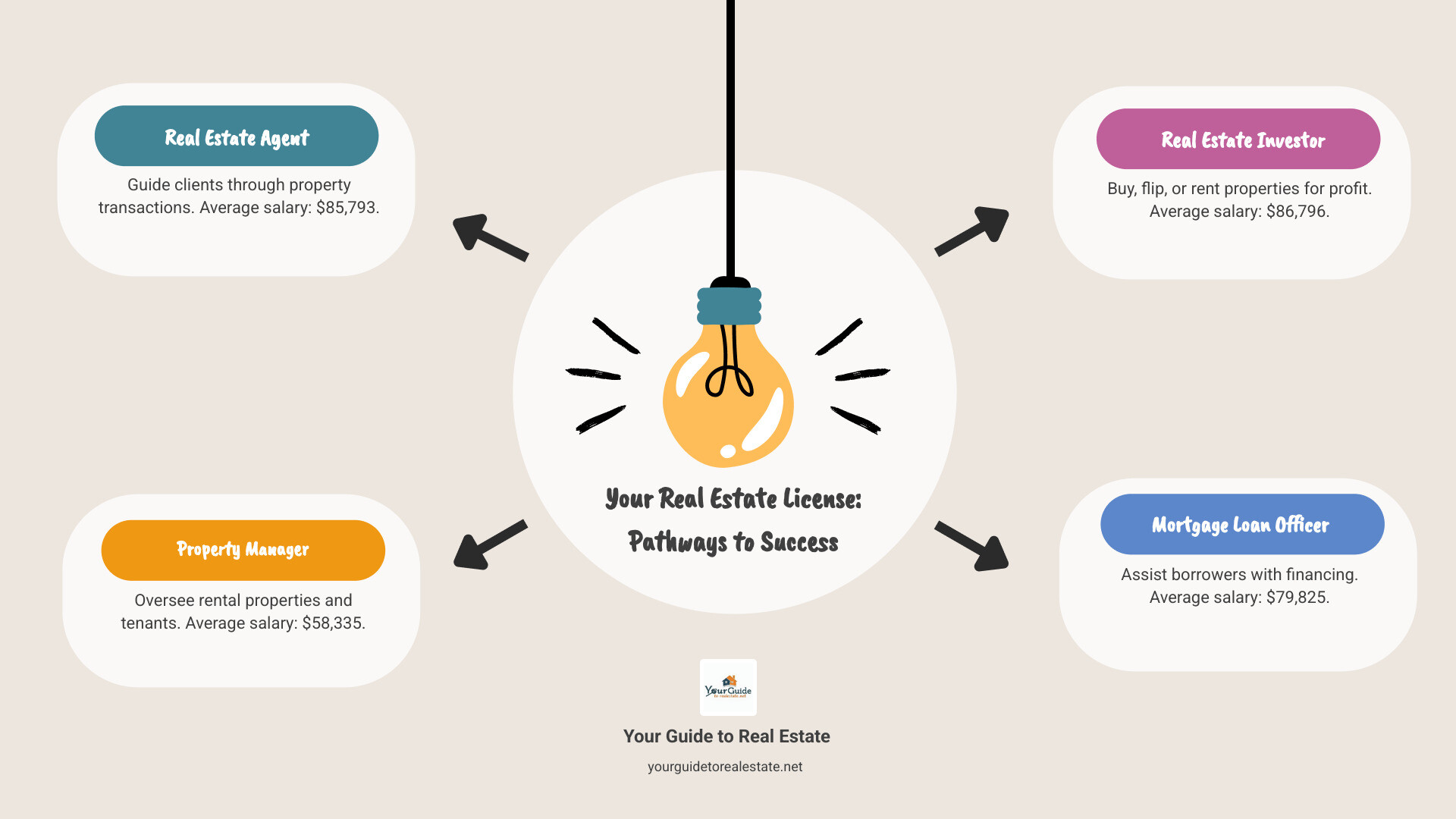
As an agent, you are a trusted guide for buyers and sellers. You analyze market trends, negotiate deals, and coordinate with lenders, inspectors, and attorneys to ensure smooth transactions. Earnings are commission-based, meaning your income reflects your success. The Bureau of Labor Statistics (BLS) reports a median income of $48,770, but top performers often earn six figures.
2. Real Estate Broker
Becoming a broker is the next level of leadership. After gaining experience and completing further education, you can obtain an advanced license to manage other agents, ensure legal compliance, and even own your own brokerage. This path offers higher earning potential through your own sales and a percentage of your agents’ deals.
3. Real Estate Assistant
Assistants are the organizational backbone for busy agents and brokers. An unlicensed assistant handles administrative tasks like scheduling and paperwork. A licensed assistant can take on more responsibility, such as showing properties and discussing contract terms. This role offers a stable income and is an excellent way to learn the business from the inside.
What Can You Do With a Real Estate License Besides Sales?
What can you do with a real estate license besides sales? Your license provides a deep understanding of property values and market dynamics, opening doors to many stable, specialized careers with regular hours.

4. Property Manager
As the bridge between owners and tenants, you’ll oversee rental properties, screen tenants, collect rent, and coordinate maintenance. This role offers a stable average salary of $58,335, and many states require a real estate license for leasing activities.
5. Real Estate Appraiser
Appraisers provide unbiased opinions on a property’s value for lenders, insurers, and investors. After additional training and certification, you can earn an average of $63,988 annually by analyzing properties and market data.
6. Mortgage Loan Officer
MLOs guide borrowers through the financing process, helping them secure loans for property purchases. While it requires a separate MLO license, your real estate background provides a significant advantage in understanding the transaction, with an average salary of $79,825.
7. Real Estate Attorney
Combining a law degree with a real estate license creates a lucrative specialty focused on the legal complexities of transactions. Real estate attorneys handle contracts, zoning issues, and disputes, earning an average salary of $140,845.
8. Real Estate Developer
Developers are visionaries who transform land into communities, managing projects from acquisition and zoning to construction. It’s a high-risk, high-reward field where a real estate license provides crucial market insight, with an average salary around $84,748 plus project profits.
9. Foreclosure Specialist
These specialists work with distressed properties for banks, asset management companies, or government agencies. The role requires empathy and strong problem-solving skills to steer complex legal procedures, offering an average salary of $57,098.
10. Real Estate Instructor or Coach
If you enjoy teaching, you can use your experience to train aspiring agents or coach existing ones. Instructors teach pre-licensing courses while coaches mentor agents, with average earnings around $63,144 for instructors and $40,970 for coaches.
Leverage Your License for Personal & Financial Gain
Some of the biggest benefits of asking “what can you do with a real estate license” are the ones that build your own wealth. Your license is a powerful tool for personal financial gain, saving you money and giving you an investment edge.
11. Become a Real Estate Investor
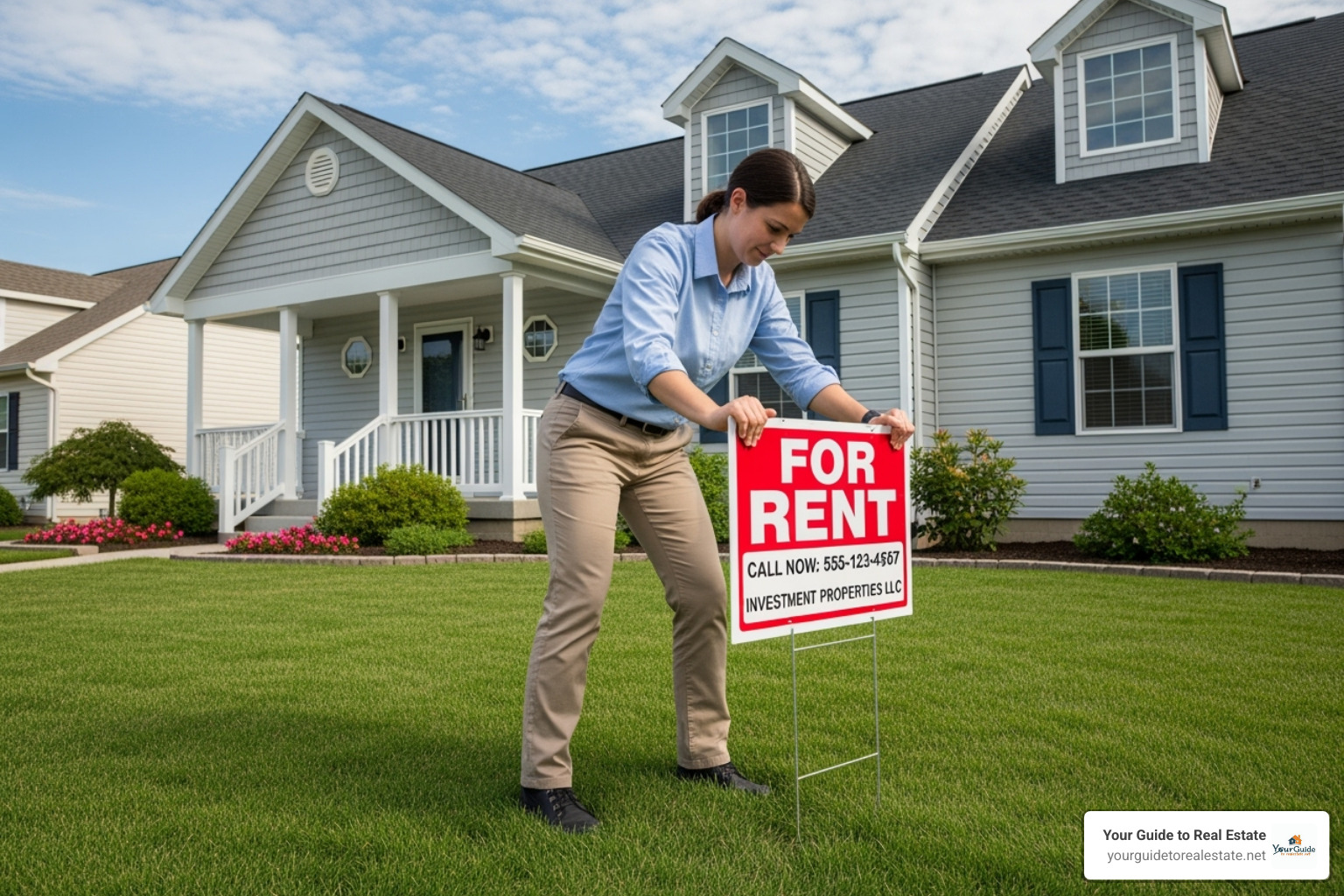
A license gives investors a significant advantage. You gain direct access to MLS data, allowing you to see new listings and market trends before the general public. Whether you’re flipping houses or building a rental portfolio, representing yourself saves you thousands in commissions and your market analysis skills help you spot undervalued properties. Licensed investors often outperform the average investor salary of $86,796 by leveraging these insider tools.
12. Save Money on Your Own Transactions
Your license puts thousands of dollars back in your pocket every time you buy or sell your own home. When selling, you can save the 2.5-3% listing agent’s commission. When buying, you can often earn the buyer’s agent commission yourself. Over a lifetime of transactions, these savings can easily add up to tens of thousands of dollars.
Specialize Your Skills: Niches & Designations
Beyond general roles, specialization can be the key to standing out. Finding a niche allows you to become the go-to expert for a specific market segment, which translates to better client service and higher earning potential.
What Can You Do With a Real Estate License in a Niche Market?
Instead of being a generalist, you can build deep expertise in a specific area. Popular niches include:
- Residential Real Estate: The most common path, focusing on homes for individuals and families.
- Commercial Real Estate: Dealing with office buildings, retail spaces, and industrial properties.
- Luxury Homes: Catering to affluent clients with high expectations.
- Land: Specializing in undeveloped properties and agricultural tracts.
- First-time Buyers: Guiding new homeowners through their initial purchase.
- Distressed Properties: Focusing on short sales and foreclosures.
Agent vs. REALTOR®: What’s the Difference?
This distinction is important for your professional development. A licensed agent has met the state’s minimum requirements to practice real estate. A REALTOR®, on the other hand, is a licensed agent who has voluntarily joined the National Association of REALTORS® (NAR) and adheres to its strict Code of Ethics.
What Can You Do With a Real Estate License as a REALTOR®?
Becoming a REALTOR® improves your professional standing. Key benefits include improved credibility, access to exclusive market data and resources, unparalleled networking opportunities, and professional development through specialized designations.
| Feature | Licensed Agent | REALTOR® |
|---|---|---|
| Membership | State-issued credential | Voluntary NAR membership with dues |
| Code of Ethics | Must follow state laws | Commits to strict NAR Code of Ethics |
| Access to Resources | Basic state resources | Exclusive NAR data, tools, and research |
Choosing to become a REALTOR® demonstrates a commitment to the highest professional standards and can provide a significant competitive advantage.
Introduction
So you passed the exam and earned your license—congratulations! A real estate license is more than a key to selling houses; it’s a gateway to varied careers and investment opportunities. This guide highlights practical paths you can take—from traditional sales to investing and specialized roles—so you can choose the route that fits your goals.
First, Get Your License: A Quick Guide (Texas Example)
Before exploring what can you do with a real estate license, nail the basics. In Texas, you must be at least 18, a U.S. citizen or lawfully admitted alien, meet honesty/integrity standards, and complete 180 hours of approved education. Unsure about eligibility? Use the optional Fitness Determination before investing in courses.
Quick steps:
- Submit your application to the Texas Real Estate Commission (TREC).
- Get fingerprinted for a background check.
- Pass the national and state exam portions.
- Secure a sponsoring broker to activate your license.
- Maintain your license with required continuing education.
Budget for tuition, application, exam, and fingerprinting. Timelines vary—check TREC Processing Times before you start.
Traditional Real Estate Sales & Brokerage Careers
Traditional sales are still the core of the industry. With a license, you can represent clients, negotiate deals, and build a book of business with strong repeat and referral potential.
- Real estate agent (client representation, commission-based)
- Real estate broker (manage agents, own a brokerage)
- Real estate assistant (licensed or unlicensed support)
1. Real Estate Agent
Represent buyers and sellers, analyze market data, negotiate contracts, and coordinate with lenders, inspectors, and attorneys. Income is commission-based, so results drive earnings. The Bureau of Labor Statistics (BLS) reports a median of $48,770, with top agents earning far more in active or higher-priced markets. This role rewards strong communication, follow-up, and client service.
2. Real Estate Broker
Ready for the next level? Brokers complete additional education and experience (in Texas, typically 900 hours of education and at least four years of active experience). You can supervise agents, ensure compliance, and even open your own brokerage. Earnings can come from your own deals plus a share of your agents’ production, but the role also carries greater responsibility.
3. Real Estate Assistant
Assistants keep transactions on track. Unlicensed assistants handle admin tasks like scheduling, marketing, and paperwork. Licensed assistants can also show properties, discuss contract terms, and help with negotiations. It’s a stable role and a great way to learn the business from the inside.
What Can You Do With a Real Estate License Besides Sales?
Your license open ups specialized roles with steadier hours and salaried options. Think property management, appraisal, lending, law, development, education, and more.
4. Property Manager
Oversee rental properties, screen tenants, draft leases, collect rent, coordinate maintenance, and ensure compliance with landlord-tenant laws. Many states require a license for leasing activities. The role offers steady income and long-term client relationships, with an average annual salary of $58,335.
5. Real Estate Appraiser
Provide unbiased property valuations for lenders, insurers, and investors. Expect additional coursework and supervised hours to earn certification. Strong analysis skills and attention to detail are key. Appraisers earn an average income of $63,988, with experienced professionals often exceeding that.
6. Mortgage Loan Officer
Help borrowers choose and secure financing. An MLO license (separate from your real estate license) is required, but your property knowledge gives you an edge in guiding clients and collaborating with underwriters. Strong communication and organization are essential. Average pay is about $79,825, often with bonus potential.
7. Real Estate Attorney
Combine legal training with market know-how. Attorneys draft and review contracts, resolve disputes, and advise on zoning and title issues. You’ll need a J.D. and to pass the bar. Real estate attorneys earn an average salary of $140,845, reflecting the high level of expertise required.
8. Real Estate Developer
Turn land or underused properties into profitable projects. You’ll source sites, analyze markets, secure approvals, and manage construction. It’s high-risk, high-reward work where a license provides critical insight into values and demand. Average pay is around $84,748, but profits can vary widely by project.
9. Foreclosure Specialist
Work with distressed properties for banks, asset managers, or agencies. You’ll steer legal timelines, coordinate valuations and repairs, and sometimes help homeowners explore alternatives. It’s detail-oriented work with steady hours and an average salary near $57,098.
10. Real Estate Instructor or Coach
Teach pre-licensing or CE courses, mentor new agents, or create training programs. Your experience is your advantage—students value real-world insight. Instructors earn an average of $63,144; coaches average about $40,970, with wide variation based on services and clientele.
Leverage Your License for Personal & Financial Gain
Your license can help you build wealth—through smarter investing, faster market access, and savings on your own deals.
11. Become a Real Estate Investor
Use MLS data, comps, and on-the-ground insights to spot deals early and act fast. Representing yourself can save thousands in commissions on flips and acquisitions. For rentals, your knowledge of leasing and management boosts long-term returns. The average investor salary is $86,796, and licensed investors often outperform thanks to better data and lower transaction costs.
12. Save Money on Your Own Transactions
Act as your own listing agent to save the typical 2.5–3% listing commission, and capture the buyer’s agent commission when you purchase. On a $400,000 home, that can mean five-figure savings. Your market knowledge also helps you negotiate stronger terms and avoid costly mistakes.
Specialize Your Skills: Niches & Designations
Specialization helps you stand out and serve clients better.
Popular niches:
- Residential
- Commercial
- Luxury homes
- Land
- First-time Buyers
- Distressed properties (short sales, foreclosures)
Agent vs. REALTOR®—what’s the difference?
- Licensed agent: Holds a state-issued license and follows state laws.
- REALTOR®: A licensed professional who also joins the National Association of REALTORS® (NAR) and commits to its Code of Ethics.
What can you do as a REALTOR®?
- Build credibility through a strict Code of Ethics.
- Access exclusive NAR research, tools, and education.
- Network nationally and benefit from REALTOR® Party advocacy.
- Get listed in member directories to increase visibility.
Frequently Asked Questions about Real Estate Careers
- What should new agents expect in year one? Find strong training and mentorship, focus on your sphere, and plan for an income ramp (it can take 3–6 months to close a first deal). Having 6–12 months of savings helps.
- What are the biggest challenges? Commission-based income, irregular hours, heavy competition, and the stress of high-stakes negotiations.
- Can real estate be a side hustle? Yes—many work part-time or as referral agents. Time management and a flexible primary job are key.
Conclusion
A real estate license open ups dozens of paths—from sales and brokerage leadership to stable salaried roles and smart investing. Choose the lane that fits your skills, stay ethical, and keep learning.
Ready to map your next step? Explore more tips for agents from Your Guide to Real Estate.