
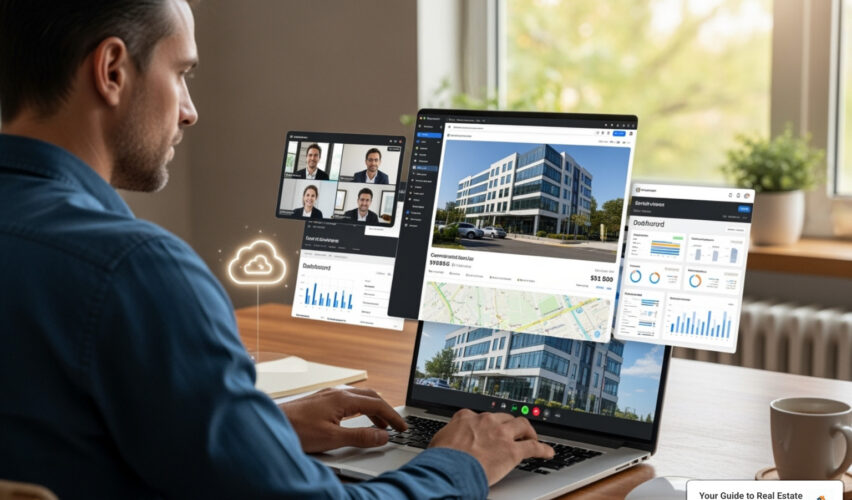
The Digital Shift in Commercial Real Estate
A virtual commercial real estate brokerage is a cloud-based firm operating entirely online, allowing agents to work remotely using digital platforms. This model replaces traditional offices with video calls and 3D property tours.
Key characteristics of virtual brokerages:
- No physical offices – Operations are cloud-based.
- Remote agent workforce – Agents work from any location.
- Digital-first approach – Meetings, tours, and transactions are virtual.
- Technology-driven – Relies on CRMs, virtual tour tools, and digital transaction management.
- Lower overhead – Eliminates rent, utilities, and office maintenance.
- Higher commission splits – Agents often keep 85-100% of commissions.
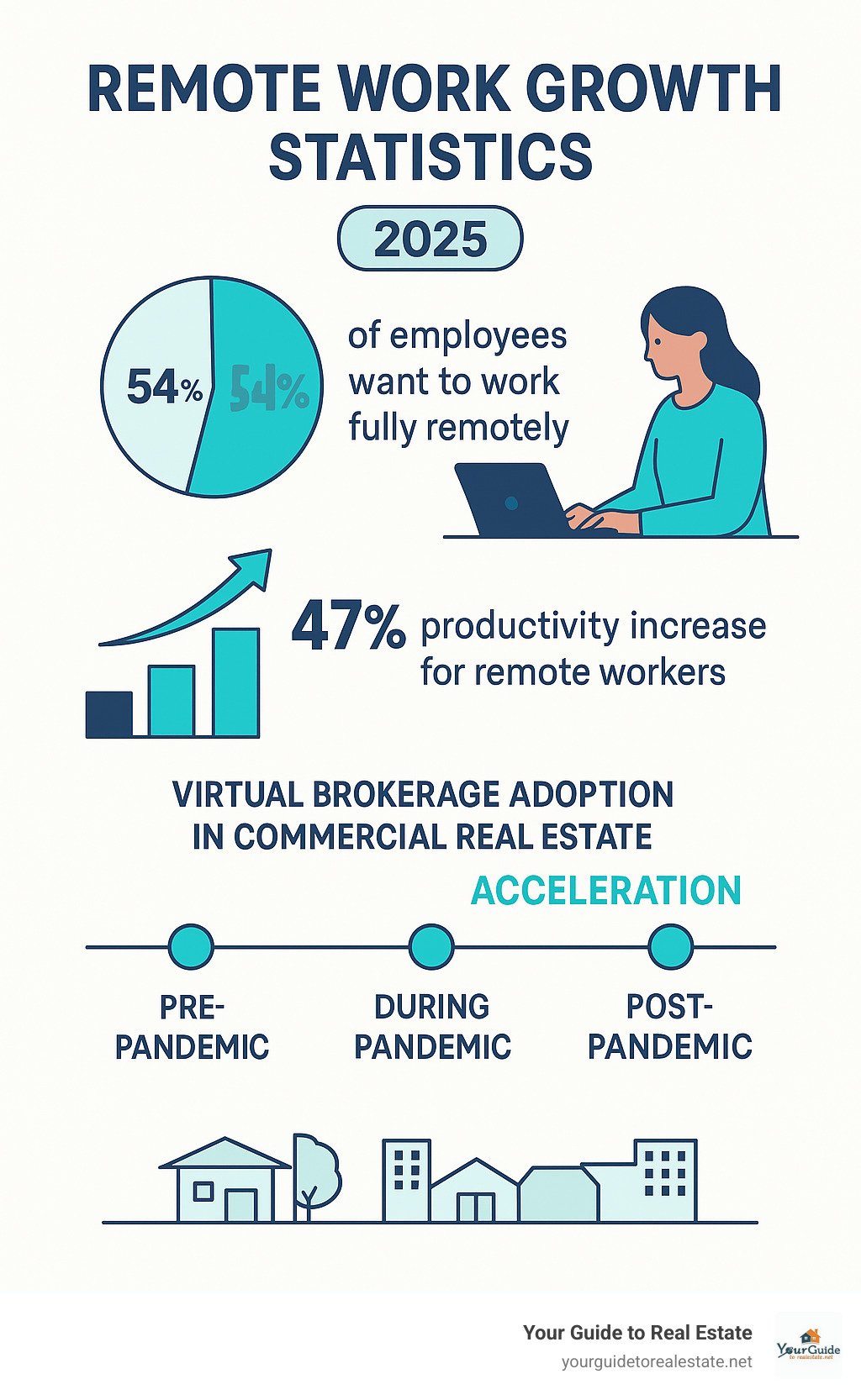
The pandemic dramatically accelerated this shift, with studies showing remote workers can be up to 47% more productive and 54% of employees want to work fully remotely. These trends pushed brokerages to rethink their business models.
Virtual firms like eXp Commercial have proven the model’s success, with eXp Realty growing to over 86,000 agents. They attract agents with better commission splits and flexibility, while clients benefit from a broader agent pool and lower costs.
This evolution is part of a larger trend where technology is a fundamental driver of change in real estate. For a deeper dive into how proptech is reshaping the industry, explore our insights on The Smart Home Boom: How Proptech Is Redefining Real Estate in 2025.
Virtual vs. Traditional Brokerage: A New Model for CRE
A virtual commercial real estate brokerage marks a fundamental shift from the traditional brick-and-mortar model. By eliminating physical offices, these firms operate with a leaner, more agile business structure, passing savings to agents and clients.
Here’s a quick look at how these two models stack up:
| Aspect | Virtual Commercial Real Estate Brokerage | Traditional Commercial Real Estate Brokerage |
|---|---|---|
| Overhead Costs | Significantly lower (no physical office, utilities, maintenance) | High (rent, office upkeep, staff, utilities) |
| Agent Flexibility | High (work from anywhere, flexible hours, choose own pace) | Moderate (often requires office presence, set hours) |
| Technology Stack | Central to operations (cloud-based CRM, transaction, communication tools) | Supplements operations (often uses older systems, less integrated) |
| Geographic Reach | Global/National (agents can serve clients across states/countries) | Local/Regional (limited by physical office location) |
| Client Interaction | Primarily virtual (video calls, 3D tours, digital documents) | Mix of in-person meetings and digital communication |
A traditional brokerage, as detailed in our guide What is a Real Estate Brokerage? A Beginner’s Complete Guide, relies on a physical presence, which incurs substantial fixed costs and geographic limitations. In contrast, a virtual brokerage’s digital-first core grants agents unparalleled autonomy to work from anywhere, attracting top talent.
The Core Benefits for Agents and Clients
The advantages of the virtual model are compelling for both agents and clients.
For agents, the benefits impact their income and lifestyle:
- Higher commission splits: This is a major draw. With massive savings on office space, virtual brokerages offer agents a much larger share of their commissions. Many models feature 100% commission splits (minus a small fee), letting agents keep more of their earnings. For a deeper understanding, see How Much Do Real Estate Agents Really Make? With Real Numbers.
- Flexibility and work-life balance: The ability to work from anywhere provides unprecedented flexibility. This aligns with modern work preferences, as 54% of employees want to work fully remotely, and remote workers can be up to 47% more productive.
- Wider talent pool: Virtual brokerages can recruit top agents from any location, creating a diverse and highly skilled workforce.
Clients also benefit:
- Cost savings: The efficiency of a virtual brokerage can translate into more competitive rates.
- Access to a broader market: Clients in cities like Dallas or Oklahoma City gain access to a wider network of agents with specialized knowledge, which is invaluable for complex commercial properties.
Potential Challenges and How to Overcome Them
While advantageous, the virtual model has its challenges.
- Lack of in-person collaboration: The absence of spontaneous office interactions can lead to isolation. Successful virtual firms counter this with robust collaboration tools, regular video calls, and virtual team-building events.
- Building company culture: Creating a sense of community requires intentional effort through virtual events, recognition programs, and peer-to-peer support.
- Onboarding new agents: Without a physical office, new recruits need a strong virtual onboarding process, including online training and dedicated mentorship, to feel supported.
- Client trust: Some clients may be wary of a brokerage without a physical office. Building trust requires transparency, a professional online presence, and leveraging technology to prove credibility.
- Cybersecurity risks: A distributed workforce increases security risks. Implementing strict security protocols, providing secure tools, and ongoing agent training are non-negotiable.

With careful planning, a virtual commercial real estate brokerage can effectively mitigate these issues and thrive by adapting its mindset and leveraging powerful tools.
How a Virtual Commercial Real Estate Brokerage Operates
A virtual commercial real estate brokerage moves all the functions of a traditional office—from client calls to closing deals—into the cloud. Technology is the backbone, enabling streamlined, automated workflows and global reach. As we’ve explored in How Technology Is Revolutionizing Real Estate: 2025 Trends to Watch, this digital-first approach is leading the industry’s technological revolution.
Essential Technology and Tools for Success
Running a successful virtual brokerage requires a powerful digital toolkit. These tools form the foundation of the virtual office.

The essential tech stack includes:
- Communication & Collaboration: Video conferencing (Zoom, Google Meet) and instant messaging replace in-person meetings and keep teams connected.
- CRM Systems: Tools like HubSpot are critical for managing client relationships and tracking deal pipelines in a remote setting.
- Transaction Management Software: These systems automate checklists, manage timelines, and ensure compliance without physical paperwork.
- Cloud Storage: Solutions like Microsoft 365 OneDrive provide secure, universal access to all documents.
- Virtual Tour Technology: Tools like Matterport create immersive 3D tours, while drone photography offers aerial perspectives.
- Lead Generation Platforms: Services like REDX provide targeted contact lists to source potential clients.
Integration tools connect these platforms, automating tasks and saving countless hours. Robust security software is also essential to protect sensitive data in a distributed environment.
Client Interaction and Virtual Property Tours
Building client relationships evolves in a virtual setting. Video conferencing becomes the primary meeting room, allowing for personal connection while sharing digital presentations. E-signatures have revolutionized the paperwork process, allowing clients to sign contracts legally and securely from anywhere, which dramatically speeds up transactions.
The real game-changer is the virtual property tour. 3D digital twins created with platforms like Matterport let clients “walk through” commercial spaces remotely. Research shows properties with 3D tours attract more interest and can sell for higher prices. For an even more immersive experience, explore our guide to Virtual Reality Home Tours.
Drone photography provides stunning aerial perspectives of large commercial properties, showcasing layouts and access points in ways traditional photography cannot. Even negotiations are handled remotely through secure video calls and real-time document sharing.
Marketing, Lead Generation, and Legal Compliance in a virtual commercial real estate brokerage
Without a physical storefront, a virtual commercial real estate brokerage must master digital marketing. Key strategies include content marketing (market reports, analyses) and SEO to position agents as experts and rank listings high in search results. Proactive lead generation involves building online networks and using platforms to source prospects. For comprehensive strategies, explore our guide on Real Estate Business Systems.
Paperless transactions and digital record-keeping are standard, creating efficient audit trails. Legal compliance is paramount, requiring adherence to regulations in all operating states, such as providing the Texas Real Estate Commission Consumer Protection Notice digitally. All transactions must comply with federal laws like the UETA and ESIGN Act, which give legal validity to electronic signatures and records.
The Agent’s Guide to Thriving in a Virtual Brokerage
Success in a virtual commercial real estate brokerage requires the right mindset and skills, not just technology. It’s an environment that rewards self-motivation and discipline.
Key traits for success include:
- Self-motivation: Without a manager looking over your shoulder, you must set your own schedule and hold yourself accountable.
- Tech-savviness: You must be comfortable learning and using new software, as technology is central to all operations.
- Online Personal Branding: Your digital presence becomes your virtual storefront. Building your brand online is essential for attracting clients. Our guide on Real Estate Agent Skills covers key competencies for this environment.
Choosing the right virtual brokerage is also critical. As detailed in How to Choose a Broker as a Real Estate Agent, you must evaluate the culture and support systems, which are vital in a remote setting.
Understanding Commission Structures and Fees
Virtual brokerages offer attractive financial models because their low overhead allows more money to stay with the agent. Common structures include:
- 100% commission models: Instead of a traditional split, you keep your full commission minus a small flat fee per transaction.
- Flat-fee per transaction: You pay a set amount per deal, which is highly profitable on large commercial transactions.
- Revenue sharing: Some brokerages offer passive income streams for recruiting other agents.
- Tech fees: Instead of desk fees, you pay a lower monthly tech fee for access to the brokerage’s digital tool suite.
- Caps: Many models include an annual cap on fees paid to the brokerage. Once you hit it, you keep 100% of your commission for the rest of the year (minus small transaction fees).
For a deeper dive into earnings, check out How Much Do Real Estate Agents Really Make? With Real Numbers.
The Role of the Managing Broker and Support Systems
Going virtual doesn’t mean you’re alone. The managing broker and support systems are crucial, just delivered digitally.

- Virtual support: Support is often more accessible via video calls and instant messaging, leading to faster responses.
- Compliance oversight: Digital transaction systems streamline compliance, allowing brokers to review deals remotely and flag issues early.
- Mentorship programs: Many virtual brokerages offer structured mentorship programs, pairing new agents with experienced mentors for one-on-one guidance.
- Online training: Self-paced online training replaces mandatory meetings, offering 24/7 access to learning materials.
These support systems are critical, especially for new agents. Our guide on the Top 5 Things to Look For When Choosing a Real Estate Brokerage as a New Agent highlights what to prioritize. The best virtual brokerages build a genuine community around their technology.
The Future of Virtual Commercial Real Estate Brokerages
The future of the virtual commercial real estate brokerage is bright, driven by technological innovation and evolving business models. This is not a passing trend but a fundamental change in how commercial real estate business is conducted.
Artificial intelligence and big data are ready to have the biggest impact. AI will automate tedious tasks like scheduling and lead qualification, freeing agents to focus on high-value work like building relationships. As we’ve seen, AI and Automation Are Changing the Real Estate Workforce in 2025. Big data analytics will allow brokerages to spot market patterns and provide clients with smarter, data-backed investment advice.
The virtual model will also accelerate globalization and niche specialization. Geographical barriers are disappearing, making cross-border transactions smoother. This reach allows brokerages to specialize in specific property types, like medical offices or industrial warehouses, creating highly efficient market experts.
Hybrid models are emerging as a middle ground, blending cost-effective virtual operations with small physical spaces for occasional team or client meetings. This approach offers the flexibility of a virtual model with the option for in-person interaction when needed.
The future is being shaped by technology, but it remains focused on people. The tools are simply getting better, expanding reach, and multiplying opportunities for agents and clients alike.
Frequently Asked Questions about Virtual CRE Brokerages
Stepping into a virtual commercial real estate brokerage can bring up questions. Here are answers to the most common ones.
How does a virtual commercial real estate brokerage ensure data security?
Reputable virtual brokerages prioritize data security with a multi-layered approach that often exceeds traditional standards. Key measures include:
- Cybersecurity Protocols: Robust firewalls and intrusion detection systems monitor for threats 24/7.
- Secure Cloud Storage: All data is stored on encrypted cloud servers, such as Microsoft 365 OneDrive, with strict access controls.
- Encrypted Communications: End-to-end encryption protects all emails, messages, and video calls.
- Audits and Training: Regular third-party security audits and mandatory agent training on data protection best practices are standard. This includes using security software like Norton Antivirus for small businesses.
Are virtual brokerages suitable for new commercial real estate agents?
It depends on both the agent and the brokerage. A virtual model can be challenging for new agents who lack self-discipline. However, it can be an excellent choice if the brokerage offers strong support systems. A virtual commercial real estate brokerage suitable for new agents will have:
- Exceptional onboarding and structured training.
- A dedicated mentorship program.
- Easily accessible virtual support for compliance and technical questions.
If you are a self-starter comfortable with online learning, a virtual brokerage can offer great flexibility. For more on what the job entails, check out The Day-to-Day Life of a Real Estate Agent: What You Didn’t Know.
How do clients sign legal documents with a virtual brokerage?
Signing legal documents is handled efficiently and securely using e-signature platforms like DocuSign or Adobe Sign. These tools create a comprehensive, legally binding audit trail for every signature, recording the who, what, and when of the signing event.
Documents are shared via secure portals, ensuring only authorized parties have access. The entire process complies with federal laws like the Uniform Electronic Transactions Act (UETA) and the Electronic Signatures in Global and National Commerce Act (ESIGN Act), which give electronic signatures the same legal weight as traditional ink signatures. This digital approach is often more secure and reliable than paper-based methods.
Conclusion: Embracing the Digital Frontier
The rise of the virtual commercial real estate brokerage is a fundamental shift reshaping the industry. This innovative model breaks down traditional barriers, creating new opportunities for agents and clients.
For agents, the benefits are compelling: lower overhead, higher commission splits, and the flexibility to work from anywhere. For clients, it means access to a wider talent pool and more competitive services, unconstrained by geography.
Technology is the great enabler, from 3D virtual tours to secure e-signature platforms that make transactions seamless. At Your Guide to Real Estate, our proven framework and stress-free guidance are designed to help you steer these exciting changes.
While challenges like building a remote culture exist, successful virtual firms have proven they are manageable. The shift to a more efficient, agent-centric model is already here, attracting top talent and offering clients greater convenience.
The future looks even brighter, with AI, big data, and globalization set to expand opportunities further. By embracing this digital frontier, you position yourself at the forefront of an industry evolution.
Ready to explore what the future holds? Find more insights in our comprehensive guide: Learn more about the future of the industry in our guide to Virtual Real Estate Brokerage.