What’s a Townhouse and What’s a Condo?
The townhouse vs condo decision is one of the first major choices you’ll face when shopping for a home. Both offer great alternatives to single-family houses, but they’re fundamentally different in how you own them and what you’re responsible for.
Here’s the key difference at a glance:
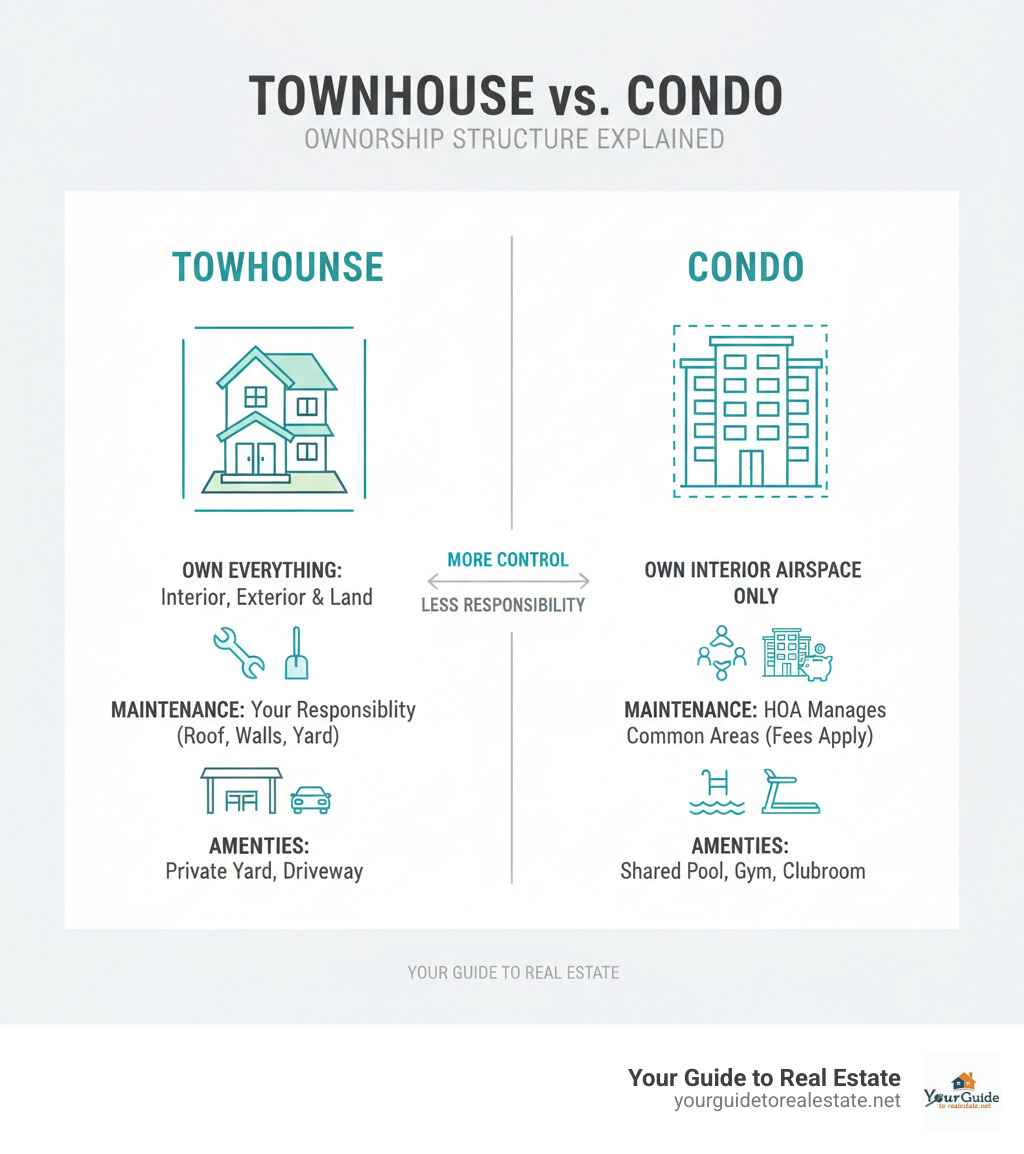
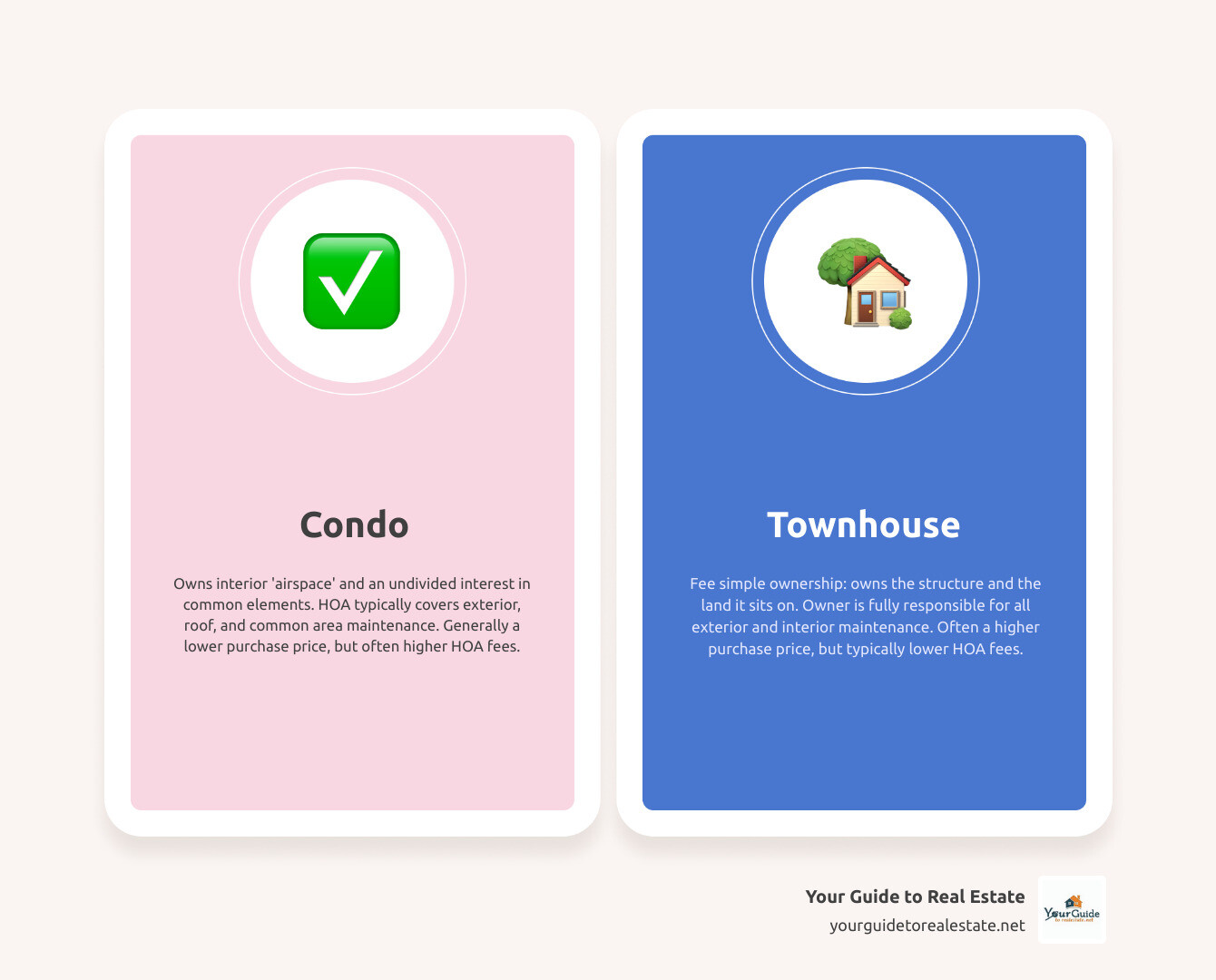
- Townhouse: You own the structure AND the land it sits on (like a house)
- Condo: You own only the interior space of your unit (like an apartment you can buy)
- Maintenance: Townhouse owners handle their own exterior upkeep; condo owners pay HOA fees for building maintenance
- Cost: Condos are typically cheaper to buy but have higher monthly fees
- Privacy: Townhouses usually offer more space and fewer shared walls
Understanding this distinction matters because it affects everything from your monthly budget to how much control you have over your living space. A townhouse gives you more independence but more responsibility. A condo offers convenience and amenities but comes with stricter rules and ongoing fees.
The confusion often starts with the fact that “condo” refers to a type of ownership, not a building style. You can actually have a townhouse-style home that’s legally structured as a condo. Meanwhile, “townhouse” describes the architectural layout – a multi-level home attached to neighboring units by shared walls.
Whether you’re a first-time buyer looking for affordability or someone who wants minimal maintenance, knowing these differences will help you make the right choice for your lifestyle and budget. For helpful tips on navigating your first home purchase, check out our First-Time Homebuyer Tips.
Simple townhouse vs condo glossary:
What is a Townhouse?
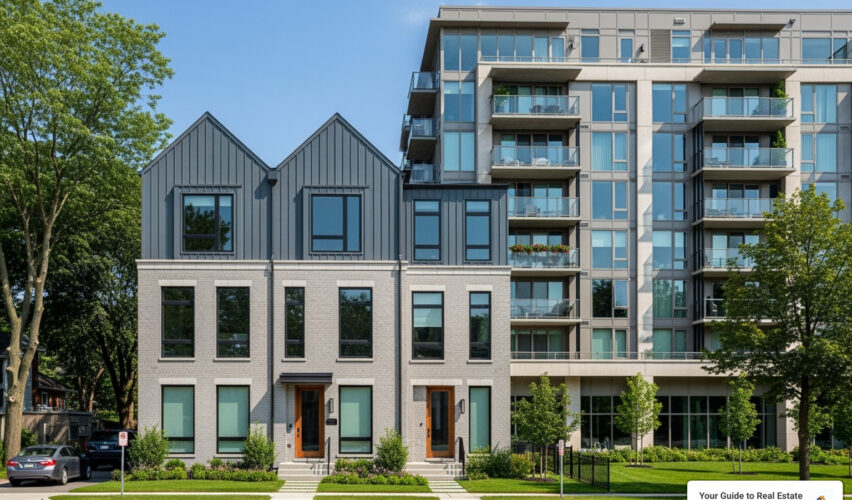
A townhouse, sometimes called a townhome, is an architectural style of home that is typically a multi-level structure sharing one or more walls with an adjacent unit. Think of it as a house built within a row of connected houses. Most townhouses are two- or three-stories tall, often narrower than traditional detached homes, and generally have their own private entrance directly to the outside.
A key characteristic of a townhouse is that the owner typically owns the structure itself, including the interior and exterior, as well as the land it sits on. This is often referred to as “fee simple ownership.” As Mike Fabbri, a licensed real estate salesperson with The Agency in NYC, explains, “Townhouse owners have full ownership of their units, including the land… Owners generally have control over the exterior appearance and landscaping of their home.” This means you’re not just buying a living space; you’re buying a piece of the earth, too, and all the responsibilities that come with it.
Townhouses offer a unique blend, sitting somewhere between a single-family home and a condo. They provide more space and often a small private yard or patio, giving you some of the benefits of a detached home without all the maintenance of a sprawling property. In many U.S. markets, including growing areas like Dallas and Oklahoma City, townhouses have become increasingly popular for those seeking a balance of independence and community living. Jeff Benach, principal of Chicago-based Lexington Homes, notes that “buyers typically know the general housing type that will work for them from the beginning of their search,” suggesting that many people instinctively gravitate towards townhouses for their specific lifestyle offerings.
What is a Condominium (Condo)?
A condominium, or condo for short, is a private residence within a larger building or complex. Unlike a townhouse where you own the land, a condo owner typically owns only the interior space of their individual unit – everything from the walls inward. The building’s structure, common areas (like lobbies, hallways, roofs, and amenities), and the land the building sits on are owned collectively by all the condo owners in the building or complex. This collective ownership is usually managed by a Homeowners Association (HOA) or Condo Owners Association (COA).
Kate Wollman-Mahan, an agent at Coldwell Banker Warburg, highlights this aspect: “Condos are great for buyers who are happy to pay a maintenance fee to the condo board in exchange for the management of the property.” This means you get to enjoy the benefits of homeownership without the direct responsibility for exterior maintenance or common area upkeep.
The concept of a condo isn’t new; the first condo in the United States was built in Salt Lake City in 1960. Today, there are approximately 17 million privately owned condominiums across the U.S., reflecting their popularity as an accessible entry point into homeownership, especially for first-time buyers or those looking to downsize. Condos often offer a more urban or suburban complex living experience, providing amenities and a sense of community that can be very appealing.
Ownership and Maintenance: The Core Difference
Here’s where the townhouse vs condo decision gets real. It’s not just about which one looks nicer or costs less upfront. The biggest difference lies in what you actually own and what you’re responsible for fixing when things go wrong.
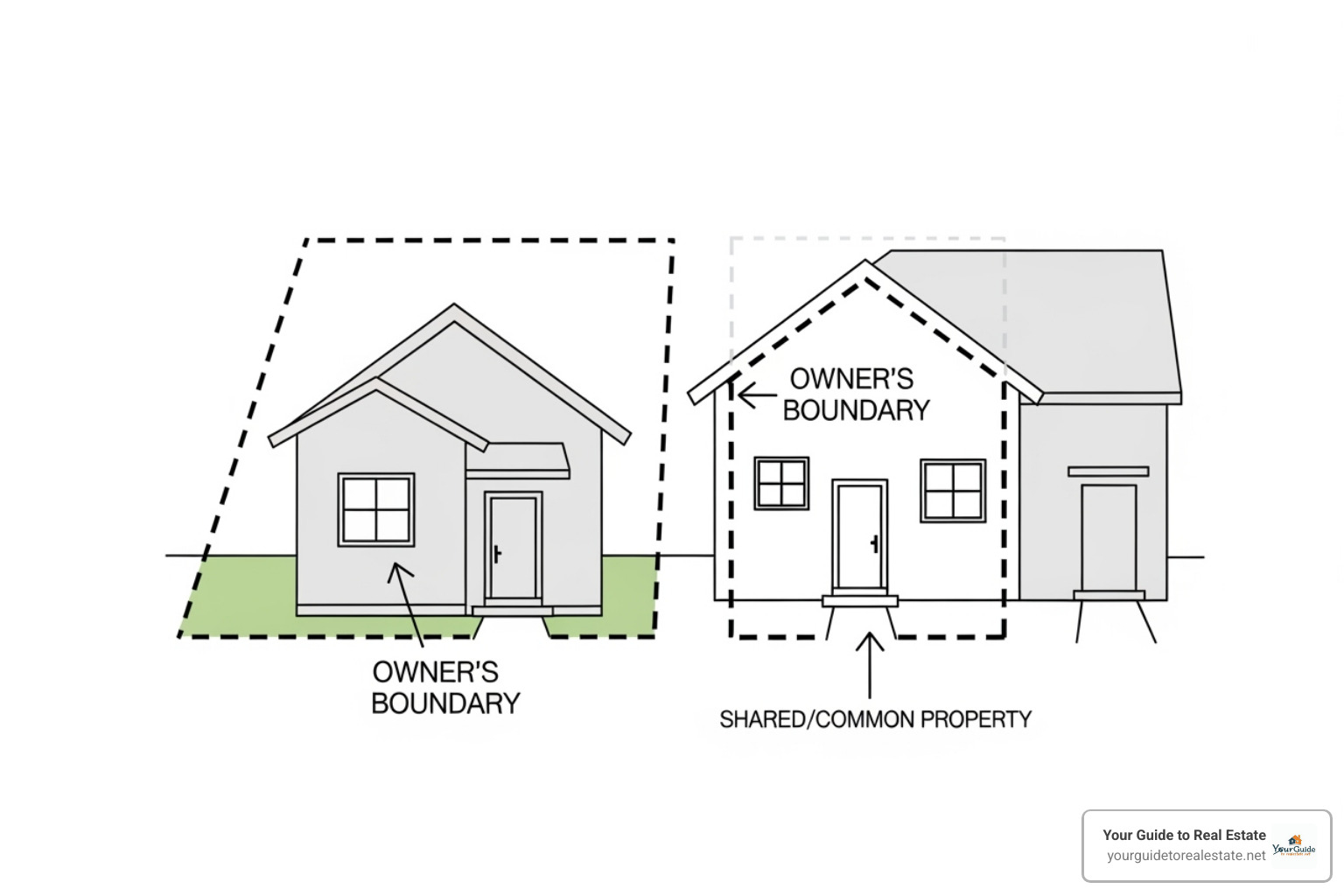
Think of it this way: buying a condo is like owning everything inside a box, while buying a townhouse is like owning the entire box plus the ground it sits on. This fundamental difference shapes every aspect of your homeownership experience.
Key Ownership Differences in the Townhouse vs Condo Debate
Let’s start with condo ownership. When you buy a condo, you’re purchasing what’s called “airspace” – basically everything from your interior walls inward. Your ownership includes your floors, ceilings, interior walls, and everything inside your unit. But you don’t own the building’s exterior walls, the roof above you, or the land underneath.
Instead, you own what’s called an undivided interest in common elements. This fancy term means you share ownership of all the common areas with every other unit owner in the building. The lobby, hallways, elevators, roof, exterior walls, and any amenities like pools or fitness centers belong to everyone collectively.
Townhouse ownership works more like owning a traditional house. With fee simple ownership, you own your entire structure – inside and out – plus the specific piece of land it sits on. This typically includes any small yard, patio, or driveway that comes with your unit.
Here’s where it gets a bit tricky: you can actually have a townhouse-style building that’s legally structured as a condo. The architectural style doesn’t always match the ownership type. When you’re house hunting, make sure to check the legal description to know exactly what you’re buying.
Maintenance Responsibilities Compared
This is where your wallet really feels the difference between a townhouse vs condo.
With condo maintenance, the HOA handles most of the big-ticket items. When the roof needs replacing, the exterior needs painting, or the landscaping needs updating, that’s all covered by your monthly HOA fees. The association takes care of everything on the outside, so you can focus on keeping your interior space in good shape.
Townhouse maintenance puts you in the driver’s seat – for better or worse. If your roof starts leaking, that’s your problem to solve and your checkbook to open. When the exterior paint starts peeling or your small yard needs attention, you’re the one calling the contractors.
The upside? You have complete control over exterior changes and improvements. Want to paint your front door bright red or plant a garden? Go for it. Condo owners usually need HOA approval for any exterior modifications.
The downside? When something major breaks, there’s no shared cost with your neighbors. A new roof or foundation repair comes straight out of your pocket.
Many townhouse communities still have HOAs, but their maintenance cost considerations are different. These HOAs typically maintain shared amenities like community pools or entrance areas, but leave individual unit exteriors to the owners. This often means lower monthly fees but higher personal maintenance responsibilities.
For example, if you need water softener maintenance, both condo and townhouse owners would handle interior repairs. But if the issue extends to exterior plumbing, a townhouse owner deals with it alone while a condo owner might share the cost through HOA assessments.
The choice really comes down to whether you prefer predictable monthly fees with less personal responsibility, or more control with the potential for surprise expenses.
Cost, Investment, and Financing: A Financial Breakdown of Townhouse vs Condo
Let’s talk money – because when you’re weighing the townhouse vs condo decision, understanding the full financial picture is crucial. It’s not just about what you can afford today, but how your choice will impact your wallet for years to come.
The financial differences between these two housing types go far beyond the sticker price. You’ll need to consider ongoing monthly costs, long-term investment potential, and even how easy it might be to get a mortgage. Don’t worry though – we’ll break it all down so you can make a confident decision that fits your budget and goals.
Comparing Purchase Price and HOA Fees
Here’s some good news if you’re budget-conscious: condos are generally the more affordable option upfront. Nationally, the average condo sells for around $353,900, according to recent data from the National Association of Realtors. The reason? You’re getting less square footage and, more importantly, no land comes with your purchase.
Townhouses typically cost more than condos but less than single-family homes, making them a sweet spot for buyers who want more space without breaking the bank. Think of townhouses as the middle child of housing options – more expensive than condos, but still more affordable than going full single-family home.
But here’s where it gets interesting: the purchase price is only part of your monthly housing cost. Those HOA fees can really add up, and they vary dramatically between condos and townhouses.
Condo HOA fees typically range from $100 to $700 per month, though they can climb much higher for luxury buildings with extensive amenities. As Janice Pynn from Simerra Property Management explains, these fees represent “your percentage share of the costs to run the building as a whole.” The good news? Condo buildings operate as nonprofit corporations, so every penny goes toward actual building maintenance and services – no one’s pocketing your money.
Townhouse HOA fees are often lower because you’re handling more of your own exterior maintenance. While a condo HOA covers your roof, exterior walls, and common areas, a townhouse HOA might only manage shared roads, community pools, or landscaping for common areas. This difference in responsibility translates to real savings in your monthly budget.
Remember to factor in property taxes and homeowners insurance too, which can vary based on your ownership structure. And speaking of important financial protections, make sure you understand Understanding Title Insurance as part of your purchase process.
Resale Value and Appreciation Potential
When it comes to building wealth through real estate, the townhouse vs condo comparison reveals some fascinating trends. Traditionally, condos haven’t appreciated as much as townhouses – and there’s a logical reason for this. Since you don’t own the land under a condo, you’re missing out on one of the key drivers of long-term real estate appreciation.
However, recent market data tells a more nuanced story. Between 2012 and 2017, condos actually appreciated by 38.4% compared to 27.9% for single-family homes. This surprising trend shows that local market conditions, desirable amenities, and location can sometimes outweigh the land ownership advantage.
Townhouses generally still have the edge in appreciation potential because you own both the structure and the land underneath it. This gives you two sources of potential value growth instead of just one. Plus, townhouses often offer more living space, which tends to hold its value well over time.
The reality is that both property types can be solid investments, but your specific market matters enormously. A well-managed condo in a desirable urban area might outperform a townhouse in a declining suburb. That’s why conducting a thorough Competitive Market Analysis Real Estate for your target area is so important.
Financing a Townhouse vs. a Condo
Getting a mortgage can be where the townhouse vs condo decision gets a bit tricky – but don’t let that scare you off.
Financing a townhouse is typically straightforward, much like getting a loan for a single-family home. Conventional loans, FHA loans, and VA loans are all readily available. As long as you and the property meet standard lending requirements, you’re good to go.
Condo financing can be more complex, especially if you’re hoping to use an FHA loan. Here’s the catch: the entire condo complex must be FHA-approved before individual units can qualify for FHA financing. Lenders scrutinize the condo association’s financial health, reserve funds, and even the ratio of owner-occupied units to rentals. If too many units are rentals or the HOA’s finances look shaky, getting that FHA loan becomes much harder.
Conventional loans for condos are usually available, though you might face slightly higher interest rates compared to townhouses. The good news is that conventional loans don’t require the entire complex to be pre-approved like FHA loans do.
Here’s something important to remember: a property that looks like a townhouse might legally be classified as a condo. Lenders will check the legal description to determine if you’re buying a condominium or a Planned Unit Development (PUD). PUDs, which typically include land ownership, don’t require complex-wide FHA approval, making financing much simpler.
Always verify the legal classification before you fall in love with a property – it could save you from financing headaches later. For more detailed information about navigating the loan process, check out our comprehensive guide on Understanding Mortgages: A Beginner’s Guide to Home Loans.
Lifestyle and Community: Privacy, Amenities, and Rules


The townhouse vs condo decision goes way beyond dollars and cents. How you want to live your daily life matters just as much as what you can afford. Do you dream of hosting pool parties without owning a pool? Or would you rather have your own little garden where you can grow tomatoes? Your lifestyle preferences should drive this choice.
Amenities and Shared Spaces
If you love the idea of a resort-style lifestyle, condos often win hands down. Picture this: you finish a long day at work, head downstairs to the fitness center for a quick workout, then relax by the pool without worrying about cleaning it or fixing the filter. Many condo buildings offer amenities that would cost a fortune to install and maintain on your own – think pools, fitness centers, clubhouses, security services, and sometimes even concierge desks.
These shared spaces also create natural opportunities to meet your neighbors. Whether it’s chatting by the mailboxes or bumping into someone at the community barbecue area, condo living tends to foster stronger community connections. Your monthly HOA fees fund all these perks, so you’re essentially splitting the cost of luxury amenities with all your neighbors.
Townhouse communities take a different approach. While some offer community pools or playgrounds, the real prize is usually your own private outdoor space. Jennifer Patchen, an Opendoor broker, puts it perfectly: “Living in a townhouse lets you enjoy the best of both single-family living and condo living in that you have some… outdoor space.”
That small fenced yard or patio might not sound like much, but it’s yours. Want to plant a garden? Go for it. Need a safe place for your dog to run? You’ve got it. Planning a small dinner party on your deck? No need to reserve the community space or worry about noise complaints from upstairs neighbors.
Privacy Levels
Here’s where townhouses really shine. Most townhouses share just one or two walls with neighbors, and if you’re lucky enough to snag an end unit, you might only share one wall. You get your own front door that opens directly to the outside – no shared hallways or elevators where you bump into neighbors in your pajamas carrying laundry.
The multi-level layout of townhouses also helps with privacy. Even when you do share walls, they’re typically on the sides rather than above and below you. This means less noise transfer and more of that single-family home feeling you might be craving.
Condo living, on the other hand, means getting cozy with your neighbors whether you want to or not. You’re sharing walls, floors, and ceilings with multiple units. Those shared hallways and elevators mean more frequent neighbor encounters, which can be great if you’re social but challenging if you value your alone time.
Noise can be a real issue in condos. That upstairs neighbor who loves late-night tap dancing? You’ll know their schedule intimately. However, don’t write off all condos – some buildings have excellent soundproofing. The key is visiting potential units at different times of day and asking current residents about their experiences.
HOA Rules and Regulations
Both property types come with HOA rules, but think of it this way: condo rules are like living with strict parents, while townhouse rules are more like having understanding roommates.
Condo associations typically have extensive rules because they’re managing an entire building. These Covenants, Conditions, and Restrictions (CC&Rs) can cover everything from exterior modifications and paint colors to pet restrictions and holiday decorations. Want to hang a wreath on your door? Better check the rules first. Thinking about getting a Great Dane? Hope the weight limit allows it.
While these rules might feel restrictive, they serve a purpose – maintaining consistency and protecting everyone’s property values. Nobody wants their building to look like a patchwork quilt of different styles and colors.
Townhouse HOAs are generally more relaxed, especially about your unit’s exterior if you own it. You typically have more control over your landscaping, exterior appearance, and minor modifications. Want to paint your front door red? In many townhouse communities, that’s your call.
That said, Jennifer Patchen reminds us that “A townhouse is typically governed by an HOA… There are monthly fees and restrictions involved here, too.” Shared elements like fences or common driveways still need HOA approval, but the rules tend to focus more on community standards than micromanaging individual units.
The bottom line? Review those HOA documents carefully before buying either property type. Understanding the rules, fees, and the association’s financial health will save you from unpleasant surprises later.
Frequently Asked Questions about Townhouse vs Condo
As you steer the townhouse vs condo decision, you’re probably juggling a dozen questions in your head. Don’t worry – you’re not alone! These are the questions we hear most often from homebuyers just like you.
Which is a better investment, a townhouse or a condo?
Here’s the honest answer: it depends on what you’re looking for and where you’re buying. But let me break down the key factors that’ll help you decide.
Townhouses typically have the edge when it comes to long-term appreciation. Why? It all comes back to that magic word: land. When you own the dirt beneath your home, you’re not just buying shelter – you’re buying a piece of the earth that tends to become more valuable over time. That’s why townhouses often appreciate faster than condos.
But here’s where it gets interesting. Recent market data shows that condos aren’t necessarily the underdog they once were. Between 2012 and 2017, condos actually appreciated by 38.4% compared to 27.9% for single-family homes in some markets. Location, amenities, and local demand can turn a condo into a surprisingly strong investment.
Your investment choice should match your lifestyle and goals. If you want lower upfront costs and prefer someone else handling maintenance (giving you more time or money for other investments), a condo might be perfect. If you’re thinking long-term wealth building and want more control over your property, a townhouse could be your winner.
The key is understanding your local market conditions. What works in downtown Dallas might not work in suburban Oklahoma City. For deeper insights into building wealth through real estate, check out our guide on How to Invest in Real Estate.
Which is cheaper to buy, a condo or a townhouse?
Condos usually win the affordability contest – at least when you’re looking at that initial purchase price. With a national average around $353,900, condos are generally the more budget-friendly option because you’re getting less square footage and no land attached.
But here’s where you need to put on your detective hat. That lower sticker price can be deceiving when you factor in monthly HOA fees. A condo might cost $50,000 less than a townhouse, but if the HOA fees are $300 higher per month, you’re looking at an extra $3,600 per year – or $36,000 over ten years.
Townhouses sit in that sweet middle ground between condos and single-family homes. You’ll typically pay more upfront than a condo, but your HOA fees might be lower since you’re handling more of your own maintenance. Plus, you’re getting more space and often a little yard to call your own.
The smart move? Calculate your total monthly housing cost including mortgage, HOA fees, property taxes, and insurance. That’ll give you the real picture of what each option costs to own, not just to buy.
Can a townhouse be a condo?
Yes, and this trips up buyers all the time! It’s actually one of the most confusing aspects of the townhouse vs condo world.
Think of it this way: “townhouse” describes what it looks like, while “condo” describes how you own it. A townhouse is an architectural style – that multi-level home with shared walls and its own entrance. A condo is a legal ownership structure where you own the interior space but share ownership of everything else.
So you can absolutely have a townhouse-style home that’s legally a condo. In this case, your home might look exactly like a traditional townhouse, but legally, you only own the interior. The exterior walls, roof, and land are part of the common elements managed by the condo association.
This distinction matters more than you might think. It affects everything from your financing options to your maintenance responsibilities to your monthly fees. Always check the legal documents rather than just trusting what the property looks like. Your real estate agent can help you understand the ownership structure, and it’s worth getting crystal clear on this before you make an offer.
The bottom line? Don’t let the architectural style fool you – dig into the ownership details to understand what you’re really buying.
Conclusion: Making the Right Choice for Your Lifestyle
Choosing between a townhouse vs condo isn’t just about comparing square footage or monthly fees – it’s about finding the home that fits your life like a favorite pair of jeans. After exploring ownership structures, maintenance responsibilities, costs, and lifestyle factors, you now have the foundation to make an informed decision.
Think about your daily routine and what matters most to you. If you’re someone who loves the idea of coming home to maintained grounds and shared amenities without worrying about roof repairs or lawn care, a condo might be calling your name. You’ll enjoy that lower entry price and the convenience of having exterior maintenance handled by professionals. Plus, there’s something to be said for having a pool and fitness center just an elevator ride away.
On the flip side, if you’re dreaming of your own little patch of earth where you can plant flowers, grill on your own patio, or let the kids run around without sharing space, a townhouse could be your perfect match. Yes, you’ll be the one calling the roofer when needed, but you’ll also have the freedom to paint your front door whatever color makes you smile.
Budget considerations go beyond the sticker price. Condos often come with higher HOA fees but lower purchase prices, while townhouses typically flip that equation. Think about your monthly comfort zone and don’t forget to factor in your tolerance for surprise expenses – condo owners share those costs, while townhouse owners handle them solo.
Your long-term goals matter too. Planning to stay put for decades? That land ownership in a townhouse could really pay off in appreciation. Looking for flexibility to move in a few years? A condo’s easier maintenance might make more sense for your lifestyle.
At Your Guide to Real Estate, we know that every buyer’s situation is unique. That’s why we believe in offering a proven framework and stress-free guidance for success in the real estate market. The best choice ultimately comes down to matching your priorities with your reality – whether that’s space, maintenance preferences, community feel, or budget constraints.
Don’t go it alone in this decision. A knowledgeable real estate agent can walk you through specific properties, explain HOA financials in plain English, and help you understand local market trends that could impact your investment. For help finding the right professional to guide you, check out our comprehensive guide on How to Choose the Right Real Estate Agent: A Complete Buyer’s Guide.
Whether you end up with keys to a sleek condo or a charming townhouse, the most important thing is that it feels like home to you. For deeper insights into what the market might hold for your new home’s value, explore our Housing Market Forecast to make your decision with confidence.