

Why the Social Security Fairness Act Payments Update Matters for Millions
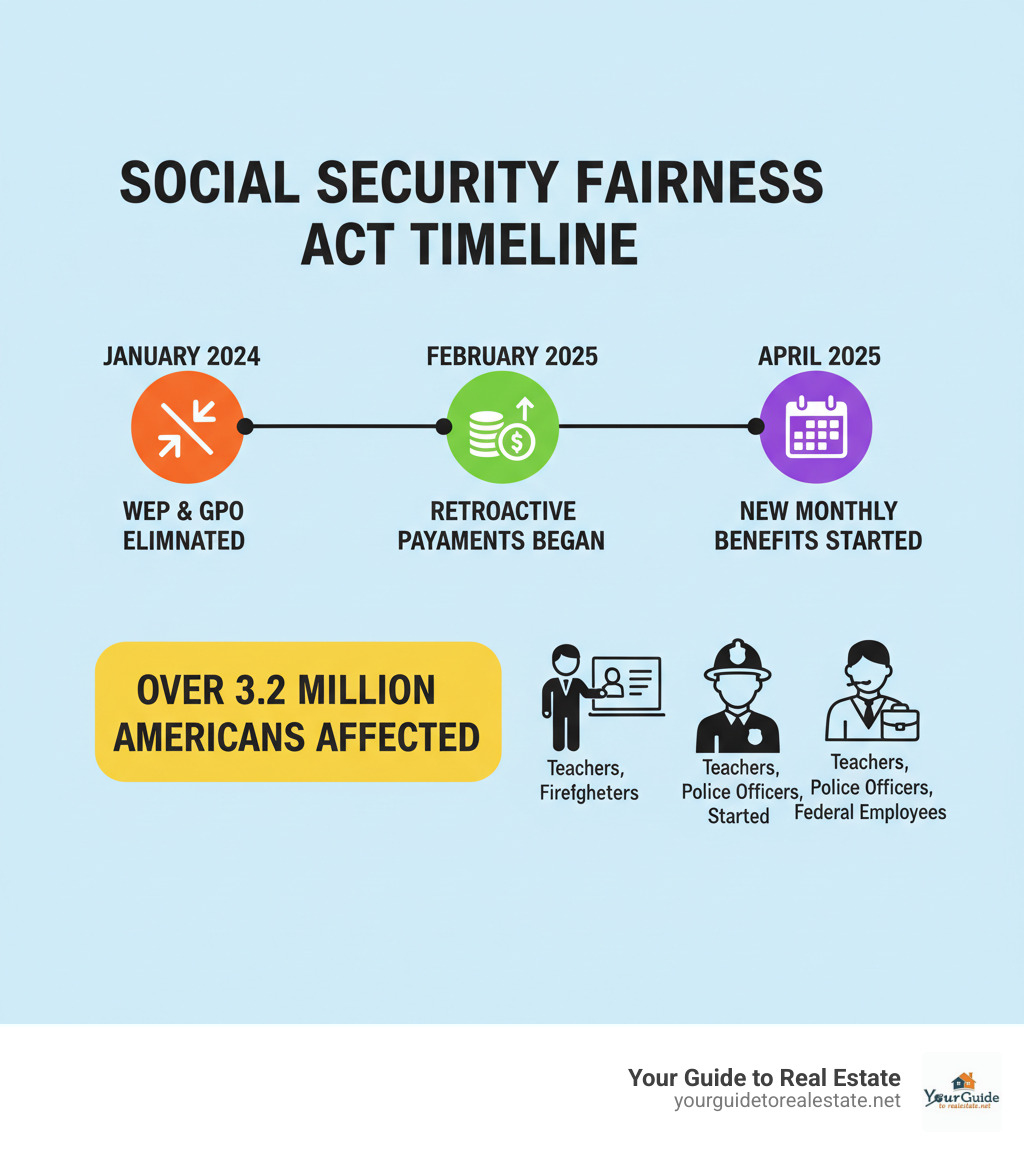
The social security fairness act payments update has brought life-changing news for over 3.2 million Americans who have waited decades for fair treatment of their earned Social Security benefits.
Key Updates at a Glance:
- Retroactive payments: One-time lump-sum payments covering January 2024 through March 2025, with most paid by end of March 2025
- New monthly benefits: Increased monthly payments starting April 2025 (for March 2025 benefit)
- Total impact: Over $17 billion in payments to eligible beneficiaries as of July 2025
- Who benefits: Public employees with pensions from non-Social Security covered work (teachers, firefighters, police officers, federal employees)
- No action required: If SSA has your current contact information, payments are automatic
President Biden signed the Social Security Fairness Act into law on January 5, 2025, officially ending the Windfall Elimination Provision (WEP) and Government Pension Offset (GPO). These provisions had unfairly reduced or eliminated Social Security benefits for millions of public servants who also received pensions from work not covered by Social Security taxes.
The Social Security Administration moved faster than expected, using automation to process most cases and deliver retroactive payments months ahead of schedule. Some beneficiaries are seeing increases of $1,000 or more per month in their Social Security benefits.
For public servants who dedicated their careers to serving their communities, this update represents more than just additional income – it’s about receiving the full benefits they earned through their Social Security-covered employment.
Simple guide to social security fairness act payments update:
- what changes are coming to social security in 2025
- financially free
- i make $70,000 a year how much house can i afford
Understanding the Social Security Fairness Act
If you’ve been following the social security fairness act payments update, you’ve probably wondered what this historic legislation actually does. Simply put, it fixes a decades-old problem that unfairly punished millions of public servants for their dedication to serving their communities.
The Social Security Fairness Act eliminates two complex formulas that reduced or wiped out Social Security benefits for people who also earned government pensions from jobs that didn’t pay into Social Security. These formulas had confusing names – the Windfall Elimination Provision (WEP) and the Government Pension Offset (GPO) – but their impact was crystal clear: they left hardworking retirees with less money than they deserved.
President Biden signed the official Act into law on January 5, 2025. Here’s the great news: the changes are retroactive to January 2024. This means if you’re affected, you’re not just getting higher monthly payments going forward – you’re also getting a lump sum covering all those months since the beginning of 2024.
Who is Affected by the Repeal of WEP and GPO?
Over 3.2 million Americans have been waiting for this moment. These are the teachers who shaped young minds, the firefighters who ran into burning buildings, the police officers who kept communities safe, and countless other state and local employees who chose public service over higher-paying private sector jobs.
The common thread? They all worked in jobs where they didn’t pay Social Security taxes but instead contributed to separate pension systems like the Civil Service Retirement System (CSRS) for federal employees. When these dedicated public servants also worked other jobs that did pay into Social Security – or when they became eligible for spousal benefits – WEP and GPO swooped in to reduce their benefits.
Not every public worker will see changes from this law. About 72% of public employees already pay Social Security taxes through their jobs and were never affected by these unfair provisions. This legislation specifically helps those with non-covered pensions – retirement benefits from work that didn’t contribute to Social Security.
The impact varies by state. Some states like Texas and California have large numbers of teachers in non-covered positions, while others have most public employees already paying into Social Security. For ongoing updates about how this affects different groups, check our Social Security Fairness Act Update.
What Were the Windfall Elimination Provision (WEP) and Government Pension Offset (GPO)?
To appreciate why this social security fairness act payments update matters so much, you need to understand just how unfair these old rules were.
The Windfall Elimination Provision targeted people who worked both in Social Security-covered jobs and non-covered government positions. Imagine a teacher who spent 20 years in a public school system that didn’t pay into Social Security, then switched to private tutoring for 15 years that did. WEP would reduce their Social Security benefits using a complex formula that essentially punished them for having a government pension. The reasoning was to prevent a “windfall,” but in reality, it often left people with less than they’d earned.
The Government Pension Offset was even harsher. It slashed spousal and survivor benefits for anyone receiving a government pension from non-covered work. The formula was brutal: it reduced Social Security spousal or survivor benefits by two-thirds of the government pension amount. For many widows and widowers, this meant their survivor benefits disappeared entirely, leaving them financially vulnerable when they needed support most.
These weren’t small adjustments – they were benefit reduction formulas that created genuine hardship. Public servants who thought they’d planned well for retirement suddenly found themselves with much less income than expected. Some lost hundreds of dollars per month, while others saw their spousal benefits vanish completely.
The provisions had been causing problems for decades, affecting not just retirees but their families too. Spouses who had never worked in government jobs found their Social Security benefits reduced simply because their partner had served the public in a non-covered position.
Now, with WEP and GPO finally repealed, these unfair penalties are history. Public servants can retire knowing they’ll receive the full Social Security benefits they earned, just like everyone else.
Your Social Security Fairness Act Payments Update: What to Expect
The wait is finally over! If you’re one of the millions of public servants who’ve been wondering when these life-changing payments would arrive, we have fantastic news to share. The social security fairness act payments update has delivered results faster than anyone expected, and the Social Security Administration has been working around the clock to get these benefits into your hands.
Let’s walk through exactly what’s happening with your payments, when you can expect them, and what these changes mean for your financial future.
Retroactive Payments: Timeline and Amounts
Here’s where things get really exciting. The SSA started sending out one-time lump-sum payments beginning the week of February 24, 2025. These weren’t just small adjustments – we’re talking about substantial payments that cover your benefit increases all the way back to January 2024.
The numbers are truly impressive. By the end of March 2025, most eligible beneficiaries had already received their retroactive payments. And when we say “most,” we mean it – over 3.1 million payments totaling $17 billion had been distributed by July 7, 2025. That’s five months ahead of the original schedule!
To put this in perspective, early recipients saw an average payment of around $6,710. That’s money you earned but weren’t receiving due to those unfair WEP and GPO reductions. By April 11, the SSA had processed 81% of all retroactive payment adjustments for 2.3 million people.
If you were already receiving Social Security benefits that were reduced by WEP or GPO, your retroactive payment should have arrived automatically. This covers the period from January 2024 through the month before your new monthly payments began. For detailed information about these payments, check out our comprehensive guide on Social Security Fairness Act Retroactive Payments.
Updated Monthly Benefits: When and How Much?
Beyond that welcome lump sum, the real game-changer is your new monthly payment amount. Starting in April 2025, most affected beneficiaries began receiving their increased monthly benefits. Social Security pays benefits one month behind, so your April payment covered your March 2025 benefit.
Now, here’s what everyone wants to know – how much more will you receive? The answer varies significantly based on your unique situation, including your earnings history and the amount of your non-covered pension. Some beneficiaries are seeing modest increases, while others are receiving over $1,000 more each month. Imagine what that kind of increase could mean for your retirement security and peace of mind.
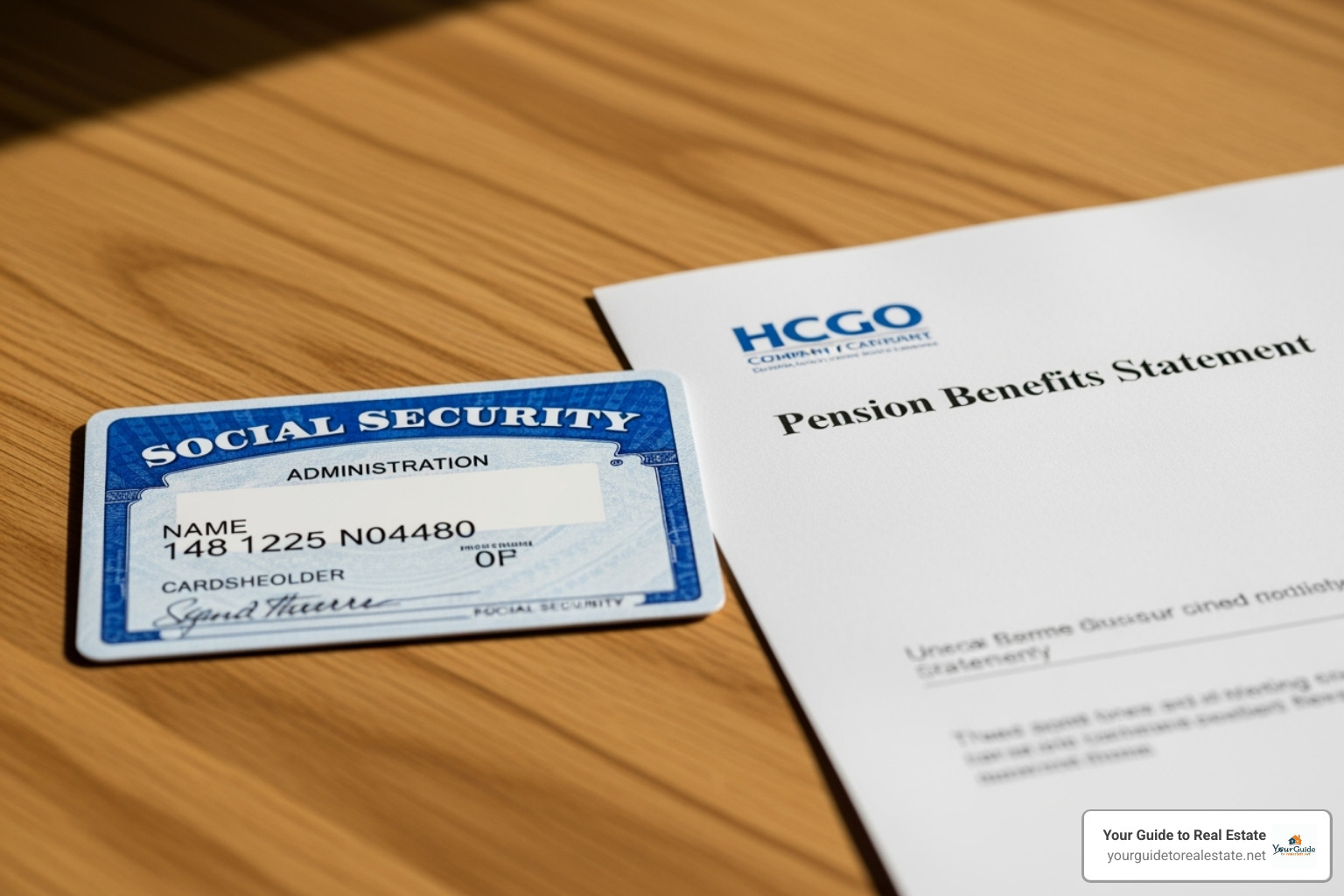
The SSA isn’t leaving you in the dark about these changes. Mailed notices explaining your new benefit amount and any retroactive payments you received should have arrived with your updated payments. Keep an eye on your mailbox for these important documents – they’ll help you understand exactly how the Act has impacted your benefits.
For a broader view of how Social Security is changing this year, our article on What Changes Are Coming to Social Security in 2025? covers all the major updates you should know about.
Navigating Complex Cases and Implementation Timelines
While the SSA’s progress has been remarkable, we want to be honest about the challenges they’ve faced. Initially, experts thought implementing these changes could take a year or more. The SSA has been dealing with staffing shortages, a hiring freeze since November 2024, and the fact that Congress didn’t provide specific funding for the administrative costs of this massive undertaking.
Thankfully, automation helped process the majority of cases quickly. However, if your work history is particularly complex – perhaps you had multiple pensions, worked in various states, or have other unique circumstances – your case might require manual processing. This means some beneficiaries may experience delays compared to the general timeline.
The SSA has projected that all beneficiaries’ records will be updated by November 2025. If you haven’t received your payments by the expected dates, we completely understand your concern. The SSA has asked for patience, advising people to wait until April before inquiring about retroactive payments, since they were processed throughout March.
For ongoing monthly benefits, it’s best to wait until after your April payment arrives before reaching out with questions. This helps prevent overwhelming their already busy call centers and allows them to focus on processing the remaining cases. You can always find the most current information by visiting the SSA’s official Fairness Act webpage.
The bottom line? This social security fairness act payments update represents the largest positive change to Social Security benefits for public servants in decades. While some cases are taking longer than others, the SSA is committed to ensuring every eligible person receives their full, fair benefits.
What Beneficiaries Need to Do Now
The most reassuring news about the social security fairness act payments update is that most people won’t need to do much at all. The Social Security Administration has worked hard to make this process as simple as possible for you. That said, there are a few smart steps you can take to make sure everything goes smoothly.
Verifying Your Information with the SSA
If you’re already getting Social Security benefits that were cut by WEP or GPO, you’re in luck. You don’t need to do anything as long as the SSA has your current address and bank information. Your payments will automatically increase.
But here’s the thing – life happens. Maybe you moved recently or switched banks. It’s worth double-checking that your information is up to date. The easiest way is through your personal ‘my Social Security’ account. This secure website lets you check your address, direct deposit details, and view your benefit statements anytime.
Don’t have an online account yet? Setting one up is straightforward and gives you 24/7 access to your Social Security information. It’s like having the SSA office at your fingertips.
If you prefer talking to a real person, you can call the SSA at (800) 772-1213 between 8 a.m. and 7 p.m., Monday through Friday. For face-to-face help, use their locator tool to find the closest SSA field office near you.
Applying for Benefits for the First Time
Here’s something exciting – maybe you never applied for Social Security because WEP or GPO would have wiped out most of your benefits. Well, those days are over! Now you might be eligible for benefits you thought you’d never see.
If you’re getting a public pension and wondering if you should apply, the answer is probably yes. The easiest route is applying online at www.ssa.gov/apply. Don’t worry if the application still asks about your pension – the SSA won’t reduce your benefits because of WEP or GPO anymore.
Time matters here. The date you apply affects when your benefits start. Generally, you can only get retroactive benefits for up to six months before you apply (twelve months for disability). Since the Act passed, over 289,000 people have filed new applications, and 92% have already been processed. The path is clear for new applicants.
There’s one exception – survivor benefits. You can’t apply for these online. If you never applied for survivor benefits because GPO would have eliminated them, call (800) 772-1213. When you call, mention “Fairness Act” and they’ll connect you with someone who knows these changes inside and out.
Managing Your Medicare Premium Payments
This part might seem a bit complicated, but we’ll walk you through it. If WEP or GPO reduced or eliminated your Social Security benefits, you probably paid your Medicare Part B premiums directly to Medicare. Now that your Social Security benefits are increasing, things will change.
The SSA will likely start taking your Medicare premiums right out of your monthly Social Security payment. This is actually convenient – one less bill to worry about. But you need to avoid paying twice.
If you were using Medicare Easy Pay, you’ll need to stop those automatic payments. Fill out the Authorization Agreement for Preauthorized Payments form or manage it online at Medicare.gov. If your bank was automatically paying Medicare for you, cancel that service too.
Keep paying Medicare directly until you get a notice from the SSA confirming your new benefit amount and that Medicare premiums will now come out of your Social Security check. If you end up overpaying, don’t worry – any refund will typically be included in your back payments or sent at the end of the quarter.
The key is staying alert during this transition. A little attention now prevents headaches later.
Staying Informed and Avoiding Scams
When significant financial changes like the social security fairness act payments update happen, it’s wonderful to see people becoming more engaged with their benefits. However, we need to talk about something less pleasant but equally important: scammers are out there, ready to take advantage of this situation.
The unfortunate reality is that whenever there’s big news about Social Security payments, fraudsters see dollar signs. They know people are eager for information and anxious about their benefits, making it the perfect time to strike with convincing-sounding schemes.

How to Avoid Scams Related to the Social Security Fairness Act Payments Update
Here’s something that might surprise you: The Social Security Administration will never ask you for payment to help with your benefits or to speed up your payments. Never. Not even a small “processing fee” or “administrative charge.” If someone claiming to be from the SSA asks for money, you’re talking to a scammer.
Government imposter scams have become incredibly sophisticated. These fraudsters might know some of your personal information already, making their calls seem legitimate. They might mention the Social Security Fairness Act by name, claim there’s a problem with your account, or promise to expedite your payments for a fee.
The golden rule is simple: hang up on unsolicited calls. Even if the caller ID shows what looks like an official SSA number, don’t trust it. Scammers can make any number appear on your caller ID – it’s called “spoofing,” and it’s surprisingly easy for them to do.
Real red flags include anyone demanding payment through gift cards, wire transfers, or cryptocurrency. Government agencies simply don’t operate this way. They also don’t threaten to arrest you, suspend your Social Security number, or demand immediate payment to avoid consequences.
If you’re ever unsure about a communication, here’s what to do: hang up and call the SSA directly at (800) 772-1213. Don’t use any phone number the suspicious caller gives you – look it up yourself or use the number from an official SSA document you have at home.
When you encounter these scams, please report them to the Office of the Inspector General. Your report helps protect other people from falling victim to the same scheme. The SSA takes this so seriously that they even observe National “Slam the Scam” Day to educate people about these threats.
Where to Find the Latest Social Security Fairness Act Payments Update
With so much information floating around online, it’s crucial to know where to find reliable, accurate updates about your benefits. The internet can be a wonderful resource, but it can also spread misinformation faster than you can say “retroactive payment.”
Your best friend in this journey is the SSA’s official website. They’ve created a dedicated page specifically for the Social Security Fairness Act at SSA’s Fairness Act webpage. This page is continuously updated with new information, frequently asked questions, and implementation details. Think of it as your one-stop shop for official updates.
But let’s be honest – checking websites every day isn’t everyone’s cup of tea. That’s where the SSA’s email and text update service comes in handy. You can Subscribe to Social Security Updates and receive notifications directly in your inbox or on your phone. It’s free, it’s official, and it ensures you won’t miss important announcements.
We also keep a close eye on developments and share updates on our Social Security News page. We make it our job to translate the sometimes complex government language into plain English that’s easy to understand.
When it comes to your Social Security benefits, official sources are your best protection against both scams and misinformation. It might take an extra minute to verify information, but that minute could save you thousands of dollars and a lot of heartache.
Frequently Asked Questions about the Social Security Fairness Act
We understand that navigating such significant changes to your Social Security benefits can feel overwhelming. You’re not alone in having questions! Since the social security fairness act payments update began rolling out, we’ve been hearing from many folks who want to understand exactly how this affects them. Let’s walk through the most common questions together.
Will every public worker get a benefit increase because of the new law?
Here’s something that surprises many people: not every public worker will see a benefit increase from the Social Security Fairness Act. This might seem confusing at first, but it makes perfect sense once you understand how the system works.
The Act specifically helps people whose benefits were reduced by the Windfall Elimination Provision (WEP) or Government Pension Offset (GPO). These provisions only affected workers who received a pension from employment that wasn’t covered by Social Security taxes.
Here’s the key detail: about 72% of state and local public employees already pay into Social Security through their jobs, just like private sector workers. If you’ve been paying Social Security taxes throughout your public service career, then WEP and GPO never touched your benefits in the first place.
Think of it this way – if you were a teacher in a state where educators pay Social Security taxes, or a firefighter whose department participates in Social Security, you weren’t affected by these unfair reductions. The new law corrects an injustice, but only for those who experienced that injustice to begin with.
How much will my monthly benefit increase?
This is probably the question we hear most often, and honestly, we wish we could give you a simple answer. The truth is, your benefit increase is as unique as your work history.
Several factors determine your specific increase. Your earnings record in Social Security-covered jobs plays a huge role – the more you earned and the longer you worked in covered employment, the bigger your potential increase. The amount of your non-covered government pension also matters significantly.
Your age when you started receiving benefits affects the calculation too. Whether WEP, GPO, or both provisions were reducing your benefits makes a difference as well.
Some folks are seeing modest adjustments of a few hundred dollars, while others are finding increases of $1,000 or more each month. That’s life-changing money for many retirees! The Social Security Administration will send you a detailed notice explaining your specific benefit adjustment, so you’ll know exactly where you stand.
Do I need to contact the Social Security Administration to receive my payments?
This is where we have some really good news for most people: you probably don’t need to do anything at all. The Social Security Administration has worked hard to make this process as automatic as possible.
If you’re already receiving Social Security benefits that were reduced by WEP or GPO, and the SSA has your current information on file, you’re all set. Your retroactive lump-sum payment and your increased monthly benefits will arrive without any action from you.
The SSA will mail you an official notice explaining all the changes to your benefits. It’s like getting a pleasant surprise in your mailbox – except you’ve been waiting decades for this particular surprise!
There are just a few situations where you might need to reach out. If you’ve moved recently or changed banks and haven’t updated your information with Social Security, you’ll want to do that. Also, if you never applied for Social Security benefits because WEP or GPO would have wiped them out, now’s the time to apply.
The SSA asks for a bit of patience during this massive undertaking. They suggest waiting until April to ask about retroactive payments and until after you receive your April payment to inquire about monthly benefit changes. This helps their staff focus on processing payments rather than answering calls about payments that are already on their way.
This update to your financial standing can open new doors for your future plans, including potential real estate decisions that might have seemed out of reach before.
Conclusion: Securing Your Financial Future
The social security fairness act payments update represents far more than just numbers on a check—it’s a victory for fairness that’s been decades in the making. For over 3.2 million Americans who chose careers in public service, this moment finally brings the recognition they deserved all along. Teachers who shaped young minds, firefighters who ran toward danger, police officers who protected our communities, and federal employees who kept our government running—they can now rest easier knowing their Social Security benefits reflect their true contributions.
What strikes us most about this journey is how efficiently the Social Security Administration rose to the challenge. When we first heard about the Act passing, many expected a slow, bureaucratic rollout that could take over a year. Instead, we witnessed something remarkable: over $17 billion in retroactive payments delivered months ahead of schedule, with most beneficiaries receiving their lump-sum payments by March 2025. The new monthly benefits, some exceeding $1,000 in additional income, started flowing in April 2025.
This financial boost creates ripple effects that extend well beyond monthly budgets. For many, it transforms retirement from a time of financial uncertainty into one of genuine security. Some beneficiaries are finding they can finally afford the home they’ve always wanted, while others are considering real estate investments they previously thought were out of reach.
At Your Guide to Real Estate, we see how financial stability opens doors—literally. When your retirement income increases by hundreds or even thousands of dollars monthly, it changes what’s possible in the housing market. Maybe you can finally afford that down payment, qualify for a better mortgage rate, or invest in rental property for additional income streams.
This update to your financial standing can be a cornerstone for achieving your long-term life goals, including real estate decisions. Whether you’re dreaming of downsizing to a cozy retirement home, helping your children with their first house purchase, or building wealth through property investment, having predictable, fair Social Security benefits makes those dreams more attainable.
The road ahead looks brighter for public servants who spent their careers serving others. While some complex cases may still be working through the system, the commitment to fairness is now law. For those ready to explore how this financial improvement might impact their real estate goals, we’re here to help you steer those exciting possibilities. Learn more with our beginner’s guide to home loans and find how your improved financial foundation can support your homeownership dreams.