

Why the Social Security Fairness Act News Matters to Millions
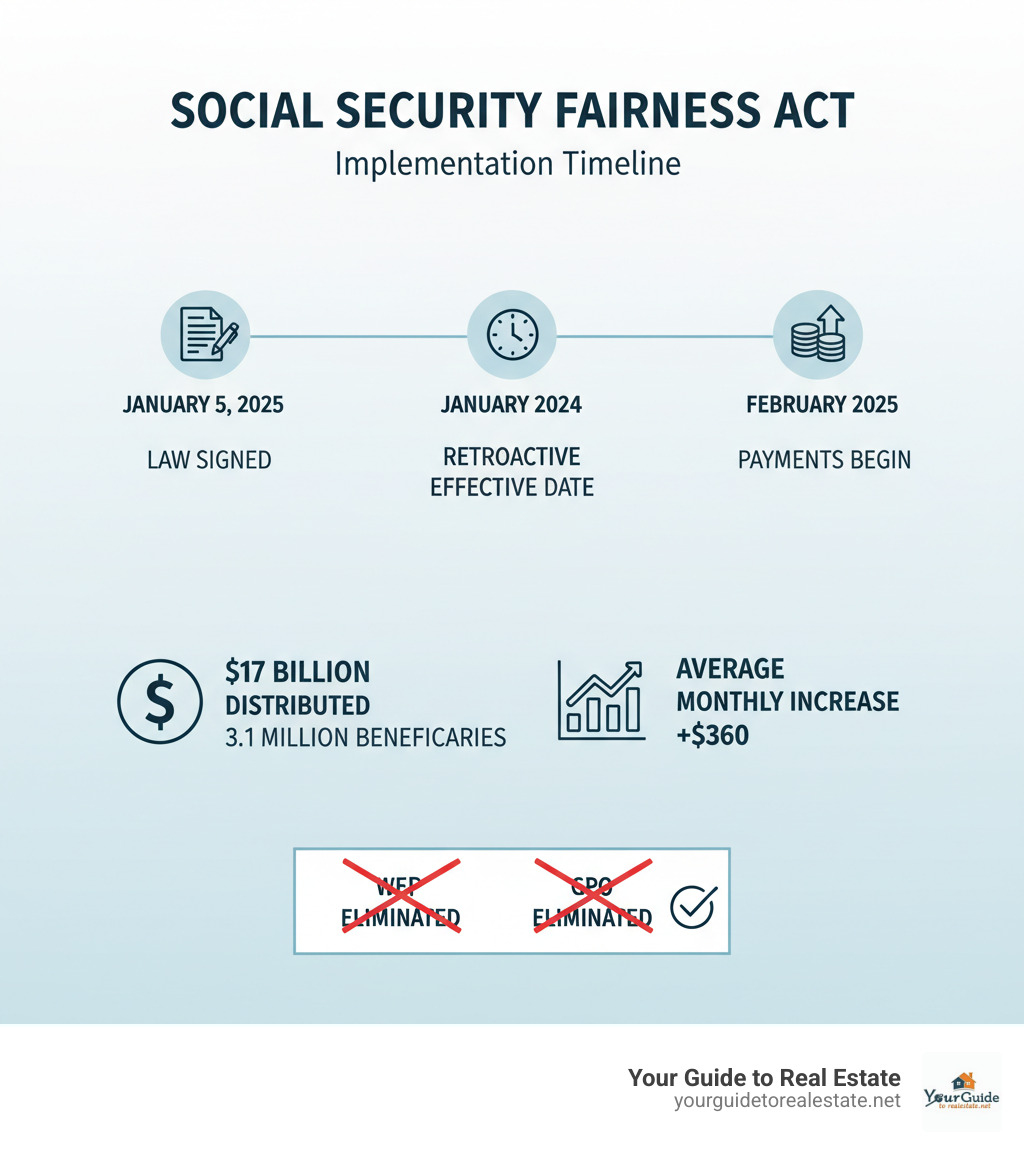
Social Security Fairness Act news has dominated headlines since President Biden signed this landmark legislation into law on January 5, 2025. This historic change affects millions of public servants who have waited decades for fair treatment from the Social Security system.
Key Updates on the Social Security Fairness Act:
- Law Status: Signed into law January 5, 2025, effective retroactively to January 2024
- What Changed: Eliminated the Windfall Elimination Provision (WEP) and Government Pension Offset (GPO)
- Who Benefits: 2.8 million current beneficiaries, including teachers, firefighters, police officers, and federal employees
- Financial Impact: Average monthly increase of $360, with some receiving over $1,000 more per month
- Payments: SSA has already distributed over $17 billion in retroactive payments, 5 months ahead of schedule
- Action Required: Most beneficiaries need to do nothing except verify their contact information with SSA
The Social Security Fairness Act represents the first major expansion of Social Security benefits in decades. It ends two provisions that unfairly reduced benefits for public servants who also worked in jobs covered by Social Security.
For teachers like Sara, who saw her projected $1,800 monthly benefit drop to just $800 due to WEP, this law means getting back the full benefits she earned. The same relief applies to spouses and survivors who lost benefits under GPO rules.
The Social Security Administration has moved quickly to implement these changes. Starting in February 2025, eligible beneficiaries began receiving both their increased monthly payments and lump-sum retroactive payments covering the period since January 2024.
Key terms for social security fairness act news:
- what changes are coming to social security in 2025
- a is a plan in which an individual balances available resources and expenses
- financially free
What is the Social Security Fairness Act and What Does It Change?
The Social Security Fairness Act news represents one of the most significant victories for public servants in decades. When President Biden picked up his pen on January 5, 2025, he wasn’t just signing another piece of legislation – he was correcting a decades-old injustice that had quietly stolen billions of dollars from the very people who dedicated their lives to serving others.

This landmark law does something beautifully simple: it completely eliminates two controversial provisions that have been reducing Social Security benefits for public servants since the 1980s. The Windfall Elimination Provision (WEP) and the Government Pension Offset (GPO) are now officially history.
What makes this even better is that the changes are retroactive to January 2024. That means if you’ve been getting reduced benefits, you’re not only getting your full benefits restored moving forward – you’re also getting back pay for over a year of missed money.
The bipartisan support for this legislation was remarkable. In a time when Congress seems to agree on very little, lawmakers from both parties recognized that these provisions were simply unfair. The House passed it with a vote of 327-75, and the Senate followed with 76-20. That’s what happens when an issue is so clearly right that politics takes a back seat to doing what’s fair.
If you’re wondering what other changes might be coming your way, our comprehensive guide on What Changes Are Coming to Social Security in 2025 covers everything you need to know.
The End of WEP and GPO: Why They Were Controversial
Let’s talk about why these two provisions made so many people angry for so many years. Understanding the Windfall Elimination Provision (WEP) and Government Pension Offset (GPO) helps explain why their elimination is such big news.
The WEP was like a punishment for having two careers. Imagine you spent 20 years teaching (paying into a teacher’s pension but not Social Security) and then worked another 15 years in the private sector (paying into Social Security). When you retired, Social Security’s computers would only see those 15 years of earnings and think, “Oh, this person was a low earner their whole life.” So they’d give you the higher replacement rate that low earners deserve.
But here’s the problem: you weren’t really a low earner. You had good earnings as a teacher that just didn’t show up in Social Security’s records. So WEP would swoop in and reduce your Social Security benefits, sometimes dramatically. A teacher expecting $1,800 a month might suddenly find themselves getting only $800.
The complex calculations made it nearly impossible for people to understand why their benefits were being cut. Many public servants had no idea these reductions were coming until they applied for benefits. Talk about an unwelcome retirement surprise.
GPO was even more heartbreaking because it often affected widows and widowers. If you received a government pension and your spouse died, GPO would reduce your survivor benefits by two-thirds of your pension amount. For many people, this meant getting zero survivor benefits, even though their spouse had paid into Social Security for decades.
Picture a retired teacher whose husband worked in the private sector his whole life. When he passed away, she expected to receive his Social Security survivor benefits. Instead, GPO eliminated them entirely because of her teacher’s pension. She lost not only her husband but also the financial security his Social Security contributions should have provided.
These provisions didn’t just reduce benefits – they created genuine hardship for people who had spent their careers serving the public. Teachers, firefighters, police officers, and postal workers found themselves penalized for their service. The calculations were so confusing that many people couldn’t even understand why they were being punished.
The repeal of these unfair penalties represents a return to basic fairness. Public servants will finally receive the full benefits they’ve earned through their contributions and service. For more updates on Social Security developments, check our Social Security News page.
Who Is Most Affected by This Landmark Law?
The Social Security Fairness Act news brings the biggest smiles to a very specific group of Americans: public sector retirees and their families who have been dealing with reduced benefits for years.
If you’re wondering whether this applies to you or someone you love, here’s who benefits most from this change. Teachers make up a huge portion of those affected, especially in states like Texas, California, and Ohio where many school districts didn’t participate in Social Security. In Ohio alone, about 230,000 people are directly impacted by this law.
Firefighters and police officers who worked for departments with their own retirement systems (separate from Social Security) will also see their benefits restored. These brave men and women often worked second jobs that paid into Social Security, only to have their benefits reduced by WEP when they retired.
Federal employees under the old Civil Service Retirement System (CSRS) represent another large group affected by this change. Unlike newer federal workers who are covered by Social Security, CSRS employees often found their spousal and survivor benefits eliminated by GPO.
Postal workers and other public employees who worked in non-Social Security covered positions round out the main groups seeing benefit increases.
But here’s something really important to understand: not every government worker will see an increase. About 72% of state and local public employees already work in jobs covered by Social Security, so they were never affected by WEP or GPO in the first place. This law specifically helps those who receive pensions from work that wasn’t covered by Social Security.
The impact on spouses and survivors deserves special attention. Many of these individuals saw their benefits completely wiped out by GPO, creating real financial hardship during already difficult times. With the repeal, they can now receive the full spousal or survivor benefits their families earned. Some spouses and survivors could see their monthly benefits increase by an average of $700.
The Social Security Administration has identified approximately 2.8 million current beneficiaries whose lives will be directly improved by this law. That’s 2.8 million people who will have more money in their pockets each month, more financial security in retirement, and less worry about making ends meet.
For detailed information about who’s affected and the technical aspects of the law, the Congressional Research Service report provides comprehensive analysis of the legislation’s impact.
Financial Impact: Increased Benefits and Retroactive Payments
The Social Security Fairness Act news brings more than just headlines—it’s delivering real money back to millions of hardworking Americans. If you’re one of those affected by WEP or GPO, you’ve likely already seen some very welcome changes to your bank account.
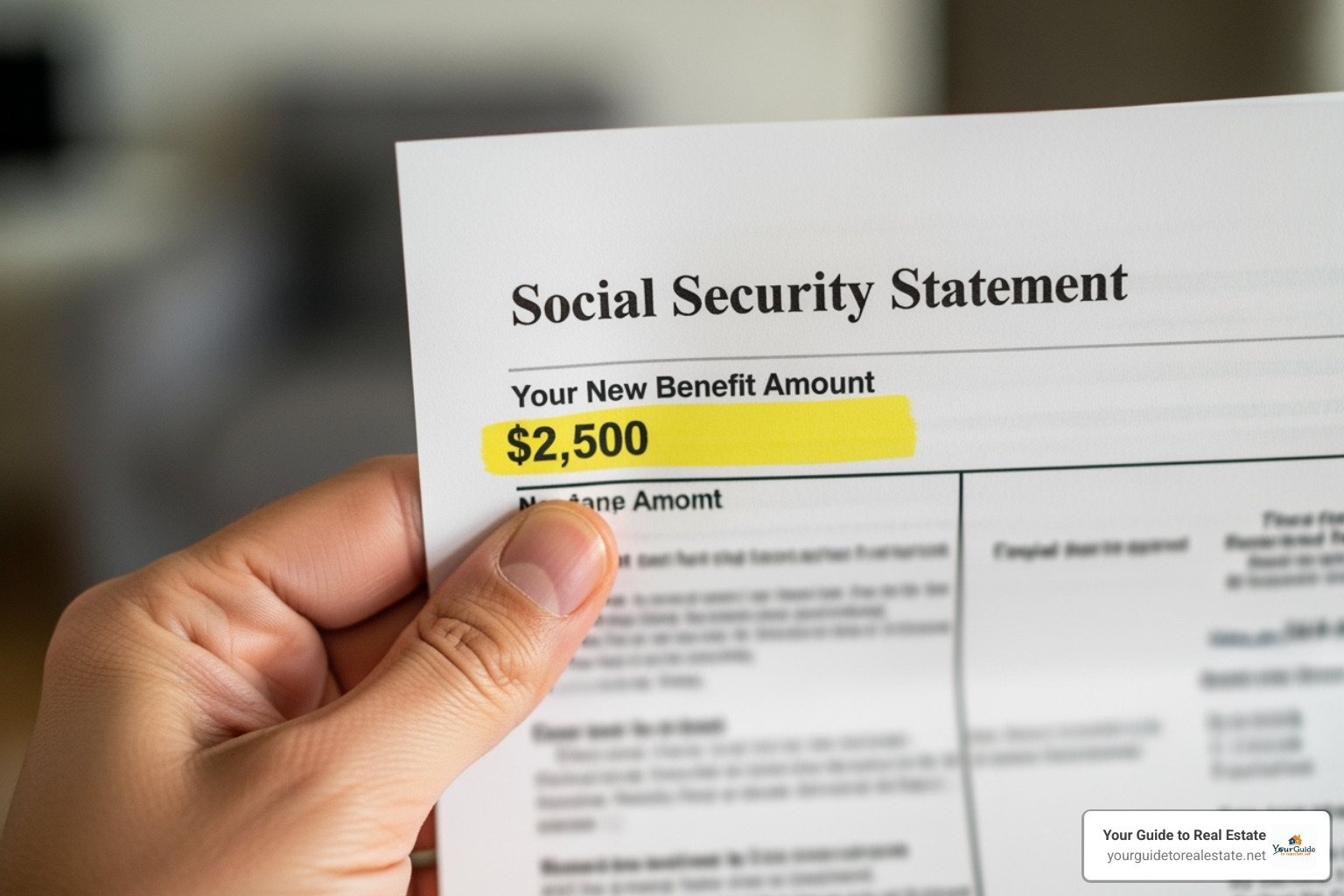
The numbers tell an impressive story. Beneficiaries are seeing an average monthly increase of $360, which adds up to more than $4,300 extra per year. But here’s what makes it even better—some folks are receiving increases of over $1,000 per month. That’s life-changing money for many retirees who have been struggling with reduced benefits for years.
Think about what that means for your monthly budget. Suddenly, you might be able to afford those prescription medications without choosing between pills and groceries. Or maybe you can finally visit your grandchildren without worrying about travel costs.
The Social Security Administration has been working overtime to get this money to people quickly. In what can only be described as a remarkable achievement, they’ve already distributed over $17 billion in retroactive payments—and they did it five months ahead of their original schedule. That’s efficiency you don’t often see from government agencies.
Since the law is retroactive to January 2024, you’re entitled to back payments covering that entire period. Most people have already received both their lump-sum retroactive payment and their new, higher monthly benefits. If you haven’t seen your payment yet, don’t panic—the SSA is still processing applications and payments. You can learn more about the timing in our detailed guide on Social Security Fairness Act Retroactive Payments.
Understanding the Impact on the Social Security Trust Fund
Now, let’s talk about the elephant in the room. While the Social Security Fairness Act news is fantastic for beneficiaries, it does come with a hefty price tag that affects everyone who depends on Social Security.
The Congressional Budget Office crunched the numbers and found that this law will cost about $195 billion over the next 10 years. That’s not pocket change, and it’s sparked some important conversations about Social Security’s future.
Here’s the thing—Social Security was already facing long-term funding challenges before this law passed. Adding nearly $200 billion to the bill could potentially speed up the timeline for when the trust fund might struggle to pay full benefits. Some experts worry this could bring forward the date when Social Security might only be able to pay about 80% of scheduled benefits.
But here’s another way to look at it: this law corrects what many considered a fundamental unfairness. Public servants who dedicated their lives to teaching our children, protecting our communities, and serving our country shouldn’t have their earned benefits arbitrarily reduced.
The debate about Social Security’s long-term sustainability isn’t new, and this law has simply added urgency to finding solutions. Lawmakers will likely need to consider various options in the coming years, from adjusting contribution caps to modifying benefit formulas. For context on other recent Social Security changes, check out our article on the Social Security 2025 COLA Increase.
How Your Medicare Premiums Might Change
Here’s something that might not be on your radar yet—your Medicare premiums could change as a result of your increased Social Security benefits. Don’t worry, this is actually a good problem to have, but it does require some attention.
If your Social Security benefits were previously too low to cover your Medicare Part B premiums, you might have been paying them directly to Medicare or having them deducted from your federal pension. Now that your Social Security benefits have increased, the system wants to streamline things by deducting your Medicare premiums directly from your Social Security check.
The SSA will notify you when they start deducting Medicare premiums from your increased benefits. This is actually more convenient for most people—one less bill to worry about each month.
But here’s the important part: if you’ve been paying Medicare premiums directly, you need to stop those payments once the deductions begin from your Social Security. Otherwise, you’ll be paying twice, which nobody wants.
If you’re using Medicare Easy Pay or your bank’s online bill payment service, you’ll need to cancel those arrangements. The Medicare website has detailed Information on Medicare Easy Pay to help you through this process.
Don’t stress if you accidentally overpay during this transition. Medicare and SSA have systems in place to catch these double payments, and you’ll receive any refund you’re owed. The government might be slow sometimes, but they’re pretty good about not keeping money that isn’t theirs.
The adjustment process might seem complicated, but it’s really just the system catching up to your new, higher benefit amount. Once everything settles, you’ll have fewer bills to manage and more money in your pocket each month.
Your Action Plan: What Beneficiaries Need to Know and Do
If you’ve been following the Social Security Fairness Act news, you’re probably wondering what you need to do next. Here’s the wonderful part: for most people already receiving benefits, the answer is refreshingly simple – almost nothing!

The Social Security Administration has made this transition as smooth as possible. If you’re currently receiving benefits and were affected by WEP or GPO, you don’t need to take any action to receive your improved payments. The SSA automatically adjusts your benefits and issues those much-deserved retroactive payments.
However, there’s one important step we strongly recommend: verify your mailing address and direct deposit information with the SSA. Think of it as making sure your mailbox is ready for good news! This simple check ensures that notices and payments reach you without any hiccups.
The easiest way to do this is through your personal “my Social Security” account. You can check your ‘my Social Security’ account to sign in or create one if you haven’t already. It’s a five-minute task that could save you weeks of worry. For more detailed guidance on this process, check out our Social Security Fairness Act Update.
Applying for Benefits Under the New Law
Here’s where the Social Security Fairness Act news gets really exciting for those who haven’t applied yet. Maybe you looked at your projected benefits years ago, saw how WEP or GPO would slash them, and thought, “Why bother?” Well, it’s time to take another look!
If you never applied due to WEP or GPO, you should absolutely reconsider now. Those provisions that made your benefits seem worthless are gone. You might be eligible for full retirement or spouse’s benefits that you previously couldn’t receive.
Applying online is your best bet for retirement or spouse’s benefits. The process is straightforward at Apply for benefits online here. If you’re married and applying for spouse’s benefits, make sure to select “Family Benefits” – you want to get every dollar you’ve earned!
Survivor benefits work a bit differently. You can’t apply for these online, so you’ll need to call 1-800-772-1213 between 8:00 a.m. and 7:00 p.m., Monday through Friday. Here’s a helpful tip: when the automated system asks “How can I help you today?”, say “Fairness Act.” This magic phrase connects you to a representative who’s specifically trained on WEP and GPO issues.
Timing matters for new applicants. Retroactivity is generally limited to six months before you apply (with some exceptions for disability claims). This means the sooner you apply, the more back payments you might receive. Don’t let procrastination cost you money!
If you’re not sure whether you applied before, or if you think you might now be eligible, the SSA encourages you to apply again. The worst they can say is no, but the best they can say could change your financial future.
Important Social Security Fairness Act News on Implementation
The Social Security Administration deserves real credit for how they’ve handled the Social Security Fairness Act news implementation. They’ve been working around the clock to get money into people’s hands as quickly as possible.
Payments started ahead of schedule. Beginning the week of February 24, 2025, the SSA started adjusting monthly benefits and sending out retroactive payments. They completed over 3.1 million payments totaling $17 billion – five months ahead of their original timeline! That’s the kind of government efficiency we love to see.
Your retroactive payments cover back to January 2024, and most affected folks began seeing their new monthly amounts in April 2025 (for their March benefit). The SSA typically sends two notices in the mail – one confirming they removed WEP or GPO from your record, and another detailing your new payment amount. Don’t worry if your payment arrives before the paperwork does!
The SSA processed 92% of over 278,000 new claims filed since the law took effect. That’s impressive, but it also means some complex cases might need manual attention, which could cause delays. If you have questions about your specific situation, the SSA suggests waiting until April to ask about retroactive payments and until after your April payment for monthly benefit questions. This helps them manage the flood of inquiries.
The SSA has been transparent throughout this process, creating a dedicated webpage and adding special messaging to their phone system. You can see more about their commitment to openness in our article on Social Security Transparency Initiatives.
Beware of Scams: Protecting Your Benefits
Unfortunately, wherever there’s good Social Security Fairness Act news and money changing hands, scammers aren’t far behind. We want to make sure you keep every penny you’re entitled to.
The golden rule: SSA never asks for payment. If someone calls, emails, or texts claiming they can help you get your increased benefits faster for a fee, hang up immediately. The Social Security Administration will never require payment to process, increase, or expedite your benefits. Anyone asking for money is running a scam, plain and simple.
Watch for red flags like unsolicited contact asking for your Social Security number, bank details, or Medicare information. Real SSA representatives won’t threaten you or demand immediate payment. They’re patient, professional people who understand this is your hard-earned money.
If you encounter something suspicious, don’t engage – just hang up or delete the message. You can report suspected scams to the SSA’s Office of the Inspector General at ssa.gov/scams.
For reliable, up-to-date information, always stick to official sources. Visit the official SSA page on the Fairness Act for trusted information. Your financial security is too important to trust to anyone else.
Frequently Asked Questions about the Social Security Fairness Act News
When Social Security Fairness Act news broke, it sparked countless questions from beneficiaries across the country. We’ve been following these developments closely and want to address the most common concerns we’re hearing from people just like you.
How much will my Social Security benefit increase?
This is the question everyone wants answered, and honestly, we wish we could give you a simple number that applies to everyone. The truth is, your increase depends on your unique situation.
The average monthly increase is $360, but that’s just the middle ground. Some folks are seeing smaller bumps in their monthly checks, while others are celebrating increases of over $1,000 per month. Imagine what an extra thousand dollars could mean for your monthly budget!
Your specific increase depends on a few key factors. Your work history plays a big role – specifically, how many years you worked in jobs covered by Social Security and what you earned during those years. The size of your non-covered pension also matters significantly. If you’re receiving spousal or survivor benefits that were affected by GPO, your situation will be different from someone whose own retirement benefits were reduced by WEP.
The best way to find out your exact amount is to check your “my Social Security” account online. The SSA will send you official notices with all the details, but your online account often updates first.
When will I receive my retroactive payment and increased monthly benefit?
Here’s some fantastic news that might surprise you – the SSA has been working faster than anyone expected! They completed sending over 3.1 million payments, totaling a whopping $17 billion, to eligible beneficiaries five months ahead of their original schedule.
If you haven’t received your payment yet, don’t panic. Most affected beneficiaries started seeing their new monthly benefit amounts in April 2025. The retroactive payments cover the period back to January 2024, so depending on when you receive yours, it could be quite substantial.
Your “my Social Security” account is your best friend during this process. It’s often updated before you even receive the mailed notices, so you can see exactly what’s happening with your benefits. Many people have been pleasantly surprised to find deposits in their bank accounts before they even knew the payments were coming!
If you think you should have received something and haven’t, the SSA recommends waiting until April 2025 to inquire about retroactive payments. They’re dealing with millions of cases, and some complex situations need manual review.
Do I need to re-apply for benefits if they were reduced by WEP or GPO?
This might be the easiest question to answer, and it’s great news for most people: you probably don’t need to do anything!
If you’re already receiving Social Security benefits that were reduced by WEP or GPO, the SSA handles everything automatically. They’ll adjust your benefits, send you retroactive payments, and increase your monthly amount without you lifting a finger. Your main job is simply making sure your contact information and direct deposit details are current with the SSA.
However, there’s one important exception. If you never applied for Social Security benefits because WEP or GPO made it seem pointless, now’s the time to reconsider. The Social Security Fairness Act news completely changes the game for people in this situation. You might now be eligible for significant benefits that were previously reduced to almost nothing.
For these new applications, time matters. You can apply online for retirement or spouse’s benefits, or call for survivor benefits. The sooner you apply, the better, because retroactivity rules can limit how far back your benefits start.
The bottom line? If you’re already getting benefits, sit back and let the SSA do the work. If you never applied because of these unfair provisions, it’s time to take action.
Conclusion: A Fairer Future for Public Servants
After decades of waiting, the Social Security Fairness Act news has finally brought justice to millions of dedicated public servants across America. When President Biden signed this landmark legislation into law on January 5, 2025, it marked the end of a long fight for fairness that affected teachers, firefighters, police officers, and countless other public employees who saw their hard-earned Social Security benefits unfairly slashed.
This isn’t just another policy change – it’s restored fairness to a system that had been penalizing the very people who dedicated their careers to serving our communities. The repeal of the controversial Windfall Elimination Provision (WEP) and Government Pension Offset (GPO) means that 2.8 million beneficiaries can finally receive the full Social Security benefits they earned through their years of service and contributions.
The financial relief has been substantial and swift. With average monthly increases of $360 and some beneficiaries seeing over $1,000 more per month, this represents real money that makes a real difference in people’s lives. The Social Security Administration deserves credit for their impressive implementation, processing over $17 billion in retroactive payments five months ahead of schedule. That’s the kind of efficiency that shows how important this change truly was.
What makes this Act truly historic is that it represents the first major expansion of Social Security benefits in decades. It sends a clear message that the contributions of public sector workers matter and that fairness in our retirement system isn’t negotiable.
For those of you receiving these increased benefits, this positive change in your monthly income could open new doors for your financial future. Whether you’re considering downsizing, looking at investment properties, or helping family members with their homeownership dreams, having more stable monthly income strengthens your foundation for making smart real estate decisions.
Moving forward, we encourage you to stay connected with official SSA channels and keep your “my Social Security” account information current. This ensures you’ll continue receiving all the benefits you’re entitled to without any hiccups.
The Social Security Fairness Act proves that sometimes, persistence and advocacy really do pay off. For millions of public servants, retirement just got a little brighter – and that’s news worth celebrating. This positive change in your monthly income could impact your long-term financial goals, like homeownership. Learn more about navigating home loans with our beginner’s guide to mortgages.