

Why Refinancing Your Car Loan Could Save You Thousands
Refinance car loan options are helping drivers across America slash their monthly payments and keep more money in their pockets. Here’s what you need to know:
Quick Answer: Car Loan Refinancing Benefits
- Lower monthly payments – Save $141+ per month on average
- Better interest rates – Rates as low as 4.09% APR for new vehicles
- Faster payoff – Pay off your loan sooner with better terms
- Cash savings – Save nearly $600 on a $20k loan by dropping from 7% to 6% interest
- Simple process – Get approved in as little as 48 hours
If you’re stuck with a high-interest car loan, you’re not alone. Many drivers are paying more than they need to simply because they don’t know about refinancing options.
Car loan refinancing means replacing your current auto loan with a new one – ideally at a lower interest rate or with better terms. It’s similar to refinancing a mortgage, but much faster and simpler.
The numbers tell the story. A customer with a $59,418 loan at 16% interest saved $5,318.45 by refinancing to 10.1% interest. Even after paying $2,490 in fees, they came out thousands ahead.
With rates as low as 4.09% APR and the potential to save hundreds every month, refinancing could be one of the smartest financial moves you make this year.
Refinance car loan terms to learn:
Understanding Car Loan Refinancing: The What, Why, and When

Think of your car loan like a first date that didn’t go well. You were desperate, maybe a little naive, and you said yes to terms that seemed okay at the time. But now? You’ve learned a thing or two, and you deserve better. That’s where a refinance car loan comes in – it’s your chance for a do-over with better terms.
What is a Car Loan Refinance?
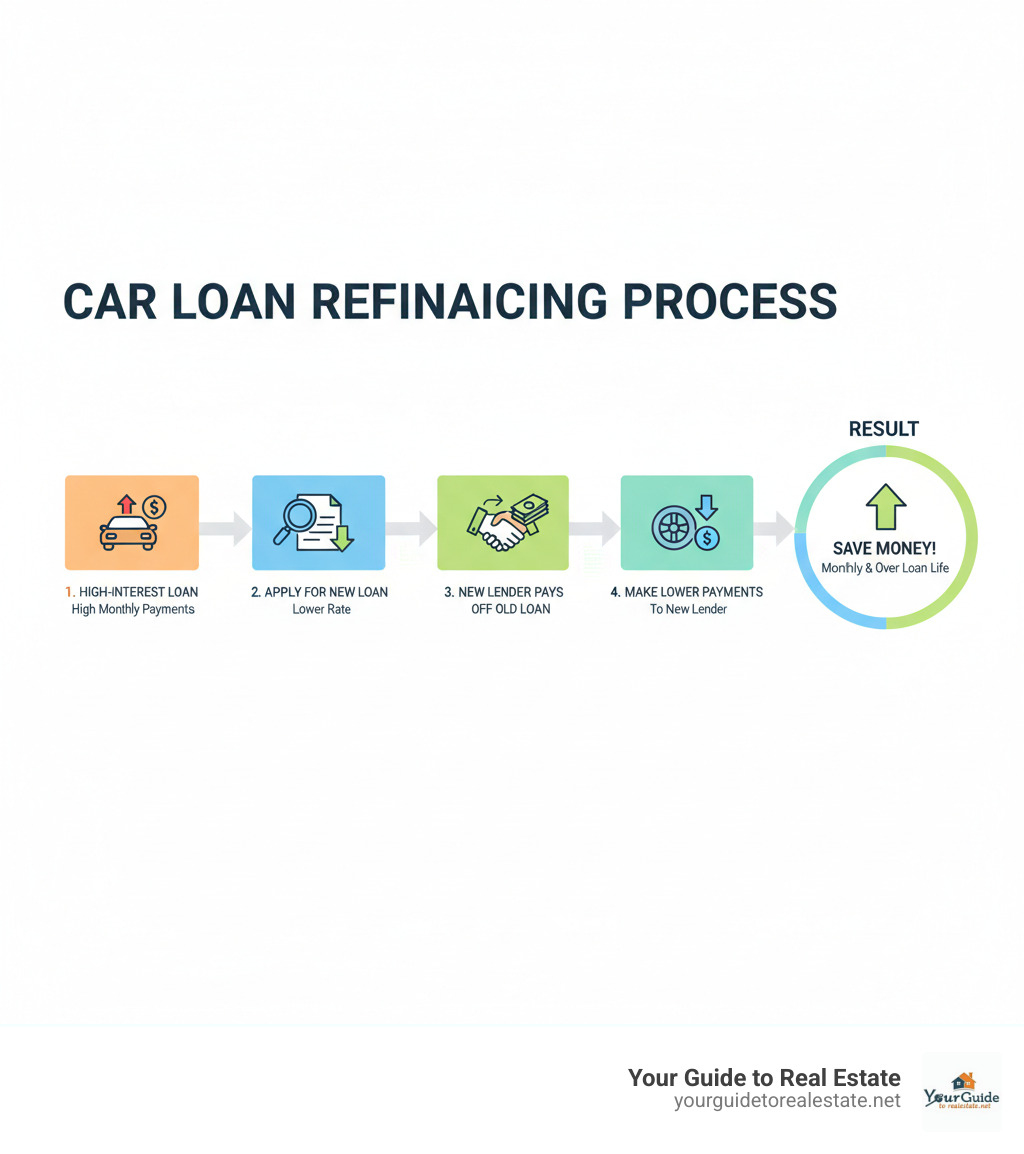
A refinance car loan is simply swapping your current auto loan for a shiny new one with better terms. Here’s how it works: you find a new lender who offers you a better deal, they pay off your old loan completely, and now you make payments to them instead.
It’s basically like breaking up with your current lender and finding someone who treats you better. The new lender takes over your loan balance, and hopefully gives you a lower interest rate, shorter loan term, or reduced monthly payments in the process.
This process works much like Mortgage Refinancing Explained, except it’s way faster and much less paperwork. While mortgage refinancing can take months, car loan refinancing often wraps up in just a few weeks.
Key Benefits: Lower Payments, Better Rates, and More
The magic of refinancing happens when you secure a lower APR than your current loan. Even dropping from 7% to 6% interest can save you nearly $600 over the life of a $20,000 loan. That’s real money back in your pocket.
Lower monthly payments are usually the biggest win. Many drivers save $141 or more each month after refinancing. Imagine what you could do with an extra $150 every month – that’s a nice dinner out, a weekend getaway fund, or just breathing room in your budget.
Some people choose to pay off their loan faster instead of lowering payments. If you refinance to a shorter term with a lower rate, you might keep similar monthly payments but own your car outright much sooner. Plus, you’ll save thousands in total interest over the loan’s lifetime.
There’s also something called a cash-out refinance option if your car is worth more than you owe. This works similarly to Cash-Out Refinancing Explained for homes – you can borrow against your car’s equity and get cash for other needs.
Is Now the Right Time to Refinance?
Timing matters when you refinance car loan debt. The sweet spot usually comes when several factors align in your favor.
Your credit score has improved since you first bought the car. Maybe you’ve paid down credit cards or simply made consistent payments for a while. If your score has jumped significantly, lenders will see you as less risky and offer better rates.
Market interest rates have dropped below what you’re currently paying. Interest rates change constantly, and what seemed like a good deal two years ago might look expensive today. With rates as low as 4.09% APR available for new vehicles, it’s worth checking what you could qualify for now.
Your financial situation has changed for the better. Perhaps you got a promotion, paid off other debts, or your income has increased. These changes can help you qualify for better terms than when you first financed your vehicle.
The timing also depends on where you are in your loan. You’ll want at least 6-12 months of payment history to show lenders you’re reliable. But you also need several years left on your current loan to make refinancing worthwhile. If you only have a year left, the savings probably won’t justify the effort.
The bottom line? If any of these situations sound familiar, it might be time to circle that date on your calendar and start shopping for better terms.
Are You Eligible? Requirements for a Car Loan Refinance

Before you get excited about those potential savings, let’s make sure you’re eligible for a refinance car loan. Think of this as a friendly pre-screening – just like when you’re house hunting and need to know if you qualify for a mortgage before falling in love with a property.
The good news? Most people with decent credit and a reliable car can refinance. But lenders do have some specific boxes they need you to check, both for your vehicle and your personal finances.
Lender Requirements for Your Vehicle and Loan
Your car needs to meet certain standards before lenders will consider refinancing. It’s not personal – they just want to make sure they’re lending on something that holds its value.
Vehicle age is usually the first hurdle. Most lenders won’t refinance cars that are 10 years old or older, though some are even stricter at around 5 years. If your car is pushing 20 years, it might be considered a classic, which falls into a completely different category.
Mileage matters too. Many lenders set limits around 120,000 to 125,000 miles. If you’re looking at longer loan terms (more than 72 months), some lenders get pickier about mileage, sometimes capping it at just 7,500 miles.
The loan balance needs to hit that Goldilocks zone – not too big, not too small. For example, Chase wants to see loan balances between $4,000 and $100,000, while other services like RefiJet work with amounts from $5,000 to $150,000.
Here’s something important: branded titles are deal-breakers. If your car has a salvage, branded, or bonded title (meaning it was in a serious accident or flood), lenders typically won’t touch it. They want clean titles only.
The loan-to-value ratio is where things can get tricky. This compares what you owe to what your car is actually worth today. If you owe way more than the car’s value, refinancing becomes much harder.
Checking Your Credit Score and Financial Health
Now let’s talk about you. Your financial health is just as important as your car’s condition when it comes to getting approved for a refinance car loan.
Your FICO score is the star of the show here. While you can get approved with fair or poor credit, having a score of 670 or higher opens up the best rates and terms. Think of it as your financial report card – the better the grade, the better the deals.
Lenders want to see stable income because they need confidence you’ll make those monthly payments. Some services require minimum incomes like $1,900 for single applicants or $2,200 for couples. It’s not just about how much you make, though – they also look at your debt-to-income ratio to make sure you’re not already stretched too thin.
Here’s something that trips people up: there are hard and soft credit pulls. When you’re shopping around for pre-qualified offers, that’s usually a soft pull that won’t hurt your credit score. But once you formally apply, expect a hard inquiry that might ding your score by a few points temporarily.
Before you do anything else, check your credit for free. You can get your free credit report from AnnualCreditReport.com from all three major bureaus. Make sure everything looks accurate – you’d be surprised how often there are errors that could be hurting your score.
Pro tip: If you have a credit freeze (which is smart for security), remember to unfreeze it with all three bureaus before applying, or your application might get stuck in limbo.
What to Do with Negative Equity
Here’s where things get a bit more complicated. If you have an upside-down loan – meaning your car is worth less than what you owe – you’re dealing with negative equity. It’s like being underwater on a mortgage, but with a depreciating asset.
This situation makes refinancing challenging because lenders don’t love lending more money than the collateral is worth. But don’t panic – you have options.
Some lenders will let you pay the difference upfront. If you owe $15,000 but your car is only worth $12,000, you could pay that $3,000 gap to bring the loan amount down to match the car’s value. It’s a chunk of change, but it might be worth it for the long-term savings.
Often, the smartest move is to wait for positive equity. Keep making your regular payments (or even extra payments) until your car’s value catches up to what you owe. It requires patience, but it’s usually the most financially sound approach.
Just like tracking property values in real estate (similar to Valuation and Market Analysis in Real Estate), you can monitor your car’s value using online tools to see when you might break even. Once you have positive equity, refinancing becomes much more straightforward.
The 5-Step Process to Refinance Your Car Loan

Ready to refinance car loan and start saving money? Great news – the process is much simpler than you might think. We’ve helped countless people steer this journey, and we’ll walk you through each step so you feel confident and prepared.
Think of refinancing like moving to a better apartment. You’re essentially switching from one lender to another for better terms. The new lender pays off your old loan, and you start fresh with (hopefully) a lower payment and better rate.
Step 1: Gather Necessary Documents
Before you start shopping around, let’s get your paperwork organized. Having everything ready upfront will make the process smooth and prevent frustrating delays later.
You’ll need your driver’s license as proof of identity – pretty straightforward. For income verification, gather your two most recent pay stubs or tax returns. If you’re self-employed, bank statements work too. Don’t forget proof of residence like a utility bill showing your current address.
Here’s where it gets car-specific: you’ll need your vehicle registration and title documents. These prove you own the car and provide all the details lenders need. Your current loan statement is crucial too – it shows your payment history and current balance.
The most important document? Your 10-day payoff amount from your current lender. This tells the new lender exactly how much they need to pay to close out your old loan. Call your current lender to get this precise figure, as it includes any interest that will accrue.
Step 2: Shop Around and Compare Offers
This is where the magic happens – and where you can save the most money. Never settle for the first offer you receive. Shopping around could mean the difference between saving $50 per month or $150 per month.
Banks like Chase and Bank of America offer competitive rates, especially if you’re already a customer. Credit unions often provide the sweetest deals because they’re member-owned. Navy Federal, Civic Credit Union, and similar institutions frequently offer the lowest rates and sometimes throw in perks like cash-back bonuses.
Online lenders like Caribou and RefiJet can be game-changers. They compare offers from 30+ lenders in minutes, doing the heavy lifting for you. Many offer pre-qualification with just a soft credit check, so you can see potential rates without affecting your credit score.
Don’t just look at the monthly payment – that can be misleading. Compare the Annual Percentage Rate (APR), which includes interest and fees for the true cost. Consider different loan terms too. A 60-month loan might have a higher payment than a 72-month loan, but you’ll pay less interest overall.
Use a Car payment calculator to crunch the numbers and see your potential savings. Ask about any sneaky fees like application charges or prepayment penalties that could eat into your savings.
Step 3: Submit Your Application
Found a great offer? Time to make it official. The application process today is surprisingly quick and mostly online.
You’ll fill out an online application with your personal details, income information, and everything about your vehicle. If you have a co-owner on your car title, they’ll need to apply with you – both names on the title means both people need to be part of the refinancing.
Here’s what to expect: submitting your formal application triggers a hard credit inquiry. This might ding your credit score by a few points temporarily, but don’t worry too much. If you complete all your loan shopping within 14 days, credit scoring models typically count multiple auto loan inquiries as just one.
Most online lenders and credit unions can give you an approval decision within hours, sometimes even minutes. It’s much faster than the Loan Process for Buying a House, which can take weeks.
Step 4: Close the Loan and Pay Off Your Old Lender
You’re in the home stretch! This final step seals the deal and officially moves you to your new, better loan.
Take time to review your loan agreement carefully. Make sure the APR, monthly payment, and loan term match what you were promised. If something looks off, speak up before signing. Once you’re satisfied, you’ll sign the documents – usually electronically, which makes everything faster.
Here’s the beautiful part: your new lender handles paying off your old lender. You don’t have to coordinate between two financial institutions or worry about timing. They send the payoff amount directly to your old lender, typically within 1-2 weeks of approval.
The title transfer process happens behind the scenes too. Your new lender becomes the lienholder on your vehicle’s title, replacing the old lender. This paperwork dance can take 30-60 days depending on your state’s DMV, but you don’t have to manage it.
Just make sure you submit any required ownership documents to your new lender within their timeframe – usually around three months. Some lenders might adjust your APR if you don’t provide these documents promptly, so stay on top of this final detail.
Weighing the Pros and Cons of Refinancing
Making smart financial decisions means looking at the full picture. While a refinance car loan can put serious money back in your pocket, it’s important to understand both the benefits and potential drawbacks before moving forward.
Calculating Your Potential Savings
The numbers tell a compelling story, and they’re often the biggest reason people decide to refinance their car loans.
Let’s look at a real example that shows just how much you could save. If you currently have a $20,000 loan with a five-year repayment term at 7% interest, refinancing to just 6% interest could save you nearly $600 in total interest charges over the life of the loan. That one percentage point difference might seem small, but it adds up quickly.
The monthly savings can be even more impressive. Many people who refinance car loan agreements report saving $141 per month or more on their car payments. Some see average monthly reductions around $150, which means you’re putting over $1,600 back in your pocket every year. Imagine what you could do with that extra cash flow – maybe finally start that emergency fund or tackle other high-interest debt.
Here’s what makes these savings so powerful: you’re not just reducing your monthly payment, you’re also cutting down the total cost of your loan. Less money goes to the lender over time, which frees up your budget for the things that matter most to you and your family.
Potential Risks and Downsides to Consider
Now, let’s be honest about the potential downsides. Refinancing isn’t always the perfect solution for everyone, and being aware of these risks will help you make the best choice for your situation.
Extending your loan term is probably the biggest trap to watch out for. Yes, stretching out your payments will lower your monthly bill, but it almost always means you’ll pay more in total interest over the life of the loan. Think about it this way: if you have two years left on your current loan and you refinance into a new four-year loan, you’re essentially paying interest for six total years instead of four.
Prepayment penalties on your current loan can also eat into your savings. Some lenders charge a fee if you pay off your loan early, so it’s worth checking your original loan contract before you get too excited about refinancing.
While many lenders advertise no fees, some new loans might include origination fees or other administrative costs. Your state might also impose title transfer fees when the new lender becomes the lienholder on your vehicle. These costs are typically rolled into your new loan amount, but they’re still something to factor into your decision.
There’s one more thing that catches people off guard: if you purchased GAP insurance or an extended warranty with your original loan, these products might not transfer to your new refinanced loan. You’d need to purchase new coverage, which adds to your overall cost.
How Refinancing Your Car Loan Affects Your Credit Score
If you’ve been working hard to build your credit score, you’re probably wondering how refinancing might impact all that progress. The good news is that the effects are generally minor and temporary.
When you apply for your new loan, you’ll get a hard credit inquiry on your credit report. This typically causes a small, temporary dip in your credit score – usually just a few points. The impact is short-lived and shouldn’t cause major concern.
Opening a new account also lowers the average age of your credit accounts. Since longer account history is generally viewed favorably, this could have a very minor negative effect initially.
But here’s the silver lining: the long-term benefits usually far outweigh these temporary bumps. When you secure a better rate and manage your new loan responsibly, you’re setting yourself up for credit success. Making consistent, on-time payments on your more affordable loan is one of the most powerful ways to improve and maintain a healthy credit score. Your positive payment history will quickly outweigh that temporary dip from the credit inquiry.
The bottom line? If refinancing saves you money and makes your monthly budget more manageable, the minor short-term impact on your credit score is usually worth it.
Frequently Asked Questions about Car Loan Refinancing
We know that considering a refinance car loan can bring up plenty of questions. After helping countless people steer financial decisions (just like we do with real estate), we’ve heard these questions time and time again. Let’s clear up the most common concerns.
Are there fees associated with refinancing a car loan?
This is hands down the most important question to ask any lender you’re considering. The good news? Many lenders have gotten pretty competitive about keeping fees low or eliminating them entirely.
Application fees are becoming increasingly rare. Most reputable lenders, especially credit unions, proudly advertise that they don’t charge you just to apply. That’s a win right there.
Origination fees are where you need to pay attention. Some lenders might charge a processing fee for setting up your new loan. It’s not universal, but it’s worth asking about upfront. A simple “Do you charge any origination fees?” can save you from surprises later.
Here’s something many people forget about: prepayment penalties from your current lender. This isn’t a fee from your new lender – it’s your existing lender charging you for paying off your loan early. Check your current loan paperwork before you start the refinancing process.
State title fees and taxes are the unavoidable ones. These are government charges, not lender fees. The silver lining? Your new lender typically rolls these into your loan amount and handles all the paperwork for you.
The key is getting everything in writing before you sign. A good lender will be completely transparent about any costs involved.
Can I refinance a car loan from any lender?
Absolutely! That’s the whole point of shopping around for a refinance car loan. You’re looking for a new financial institution that can offer you better terms than your current one.
There’s just one quirky rule to remember: you generally can’t refinance with your current lender. It’s like asking your current employer to compete against themselves for your services. Chase, for example, won’t refinance a loan that’s already with them. It makes sense when you think about it – they’d essentially be negotiating against themselves.
This rule actually works in your favor. It forces you to shop around with different banks, credit unions, and online lenders. Competition is your friend here, and it often leads to better deals than you might have gotten otherwise.
How long does the car loan refinancing process typically take?
Here’s where car loan refinancing really shines compared to other types of refinancing. It’s refreshingly fast and straightforward.
Getting approved can happen incredibly quickly. Many online lenders and credit unions can give you a decision within minutes or hours. Even the more traditional lenders usually respond within a couple of business days. It’s nothing like the weeks-long approval process you might expect from a mortgage.
Document submission is where your preparation pays off. If you’ve gathered all those documents we mentioned earlier (pay stubs, vehicle registration, current loan statement), this step can be wrapped up in just a few days.
The lender payoff happens pretty smoothly too. Once you’ve signed your new loan documents, your new lender typically pays off your old lender within one to two weeks. You’ll start making payments to your new lender during this time.
Title transfer is the longest part of the whole process, and it’s mostly just waiting for government paperwork. Your state’s Department of Motor Vehicles needs to update their records to show your new lender as the lienholder. This can take anywhere from 30 to 60 days, depending on how efficient your local DMV is.
From start to finish, you’re looking at about 30-60 days for complete processing. The best part? You’ll start enjoying your lower payments long before all the paperwork is finalized. It’s similar to the Loan Process for Buying a House, but much faster and with far less stress involved.
Conclusion
Think of your car loan the same way you’d think about any major financial decision – it deserves your attention and care. A refinance car loan isn’t just about getting a lower payment; it’s about taking control of your financial future and making your money work smarter, not harder.
The numbers speak for themselves. When you can potentially save $150 or more each month and thousands of dollars over the life of your loan, refinancing becomes more than just an option – it becomes a smart financial strategy. Whether you’re looking to free up cash flow for other goals, pay off your car faster, or simply reduce the burden of high-interest debt, refinancing puts you in the driver’s seat.
But here’s the thing: knowledge is power, and research is your best friend. Take the time to compare offers from different lenders, understand all the terms and fees, and make sure the numbers truly work in your favor. Don’t rush into the first offer you see – shop around like you would for any major purchase.
At Your Guide to Real Estate, we believe that financial literacy extends beyond just real estate. The same principles that help you make smart decisions about buying or selling a home apply to managing all your major financial commitments. When you master one area of your finances, it creates a ripple effect that strengthens your entire financial foundation.
Taking control of your auto loan is just one piece of building your financial confidence. If you’re ready to tackle another major area of your financial life, dive into our comprehensive guide: Understanding Mortgages: A Beginner’s Guide to Home Loans.
Every dollar you save on interest is a dollar that stays in your pocket. Your financial journey is unique to you, but you don’t have to steer it alone. We’re here to provide the guidance and insights you need to make confident, informed decisions every step of the way.