
Why Choosing the Right Real Estate License School Matters for Your Success
A real estate license school is your gateway to a new career, and the one you choose will determine how well you’re prepared for the licensing exam and your future success.
The path to getting your license involves a few key steps:
- Complete pre-licensing education from an approved school.
- Pass the state licensing exam to demonstrate your knowledge.
- Find a brokerage to work with.
- Apply for your license with your state’s regulatory body.
- Purchase professional insurance, like errors and omissions coverage.
The process varies by state, but it generally requires completing pre-licensing education—often around 90 hours. While some states allow for completion in as little as 54 days, most schools give you up to a year to finish your courses.
Your choice of school impacts more than just passing the exam. As one industry expert noted, “Pre-licensing education often leaves gaps that new agents need to fill to achieve success.” The best schools offer comprehensive curriculum, experienced instructors, and ongoing career support. Whether you prefer a flexible online program or in-person classes, choosing an effective program is the first step toward building a successful career.
Basic real estate license school vocab:
Understanding the Path to Licensure: What to Expect Before You Enroll
Getting your real estate license is a well-structured journey. Understanding what to expect will help you plan better and avoid surprises.
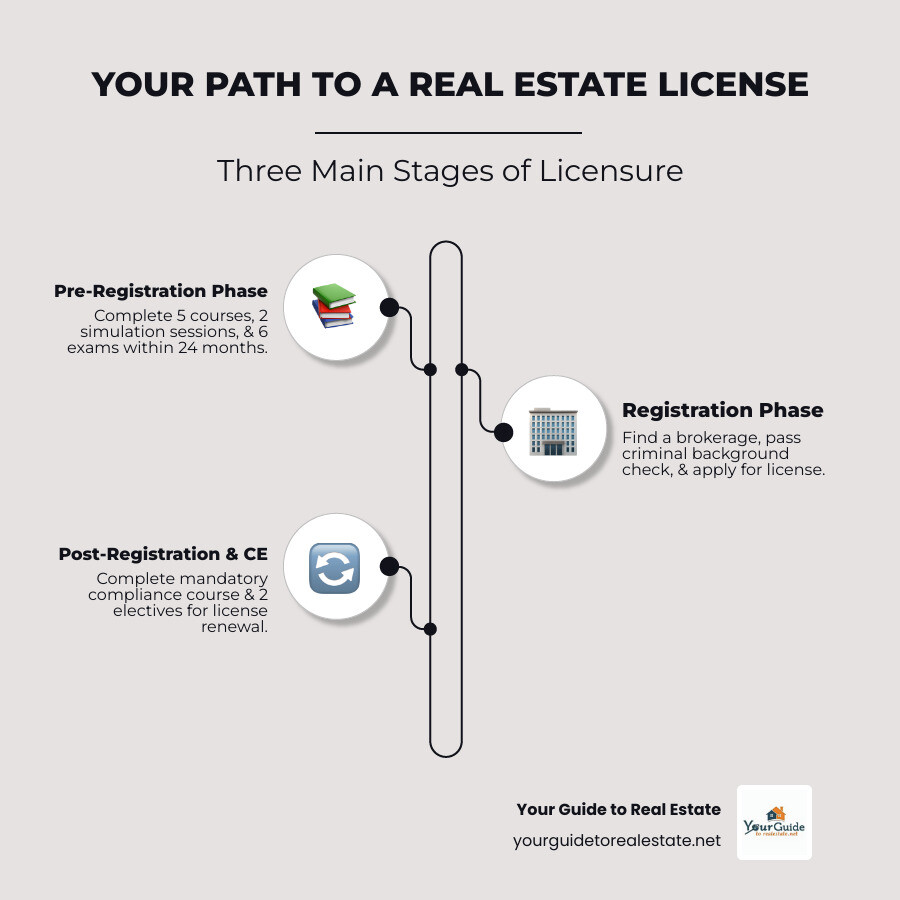
Think of becoming a licensed professional as a three-phase adventure. State regulatory bodies, like California’s Department of Real Estate (DRE), aren’t there to make your life difficult—they exist to protect consumers by ensuring all agents meet solid educational and ethical standards.
The journey breaks down into three main stages: first, you’ll tackle your pre-licensing education (this is where your real estate license school comes in). Then comes the registration process, where you’ll handle background checks and find a brokerage. Finally, there’s the ongoing education phase that keeps you sharp and compliant throughout your career.
For a complete roadmap of what’s ahead, check out our detailed guide on How to Get a Real Estate License.
The Pre-Registration Phase: Your Educational Foundation
This is where you build the knowledge base for your entire career. The good news is that admission requirements are usually straightforward. In most states, you just need to be at least 18 years old and a legal resident.
The coursework is the core of your training. In California, for example, you must complete three approved courses in subjects like Real Estate Principles and Real Estate Practice. While the program can be completed in as little as 54 days if you’re motivated, most people take longer to absorb the material. You typically have up to a year from enrollment to finish.
These courses aren’t just about passing an exam. You’re learning real estate laws, understanding complex transactions, and developing an ethical foundation. Some programs include simulation sessions, which are valuable for practicing real-world scenarios in a safe learning environment.
The Registration Phase: Becoming Official
Once you’ve completed your education, it’s time to become an official, licensed professional. This phase is all about finalizing the details with your state’s regulatory body.
An important requirement is finding a brokerage to work with. You can’t operate independently as a new agent. Your brokerage serves as your professional home base, providing guidance, resources, and the legal framework you need.
A criminal record check is also a standard part of the process. This is about transparency and consumer protection. Regulatory bodies need to assess your suitability for registration, which is reasonable given you’ll be handling major financial transactions.
Once your application is approved, you’ll need professional liability insurance. This often includes errors and omissions coverage, which is your safety net in a profession where large sums of money change hands.
The Post-Registration & Continuing Education Phase
Getting your license is just the beginning of your learning journey. Real estate is constantly evolving, and staying current is required by law.
Your first renewal requirements will likely include completing a certain number of hours of continuing education within your initial two-year license cycle. This might involve a mix of mandatory compliance courses and electives.
Lifelong learning in real estate isn’t just about checking boxes. It’s about staying competitive, serving clients better, and keeping the work interesting. Markets change, laws evolve, and client expectations shift. The agents who accept ongoing education are the ones who build lasting, successful careers.
As we discuss in our guide on the Benefits of continuing education for real estate professionals, this commitment to learning is what separates good agents from great ones.
Key Factors for Choosing the Best Real estate license school
Choosing the right real estate license school is a critical decision. It’s not just about passing an exam—it’s about building a solid foundation for your career.

With so many online and in-person options, focus on what matters most: accreditation from your state’s regulatory body, genuine student reviews, strong exam pass rates, and comprehensive career support that extends beyond graduation.
The best schools know that getting licensed is just the beginning. Many top programs offer New Agent Acceleration Programs to bridge the gap between classroom learning and real-world practice. These often include mentorship, expert-led classes, and help creating a business plan.
Curriculum and Course Structure
A great real estate license school is built on its curriculum. You want a program that prepares you for the day-to-day realities of the job. A strong curriculum covers core subjects like Real Estate Principles (property ownership, contracts) and Real Estate Practice (listings, disclosures, client work). Many programs also offer electives in areas like property management.
The quality of exam prep materials is crucial. Look for schools that provide ample practice questions, mock exams, and review sessions. These resources help you get comfortable with the exam format and boost your confidence. Don’t overlook the importance of state-specific content, as local laws vary significantly.
Learning Formats: Online vs. In-Person
The choice between online and in-person learning depends on your lifestyle and learning style. Both can be excellent options.
| Feature | Online Real Estate Schools | In-Person Schools |
|---|---|---|
| Flexibility | Study anytime, anywhere at your own pace | Fixed schedules and classroom locations |
| Self-Paced Learning | Complete coursework when it fits your schedule | Follow structured timeline with deadlines |
| Cost-Effectiveness | Often more affordable with lower overhead costs | May include additional facility and material fees |
| Networking Opportunities | Limited to online forums and virtual events | Direct interaction with classmates and instructors |
| Direct Interaction | Email, chat, or scheduled virtual sessions | Immediate Q&A and informal discussions |
| Structured Schedule | Requires strong self-discipline and motivation | Built-in accountability with regular class meetings |
Many schools now offer hybrid models, combining online coursework with live webinars or in-person workshops. Online courses offer incredible convenience, but success requires self-discipline. In-person classes provide structure and valuable networking opportunities.
Instructor Quality and Post-Licensing Support
Great instructors are experienced professionals who share real-world insights beyond the textbook. Look for a real estate license school where instructors are active in the field.
Post-licensing support is where the best schools shine. Look for mentorship programs with dedicated mentors, often top-producing agents who provide personalized guidance. Alumni networks are also valuable, offering a built-in support system and referral sources. Some schools provide career services like resume building and help finding a brokerage.
These support systems matter because pre-licensing education doesn’t cover everything. For more insight into how brokerages work, check out our guide What is a Real Estate Brokerage: A Beginner’s Complete Guide.
Cost and Value: What to Budget For
Focus on the value of your investment, not just the sticker price. Program fees typically range from a few hundred to over a thousand dollars. Some programs offer a pay-as-you-go model, while others have package deals.
Don’t forget to budget for additional costs beyond tuition, such as exam fees, background checks, license application fees, and professional insurance. Look for schools that offer money-back guarantees, which show they stand behind their program quality. Investing in a school with excellent instruction and strong career support will pay for itself many times over. For a detailed breakdown of expenses, visit our article on Real Estate License Cost.
Beyond the Classroom: Preparing for a Successful Real Estate Career
Earning your license from a real estate license school is the starting line. The classroom teaches you the rules, but the real world is where you learn to win.
There’s often a gap between pre-licensing courses and what you need to succeed. Successful new agents understand they’re starting a business. This means developing skills like building a business plan, creating a personal brand, generating leads, and mastering client relationships. Some brokerages offer specialized programs to help new agents develop these crucial entrepreneurial habits.
Finding the Right Brokerage to Join
Choosing your first brokerage is a major decision that will impact your training, support, and income. You’ll encounter independent brokerages, which often offer a close-knit culture, and franchise brokerages, which provide national brand recognition and established systems. Neither is inherently better; it depends on your goals. Our guide on Independent vs. Franchise Real Estate Brokerages: Which One Is Right For You? can help you decide.
When interviewing brokerages, look for:
- Compensation Structure: Understand commission splits, desk fees, and other costs.
- Training Programs: The best brokerages offer ongoing mentorship and skill development beyond what you learned in school.
- Company Culture: Find a supportive environment where you can thrive.
- Technology and Marketing: The right tools can make a huge difference in your success.
Don’t rush this decision. For more specific guidance, check out our article on Top 5 Things to Look For When Choosing a Real Estate Brokerage as a New Agent.
Salesperson vs. Broker: Planning Your Career Path
Most people begin as real estate salespersons (or agents), but many eventually become real estate brokers.
A salesperson works directly with clients on transactions under a broker’s supervision, developing core skills and market knowledge. A broker can work independently, open their own brokerage, and hire other agents. With this independence comes greater responsibility, including overseeing transactions, ensuring legal compliance, and managing a team.
The income potential for brokers can be higher, but it comes with the challenges of running a business. Broker license requirements are more demanding, typically requiring two to three years of experience as a salesperson, completion of advanced education courses, and passing a more comprehensive broker exam.
Starting as a salesperson is the natural first step. After gaining experience, you can decide if pursuing a broker’s license aligns with your long-term goals. Our Real Estate Broker License Complete Guide provides comprehensive details on making this transition.
Frequently Asked Questions about Real Estate Education
Starting your real estate journey brings up many questions. Here are answers to the most common ones we receive.
How long does it take to complete a real estate license school program?
The timeline depends on your state and your personal pace. In California, for example, the Department of Real Estate requires each course to take at least 18 calendar days. With three required courses, the minimum time is 54 days. However, most schools give you up to a full year to finish, offering flexibility.
Remember to factor in time for studying, passing the exam, and application processing, which can take several weeks. Realistically, you should plan on three to six months from starting your first course to holding an active license. For a complete timeline breakdown, see our guide on How Long Does It Take to Get a Real Estate License?.
Can I get a real estate license with a criminal record?
Having a criminal record doesn’t automatically disqualify you, but it does require a thorough review. Regulatory bodies like California’s DRE take consumer protection seriously and require every applicant to undergo a background check.
They conduct a “suitability assessment,” considering factors like the type of offense, how long ago it occurred, and your behavior since. Financial crimes are typically viewed more seriously. The most important thing is to be completely honest on your application. Trying to hide past issues will likely cause more problems than disclosing them upfront. Many successful professionals have overcome past mistakes by demonstrating their commitment to ethical conduct.
What should I look for in an online real estate license school?
Choosing an online real estate license school requires careful consideration. Here’s what to look for:
- State Approval: This is non-negotiable. Ensure the program is approved by your state’s real estate commission.
- Flexibility: Look for 24/7 access to materials, self-paced learning, and generous completion timelines.
- Exam Preparation: The best schools offer extensive practice questions, mock exams, and pass guarantees.
- Instructor Support: You should have clear ways to contact qualified instructors with questions.
- Student Testimonials: Look for reviews that mention feeling prepared for a real estate career, not just passing the exam.
- Transparent Cost: Understand the complete cost, including any package deals or additional fees.
The right online school will help you pass your exam and give you the confidence to start your career.
Conclusion
Choosing the right real estate license school is one of the most important investments you’ll make in your future. It’s the foundation upon which your entire career will be built, shaping not just whether you pass the exam, but how well you’ll thrive as an agent.
We’ve walked through the journey from pre-licensing education to continuing education, highlighting how regulatory bodies like the DRE ensure quality standards. The best schools go beyond test prep; they understand that pre-licensing education often leaves gaps and work to fill them. They offer experienced instructors, flexible learning options, and robust career support that continues long after you’re licensed.
As you evaluate your options, look closely at the curriculum, learning formats, instructor quality, and post-licensing support. The most successful agents often come from schools that provide proven frameworks and stress-free guidance, bridging the gap between classroom theory and the real world of real estate.
Your real estate career is waiting. Check out our comprehensive Become a Real Estate Agent Guide for more insights. As you plan your path, don’t forget to explore how a modern virtual brokerage can support your new career with the flexibility and resources today’s agents need.