

Why Marketing Fundamentals Matter More Than Ever
Marketing fundamentals are the core principles for attracting and keeping customers. For real estate professionals, these timeless concepts—understanding your customers, creating value, and using the right strategies—are essential.
Here are the essential marketing fundamentals every real estate professional should know:
- Customer-centricity: Put your clients’ needs first
- Value proposition: Clearly communicate what makes you different
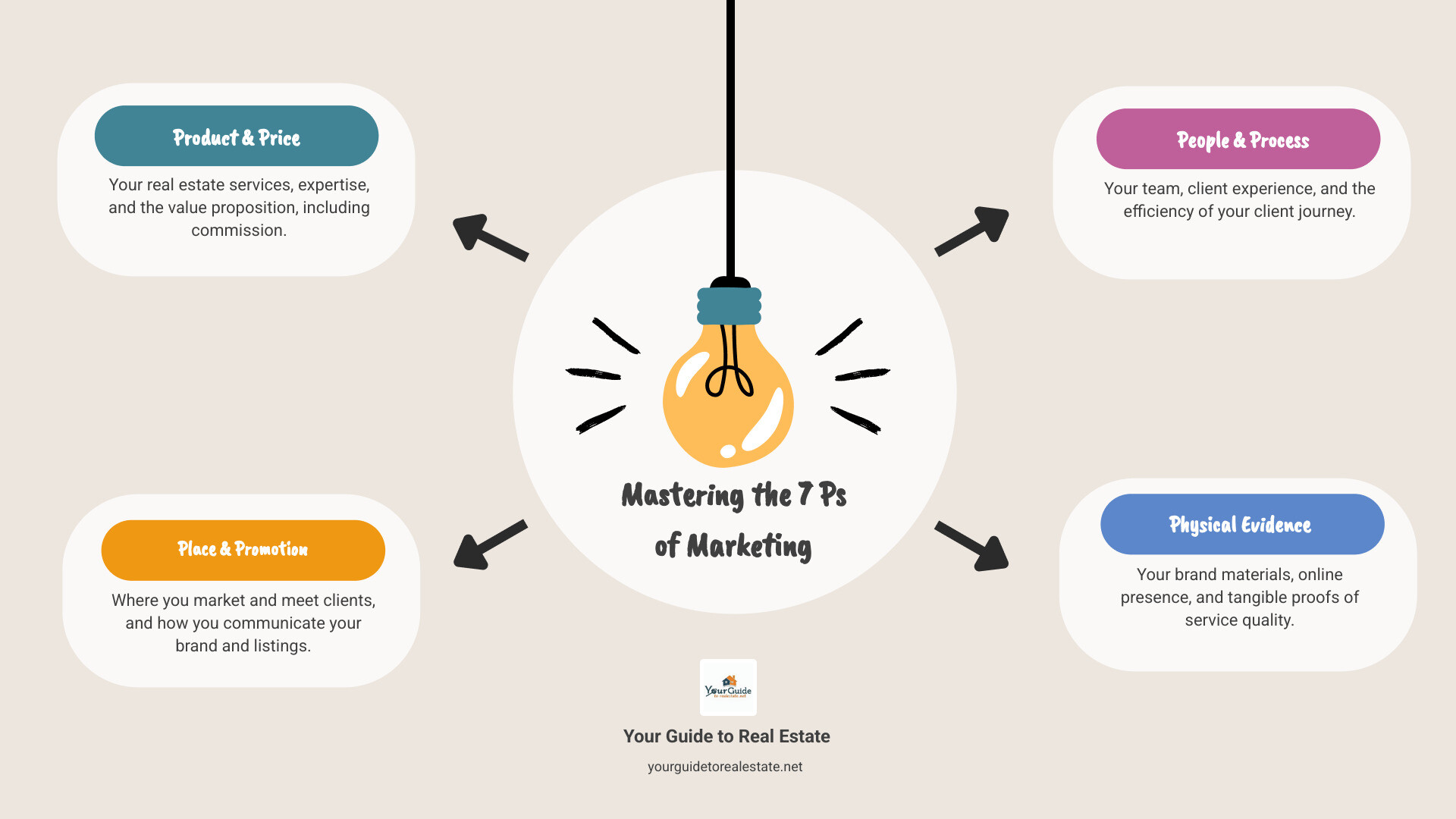
- The 7 Ps: Product, Price, Place, Promotion, People, Process, Physical Evidence
- Market research: Know your target audience and competitors
- Integrated strategy: Combine multiple marketing approaches for better results
As one marketing expert noted: “Marketing is about planning and executing the development, pricing, distribution and promotion of products and services to satisfy the needs of your customers.” This couldn’t be more true in real estate, where trust and relationships drive success.
The digital age brought new tools, but the core principles remain. Whether you’re a new agent or an experienced pro, these fundamentals help you create meaningful connections with buyers and sellers.
What’s changed is how we apply them. Social media, content marketing, and digital ads have expanded our reach, but they don’t replace the need to understand customer wants and deliver value.
The most successful real estate professionals combine traditional relationship-building with modern marketing tactics. They know that behind every transaction is a person with specific needs, fears, and dreams about their future home.
* marketing fundamentals* terms to remember:
The Core Principles: Understanding Your Customer and Value
The most important of all marketing fundamentals starts with a simple question: What do your customers really need? Everything else flows from there.
When someone calls a real estate agent, they aren’t just buying or selling a house. They could be searching for a family home, downsizing for retirement, or making an investment. Each client has unique hopes and fears driving their decision.
This is what we call customer-centricity – putting your clients’ actual needs at the center of everything you do. It means listening more than talking, asking thoughtful questions, and understanding that behind every transaction is a real person with real concerns.
The best agents don’t just show properties; they solve problems. This could mean guiding a nervous first-time buyer or finding creative solutions for a family that needs to sell quickly. When you focus on helping people, sales follow.
Market research becomes crucial here. You need to understand not just what people say they want, but what they actually need. A couple might say they want a four-bedroom house, but what they really need is space for their growing family and a good school district. Learning to spot these deeper motivations is what separates great agents from average ones.
Customer behavior tells us that people buy based on emotion and justify with logic. They fall in love with a kitchen where they imagine family dinners, then worry about the mortgage payment later. Understanding this helps you address both the heart and the head in your approach.
What is a Value Proposition?
Your value proposition answers one question: “Why should someone choose you over other agents?”
It’s not about flashy websites or big ads. It’s about clearly communicating the problems you solve and the unique benefits you offer.
For example, instead of saying “I provide excellent customer service” (which every agent claims), you might say “I guide first-time buyers through every step with a proven 30-day process that eliminates confusion and surprises.” That’s specific, meaningful, and different.
The key is focusing on competitive advantage – what makes your service genuinely different. Maybe you specialize in helping military families with relocations, you have deep expertise in luxury properties, or you’ve developed a system that helps sellers get top dollar in any market.
Your messaging should make it crystal clear how you solve your customers’ biggest pain points. If buyers in your area struggle with bidding wars, show them how your strategy helps them win. If sellers worry about pricing their home right, explain your proven approach to market analysis.
This is all about differentiating your service in ways that actually matter to your clients. Want to learn more about what buyers should look for? Check out our guide on choosing a real estate agent.
The Role of Research
You can’t serve customers well if you don’t know them. That’s where solid market research—one of the most overlooked marketing fundamentals—comes in.
Identifying target markets means getting specific about who you serve best. Rather than trying to help everyone, successful agents often focus on particular groups – maybe young professionals buying condos, or empty nesters looking to downsize, or investors seeking rental properties.
Customer segments help you understand that different groups have different needs. A cash buyer has completely different concerns than someone using an FHA loan. A family relocating for work faces different challenges than local buyers who can take their time.
Competitor analysis isn’t about copying what other agents do – it’s about understanding the landscape. What are other agents in your area emphasizing? Where are the gaps? What complaints do you hear about other agents’ services? This information helps you position yourself more effectively.
The goal is making informed decisions based on real data analysis, not just gut feelings. Maybe you think luxury homes are where the money is, but research might show that first-time buyers in your area represent a bigger, less competitive opportunity.
In real estate, this means staying on top of local market trends, understanding neighborhood dynamics, and knowing what buyers and sellers in your area are really looking for. It’s the difference between throwing marketing efforts at the wall and strategically connecting with the right people.
Ready to dive deeper into market research? Learn how to do a competitive market analysis for real estate and start making data-driven decisions for your business.
The Marketing Mix: A Deep Dive into the 7 Ps
The marketing mix is your toolkit for success and a foundation of marketing fundamentals. It’s a set of controllable tools you can adjust to get results from your target market. Mastering these elements means creating a strategic approach instead of just hoping tactics stick.
The original “4 Ps” (Product, Price, Place, and Promotion) were introduced in the 1960s. As service industries like real estate evolved, the model expanded to the “7 Ps”, adding People, Process, and Physical Evidence.
This framework is highly relevant for real estate professionals, as it captures the full picture of delivering client value.

The real power comes when you combine all these elements into an integrated strategy. It’s like conducting an orchestra – each instrument (or P) plays its part, but the magic happens when they all work together harmoniously.
The Traditional 4 Ps: Core marketing fundamentals
These four classic elements have been the backbone of successful marketing for decades and remain crucial.
Product is what you offer clients. In real estate, your “product” is more than a transaction; it’s your expertise, guidance, proven framework, and the entire client experience. It’s the stress-free journey you provide during a major life decision.
If your service doesn’t have a Unique Selling Point (USP) or doesn’t solve real problems for your clients, all the marketing in the world won’t help. You need to constantly ask yourself: How can I make my approach even more valuable and effective for the people I serve?
Price is the value exchange with your clients. It’s more than commission rates; it communicates perceived value and quality. For example, luxury brands use premium pricing to signal exclusivity and superior quality.
In real estate, your pricing strategy needs to reflect the true value of your services while keeping your business profitable. Price is often the main driver of purchase decisions, so you need to get this balance right.
Place is all about accessibility – where and how your clients can find and work with you. This includes your physical office, your website, online listings, social media presence, and even your participation in community events. The key is being wherever your ideal clients are looking for help.
“Place” often means having a strong online presence. But don’t forget about traditional touchpoints either. The best approach combines both digital and physical accessibility.
Promotion encompasses everything you do to communicate your value and attract clients. This is the most visible part of marketing – your advertising, content marketing, social media posts, and direct outreach efforts. It’s about building awareness and persuading potential clients that you’re the right choice for them.
Here’s how the traditional 4 Ps have evolved in our digital age:
| 4 Ps | Traditional Context | Digital Context |
|---|---|---|
| Product | Physical goods, in-person services, tangible features | Digital products, online services, user experience |
| Price | Fixed prices, in-store discounts, price lists | Dynamic pricing, subscription models, personalized offers |
| Place | Physical stores, direct sales, traditional distribution | Websites, e-commerce platforms, social media, apps |
| Promotion | Print ads, TV/radio commercials, billboards, direct mail | Content marketing, SEO, social media, email marketing |
The Extended Service Mix: People, Process, and Physical Evidence
The additional three Ps are where service businesses like real estate shine, often creating the difference between a good and an exceptional experience.
People includes everyone involved in delivering your service – you, your support staff, and any partners you work with. In real estate, people truly are your brand. Every interaction shapes how clients perceive your professionalism and expertise.
Great customer service isn’t just nice to have; it’s essential for building relationships, solving problems, and generating those valuable referrals that keep your business growing. Your team’s ability to communicate effectively and handle challenges with grace often determines whether clients recommend you to their friends and family.
Process refers to the systems and workflows that make your service delivery smooth and consistent. Your proven framework for guiding clients through real estate transactions is a perfect example of process in action. It’s about making yourself “easy to do business with.”
A well-designed process ensures every client gets the same high-quality experience, regardless of when they work with you or which team member they interact with. It builds your reputation for reliability and delivers on that promise of stress-free guidance.
Physical Evidence includes all the tangible elements that help clients evaluate and trust your brand. This goes far beyond your office space or printed brochures. Your website design, social media presence, email communications, and online testimonials all serve as “digital proof” of your professionalism.
Consistent branding across all these touchpoints reinforces your identity and builds confidence. When everything looks polished and professional, it reassures clients they’ve made the right choice in working with you.
These three additional Ps work together to create repeatable excellence in customer service and operational efficiency. They’re what transform a simple transaction into a relationship-building experience. Learn more about implementing effective real estate business systems to streamline your operations.
Applying Marketing Fundamentals: Building Your Strategy
Now it’s time to put these marketing fundamentals into action. This is where we move from theory to a concrete plan that brings in clients.

Success in real estate often comes down to strategy. Instead of random marketing, targeted selling focuses energy on the most likely clients. This approach moves away from generic ads toward creating genuine connections.
Strategic planning means we’re not just busy; we’re productive. We’re attracting the right clients who value what we offer, rather than chasing anyone with a pulse.
Developing Your Marketing Plan
A solid marketing plan is your blueprint for success. Without one, you’re just winging it, which rarely leads to consistent results.
We start with a SWOT analysis to get an honest look at where we stand. Our strengths might include our proven framework and deep local market knowledge. Our weaknesses could be limited social media presence or a small referral network. Opportunities might include a growing first-time buyer market in our area, while threats could be rising interest rates or increased competition.
A PESTEL analysis helps us zoom out even further. We look at the bigger picture – things like new real estate regulations (legal factors), economic shifts like changing mortgage rates, or social trends like remote work affecting where people want to live. These external forces can dramatically impact our business, so we need to stay aware of them.
Next, set SMART goals. Instead of vague hopes like “get more clients,” create specific, measurable, achievable, relevant, and time-bound targets, such as: “Increase qualified website leads by 30% in six months.” Focus on three to five key objectives to avoid spreading ourselves too thin.
Resource allocation is where reality meets ambition. We have limited time, money, and energy, so we need to use them wisely. This means setting a realistic marketing budget and being honest about what we can actually execute well. It’s better to do a few things excellently than many things poorly.
The final piece is staying flexible. Markets change, client needs evolve, and what worked last year might not work today. Our plan needs to be our guide, not our prison.
Choosing Your Channels: Traditional vs. Digital
With more ways than ever to reach clients, choosing the right channel mix for your audience and goals is key.
Business-to-consumer (B2C) marketing is our bread and butter when we’re reaching individual homebuyers and sellers. This type of marketing often taps into emotions – the dream of homeownership, the stress of selling, the excitement of a new neighborhood. Business-to-business (B2B) marketing comes into play when we’re working with investors, developers, or other real estate professionals. Here, we focus more on ROI, market data, and long-term relationships.
Inbound marketing has become incredibly powerful. Instead of interrupting people with ads, we attract them by providing genuine value. This might mean creating helpful blog posts about the home buying process, offering free market reports, or sharing insights on social media. The idea is to be helpful first, which builds trust naturally.
Content marketing sits at the heart of most successful inbound strategies. When we consistently share valuable information, we position ourselves as the go-to expert in our area. SEO ensures people can actually find this content when they’re searching online – it’s amazing that this term is only 22 years old considering how crucial it is today!
Social media marketing lets us connect with our community and showcase our personality. Email marketing helps us stay in touch with past clients and nurture potential ones. Word-of-mouth marketing remains the holy grail – when satisfied clients naturally recommend us to their friends and family.
Traditional channels still have their place. Print marketing has seen a dramatic decline, but targeted local publications can still reach specific audiences effectively. Event marketing – like hosting first-time buyer seminars – creates face-to-face connections that digital can’t replicate.
The key is being where our clients are and choosing channels that let our message cut through the noise.
Measuring Success and Adapting Your marketing fundamentals
Many professionals fail to measure their marketing efforts. It’s like driving with your eyes closed—you might move, but not toward your intended destination.
Key Performance Indicators (KPIs) are our compass. For our website, we might track lead conversion rates, time spent on pages, or which blog posts generate the most inquiries. For social media, engagement rates and follower growth tell us if we’re connecting with our audience.
Marketing attribution helps us understand the customer journey. Did that client find us through Google, see our Facebook post, then call after reading our newsletter? Understanding these touchpoints helps us invest our marketing dollars more wisely.
A/B testing takes the guesswork out of improvement. Instead of wondering whether a red or blue call-to-action button works better, we test both and let the data decide. This approach applies to everything from email subject lines to ad headlines.
Continuous improvement means we’re always learning and adjusting. What worked six months ago might not work today, and that’s okay. The market evolves, client preferences change, and new platforms emerge. The most successful professionals adapt their strategies while staying true to core marketing fundamentals.
Sometimes we need to cut our losses. The sunk cost fallacy tempts us to keep throwing money at strategies that aren’t working just because we’ve already invested in them. Good data helps us make objective decisions about when to pivot or try something completely new.
While marketing tactics and channels will continue to evolve, these fundamental principles of understanding your customer, creating value, and measuring results will always be relevant. Master these basics, and you’ll be ready to adapt to whatever changes come next.
Frequently Asked Questions about Marketing Fundamentals
We often hear the same questions from real estate professionals about marketing. Here are the most common ones.
What is the most important marketing fundamental?
If we had to pick one marketing fundamental, it would be customer-centricity. It’s the North Star from which all other principles flow.
Here’s why it matters so much: you can have the most beautiful website, the cleverest social media campaigns, and the most competitive pricing, but if you don’t truly understand what your clients need and want, you’re essentially throwing darts in the dark.
When we put our clients at the center of everything we do, we naturally start asking the right questions. What keeps a first-time homebuyer up at night? What frustrates sellers most about the listing process? How can we make this journey less stressful and more rewarding?
Customer-centricity makes other fundamentals fall into place. Your value proposition becomes clearer, your messaging resonates, and the 7 Ps of marketing become easier to manage when you’re consistently asking, “How does this serve my client better?”
How have marketing fundamentals changed with digital marketing?
This is a common question. The core marketing fundamentals haven’t changed; what’s changed is how we apply them.
Think about it this way: people still want to feel understood, they still need their problems solved, and they still make decisions based on trust and value. A homebuyer in 1985 and a homebuyer today are dealing with the same fundamental emotions and concerns. They want to find the right home, at the right price, with someone they can trust to guide them through the process.
What’s dramatically different is the tools we have at our disposal. We can now research our target audience with incredible precision, create personalized messages for different client segments, and track which marketing efforts actually lead to closed deals through sophisticated attribution models.
Digital marketing has also democratized access to information. Today’s clients often know more about market trends and property values before they even call us. This means our role has evolved from information gatekeeper to trusted advisor and skilled negotiator.
The data-driven nature of digital marketing is perhaps the biggest shift. We can test different approaches, measure results in real-time, and adjust our strategies based on what actually works rather than what we think might work.
What is the difference between marketing and advertising?
This confusion is understandable, as the terms are often used interchangeably. However, the difference is important for your business.
Marketing is the entire umbrella – it’s everything you do to attract, serve, and keep clients. It includes understanding your market through research, developing your services, setting your pricing strategy, choosing where and how to reach people, and yes, promoting your business. When we talk about the 7 Ps framework, we’re talking about marketing as a whole system.
Advertising, on the other hand, is just one piece of that puzzle. It fits specifically under the “Promotion” P of the marketing mix. It’s the paid communication you do – your Facebook ads, Google ads, billboard, or sponsored content. Advertising is about getting your message in front of people through paid channels.
Think of it this way: if marketing is a complete meal, advertising is just one ingredient. You need the whole recipe, but that one ingredient can make a big difference.
The most successful real estate professionals understand this distinction. They don’t just throw money at advertising and hope for the best. Instead, they develop a comprehensive marketing strategy where advertising works alongside great service, smart pricing, convenient processes, and genuine relationship-building to create lasting success.
Conclusion: Building a Lasting Foundation
Think of marketing fundamentals as the solid foundation of a house – without them, everything else crumbles. We’ve journeyed through the essential principles that make great marketing work, from putting your customers first to mastering the 7 Ps framework. These aren’t just academic concepts; they’re the building blocks that separate successful real estate professionals from those who struggle.

The beauty of these timeless principles lies in their adaptability. Whether you’re crafting your Product (your unique services), setting your Price (your commission structure), choosing your Place (where clients find you), planning your Promotion (how you get the word out), building your People (your team), perfecting your Process (your client experience), or strengthening your Physical Evidence (your brand presence) – the 7 Ps work together like a well-oiled machine.
The digital world has given us amazing new tools. Social media, online listings, and digital marketing have changed how we reach people. But here’s the thing: they haven’t changed why people buy or sell homes. They still want someone they trust, someone who understands their needs, and someone who makes the process less stressful.
That’s exactly what we’re all about at Your Guide to Real Estate. Our proven framework isn’t just marketing speak – it’s a real commitment to making your real estate journey as smooth as possible. We believe that when you combine solid marketing fundamentals with genuine care for your clients, magic happens.
The most successful real estate professionals never stop learning. They stay curious about new trends and technologies, but they never forget these core principles. It’s like learning to play piano – you might add jazz or rock techniques over time, but you always come back to those fundamental scales.
Ready to put these principles into action? Start by learning how to perform a competitive market analysis for your real estate business. It’s a perfect way to apply what you’ve learned and begin building your own lasting foundation for success.