Why Getting Garage Sale Pricing Right Makes All the Difference
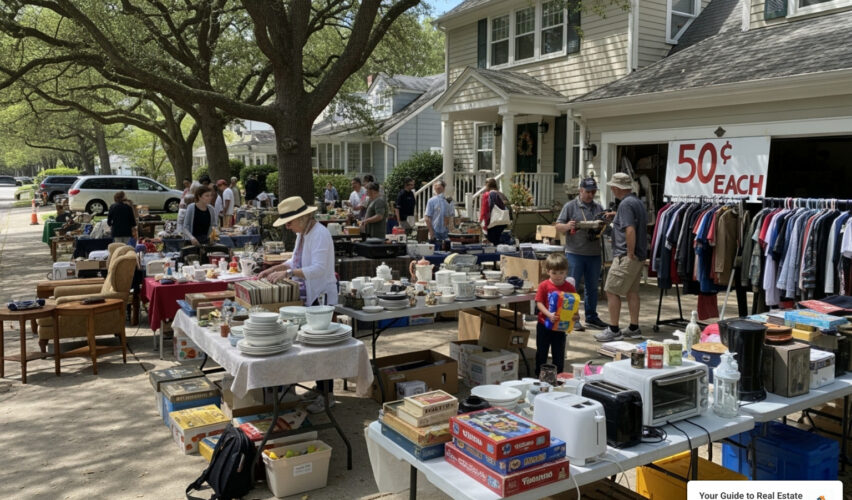
Learning how to price garage sale items can be the difference between a successful sale that clears out your home and makes decent money, versus boxes of unsold items heading back to your garage. With an estimated 165,000 garage sales happening every week across the United States, competition is fierce – and shoppers know a good deal when they see one.
Quick Pricing Guide for Garage Sale Success:
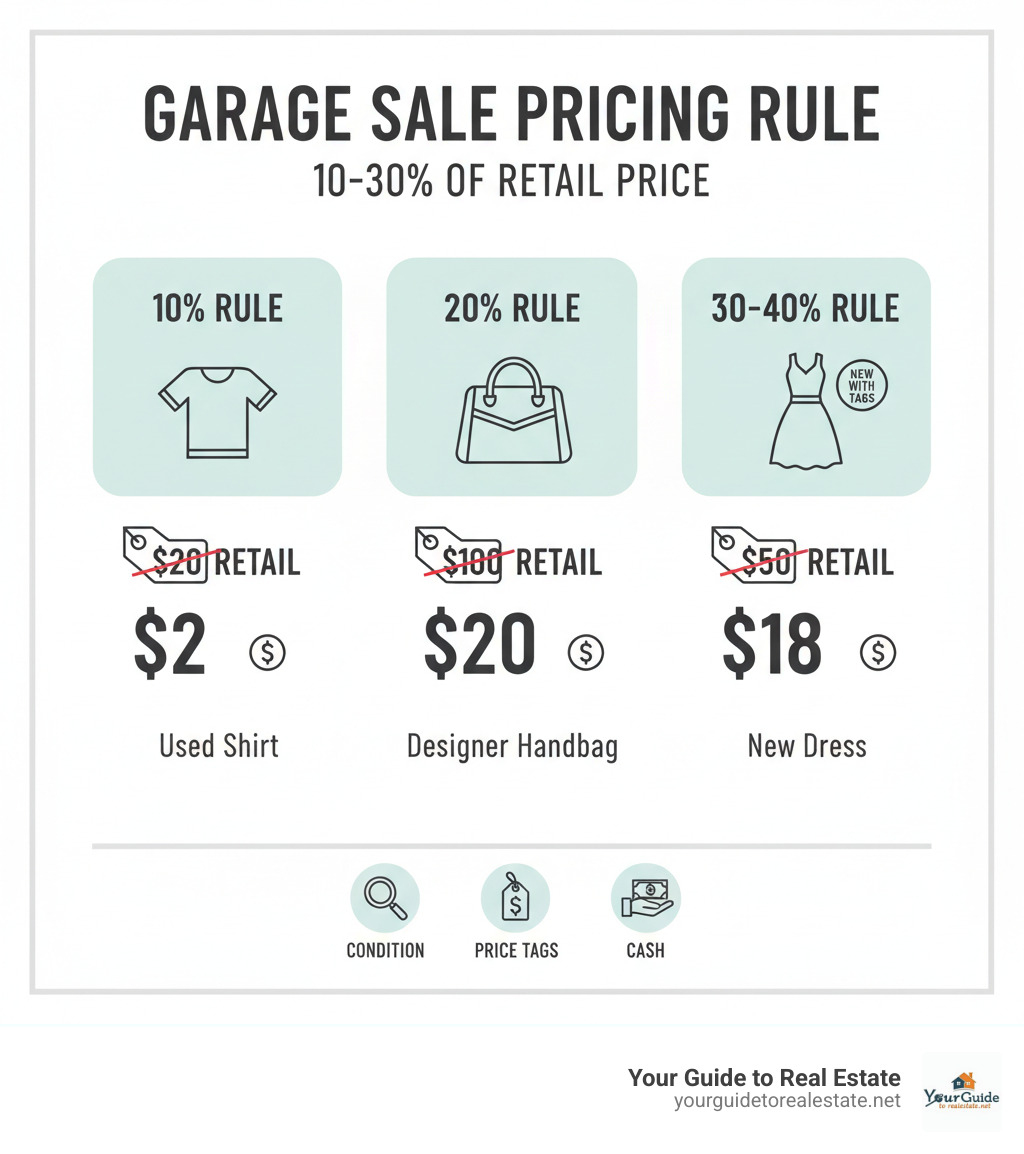
- Follow the 10% Rule: Price most items at 10% of their original retail value
- Adjust for Quality: Luxury brands can go up to 20% of retail price
- New Items with Tags: Price at 30-40% of original retail price
- Use Round Numbers: Stick to quarters, 50 cents, and whole dollars for easy transactions
- Research First: Check other local sales and online marketplaces for valuable items
Whether you’re decluttering before a move, clearing out after a life change, or simply making space in your home, the right pricing strategy turns unwanted items into cash while ensuring everything actually sells. One Reddit user shared their success: “I made $1,200 at the last garage sale I had… I browsed eBay, Etsy etc. for similar items and then priced 50-75% of that.”
The key is understanding that garage sale shoppers expect bargains – they’re not looking to pay near-retail prices. Your goal should be moving inventory quickly while still earning fair money for your effort.
Quick how to price garage sale items definitions:
The Foundation: General Pricing Rules & Research
Learning how to price garage sale items effectively starts with understanding some basic principles that successful sellers swear by. Think of this as building your pricing toolkit – once you have these fundamentals down, you’ll feel confident putting price tags on everything from that old toaster to your grandmother’s vintage jewelry.
The beauty of garage sale pricing is that it doesn’t have to be complicated. Most items follow predictable patterns, and with a little research upfront, you can avoid the common mistake of either giving away valuable items for pennies or pricing everyday items so high that nobody wants them.
Understanding the ‘10% Rule’ and When to Adjust It
Here’s where most successful garage sale hosts start: the 10% rule. This simple guideline suggests pricing most used items at roughly 10% of what they originally cost new. That $50 coffee maker you bought three years ago? Start thinking around $5. It’s not a perfect science, but it gives you a solid baseline that attracts bargain hunters while still putting money in your pocket.
But here’s the thing – this rule is more like a helpful suggestion than a law. You’ll want to adjust it based on what you’re selling. High-quality items and luxury brands can often command 20% of their original price, especially if they’re still in great shape. That Coach purse or those barely-worn leather boots might be worth pricing a bit higher.
New items with tags are where you can really bump up your prices. Since these are essentially unused, you can ask for 30-40% of the retail price and still offer buyers a fantastic deal. Just imagine finding a brand-new sweater with tags at a garage sale for 60% off – most shoppers would grab it immediately.
The key is being realistic about depreciation. We’re not trying to get back what we paid – we’re trying to clear out our homes while making some decent cash in the process.
How to Research Prices Before Your Sale
Smart pricing starts with a little detective work, and honestly, this can be the most fun part of preparing for your sale. Visiting other local garage sales gives you the best sense of what’s working in your area. Spend a Saturday morning browsing sales in your neighborhood and take mental notes. Are books flying off tables at 50 cents each? Are people walking past electronics priced at $20?
Online marketplaces become your best friend when you suspect something might be valuable. Check eBay’s “sold” listings (not just what people are asking) to see what similar items actually sell for. One successful seller shared that they research items online and then price them at 50-75% of those online prices for quick garage sale turnover.
Don’t forget about thrift store pricing as a reality check. If Goodwill is selling similar items for $3, your garage sale price should probably be lower to compete. The Garage-sale pricing guidelines offer additional insights into what different categories of items typically sell for.
This research pays off when you find that quirky vase is actually a collectible worth $50, or when you realize those common paperback books should be priced to move at a quarter each.
The Importance of Condition and Presentation
Here’s something that can make or break your sale: the condition of your items matters more than almost anything else. Excellent condition items can command top dollar within your price range, while anything with obvious flaws needs to be priced much lower – or honestly, just donated instead.
Before you price anything, give it the “would I buy this?” test. Clean everything thoroughly – dusty items look unloved and unwanted, while clean items suggest they’ve been cared for. A simple wipe-down can transform how buyers perceive value.
Functionality is crucial, especially for electronics and appliances. Always test everything beforehand and have extension cords available so buyers can plug things in and try them out. Nothing kills a sale faster than a buyer finding something doesn’t work after they’ve shown interest.
Minor repairs can be worth your time if they’re quick fixes. Sewing on a loose button or tightening a wobbly handle might let you price an item in a higher category. But don’t spend hours on repairs – your time is valuable too.
Presentation extends beyond just cleanliness. Neatly arranged, well-displayed items naturally look more valuable and appealing. This attention to detail is especially important if you’re preparing for bigger life changes like selling your home. Our Quick Home Sale Tips share more strategies for presenting your property in its best light.
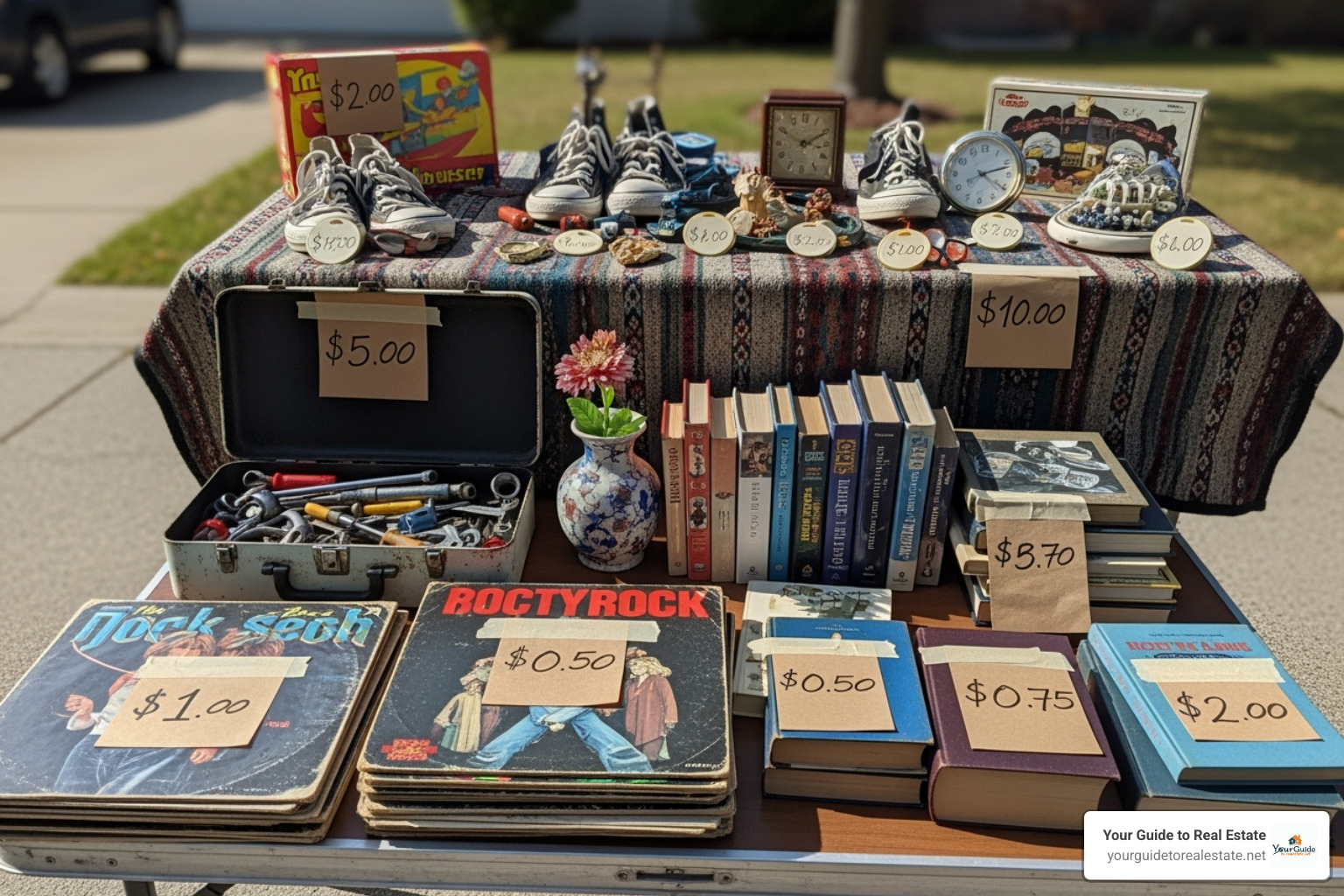
How to Price Garage Sale Items by Category
Different types of items require different pricing strategies when learning how to price garage sale items. A designer handbag shouldn’t be priced the same way as a paperback book, and understanding these category-specific differences helps us maximize both sales and profits.
The beauty of category-based pricing is consistency. When we establish ranges for each type of item, we can price quickly without second-guessing every decision. This approach also helps shoppers understand our pricing logic, making them more comfortable with their purchases.
| Item Category | Suggested Price Range (General) | Pro Tips |
|---|---|---|
| Clothing | $0.25 – $3.00 | Designer brands can go higher; bundle children’s clothes |
| Furniture | $5.00 – $50.00 | Price based on size and condition; clean thoroughly |
| Electronics | $2.00 – $25.00 | Test everything; include cords when possible |
| Books & Media | $0.25 – $2.00 | Hardcovers cost more than paperbacks |
| Toys & Games | $0.50 – $10.00 | Complete sets command higher prices |
| Home Decor | $1.00 – $15.00 | Seasonal items sell better in-season |
| Kitchenware | $0.50 – $8.00 | Small appliances need to work perfectly |
Pricing Clothing, Shoes, and Accessories
Clothing is often the backbone of successful garage sales, but it requires careful consideration. Adult clothing typically sells best in the $1.00 to $3.00 range, while children’s clothing moves faster at $0.25 to $1.00 per piece. The key difference? Kids outgrow clothes quickly, so parents expect rock-bottom prices.
Designer brands and luxury items break these rules entirely. A genuine Coach purse or designer jeans can command $10 to $25 depending on condition and current style relevance. Always research high-end brands online first – you might find that designer piece is worth selling elsewhere.
Shoes present unique challenges because they show wear differently than clothing. Athletic shoes in good condition can fetch $2 to $5, while dress shoes or boots might go for $3 to $8. However, heavily worn soles or visible damage should drop prices significantly.
Accessories like jewelry, belts, and scarves work well in the $0.50 to $3.00 range. Consider pricing children’s clothing in lots – “Fill a bag for $3” deals move inventory quickly and appeal to parents shopping for multiple kids.
Setting Prices for Furniture and Home Decor
Furniture pricing depends heavily on size, condition, and transportability. Small furniture pieces like side tables, lamps, or decorative items typically sell well between $5 and $20. Large furniture requires more consideration – while a dresser might be worth $50, will buyers want to haul it away?
Antique or vintage furniture needs special attention. That old wooden chair might be worth $200 online, but garage sale shoppers expect lower prices. Research first, then decide whether to sell it at your sale or elsewhere.
Wall art, lamps, and decorative pieces generally fall into the $1 to $15 range. Picture frames sell consistently at $1 to $3, while unique artwork or quality lamps can command higher prices. Rugs need thorough cleaning before pricing – a fresh, clean rug can sell for $10 to $25, while one that looks tired might only fetch a few dollars.
The golden rule for furniture: clean everything thoroughly. A dusty bookshelf looks unwanted, but the same piece cleaned and staged nicely suggests quality and care.
How to Price Electronics, Books, and Media
Electronics depreciate faster than almost any other category, making them tricky to price effectively. Small appliances like coffee makers, toasters, or blenders work well in the $5 to $15 range if they’re clean and functional. Always have extension cords available so buyers can test items.
TVs and computers face steep depreciation – that five-year-old laptop probably isn’t worth much at a garage sale. Focus on $10 to $25 for older electronics, but be prepared to negotiate down. Video games hold value better, especially popular titles for current systems.
Books remain garage sale staples with simple pricing: paperbacks at $0.25 to $0.50 and hardcovers at $0.50 to $2.00. Coffee table books, cookbooks, and reference materials can command slightly higher prices. DVDs and CDs typically sell for $0.50 to $2.00 each, though their popularity has declined significantly.
With approximately 165,000 garage sales held every week across the country, competition for these common items is fierce. Price competitively and focus on moving inventory rather than maximizing profit on individual pieces.
The key to successful category-based pricing is remembering that garage sale shoppers want deals. Our goal is finding the sweet spot where items sell quickly while still bringing in reasonable money for our decluttering efforts.