
Why Getting a Real Estate License Opens Doors to Your Future
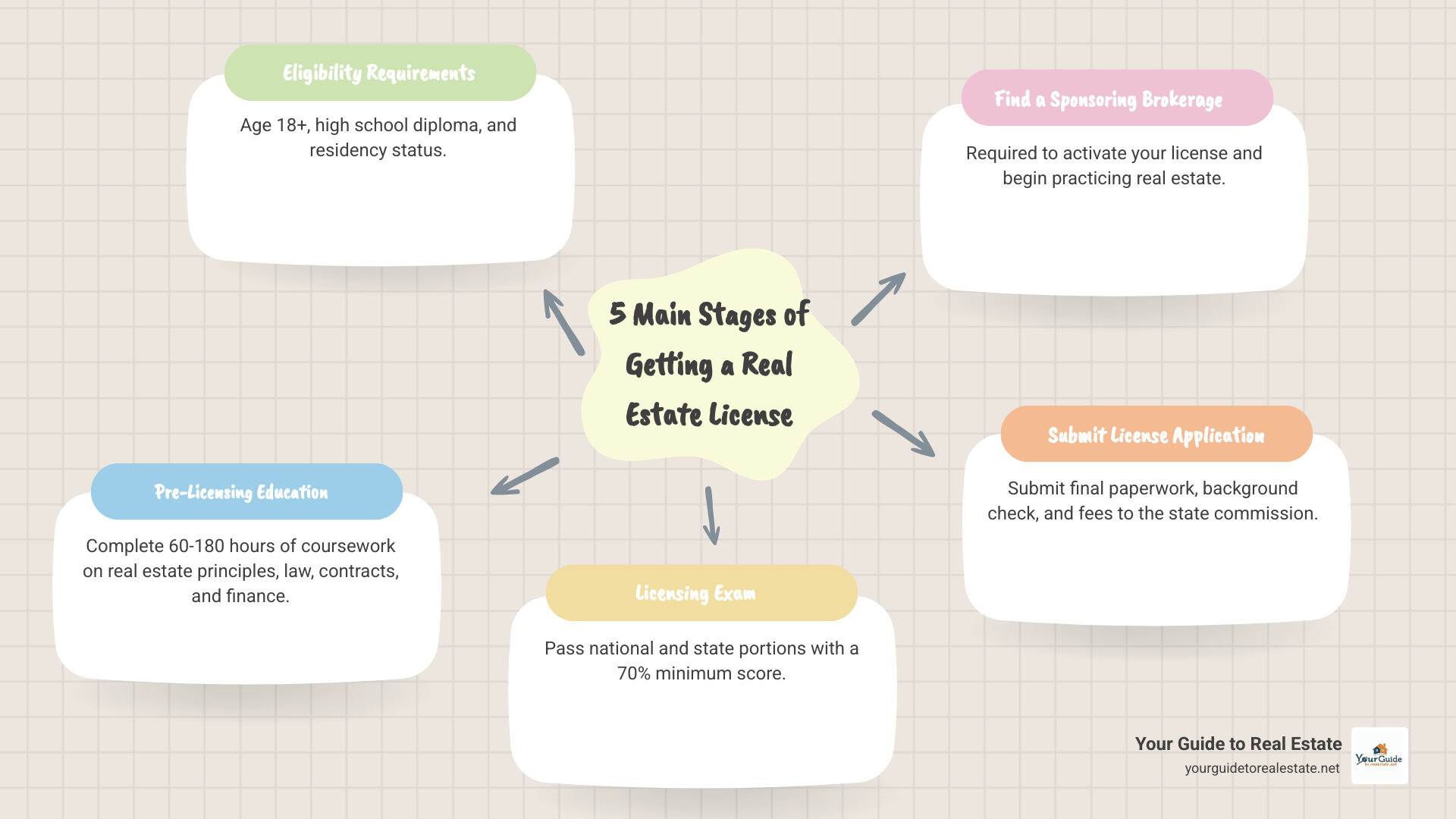
How to get a real estate license is a straightforward process that typically involves five main steps: meeting eligibility requirements, completing pre-licensing education, passing a licensing exam, finding a sponsoring broker, and submitting your application. Most people can complete this journey in 8-18 months, though accelerated programs may allow you to finish in as little as 2-5 weeks in some states.
The steps to get licensed are:
- Meet basic requirements – Be 18+ with a high school diploma
- Complete education – 60-180 hours depending on your state
- Pass the exam – National and state portions with 70%+ scores
- Background check – Fingerprinting and criminal history review
- Find a broker – Required to activate your license
- Apply – Submit final paperwork to your state commission
Real estate offers a career with incredible flexibility and unlimited earning potential. As one successful agent put it, the benefits include “more flexibility for family and other things, control of your time, above-average pay, and the potential to dictate a much better salary.”
Unlike many careers, real estate doesn’t require a college degree. You can set your own hours, work from anywhere, and your income is directly tied to your effort. Whether you’re looking for a complete career change or want to build a business helping people find their dream homes, getting licensed is your first step.
The licensing process varies by state and province. Some require as few as 60 hours of education, while others demand 180 hours or more. Costs typically range from $600 to $7,500 depending on your location and the programs you choose.
This guide walks you through every step of the licensing journey, from understanding basic requirements to launching your new career with the right brokerage partner.
Simple guide to how to get a real estate license terms:
Understanding the Fundamentals of Real Estate Licensing
Before you dive into how to get a real estate license, it’s important to understand what you’re getting into. The real estate world has its own structure, rules, and incredible opportunities that make it unlike any other career path.
Let’s start with the basics. Every state and province has a real estate commission or council that oversees licensing and ensures agents follow proper standards. These regulatory bodies create the rules you’ll need to follow and set the requirements for getting licensed.
The beauty of real estate lies in its flexibility and income potential. Unlike traditional jobs with fixed salaries, your earning power is directly tied to your effort and skill. Some agents work part-time around other commitments, while others build full-scale businesses. The choice is yours.
Real estate also offers something special – you’re genuinely helping people through major life transitions. Whether someone is buying their first home or selling a family property they’ve owned for decades, you’re there during important moments. For more insights into what makes this career so rewarding, check out more about a career in real estate and explore the essential Real Estate Agent Skills you’ll develop.
The Role of a Real Estate Salesperson
As a real estate salesperson (often just called an agent), you’ll be the bridge between buyers and sellers. Your job is to guide clients through what can be a complex and emotional process.
On the buyer’s side, you’ll help people find properties that match their needs and budget. This means understanding their lifestyle, showing them homes, explaining market conditions, and negotiating on their behalf. For sellers, you’ll help price their property correctly, market it effectively, and steer offers when they come in.
Your work spans both residential and commercial real estate. Most new agents start with residential properties – helping families buy and sell homes. But as you gain experience, you might explore commercial real estate, working with businesses and investors on office buildings, retail spaces, or apartment complexes.
Daily responsibilities are wonderfully varied. One day you might be researching market trends, the next you’re hosting an open house or negotiating a tricky contract. You’ll spend time on the phone with clients, visiting properties, and handling paperwork. It’s never boring! For a detailed look at what your days will actually look like, read The Day-to-Day Life of a Real Estate Agent: What You Didn’t Know.
The Difference Between a Salesperson and a Broker
Here’s where things get interesting. When you first get licensed, you’ll be a salesperson who must work under a licensed broker. Think of it like learning to drive – you need supervision until you’re ready to go solo.
A broker has met additional requirements beyond the basic salesperson license. They typically need more experience (usually 2-4 years as an active agent) and must complete additional education – often another 30-60 hours of advanced coursework covering topics like business management and advanced real estate law.
The big difference? Brokers can operate independently and take on supervisory responsibilities. They can open their own brokerage, hire other agents, and handle client funds directly. As a salesperson, your broker oversees your transactions and ensures everything follows state regulations.
Don’t worry though – starting as a salesperson is perfectly normal and gives you valuable time to learn the business. When you’re ready to advance, the broker path offers exciting opportunities for leadership and business ownership. To understand how brokerages work and what to look for, check out What Is a Real Estate Brokerage? A Beginner’s Complete Guide.
The licensing structure exists to protect consumers while giving you a clear path for career growth. Whether you stay as a salesperson throughout your career or eventually become a broker, you’ll have the foundation to build a successful real estate business.
Your Step-by-Step Guide on How to Get a Real Estate License
Ready to turn your real estate dreams into reality? How to get a real estate license doesn’t have to feel overwhelming when you break it down into clear, manageable steps. We’ve walked countless aspiring agents through this journey, and we’re here to guide you through each phase with confidence.
Think of this as your roadmap to success. Every state and province has its own quirks, but the fundamental path remains remarkably similar everywhere you go.

Step 1: Meet the Basic Eligibility Requirements
Before you dive into textbooks or start planning your first open house, let’s make sure you check all the right boxes. The good news? Most people easily meet these basic requirements.
You’ll need to be at least 18 years old – this is pretty much universal across North America. No exceptions here, but if you’re close to 18, you can often start your coursework early and take the exam once you reach the minimum age.
A high school diploma or GED is your educational foundation. Don’t have yours yet? Don’t worry – you can get your GED and then pursue your real estate license. In Ontario, they’ll even let you take an admission exam if you’re missing this credential, though having your diploma makes everything smoother.
Residency or citizenship requirements vary by location, but generally you need to be legally allowed to work where you plan to practice. For U.S. states like Idaho, Hawaii, and Ohio, you’ll need to be a citizen or lawfully present resident. Canadian provinces require legal permission to work in Canada.
The “good character” provision is where things get interesting. Regulatory bodies want to ensure you’re someone clients can trust with their biggest financial decisions. Past criminal offenses, unpaid judgments, or previous license discipline could affect your eligibility – but don’t panic if you have concerns.
Here’s a pro tip from our experience: If you’re worried about your background, Texas offers something called a “Fitness Determination” through TREC. It’s much cheaper than applying for the full license and gives you a clear answer about your eligibility upfront. Other states have similar processes, so check with your local commission.
We always recommend checking the typical admission requirements for your specific area early in the process. Better to know now than be surprised later!
Step 2: Complete Your Pre-Licensing Education
Here’s where your real estate education truly begins. Every jurisdiction requires you to complete a certain number of hours of approved coursework before you can even think about taking the licensing exam. Think of it as your foundation – the knowledge that will serve you throughout your entire career.
The required hours can vary dramatically depending on where you live. Hawaii and Iowa keep things relatively light at 60 hours, while Texas goes all-in with 180 hours of required coursework. Ohio recently streamlined their requirements to 100 hours (down from 120), effective April 9, 2025. This includes 40 hours of Principles & Practices, 40 hours of Ohio Law, 10 hours of Finance, and 10 hours of Appraisal.
Ontario takes a different approach entirely with their Pre-Registration Phase through Humber Polytechnic. You’ll complete five courses, two simulation sessions, and six exams – all within a 24-month window. It’s comprehensive but well-structured.
Your coursework will cover the essential topics that every real estate professional needs to master. Real Estate Principles and Practices forms the backbone of your education, teaching you how transactions work from start to finish. Real Estate Law dives deep into agency relationships, contracts, and the legal framework that governs our industry.
Real Estate Finance helps you understand mortgages, lending, and the financial aspects that make or break deals. You’ll also study Property Ownership, Valuation and Appraisal, and Fair Housing Laws and Ethics – because treating everyone fairly isn’t just the right thing to do, it’s the law.
The beauty of modern real estate education is flexibility. Many providers offer both online and in-person learning options, so you can choose what works best for your schedule and learning style. Online, self-paced courses have become incredibly popular, especially for people juggling other commitments like a current job or family responsibilities.
If you’re in Ontario, the Pre-Registration Learning Path provides a clear, structured journey that prepares you for registration with RECO. It takes the guesswork out of what to study and when.
Step 3: Pass the Real Estate Licensing Exam
The licensing exam is your final academic hurdle before entering the real estate world. It’s comprehensive, but don’t let that intimidate you – thousands of people pass these exams every year, and with proper preparation, you can too.
Most exams follow a two-section format: a national portion covering general real estate principles that apply everywhere, and a state or provincial portion focusing on your local laws and regulations. You’ll need to pass both sections, typically with a minimum score of 70% on each part.
Let’s look at some real examples to give you a better picture. In Texas, you’ll face 110 multiple-choice questions – 80 covering national topics and 30 on Texas-specific material. You get 150 minutes total, and you need 70% or higher on both sections.
Iowa keeps things similar with 80 national questions and 40 state questions, while Hawaii gives you 80 national and 50 state-specific questions with a generous four-hour time limit. Ohio’s exam includes 80 national questions (with 120 minutes) and 40 state questions (60 minutes).
Idaho takes a slightly different approach with 120 multiple-choice questions total, but they require a higher passing score of 75%.
The key to exam success is preparation. Don’t just rely on your coursework – invest in practice tests and study guides that mirror the actual exam format. Many educational providers offer dedicated exam prep courses that can significantly boost your confidence and performance.
If you don’t pass on your first try, you can retake the exam. Most states allow multiple attempts, though you’ll need to pay the exam fee again and possibly wait a certain period between attempts.
Step 4: Complete a Background Check
Trust is everything in real estate. When clients hand you the keys to their home or rely on your advice for their biggest financial decision, they need to know you’re someone they can count on. That’s why every jurisdiction requires a thorough background check as part of the licensing process.
The fingerprinting process is typically your first step. In Texas, your fingerprints get electronically transmitted to both the DPS and FBI through MorphoTrust locations. If you’re applying as a non-resident, there might be specific procedures to follow, so check with your state commission for details.
Ohio uses state-approved Webcheck® vendors for both BCI and FBI background checks. You’ll schedule an appointment and complete both checks in one visit – much more convenient than the old paper-based system.
Ontario requires what’s called a CRJMC (Criminal Record and Judicial Matters Check) – specifically a level 2 check for suitability assessment. Here’s an important tip: don’t apply for this directly through third-party websites. RECO’s online application system via MyWeb will direct you to the correct platform, making the process seamless and ensuring your results reach the right people.
If you have any concerns about your background – maybe a past mistake or previous license discipline – address it early in the process. As we mentioned with Texas’s “Fitness Determination,” it’s much better to know where you stand before investing significant time and money in your education and application.
The background check isn’t meant to be a barrier for good people who’ve made past mistakes. Regulatory bodies understand that people grow and change. They’re looking for patterns of behavior that might indicate ongoing trustworthiness issues, not isolated incidents from years ago.
Navigating Costs, Timelines, and Regional Differences
Planning your journey to how to get a real estate license means understanding that timing and costs can vary dramatically depending on where you live. Let’s break down what you can realistically expect so you can budget your time and money effectively.
How long does it take to get a real estate license?
The honest answer? It depends on your situation, but most people complete the entire process in 8 to 18 months. That includes everything from your first day of coursework to holding your provisional license and starting work.
If you’re in a hurry, some states offer accelerated paths. In Florida, for example, highly motivated students can finish their pre-licensing phase and register for the exam in just 2 to 5 weeks. These fast-track programs require serious dedication, but they’re perfect if you want to jump-start your new career quickly.
Ontario takes a different approach with about 9 to 12 months for the initial coursework and training, followed by a two-year “articling period” called the Post-Registration Phase. The Pre-Registration Phase alone gives you up to 24 months to complete all courses and exams, with specific deadlines for each course.
Your timeline really depends on several factors. Self-paced online courses let you move as quickly or slowly as you need, though most have maximum completion times. Exam scheduling can add weeks depending on availability in your area. Background check processing sometimes takes longer than expected, especially during busy periods. Finally, your state or provincial regulatory body might take additional time to process your final application.
The beauty of this career path is that you can often work around your current schedule. Many successful agents completed their licensing while working full-time jobs or managing family responsibilities.
How much does it cost to get a real estate license?
Let’s talk numbers because understanding the investment upfront helps you plan better. Getting your real estate license involves several costs beyond just the coursework.
Pre-licensing courses typically range from $200 to $1,200 in most U.S. states, though this varies significantly. Exam fees usually run $50 to $200, while background checks and fingerprinting add another $25 to $100. Application fees can range from $50 to $300 depending on your location.
Here’s where regional differences really show up. In Iowa, you’re looking at roughly $600 to $1,000 total for the initial licensing process. Hawaii costs run between $1,000 and $1,300. Ohio typically ranges from $1,194 to over $2,200, depending on which education provider you choose.
Ontario is notably higher at approximately $5,600 for registration and course fees through Humber Polytechnic. When you add professional liability insurance and local real estate board fees, Ontario agents often invest around $7,500 to get started.
Don’t forget the ongoing costs either. You’ll need professional liability insurance (required in most areas), MLS access fees, and local real estate board membership. These annual costs vary widely but are essential for practicing.
The good news? Unlike many career changes, real estate licensing doesn’t require years of expensive college education. Most agents recoup their initial investment within their first few successful transactions.
Understanding State and Provincial Variations
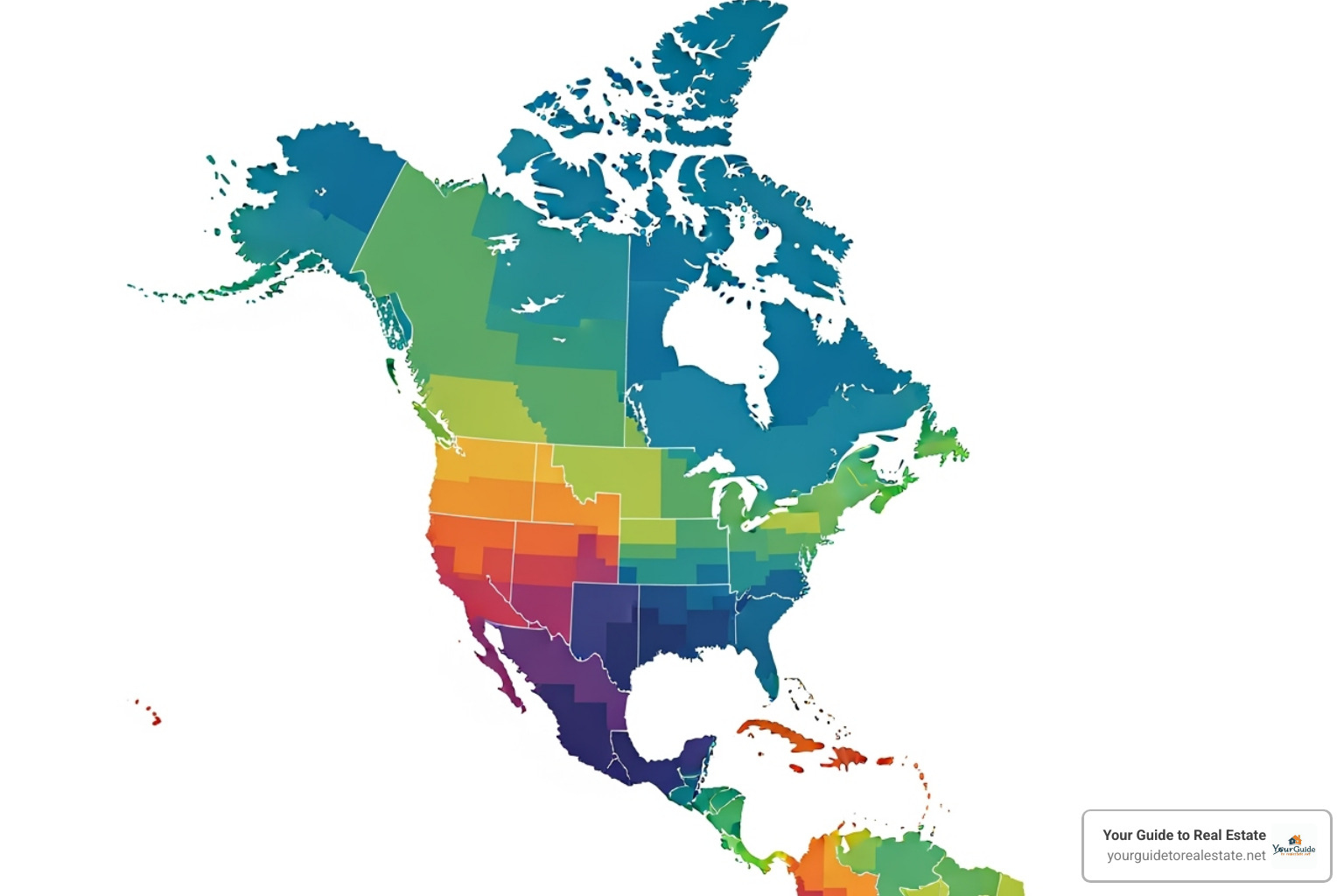
Here’s something that surprises many new agents: every state and province has its own rules. While the basic steps remain similar, the details can be vastly different.
Education requirements show the biggest variation. Hawaii and Iowa require just 60 hours of pre-licensing education, while Texas demands 180 hours. Ohio recently reduced their requirement from 120 to 100 hours starting April 2025. These differences directly impact both your timeline and costs.
Reciprocity agreements can be a huge time-saver if you plan to move or practice in multiple states. Iowa has reciprocity with Arkansas, Georgia, Louisiana, Massachusetts, Minnesota, Mississippi, and North Dakota. Ohio offers limited reciprocity with certain states. However, Hawaii doesn’t have direct reciprocity agreements, though they might waive the national exam portion if you hold an active license and recently passed a comparable national exam.
License renewal cycles and continuing education requirements also vary significantly. Iowa requires renewal every three years with 36 hours of continuing education. Hawaii requires renewal every two years with 20 hours of CE. Ohio mandates renewal every three years with 30 hours of CE. Ontario requires completion of the Post-Registration Phase before your first two-year renewal, including mandatory compliance courses.
The most important advice we can give you? Always check your specific state’s Real Estate Commission website or provincial regulator for the most current requirements. Rules change, fees adjust, and new programs launch regularly. Don’t rely on outdated information or assume what works in one state applies to another.
Taking time to understand your local requirements upfront saves you from costly surprises later. Most regulatory bodies have detailed guides and FAQs that walk you through every step of the process for your specific location.
Launching Your Career After Licensing
Congratulations! You’ve successfully steerd the education requirements, passed your exams, cleared your background check, and earned your license. This is a tremendous achievement that deserves celebration, but your real estate journey is just beginning. The next phase involves finding the perfect professional home for your new license and staying on top of ongoing requirements that will keep you practicing legally and effectively.
Step 5: Find a Sponsoring Real Estate Brokerage
Here’s something that surprises many new agents: you cannot practice real estate independently right after getting your license. As a newly licensed salesperson, you must work under the supervision of a licensed real estate broker. This requirement exists in Texas, Iowa, Ohio, Hawaii, Ontario, and virtually every other jurisdiction. Think of it as a professional safety net – the brokerage provides guidance, resources, and legal oversight while you gain experience in the field.
Choosing your first brokerage is arguably one of the most important decisions you’ll make as a new agent. It’s not just about finding someone to sponsor your license; it’s about finding a partner who will help you succeed. The right brokerage can accelerate your career, while the wrong one can leave you struggling.
When you’re interviewing potential brokerages (and yes, you should interview them, not just the other way around!), focus on these key areas:
Training and mentorship programs should be at the top of your list. Your pre-licensing education taught you the basics, but there’s a huge gap between classroom theory and real-world practice. Look for brokerages that offer comprehensive new agent training programs. Some even provide dedicated mentorship where experienced agents guide you through your first few transactions.
Office culture and support systems matter more than you might think. Will you feel comfortable asking questions? Is the environment collaborative or cutthroat? What kind of administrative help is available when you’re drowning in paperwork? These factors directly impact your daily experience and long-term success.
Commission structures vary widely between brokerages. While it’s tempting to chase the highest commission split, a higher percentage of zero is still zero. Sometimes a lower split with better support and leads generates more income than a higher split where you’re completely on your own.
Technology and resources can make or break your efficiency. What tools does the brokerage provide? Do they offer CRM systems, marketing platforms, or MLS access? Having the right technology support is crucial.
Don’t rush this decision. Interview multiple brokerages and ask the tough questions. You’re not just looking for any sponsor – you’re looking for the right partner to launch your career. For detailed guidance on making this choice, check out Top 5 Things to Look For When Choosing a Real Estate Brokerage as a New Agent and explore Independent vs. Franchise Real Estate Brokerages: Which One Is Right For You?.
Step 6: Complete Your License Application and Fulfill Ongoing Requirements
Once you’ve found your sponsoring broker, you’re ready for the final step in the initial licensing process. This involves submitting your complete application to your state or provincial regulatory body. The paperwork typically includes proof of your completed education, your exam certificates, background check confirmation, and details about your sponsoring broker (often requiring their signature). Don’t forget the final licensing fees – you’re almost there!
In Ontario, you’ll need to apply for registration with RECO through their MyWeb portal within one year of completing your Pre-Registration Phase. You’ll also purchase required insurance coverage through this same portal, which needs annual renewal.
But here’s where many new agents get a surprise: your learning journey doesn’t end when you get your license. Real estate is a profession that requires continuous growth and ongoing compliance. The rules change, markets evolve, and staying current isn’t just good practice – it’s legally required.
Post-licensing education is mandatory in many areas. This isn’t the same as your initial pre-licensing courses. These additional courses help bridge the gap between your classroom learning and real-world practice. In Ontario, for example, you must complete the Post-Registration Phase within your first two years. This includes a mandatory compliance course and two electives that help you understand the practical aspects of the business.
Continuing education requirements keep you sharp throughout your career. Iowa requires 36 hours every three years, Hawaii wants 20 hours every two years, and Ohio mandates 30 hours every three years. These courses cover legal updates, market trends, and best practices. Think of them as tune-ups for your professional skills.
License renewal is your ongoing responsibility. This typically involves proving you’ve completed your continuing education, paying renewal fees, and sometimes updating your background information. Missing these deadlines isn’t just embarrassing – it can lead to fines, license suspension, or even revocation.
Our advice? Set up a system to track these requirements from day one. Use calendar reminders, create a dedicated file for your CE certificates, and plan your education well in advance. The last thing you want is to scramble for courses at the last minute or, worse, let your license lapse because you missed a deadline.

Frequently Asked Questions about Getting a Real Estate License
We know you have questions, and we’re here to answer them! Let’s tackle some of the most common inquiries about how to get a real estate license and what to expect from a real estate career.
How much can I earn as a real estate agent?
This is often the million-dollar question, and here’s the exciting answer: there’s no salary cap! Real estate agents work on commission, which means your earnings are directly tied to your performance and dedication. The more deals you close, the more you earn.
Your income potential depends on several key factors. Experience plays a huge role – new agents typically start with lower earnings while they build their client base and learn the ropes. Location matters tremendously since real estate markets vary wildly across different areas. Agents in high-value markets often have much higher commission potential per transaction.
Your activity level directly impacts your income – the number of transactions you handle each year makes all the difference. Finally, your brokerage split determines what percentage of each commission you actually keep, and this varies significantly between different brokerages.
Let’s look at some real numbers from our research. In Iowa, agents earn an average of $80,582 annually according to ZipRecruiter, with experienced agents having even higher potential through commissions. Ontario agents see a wide range, with the Government of Canada reporting earnings between $27,446 and $134,783 annually, and a median salary of $46,212.
Hawaii shows some interesting variations in reported income. Indeed reports an average of $104,377 per year, while ZipRecruiter estimates $89,135. Glassdoor suggests an average total pay of $278,990 when including salary and additional compensation. These differences often reflect how different sites collect their data.
In Ohio, many agents earn between $80,000 and $90,000 per year according to sites like Indeed and ZipRecruiter, with top performers surpassing $100,000.
Your income potential is ultimately in your hands. The beauty of real estate is that your effort directly translates to your earnings. For a deeper dive into agent earnings, check out How Much Do Real Estate Agents Really Make With Real Numbers?.
Is it hard to become a real estate agent?
The training to become a real estate agent is comprehensive and requires dedication, but it’s absolutely achievable. As one expert explained, “the training is comprehensive and requires time for reading and exams, but it’s achievable with a post-secondary education.”
The academic challenge isn’t overwhelming, but success does require self-discipline to complete coursework and prepare thoroughly for the exam. Most people find the process very manageable with consistent effort and good study habits.
The real challenge often comes after getting licensed. Building a successful real estate career requires mastering skills that aren’t covered in pre-licensing courses. Marketing and lead generation become crucial as you build your client base from scratch. This takes creativity, persistence, and often some trial and error.
Networking is absolutely essential – you’ll need to connect with clients, other agents, lenders, inspectors, and various industry professionals. These relationships often become your most valuable source of referrals and support.
Client management skills are vital since you’ll guide people through complex, emotional transactions. You’ll need empathy, patience, and the ability to explain complicated processes in simple terms.
Perhaps most importantly, real estate requires self-motivation and discipline. As independent contractors, we’re essentially our own bosses. There’s no manager telling us what to do each day, which means we need that internal drive to prospect for clients, follow up on leads, and continuously improve our skills.
These soft skills aren’t taught in licensing courses, but they’re absolutely critical for building a thriving career. If you’re interested in strategies for growth, we explore this topic in depth at Real Estate Business Growth.
What are the initial steps for marketing myself as a new agent?
Once you’re licensed and affiliated with a brokerage, it’s time to get your name out there! Effective marketing is what separates successful agents from those who struggle to find clients.
Building a professional online presence is your first priority in today’s digital world. A simple, informative website acts as your digital storefront – it doesn’t need to be fancy, but it should clearly explain who you are and how you help clients. Social media engagement is equally important. Platforms like Facebook, Instagram, LinkedIn, and even TikTok (if it fits your personality!) let you share market insights, showcase new listings, and give people behind-the-scenes glimpses of your work.
Essential marketing materials can’t be overlooked. A high-quality, friendly headshot builds immediate trust with potential clients. Business cards remain a classic necessity – they’re still one of the most common ways people remember and contact agents. For tips on creating effective cards, check out our guide on Real Estate Business Cards.
Community networking often provides the strongest foundation for new agents. Attend local events, consider sponsoring youth sports teams, or get involved in volunteer work. Building genuine relationships in your community creates a powerful source of referrals over time.
Don’t forget about professional networking either. Connect with mortgage lenders, home inspectors, real estate attorneys, and other professionals who regularly work with homebuyers and sellers. These relationships can provide valuable referrals and support throughout your career.
Most brokerages provide helpful resources like CRM systems, MLS access, and marketing templates to help new agents get started. Take full advantage of these tools – they’re often included in your fees and can save you significant time and money.
Technology should complement your expertise and people skills, not replace them. Building trust and genuine rapport remains at the heart of real estate success, no matter how fancy your marketing materials might be.
Conclusion
What an incredible journey you’ve just completed! Learning how to get a real estate license is truly your first step into a world of unlimited possibilities. We’ve walked together through every stage—from checking those basic eligibility boxes and diving into your pre-licensing education, to conquering that exam, clearing your background check, and finding the perfect brokerage partner.
The path isn’t always straightforward, and we know the varying costs and timelines across different regions can feel overwhelming at first. That’s exactly why checking your local regulations is so important. What works in Iowa might be completely different in Ontario or Hawaii, and being prepared makes all the difference.
Here’s what excites us most about your future in real estate: you’re entering a career that offers genuine financial independence, personal growth, and the deep satisfaction that comes from helping families find their perfect home. It takes dedication and a commitment to lifelong learning. Yes, you’ll need to develop strong people skills and stay on top of market changes. But the rewards? They’re extraordinary.
Think about it—flexible hours that actually work around your life, uncapped earning potential where your success is directly tied to your effort, and the opportunity to build a business that’s truly your own. These aren’t just career benefits; they’re lifestyle changers.
As you take these next steps, choosing the right support system can make or break your early success. A strong brokerage with excellent training, genuine mentorship, and a collaborative culture becomes your launching pad. Don’t rush this decision—interview multiple brokerages, ask the tough questions, and find the one that feels like home.
At Your Guide to Real Estate, we’re genuinely excited to be part of your journey. We’re here to provide the expert insights, practical tips, and reliable resources you need to steer every aspect of the real estate market with confidence. Whether you’re just starting out or looking to grow your existing business, we’ve got your back.
Ready to make your real estate dreams a reality? Learn more about choosing the right brokerage to start your career and let us help you build that solid foundation for long-term success. Your future clients are waiting for you!