

Why Finance Jobs Are Essential in Today’s Economy
Finance jobs are the backbone of every successful organization, from multinational corporations to local governments. These roles drive business growth, ensure fiscal responsibility, and support strategic decision-making across all industries.
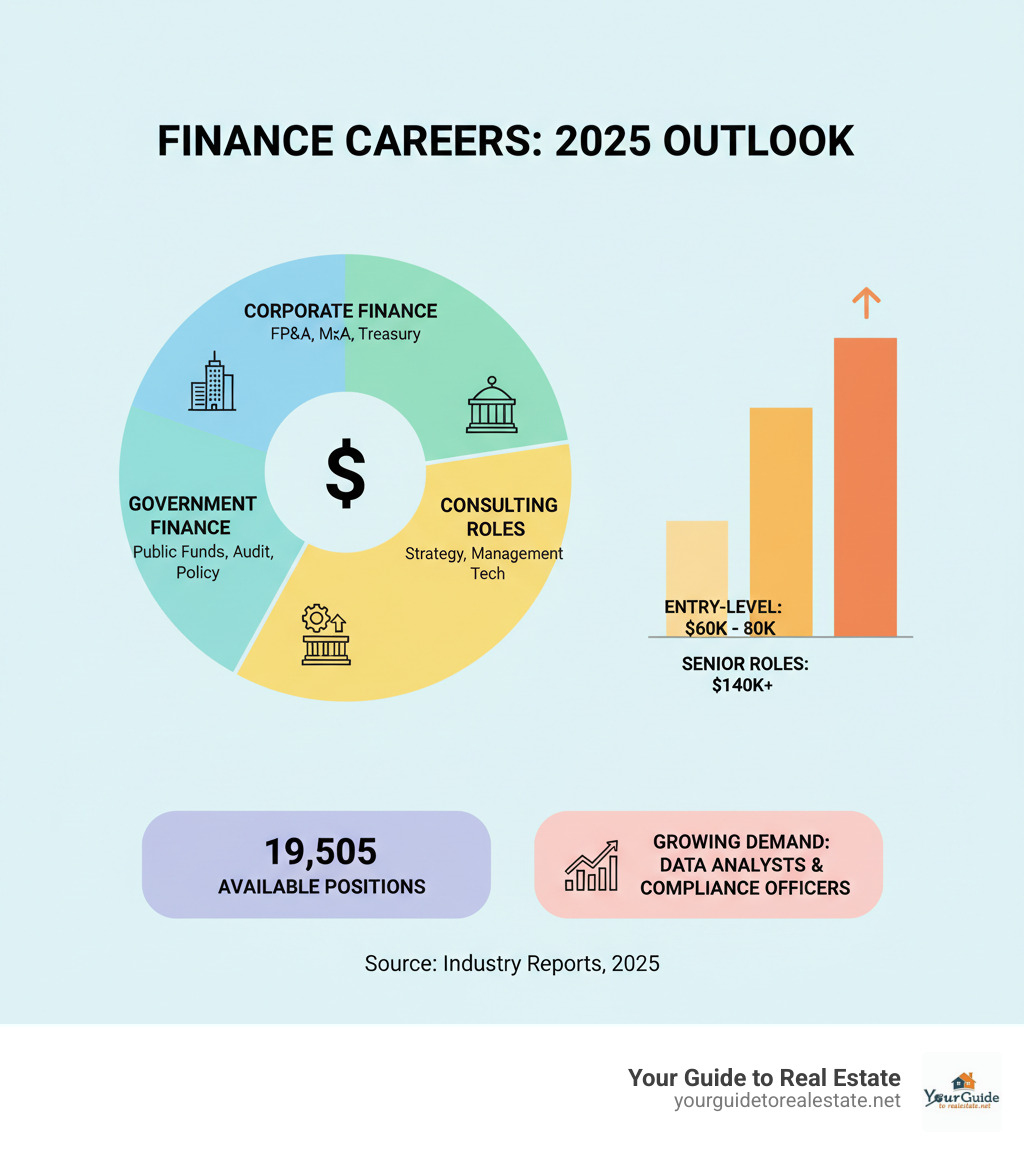
Most In-Demand Finance Roles:
- Financial Analyst – Analyze data and create forecasts
- Investment Banker – Help companies raise capital and advise on transactions
- Risk Manager – Develop strategies to protect company assets
- Data Analyst – Use data to inform business decisions
- Compliance Officer – Ensure adherence to regulations
Salary Ranges:
- Controllers: $140,000+
- Senior Financial Analysts: $90,000-$120,000
- Property/Project Accountants: $70,000-$90,000
- Entry-level roles: $60,000-$80,000
The finance industry offers incredible diversity. As one industry expert notes: “Finance professionals are at the heart of the Government of Alberta; they are integrated into all aspects of government business. They provide strategic advice to decision-makers, offer evidence-based analysis, and enable responsible fiscal stewardship.”
Whether you’re drawn to the world of investment banking, the stability of government finance, or the innovation happening at tech companies like Amazon, there’s a finance career path that matches your interests and skills.
The job market is strong, with 19,505 finance positions currently available across various sectors. Remote work options are growing, and employers are actively seeking professionals who can blend traditional financial expertise with modern data analysis skills.
This guide will walk you through seven critical steps to land your ideal finance role – from understanding different career paths to mastering the interview process.
Finance jobs vocabulary:
Step 1: Explore the Landscape of Finance Roles and Sectors
Before you begin your job search, it’s crucial to understand the variety of roles and sectors available. Finance jobs aren’t all the same – this field is incredibly diverse, with distinct opportunities in private consulting, corporate business, and government sectors.
Think of finance as more than just number-crunching. Yes, you’ll work with data, but you’ll also drive strategy, manage risk, and ensure the financial health of organizations. It’s about being a trusted advisor who helps make the big decisions that shape a company’s future.
Key Roles and Responsibilities
The world of finance jobs offers something for everyone, whether you love detective work, thrive under pressure, or prefer steady, meaningful work that serves the public.
Financial Analysts are like financial detectives. They dig into data, build models, and create forecasts that help businesses make smart investment decisions. Companies depend on them to optimize growth and cash flow while maximizing returns for shareholders.
Controllers take on senior responsibilities, overseeing accounting operations and preparing financial statements. They ensure everything complies with regulations and can work in various settings – from business partnerships to manufacturing facilities, or even specialized areas like Supply Chain or Sales.
For those who love high-stakes environments, Investment Bankers help companies raise capital through stocks and bonds. They also guide mergers and acquisitions, handling complex financial transactions that can reshape entire industries.
Risk Managers have become increasingly vital in our uncertain world. They identify potential financial threats and develop strategies to protect company assets. Their expertise keeps organizations stable and helps avoid costly mistakes.
Auditors serve as financial watchdogs, examining records to ensure accuracy and compliance. Whether working internally or as external consultants, they provide independent assessments of financial health and internal controls.
Tax Specialists steer the complex world of tax planning and compliance, helping individuals and organizations meet their obligations efficiently while minimizing tax burdens legally.
Payroll Specialists ensure employees get paid correctly and on time, managing compensation, benefits, and tax withholdings. Understanding foundational concepts like What is Accounts Receivable? can be incredibly helpful for these roles.
The responsibilities span from analyzing data and forecasting trends to managing massive budgets and ensuring regulatory compliance. Each role plays a critical part in keeping the financial world running smoothly.
Private vs. Public Sector: What’s the Difference?
When exploring finance jobs, you’ll want to understand the key differences between private sector roles (like consulting firms or corporations) and public sector positions (government work). While the core financial principles remain the same, the goals and work environments can be quite different.
| Feature | Private Sector (e.g., PwC, Amazon) | Corporate (e.g., Nestlé) | Government (e.g., Government of Alberta) |
|---|---|---|---|
| Primary Goal | Profit maximization, shareholder value, client success | Long-term value creation, growth, cash flow, shareholder return | Fiscal stewardship, public service, citizen well-being |
| Work Environment | Fast-paced, innovative, competitive, client-driven | Dynamic, results-oriented, collaborative, focused on innovation | Stable, process-driven, public accountability, diverse program areas |
| Typical Projects | M&A advisory, financial restructuring, audit, tax consulting | Budgeting, forecasting, financial reporting, risk management, business development | Strategic advice, evidence-based analysis, policy development, program funding, financial integrity |
Private sector firms like PwC focus on helping clients steer complex financial challenges. Tech companies like Amazon look for “big thinkers” who can support new revenue initiatives – they want people with an entrepreneurial mindset who are comfortable working with big data.
Corporate finance teams act as “change agents” within their organizations. They drive growth initiatives, optimize cash flow, and focus on creating long-term value for shareholders and stakeholders alike.
Government finance professionals take a different approach entirely. They’re “integrated into all aspects of government business,” providing strategic advice and evidence-based analysis. Their work focuses on responsible fiscal stewardship for citizens rather than profit maximization.
The City of Edmonton, for example, emphasizes financial integrity and serving both internal and external clients. Their goal is ensuring a financially responsible city that can thrive today and in the years to come. This public service aspect adds a unique and meaningful dimension to government finance jobs.
Step 2: Chart Your Career Path and Specialization
A successful career in finance requires a clear vision of your potential growth trajectory. Understanding the typical career paths and areas of specialization will help you set long-term goals. Think of it like planning a road trip – you need to know where you’re headed so you can pack the right tools and choose the best route to get there.

Typical Career Progression
The beauty of finance jobs is that they offer a clear pathway upward. Most professionals start at the ground level and work their way up through increasingly responsible positions. It’s like climbing a ladder where each rung builds on the skills you’ve developed below.
Your journey typically begins as an entry-level analyst, where you’ll be learning the fundamentals, supporting senior team members, and getting comfortable with financial data. After a few years of proving yourself, you’ll likely advance to senior analyst, taking on more complex projects and maybe even mentoring the new folks coming in behind you.
The next step up is usually finance manager, where you’ll start overseeing teams and managing budgets for specific departments. From there, you might become a director, responsible for broader financial functions across multiple business units. Some professionals continue climbing to vice president roles, overseeing major financial divisions, and eventually to CFO – the top of the mountain for many corporate finance careers.
Many organizations recognize that structured growth programs work best for everyone involved. The City of Edmonton, for example, offers rotational programs that accelerate growth for aspiring professionals, especially those pursuing their CPA designation. These programs expose you to different departments and help you find where your talents shine brightest.
If you’re wondering whether this career path is right for you, check out our detailed analysis: Is Finance a Good Career Path?
Finding Your Niche: Popular Finance Specializations
Once you understand the career ladder, it’s time to think about which area of finance excites you most. Finance jobs span numerous specializations, and finding your niche can make you incredibly valuable to employers.
Corporate Finance (FP&A) is where many professionals find their home. This involves financial planning and analysis, budgeting, and forecasting. You’ll be the person helping shape the company’s financial future, looking ahead and planning for growth.
Treasury Management professionals become the guardians of cash flow. They manage liquidity, oversee banking relationships, and ensure the company always has the funds it needs to operate smoothly. It’s like being the financial air traffic controller.
The world of Risk and Compliance has exploded in recent years. Risk managers identify and manage potential financial threats, while compliance officers make sure everything follows the rules. With regulations constantly evolving, these roles are more important than ever.
Internal Audit offers a unique perspective – you become the independent voice that ensures everything is working as it should. Internal auditors provide assurance that risk management and internal controls are effective.
For those who love the thrill of big deals, Mergers & Acquisitions (M&A) might be the perfect fit. You’ll value companies, structure deals, and facilitate the buying and selling of businesses. It’s high-stakes work that’s often found in investment banks.
If you’re interested in where finance meets real estate, Property Investment could be your calling. This specialization focuses on analyzing and managing real estate for profit. You can learn more about this exciting field at Property Investment.
Finally, Tax and Pensions specialists handle the complex world of corporate taxation and employee benefits. They ensure compliance while finding ways to optimize financial outcomes for both companies and employees.
Each specialization offers a unique set of challenges and rewards. The key is finding the one that matches your personality, interests, and long-term goals. Some people thrive on the fast pace of M&A work, while others prefer the steady, analytical nature of FP&A. There’s truly something for everyone in finance.
Step 3: Build Your Essential Skillset and Qualifications
Landing the best finance jobs isn’t just about having a degree in accounting or economics. Today’s employers want the complete package – someone who can crunch numbers, tell compelling stories with data, and work well with teams across the organization. Think of it like building a house: you need a solid foundation of technical skills, but the soft skills are what make it a place people actually want to live.
Must-Have Technical and Analytical Competencies
The technical side of finance has evolved dramatically over the past decade. While spreadsheet wizardry is still important, the most sought-after professionals combine traditional finance knowledge with modern data skills.
Financial modeling remains the cornerstone of most finance jobs. Whether you’re building a budget forecast or valuing a potential acquisition, your ability to create robust models that can withstand scrutiny is what separates the pros from the amateurs. These models become the foundation for major business decisions, so precision matters.
Data analysis goes far beyond basic calculations. Modern finance professionals need to spot patterns, identify trends, and draw meaningful insights from complex datasets. This skill is what transforms raw numbers into strategic recommendations that executives can act on.
The rise of big data has made SQL and ETL processes increasingly valuable, especially at tech-forward companies like Amazon. These skills let you work directly with databases, pulling and manipulating large amounts of information without waiting for IT support. It’s like having a direct line to the data goldmine.
Big data concepts are becoming non-negotiable for many roles. Companies are drowning in information and need professionals who can swim confidently in that ocean of data. Understanding how to extract value from massive datasets is what separates good analysts from great ones.
ERP systems like SAP are the backbone of most large organizations. These integrated platforms manage everything from accounting to supply chain operations. Knowing your way around these systems makes you immediately useful to any employer using them.
Don’t underestimate Advanced Excel skills either. While newer tools grab headlines, Excel remains the Swiss Army knife of finance. Mastering pivot tables, complex formulas, and macros can make you incredibly efficient. Understanding foundational concepts like How to Calculate Retained Earnings shows you grasp the building blocks of financial analysis.
Beyond the technical stuff, soft skills make or break careers. The Government of Alberta specifically looks for professionals with strong communication abilities, leadership potential, systems thinking, creative problem-solving skills, collaboration experience, networking capabilities, and agility. You might be a spreadsheet genius, but if you can’t explain your findings to the marketing team or the board of directors, your impact will be limited.
Top Professional Certifications for your finance jobs search
Professional certifications are like having a stamp of approval from industry experts. They show employers you’re serious about your craft and have the knowledge to back up your ambitions.
The CPA (Chartered Professional Accountant) designation is the gold standard for accounting, audit, and tax roles in Canada. It’s comprehensive, rigorous, and respected across all industries. Many organizations, including government bodies, actively support employees pursuing their CPA through study time and financial assistance.
For investment-focused roles, the CFA (Chartered Financial Analyst) certification is highly coveted globally. This program dives deep into investment tools, asset valuation, portfolio management, and wealth planning. The University of Alberta offers specialized programs that can help you prepare for the CFA exams while earning your MBA. You can learn more about their CFA – Chartered Financial Analyst program.
Internal audit professionals should consider the CIA (Certified Internal Auditor) designation. This certification demonstrates your expertise in internal control, risk management, and governance – all critical areas as organizations face increasing regulatory scrutiny.
For payroll specialists, the PCP (Payroll Compliance Practitioner) certification ensures you understand the complex web of legislative requirements. Building on that foundation, the CPM (Certified Payroll Manager) designation focuses on strategic payroll management and leadership skills for those overseeing payroll departments.
The beauty of these certifications is that many employers will support your journey. Organizations like the City of Edmonton and the Government of Alberta often provide financial assistance and dedicated study time, recognizing that investing in employee development creates better outcomes for everyone involved.
These skills and certifications are the tools that will help you build a successful career in finance. But remember, they’re just the foundation – how you apply them and continue learning throughout your career is what will set you apart in this dynamic field.
Step 4: Analyze the Future Outlook for Finance Jobs
The finance industry is constantly evolving, driven by technology and data. Understanding current trends and the future outlook is key to positioning yourself as a forward-thinking candidate. We’re not just looking at the present; we’re peering into the crystal ball of financial careers.

The Rewards and Realities of a Finance Career
Let’s be honest – pursuing finance jobs isn’t just about crunching numbers all day. It’s a career path that offers real rewards, but it also comes with its fair share of challenges. Think of it like buying your first home: exciting opportunities ahead, but you need to understand what you’re getting into.
The competitive compensation in finance is hard to ignore. Most finance roles offer strong earning potential that grows with your experience. You’ll also find strong career growth opportunities, with clear pathways from entry-level analyst positions all the way up to CFO or specialized director roles.
What makes many finance professionals jump out of bed each morning is the strategic business impact they have. You’re not just working with spreadsheets – you’re influencing company strategy and helping make decisions that shape entire organizations. Whether you’re ensuring fiscal stewardship in government or driving innovation at a tech company, your work creates meaningful impact that extends far beyond the finance department.
The dynamic environment keeps things interesting too. Finance is always evolving, which means continuous learning and fresh challenges. One day you might be analyzing market trends, the next you could be presenting budget recommendations to senior leadership.
But let’s talk about the flip side. Many finance jobs operate in a * environment* that can feel like drinking from a fire hose at times. You’ll face high-pressure deadlines – quarterly reports don’t wait for anyone, and deal closings have their own demanding timelines.
The industry also demands continuous learning. Regulations change, new technologies emerge, and what worked last year might not cut it today. During peak periods like budget cycles or reporting seasons, long hours can become the norm rather than the exception.
The benefits are significant, but the challenges require resilience and agility. It’s perfect for people who thrive under pressure and genuinely enjoy solving complex puzzles.
The Future of Finance Jobs: Trends Shaping the Industry
The world of finance jobs is changing faster than ever before. Technology and data are reshaping not just how we work, but what skills employers actually want to see on your resume.
Data-driven decision making has moved from nice-to-have to absolutely essential. Today’s finance professionals need to analyze massive datasets and translate complex information into clear, actionable insights. It’s like being a financial detective – you’re looking for patterns and stories hidden in the numbers.
AI and automation are changing the game entirely. Rather than replacing finance professionals, these tools are handling routine tasks and freeing up time for higher-value strategic work. This shift means roles are evolving from basic transaction processing to analysis and advisory functions.
The rise of hybrid and Work From Home Jobs has permanently changed the workplace landscape. The pandemic accelerated this trend, and now many finance jobs offer flexible arrangements. This flexibility requires strong self-management skills and the ability to collaborate effectively through digital platforms.
We’re seeing increased demand for Risk Managers and Data Analysts across the industry. Companies need experts who can steer complex risks and make sense of overwhelming amounts of information. These roles are among the hottest in the market right now.
There’s also a growing focus on financial crime compliance. With regulatory scrutiny intensifying, Compliance Officers have become crucial for protecting organizations from legal and reputational damage. It’s not the most glamorous work, but it’s absolutely vital.
Perhaps most importantly, upskilling in technology is becoming non-negotiable. Whether it’s mastering Excel’s advanced features, understanding AI applications, or developing leadership skills, continuous learning isn’t just an advantage – it’s a survival requirement.
The landscape of finance jobs is evolving rapidly, and professionals who accept these trends will find themselves well-positioned for long-term success.
Step 5: Research Salaries and Compensation Packages
Knowing your worth is a critical step in the job search process. Compensation in finance varies significantly based on role, experience, industry, and geographic location. We want you to walk into salary negotiations with confidence, armed with the right information.
Think of salary research like preparing for a big presentation – the more data you have, the more confident you’ll feel when it’s time to negotiate. Finance jobs offer some of the most competitive compensation packages across all industries, but the ranges can be surprisingly wide depending on where you work and what you do.
Typical Salary Ranges for Key Finance Roles
Let’s talk numbers. While salaries can fluctuate based on market conditions and company size, we can give you a solid foundation based on recent data from recruitment firms and actual job postings.
At the senior level, a Controller salary commands serious respect – we’re talking $140,000 or more across the country. These professionals oversee entire accounting operations, so the compensation reflects that responsibility.
For those in analytical roles, a Senior Financial Analyst salary in major cities like Montreal typically falls between $90,000 and $120,000. These roles are perfect for people who love diving deep into data and helping companies make smart financial decisions.
Specialized positions like Property Accountant salary ranges, along with Project Accountants and Payroll Specialists, typically sit in the $70,000 to $90,000 range. The exact amount depends on your location and how much experience you bring to the table. If you’re curious about what a $70,000 salary means in terms of buying power, check out I Make $70,000 a Year: How Much House Can I Afford? for some practical insights.
Entry-level roles in finance jobs generally start around $60,000-$80,000, which provides a solid foundation for building your career. These starting positions are stepping stones to much higher earning potential.
Here’s where it gets really interesting: tech companies like Amazon show just how wide salary ranges can be. For a Finance Manager role on their Alexa Finance team, the base pay ranges from $85,900 per year in their lowest geographic market up to $179,500 per year in their highest geographic market. That’s more than double, just based on location and market conditions.
Beyond the Paycheck: Benefits and Professional Development
A strong compensation package includes more than just the base salary. When evaluating finance jobs, we encourage you to look at the broader benefits and opportunities for professional growth. Sometimes these extras can be worth tens of thousands of dollars in value.
Pension packages are particularly generous in the public sector. Organizations like the City of Edmonton and the Government of Alberta offer robust pension plans that provide long-term financial security. Think of it as your employer helping you build wealth for retirement while you’re building your career.
Educational support and tuition reimbursement can be game-changers for your career trajectory. Many organizations invest heavily in their employees’ development by providing financial assistance for certifications like CPA or CFA, or even advanced degrees. The City of Edmonton strongly supports educational achievement, recognizing that smarter employees make better decisions.
You’ll also find comprehensive health and wellness benefits are standard for most professional finance jobs. This includes health, dental, and vision coverage that can save you thousands of dollars annually.
In the private sector, especially at high-growth companies, stock options and performance bonuses can significantly boost your total compensation. Some finance professionals see their total earnings double or triple through these incentives during good years.
Professional development opportunities are equally valuable, even if they don’t show up directly in your paycheck. Look for companies that offer internal training, mentorship programs, and access to conferences. The Government of Alberta showcases their supportive environment in resources like A day in the life of a Government of Alberta finance employee Video, which demonstrates how they invest in their people’s growth.
These additional benefits can dramatically improve your overall job satisfaction and career trajectory. Sometimes a slightly lower base salary with excellent benefits and growth opportunities is worth more than a higher salary with limited perks.
Step 6: Target Employers and Find Openings
With your goals defined and your resume polished, the next step is to find the right opportunities. A targeted approach is far more effective than a scattered one when searching for finance jobs. Think of it like house hunting – you wouldn’t just drive around randomly hoping to find your dream home. You’d research neighborhoods, check out what’s available, and focus on places that match what you’re looking for.
How Employers Support Employee Growth
The best finance jobs come from employers who see you as more than just a number on their payroll. They understand that investing in their finance professionals is really an investment in their own future. When you’re evaluating potential employers, look for these key signs that they’re serious about your career development.
CPA training programs are a golden opportunity that forward-thinking organizations offer. Both the Government of Alberta and the City of Edmonton are excellent examples of this commitment. The City of Edmonton is a CPA pre-approved employer and offers a comprehensive 30-month rotational training program for those aspiring to become Canadian CPAs. You can even Listen to a Podcast about the City of Edmonton’s CPA program to hear directly from employees about their experiences. For more information on the certification itself, visit CPA Alberta.
Funding for certifications goes beyond just CPA support. Many companies will fund other professional designations like CFA, CIA, PCP, or CPM, recognizing the value these credentials add to both the employee and the organization. It’s like having a personal education fund that grows your career while you work.
Internal mobility and advancement opportunities are crucial indicators of a healthy organization. Companies with robust internal structures provide clear pathways for employees to move between departments or take on more senior roles. This creates an environment of continuous learning and growth, where your career can evolve naturally within the same organization.
Mentorship programs can be career game-changers. When organizations pair newer employees with experienced leaders, it creates invaluable opportunities for guidance, networking, and career advice. Having someone in your corner who’s walked the path before you is incredibly valuable.
Look for employers who actively promote professional development and offer clear avenues for advancement – these are the organizations that are truly investing in their people, not just hiring them.
Where to Find the Best Openings
The digital age has made finding finance jobs easier than ever, but it also means you need to know where to look to avoid getting lost in the noise. Here’s where we recommend focusing your search energy for the best results.
Company career pages should be your first stop for large corporations. Companies like Amazon or multinational firms like Nestlé often post their newest openings on their dedicated career pages before anywhere else. For example, you can explore corporate finance opportunities at Nestle Finance Careers. These direct sources give you the most up-to-date information and often provide better insights into company culture.
Government job portals are essential if you’re interested in public sector finance jobs. These roles often offer excellent benefits and job security, plus the satisfaction of serving the public good. You can Search all current Alberta government job postings directly through their official portal. The City of Edmonton also maintains a dedicated portal for public job opportunities, making it easy to find municipal finance roles.
Professional networking sites like LinkedIn have evolved far beyond just networking – they’re now powerful job boards in their own right. You can find over 474,000 finance jobs in the United States alone, with helpful filtering options for remote work and specific locations. The platform also lets you set up job alerts, so new opportunities come straight to your inbox.
Specialized job boards like Finance Jobs Site | eFinancialCareers US focus exclusively on finance roles. These platforms often list niche positions that might not appear on general job boards, and they provide valuable market insights and career advice alongside the job listings. It’s like having a finance career expert curating opportunities just for you.
Remember to set up job alerts on these platforms – they’ll notify you when new postings match your criteria, so you can be among the first to apply. In the competitive world of finance jobs, being early can make all the difference.
Step 7: Master the Application and Interview Process
The final step in securing your ideal finance job is to make your case to potential employers. Think of this as your moment to shine – where all your preparation comes together. A polished resume and confident interview performance can absolutely set you apart from the competition.
Crafting a Winning Application
Your application is like your first handshake with a potential employer. We want to make sure it’s firm, confident, and memorable. The key is treating each application like a custom-custom suit rather than a one-size-fits-all approach.
Tailoring your resume to each job description is absolutely crucial. We can’t stress this enough – generic resumes often end up in the rejection pile. Take the time to study the job posting and mirror their language. If they mention “financial modeling,” make sure that phrase appears in your resume if you have that experience. This isn’t about being deceptive; it’s about speaking their language.
Using keywords from the posting serves a dual purpose. First, it helps your resume get past automated screening systems that many companies use. Second, it shows the hiring manager that you’ve actually read and understood what they’re looking for. It’s a simple step that makes a huge difference.
When you’re highlighting your experience, focus on quantifying your impact with numbers and data. Instead of writing “managed budgets,” try “managed annual budgets of $2.5M, consistently coming in 3% under budget.” Numbers tell a story that words alone can’t capture. Did you reduce processing time? By how much? Did you identify cost savings? What was the dollar amount?
Recruitment agencies like Hays consistently emphasize the importance of customizing applications. They see thousands of resumes, and the ones that stand out are those that clearly connect the candidate’s experience to the specific role.
Nailing the Interview
The interview is where your preparation really pays off. We like to think of it as a professional conversation where both sides are figuring out if there’s a good match. The more prepared you are, the more natural and confident you’ll feel.
Preparing for both technical and behavioral questions is essential in finance jobs. You might be asked to walk through a financial model or explain how you’d approach a budget variance. But you’ll also face questions like “Tell me about a time you had to work under pressure” or “How do you handle conflicting priorities?” Practice your answers, but don’t memorize scripts – you want to sound genuine, not robotic.
Researching the company and its culture shows genuine interest and helps you ask better questions. If you’re interviewing with Amazon, understanding their leadership principles isn’t just helpful – it’s expected. If it’s a government role with the City of Edmonton, knowing about their commitment to fiscal responsibility and public service will help you frame your answers appropriately.
Practicing how you explain your experience clearly is often overlooked but incredibly important. Can you describe your biggest accomplishment in two minutes? Can you explain a complex financial concept in simple terms? The ability to communicate clearly is just as important as technical skills in most finance jobs.
Don’t forget to prepare thoughtful questions to ask the interviewer. This isn’t just about showing interest – it’s your chance to gather information. Ask about the team you’d be joining, the biggest challenges facing the department, or what success looks like in the first 90 days. These questions help you assess if the role is right for you while demonstrating your strategic thinking.
With more interviews happening online, mastering Virtual Meeting Etiquette has become essential. Test your technology beforehand, ensure good lighting, and have a professional background. Small details like these can make or break a virtual interview.
The interview process is a two-way street. While they’re evaluating you, you’re also evaluating them. The best finance jobs come from mutual fit, where your skills align with their needs and their culture aligns with your values.
Frequently Asked Questions about Finance Jobs
We understand that exploring finance jobs can feel overwhelming, especially when you’re just starting out. Over the years, we’ve heard the same questions come up again and again from people looking to break into this exciting field. Let’s tackle the most common concerns and give you the clarity you need to move forward with confidence.
What are the most in-demand finance jobs?
The finance world is constantly evolving, and some roles are absolutely hot right now. According to eFinancialCareers, companies are scrambling to fill positions for Financial Analysts who can dig into data and turn it into actionable business insights. It’s like being a detective, but instead of solving crimes, you’re solving business puzzles.
Investment Bankers remain in high demand because companies always need help raising capital and navigating complex deals. Think of them as the matchmakers of the business world, connecting companies with the money they need to grow.
Risk Managers are more crucial than ever. With markets bouncing around like a ping-pong ball and regulations getting more complex, companies desperately need professionals who can spot trouble before it hits. Data Analysts are also incredibly sought after because every company is drowning in information but starving for insights.
Finally, Compliance Officers are essential in our heavily regulated world. They’re the guardians who make sure companies stay on the right side of the law. These roles reflect how the industry is shifting toward data-driven decisions, smart risk management, and staying compliant with ever-changing regulations.
What qualifications do I need for an entry-level finance job?
Getting your foot in the door for finance jobs isn’t as complicated as you might think. Most employers want to see a bachelor’s degree as your foundation. The most common degrees are Finance, Accounting, Economics, or Business Administration with a finance focus. If you’re more mathematically inclined, degrees in Mathematics or Statistics can also open doors, especially for number-heavy roles.
But here’s the thing – your degree is just the starting point. What really makes you stand out is practical experience. Internships are absolutely crucial for getting real-world exposure and building your professional network. Don’t underestimate their power to turn you from a resume into a real person in someone’s mind.
Employers also look for strong analytical skills, sharp attention to detail, and solid proficiency in Microsoft Excel. It’s not glamorous, but Excel mastery can be your secret weapon. If you can show familiarity with financial software or ERP systems, even better. These technical skills show you’re ready to hit the ground running.
How much can I earn in a finance career?
This is probably the question we get asked most, and honestly, the earning potential in finance jobs is one of the field’s biggest attractions. Your paycheck will depend on several factors: your specific role, experience level, the industry you choose, and where you’re located geographically.
If you’re just starting out, entry-level analysts typically earn between $60,000 and $80,000 annually. That’s a solid foundation to build on. As you gain experience and prove your worth, mid-level roles like Senior Financial Analyst can bring in $90,000 to $120,000, especially in major cities.
When you reach senior positions like Controller, you’re looking at $140,000 or more. At the top of the pyramid, roles in investment banking, private equity, or senior management at large tech companies can be incredibly lucrative. For example, a Finance Manager at Amazon could earn up to $179,500 in their highest-paying markets.
These are just base salaries. Many finance jobs come with bonuses, benefits packages, stock options, and other perks that can significantly boost your total compensation. It’s not just about the money you see in your paycheck – it’s about the complete package that builds your financial future.
Conclusion
Your journey to landing one of the many available finance jobs doesn’t have to be overwhelming. With the right preparation and strategy, you can absolutely achieve your goal of launching a successful and fulfilling career in finance.
Throughout this guide, we’ve walked through the essential steps together. We explored the diverse landscape of finance roles – from the analytical world of corporate finance to the meaningful work of fiscal stewardship in government. We charted potential career paths and finded how different specializations can align with your interests and strengths.
Building the right skillset is crucial, whether that’s mastering financial modeling, pursuing professional certifications like CPA or CFA, or developing those soft skills that help you communicate complex ideas clearly. The future of finance jobs is bright, with growing demand for data analysts, risk managers, and compliance officers who can steer our increasingly complex financial world.
Understanding compensation ranges and benefits packages gives you confidence during negotiations. The best employers don’t just offer competitive salaries – they invest in your growth through training programs, mentorship, and clear advancement paths.
When you’re ready to apply, take that targeted approach we discussed. Tailor each application, research your potential employers thoroughly, and prepare for interviews with both technical knowledge and genuine enthusiasm for the role.
The financial industry needs talented professionals like you. Whether you’re drawn to helping companies make strategic decisions, ensuring regulatory compliance, or managing public resources responsibly, there’s a place for your skills and passion.
As you start on this career path, finance principles extend into every aspect of life. Ready to take the next step in your financial journey? Explore our Understanding Mortgages: A Beginner’s Guide to Home Loans to see how financial expertise applies to one of the biggest investments you’ll ever make.
The experts at Your Guide to Real Estate are here to support you with insights on everything from personal budgeting to large-scale investments. Your finance career starts now – and we’re excited to see where it takes you.