
Why Understanding Eminent Domain Cases Matters for Property Owners
Eminent domain cases represent some of the most powerful legal proceedings that can affect property owners in America. When government entities decide they need private land for public projects, they can force owners to sell through the constitutional power of eminent domain.
Key Types of Eminent Domain Cases:
- Infrastructure Projects – Roads, bridges, airports, and utilities
- Public Buildings – Schools, courthouses, fire stations, and military bases
- Urban Development – Redevelopment projects and economic revitalization
- Conservation – Parks, environmental protection, and historical preservation
- Emergency Services – Flood control, disaster response facilities
The government’s power isn’t unlimited, though. Property owners have specific rights under the Fifth Amendment, including the guarantee of “just compensation” and the requirement that takings serve a genuine “public use.”
Understanding these cases matters because cities begin 80 public projects per year that use eminent domain to take property from residents or business owners. From the famous Susette Kelo case that sparked nationwide controversy to recent pipeline disputes, eminent domain continues to shape how we balance public needs against private property rights.
Whether you’re a homeowner, investor, or business owner, knowing how eminent domain works can help you protect your property and understand your options if you ever receive that dreaded condemnation notice.
Some cases have become legendary for their impact on property law. Take Susette Kelo’s “little pink cottage” in New London, Connecticut, which became a national symbol of the government’s eminent domain power when the city included her property in a municipal economic development plan. The Supreme Court’s controversial 5-4 decision in her case changed how we think about what constitutes “public use.”
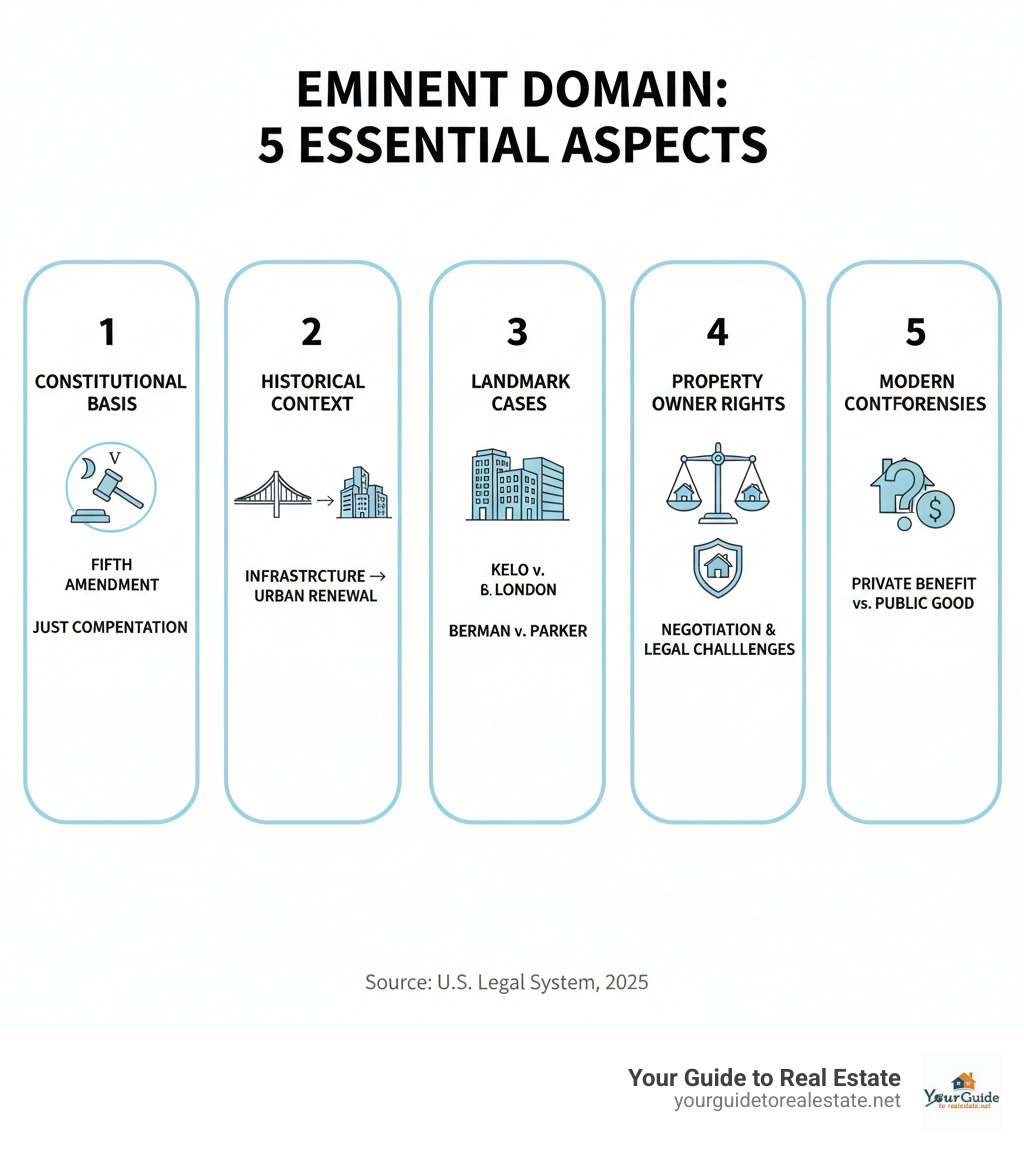
Know your eminent domain cases terms:
1. By Grasping the Constitutional Basics
Every eminent domain case starts with a simple but powerful idea: sometimes the government needs private land for projects that benefit everyone. But here’s the thing – the government can’t just take whatever it wants, whenever it wants. The Constitution puts some pretty important guardrails in place.
The power of eminent domain isn’t actually spelled out word-for-word in the Constitution. Instead, it’s what lawyers call an “inherent power” – basically, governments have always had this ability because they need it to function. Think about it: how could a city build roads or schools if one stubborn property owner could block the entire project?
But our founding fathers were smart. They knew this power could be abused, so they included the Fifth Amendment’s Takings Clause: “nor shall private property be taken for public use, without just compensation.” Those few words create two non-negotiable rules that shape every eminent domain case: the taking must serve a public use, and the owner must get just compensation.
This balance protects both sides. The government gets to build necessary projects for the community, but individual property owners don’t get steamrolled in the process. It’s like having a referee in a game – both teams can play hard, but there are rules everyone has to follow.
The constitutional purpose behind this system is pretty straightforward: allow progress while protecting people. It’s worth noting that eminent domain is different from other ways the government can end up with property. Escheat and Eminent Domain are Both Examples Of government powers over property, but they work very differently. Escheat happens when someone dies without heirs – the property just reverts to the state. Eminent domain, on the other hand, is an active taking where the government says “we need this land” and makes it happen.
What is ‘Public Use’?
Here’s where things get interesting – and controversial. What exactly counts as “public use”?
Originally, this was pretty straightforward. If the public could literally use the property, it qualified. Roads are a perfect example – everyone drives on them. Same goes for schools, public parks, military bases, and infrastructure projects like water treatment plants. These are the bread-and-butter cases that rarely cause much fuss.
But over the years, courts have stretched this definition quite a bit. Instead of requiring direct public access, many judges now accept a broader idea of “public purpose” or “public benefit.” This shift has opened the door to some pretty controversial takings.
The definition keeps evolving, and that’s created some of the most heated eminent domain cases in recent history. Some governments now argue that economic development counts as public use, even if the land ends up in private hands. The reasoning? More jobs and tax revenue benefit the whole community. Not everyone buys this argument, though.
What is ‘Just Compensation’?
When the government takes your property, they can’t just hand you a dollar and call it even. The Constitution requires “just compensation,” which sounds simple but can get complicated fast.
The goal is to make you pecuniarily whole – fancy legal speak for putting you in the same financial position you’d be in if the taking never happened. Fair, right?
The starting point is usually fair market value – what your property would sell for in the current market. Professional appraisers look at recent sales of similar properties, your land’s location, condition, and what it could potentially be used for. It’s similar to getting your home appraised for a mortgage, but with higher stakes.
But here’s where it gets more interesting. Just compensation isn’t always just about the land value. Depending on your situation, you might also be entitled to:
Relocation expenses if you need to move your home or business. Business damages if the taking forces you to close or relocate your company. Severance damages when they only take part of your property but the remaining piece loses value. Think of it like taking half of a beautiful lakefront lot – the remaining half might be worth much less than 50% of the original property’s value.
The appraisal process can be complex, and the government’s first offer often isn’t their best offer. You have every right to challenge their valuation and fight for fair treatment. Many property owners are surprised to learn there’s potential for additional damages beyond the basic property value.
The government wants to settle these cases efficiently, but that doesn’t mean you should accept the first number they throw out. Understanding your rights is the first step to protecting your investment.
2. By Exploring Its Historical Use and Evolution
When you look at America’s greatest achievements—from our national parks to massive infrastructure projects—you’ll find eminent domain played a crucial role in making them possible. The history of this government power tells the story of how our nation grew and developed, though not always without controversy.
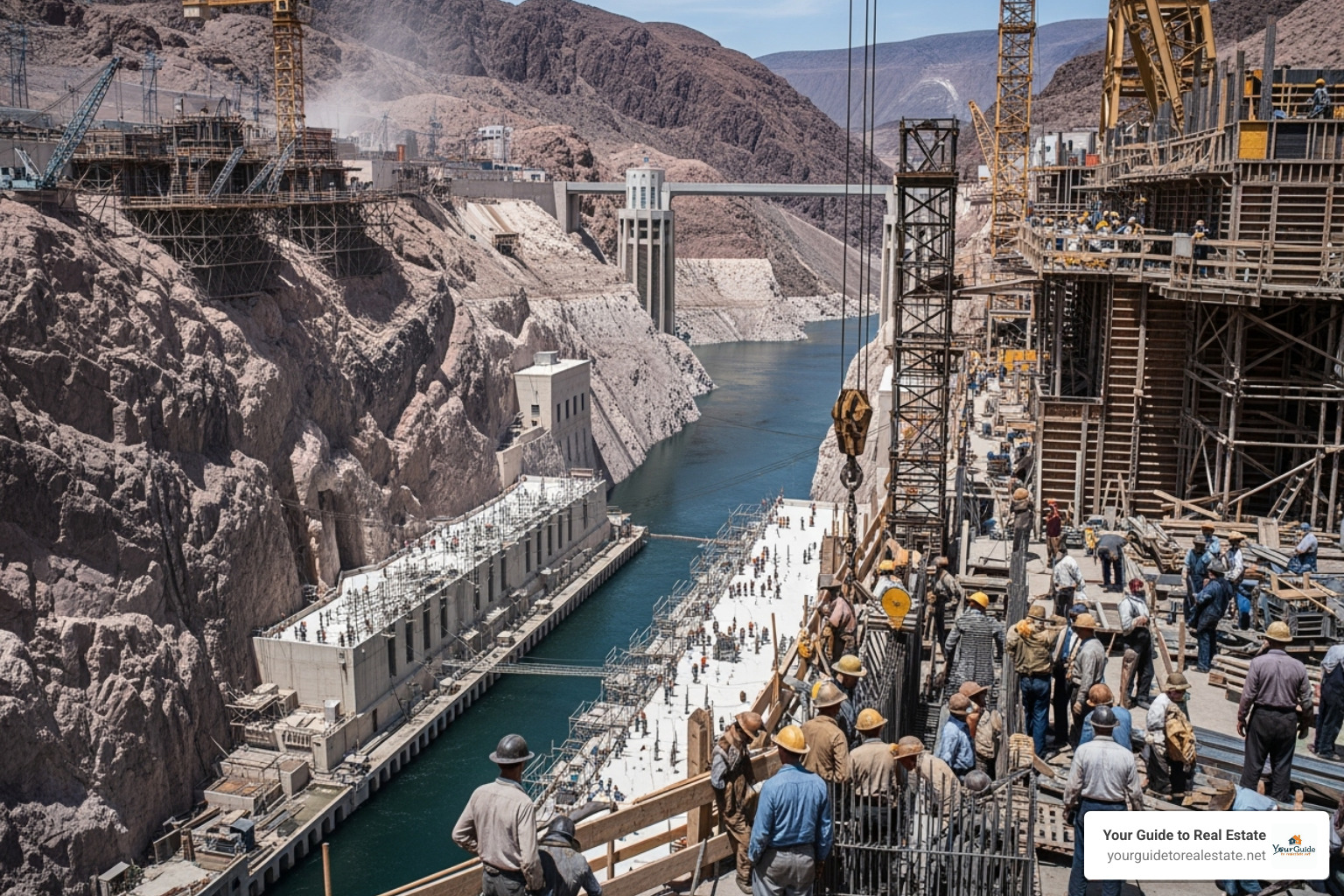
The Hoover Dam stands as one of the most impressive examples of eminent domain in action. During the 1930s, the government needed vast amounts of land along the Colorado River to build this engineering marvel. The project required taking private property to create what would become Lake Mead and support the dam structure itself. Today, millions of people benefit from the electricity and water it provides.
But not all historical uses of eminent domain have such clear-cut happy endings. Take Central Park in New York City, for instance. While we now treasure this green oasis in Manhattan, its creation came at a significant human cost. The city used eminent domain to acquire the land, forcing out 1,600 poor residents who lived there, including the thriving African American community of Seneca Village.
This pattern of displacement unfortunately became common throughout American history. Lower-income communities often found themselves in the path of “progress,” with their homes and businesses taken for public projects.
The World War II era and President Roosevelt’s New Deal policies marked the most active use of eminent domain in our nation’s history. The government needed to move fast—building factories for war production, creating jobs through infrastructure projects, and constructing military bases. Millions of acres changed hands during this period as the country mobilized for war and economic recovery.
Sometimes eminent domain served to preserve our heritage rather than build something new. In 1896, Congress stepped in to take the Gettysburg Battlefield from a private railroad company. This action ensured that one of our most important Civil War sites would remain protected for future generations to visit and learn from.
How Historical Projects Shaped the Law
These major historical projects didn’t happen without legal fights. Property owners challenged the government’s power, leading to important eminent domain cases that still influence how the law works today.
The case of Kohl v. United States in 1875 became a turning point for federal eminent domain power. The federal government wanted to build a custom house and post office in Cincinnati, but the current leaseholders fought back. The court ruled against the leaseholders, establishing once and for all that the federal government could take land within state borders for legitimate public purposes.
This decision opened the door for the federal government to build post offices and federal buildings across the country without having to negotiate with every state government. It was a practical necessity as the nation grew and needed more federal facilities.
Railroad expansion became another major driver of eminent domain law. As companies pushed tracks across the continent, they needed reliable ways to secure rights-of-way through private property. The government often granted railroad companies the power of eminent domain, recognizing that connecting the country by rail served the public good.
Water supply projects also relied heavily on this power. Growing cities needed access to clean water sources, often located miles away from urban centers. Eminent domain made it possible to build the reservoirs, aqueducts, and treatment facilities that modern cities depend on.
These early historical uses established the framework we still use today. They showed that eminent domain could serve legitimate public needs, but they also revealed how the power could impact vulnerable communities. Understanding this history helps us better evaluate modern eminent domain cases and the ongoing balance between public benefit and individual property rights.
3. By Examining Landmark Eminent Domain Cases
The most dramatic eminent domain cases in American history have fundamentally changed how we think about property rights. These aren’t just dry legal precedents – they’re stories about real people whose lives were turned upside down when government met private property.

The name Susette Kelo became synonymous with eminent domain controversy after her battle with New London, Connecticut. Her modest pink cottage sat in the path of an ambitious economic development plan that would have created a hotel, restaurants, and a marina next to a new Pfizer research facility. The city argued these private developments would create jobs and boost tax revenue – surely that counted as “public use,” right?
In Kelo v. City of New London (2005), the Supreme Court agreed with the city in a razor-thin 5-4 decision. This controversial case ruled that economic development could qualify as legitimate public use, even when the land would be transferred to private developers. The decision sent shockwaves across the country, sparking outrage from property rights advocates who saw it as government overreach.
The bitter irony? The government seized Susette Kelo’s home for a project that never happened. Today, the lot where her pink house once stood remains largely empty – a stark reminder of how eminent domain can go wrong.
But Kelo didn’t happen in a vacuum. Earlier eminent domain cases had been steadily expanding what counted as “public use” for decades.
Berman v. Parker (1954) involved Washington D.C.’s urban renewal efforts in what officials deemed a “blighted” area. When a department store owner protested that his property wasn’t actually blighted, arguing the taking was a violation of his rights, the Supreme Court unanimously disagreed. The court ruled that entire neighborhoods could be redeveloped as long as the overall plan served a public purpose – even if individual properties within that area were in good condition.
Then came the unusual case of Hawaii Housing Authority v. Midkiff (1984). Hawaii had a unique problem: a small group of landowners controlled most of the residential land, creating an oligopoly that kept housing prices artificially high. In this 1984 eminent domain case, the state used eminent domain to break up this concentration of land ownership, taking property from large landowners and selling it to existing tenants. The Supreme Court found this land redistribution served a legitimate public purpose by addressing economic inequality.
What are the most famous eminent domain cases in history?
Some of the most influential eminent domain cases deal with a trickier question: when do government regulations become so restrictive that they’re essentially the same as taking your property?
Penn Central Transportation Co. v. New York City (1978) created the framework we still use today for these “regulatory takings.” When New York City designated Grand Central Terminal as a historic landmark, it prevented Penn Central from building a skyscraper above the station. Penn Central tried to sue them, claiming the landmark designation was essentially a taking without compensation.
The Supreme Court disagreed, establishing that regulations don’t become takings unless they completely destroy a property’s economic value or interfere with the owner’s reasonable investment-backed expectations. Since Penn Central could still operate the terminal profitably, no compensation was required.
Lucas v. South Carolina Coastal Council (1992) pushed back on that principle. David Lucas bought two beachfront lots planning to build homes, but new coastal protection laws prohibited any construction. Unlike Penn Central, Lucas was left with land he literally couldn’t use for anything economically viable. The Supreme Court ruled that when regulations eliminate all economically beneficial use of property, compensation is required unless the prohibited use was already illegal under state law. The court determined the landowner was entitled to compensation from the government.
How have recent eminent domain cases impacted property rights?
The public backlash after Kelo was swift and decisive. Americans across the political spectrum united in their outrage over the idea that government could take someone’s home and give it to a private developer for economic reasons.
Forty-seven states responded by strengthening their eminent domain laws. Many states now explicitly prohibit using eminent domain for economic development, while others require a much higher standard of proof that a taking serves genuine public use rather than private benefit.
These post-Kelo reforms have created a patchwork of protections that vary dramatically by state. Some states offer robust safeguards for homeowners and small businesses, while others still allow relatively broad interpretations of public use. The result is that your property rights in an eminent domain situation depend heavily on where you live.
The legacy of these landmark eminent domain cases continues to evolve. While the constitutional framework remains the same, the political and legal landscape has shifted toward greater protection for individual property owners – a direct response to cases like Kelo that many Americans felt went too far.
4. By Knowing a Property Owner’s Rights and Recourse
When that dreaded condemnation notice arrives in your mailbox, your world might feel like it’s turning upside down. But here’s the thing – you’re not powerless. Understanding your rights in eminent domain cases can make all the difference between feeling helpless and taking control of your situation.
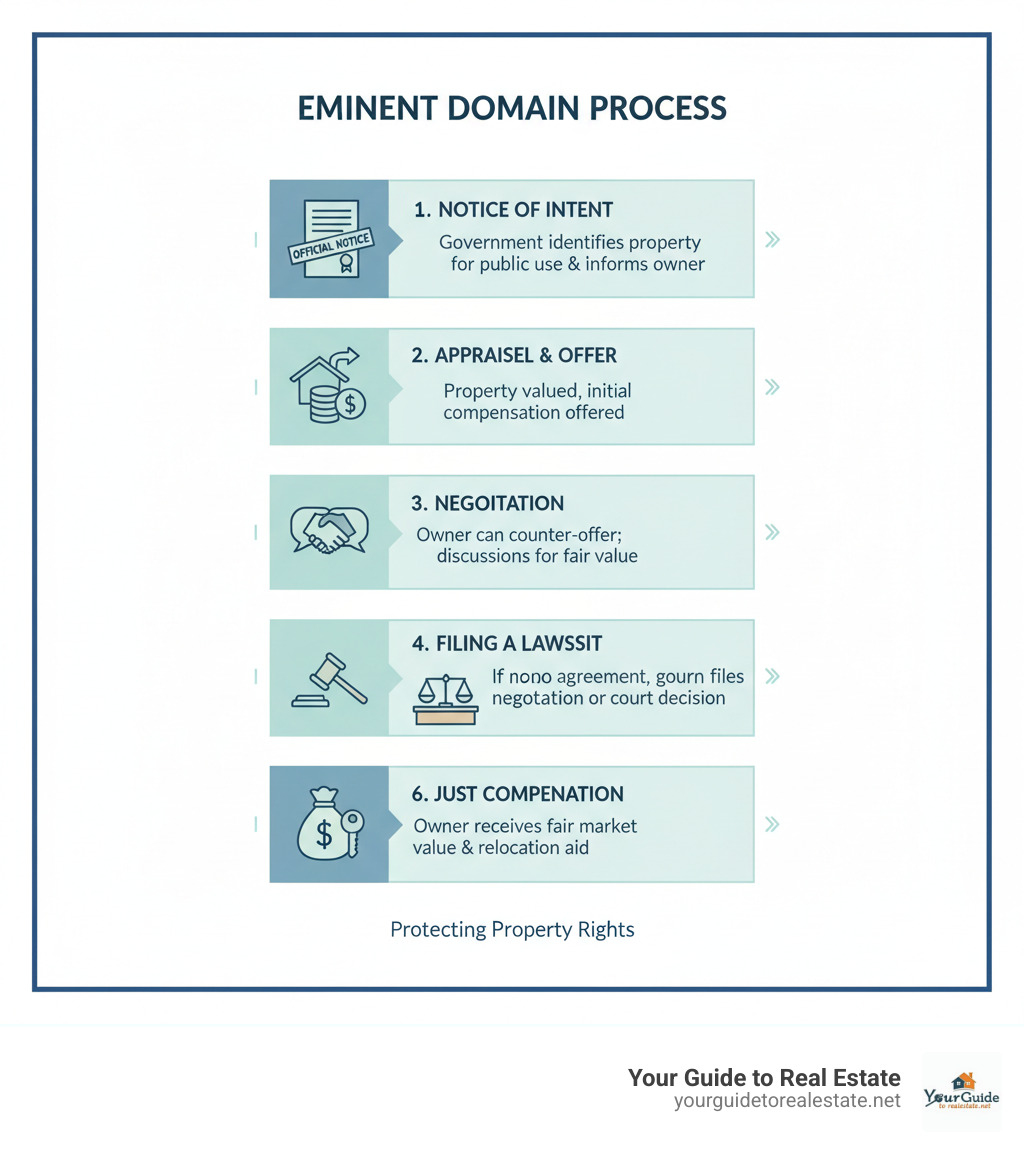
The condemnation process follows a predictable pattern, and knowing what to expect can help you prepare. It typically starts when the government identifies your property as needed for a public project. They’ll usually try to negotiate a purchase with you first – this is your right to negotiate, and you should take full advantage of it.
If those initial talks don’t work out, they’ll file a formal eminent domain lawsuit. Don’t panic. This is where your constitutional protections really kick in. You have an absolute right to notice of these proceedings – they can’t just show up and take your property without proper legal process.
Here’s something many property owners don’t realize: you can challenge the taking itself. Yes, it’s often an uphill battle, but it’s not impossible. You might argue that the project doesn’t truly serve a legitimate public use, or that the government hasn’t followed proper procedures.
Some types of property enjoy special protections too. Depending on your state, property exemptions might apply to cemeteries, certain historic sites, or other specially designated areas. Just remember – you can’t suddenly convert your property to one of these uses after condemnation proceedings begin. Nice try, though!
The smartest move you can make? Seeking legal assistance from an attorney who knows eminent domain cases inside and out. Think of it as an investment in protecting your biggest asset. Just like you’d research How to Invest in Real Estate, understanding your legal options is crucial for protecting what you already own.
How is ‘Just Compensation’ Determined?
Let’s talk money – specifically, how much the government owes you when they take your property. The process centers around fair market value appraisal, but there’s more to it than you might think.
The government will hire an appraiser to determine what your property is worth. But here’s a pro tip: you’re not stuck with their number. Getting your own independent appraisal is often one of the best investments you can make. It’s similar to conducting a Competitive Market Analysis Real Estate evaluation, but with the added complexity of legal standards and potential court testimony.
Just compensation goes beyond the basic land value too. Depending on your situation, you might be entitled to business damages if your livelihood gets disrupted. Moving a established business isn’t just about packing boxes – you could lose customers, goodwill, and revenue during the transition.
Relocation expenses are another important component. The actual costs of moving your home or business, including everything from hiring movers to reconnecting utilities, should be covered. Don’t overlook the small stuff – it adds up quickly.
If they’re only taking part of your property, severance damages for partial takings become crucial. Maybe the remaining land becomes harder to access, or the irregular shape makes it less valuable. You deserve compensation for that loss too.
The government’s first offer is rarely their best offer. Contesting the valuation is not only your right – it’s often necessary to get what you truly deserve. Armed with your own appraisals and solid legal representation, many property owners see their compensation offers increase significantly.
How Can You Fight an Eminent Domain Action?
Fighting city hall isn’t easy, but it’s absolutely possible. Many property owners achieve much better outcomes than they initially thought possible by understanding their options and preparing strategically.
Proving improper public use is often your strongest weapon. This means demonstrating that the government’s stated public purpose is really just a cover for private benefit. Remember Susette Kelo’s fight? She challenged whether transferring her property to a private developer truly served the public interest.
Showing lack of necessity can also be effective. Maybe the government doesn’t actually need your specific property, or they’re taking more land than the project requires. Sometimes there are alternative locations or less invasive designs that would work just as well.
Identifying procedural errors by the government might seem technical, but these mistakes happen more often than you’d think. Government entities must follow strict legal procedures, from proper notification to conducting valid appraisals. Any significant slip-up could invalidate the entire taking.
Even if you can’t stop the taking entirely, negotiating a higher settlement is almost always possible. With independent appraisals and experienced legal counsel, you can present a compelling case for fair compensation that includes all eligible damages.
The key is preparation and persistence. Just like following The Ultimate Guide to Selling Your Home: Tips, Timelines, and Tools, success in eminent domain cases comes from understanding your options and taking action. Don’t go it alone – legal expertise can make the difference between feeling defeated and protecting your property rights.
5. By Recognizing Modern Controversies and Abuses
Even with constitutional safeguards and legal precedents, eminent domain remains a hotbed of controversy. Modern eminent domain cases frequently highlight the tension between private property rights and the government’s expansive power, often revealing instances of alleged abuse.
One of the most heated debates today centers on the blurred line between “public good” and “private benefit.” After the Kelo decision opened the door, many property owners worry their land could be seized and handed over to private developers who promise vague economic benefits to the community. It’s a legitimate concern that has sparked outrage across the country.
The word “blight” has become particularly controversial. Too often, we see perfectly good neighborhoods suddenly declared “blighted” to justify takings that clear the way for profitable private developments. What constitutes blight can be surprisingly subjective, and the designation process doesn’t always seem fair to affected property owners.
Sports stadiums present another flashpoint. Cities frequently use public funds and eminent domain powers to acquire land for facilities that, let’s be honest, primarily benefit private sports franchises. When residents and a city couldn’t agree on compensation for a stadium project, the city used eminent domain to take the land anyway. The “public benefit” argument gets pretty thin when taxpayers foot the bill and lose their property for what’s essentially a private entertainment business.
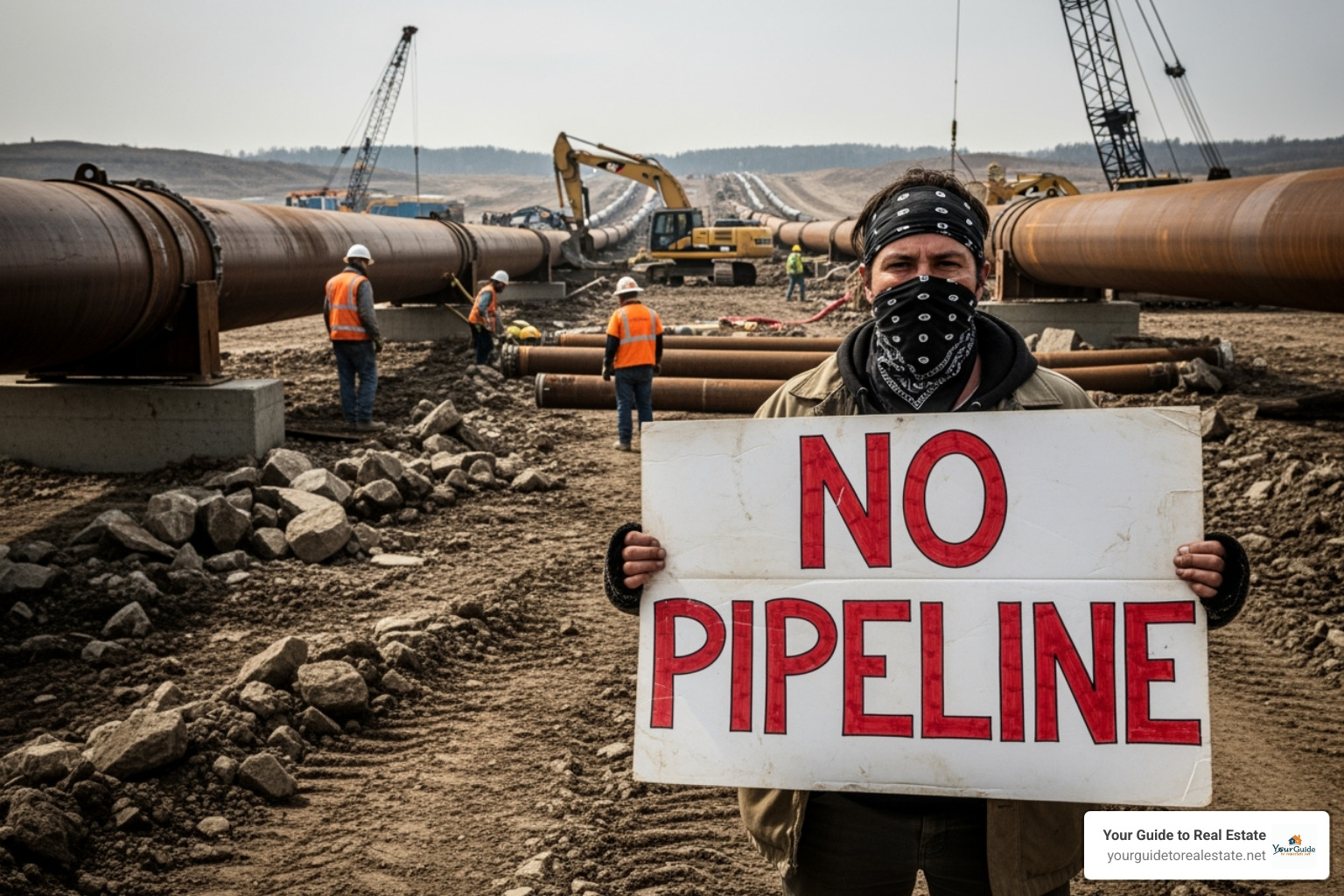
The rapid expansion of oil and gas pipelines has created a whole new category of eminent domain cases. Private companies, often granted government authority, seek to acquire easements across private property for their infrastructure projects. Rural landowners, in particular, find themselves facing powerful energy companies backed by eminent domain authority. In 2021, the Supreme Court sided with a gas company seeking to use state land to build a natural gas pipeline, showing how these disputes reach the highest levels of government.
What Are Examples of Eminent Domain Abuse?
Despite legal protections, troubling examples of eminent domain abuse continue to surface. These real-world cases show why property owners need to stay vigilant and understand their rights.
The Las Vegas widow’s story is heartbreaking. In the mid-90s, a woman inherited her husband’s well-maintained commercial building, depending on its rental income for retirement. The city suddenly declared the area “blighted” to justify eminent domain, despite her building being in good condition with paying tenants. She lost her property without proper notice or a fair hearing. This case perfectly illustrates how “blight” declarations can be misused to benefit private developers at the expense of individual property owners.
Toledo’s Chrysler plant debacle shows how economic promises can fall short. In 1999, Toledo declared neighborhoods with decent homes as “slums” to make way for a new Chrysler manufacturing plant. The city borrowed millions and offered Chrysler huge incentives, all based on promises of 5,000 new jobs. The reality? The automated plant only hired 2,100 people. This case shows how cities might justify eminent domain and relocate entire communities based on economic development promises that don’t always pan out.
Hurst, Texas provides another clear example of private benefit masquerading as public good. A real estate company expanded its private mall by acquiring over 127 homes through eminent domain. Despite fierce resistance from homeowners and multiple lawsuits, a judge eventually forced residents off their land. It’s hard to see how a private shopping mall expansion truly serves the public interest more than people’s homes.
These eminent domain cases remind us that the power to take private property, while sometimes necessary, can be misused when proper oversight is lacking.
How Does Eminent Domain Compare Internationally?
The concept of government taking private property for public use exists worldwide, though it goes by different names and operates under varying rules. Understanding these differences helps put American eminent domain in perspective.
Canada calls the process “expropriation” and handles it through provincial and federal acts like the Expropriations Act. While Canadians also receive fair compensation, some provinces explicitly allow payment for business losses or property damage that might be harder to claim in certain U.S. states. The process tends to be more standardized across provinces than our state-by-state approach.
The United Kingdom uses “compulsory purchase” powers granted by Parliament to public bodies. British compensation typically includes market value, severance, disturbance costs, and sometimes additional “home loss” or “basic loss” payments. Their system seems more generous in recognizing the emotional and practical costs of forced relocation.
China’s approach to land acquisition operates on a massive scale, as seen with projects like the Three Gorges Dam that displaced over 1.3 million people. While compensation is provided, the process prioritizes rapid development over extensive individual negotiation. According to A Comparative Perspective of Eminent Domain Laws in the United States & China, fundamental differences in property rights and legal frameworks exist between the two countries.
| Country | Term Used | Compensation Standards |
|---|---|---|
| United States | Eminent Domain | Fair market value plus eligible damages |
| Canada | Expropriation | Market value plus business losses and injurious affection |
| United Kingdom | Compulsory Purchase | Market value plus severance, disturbance, and loss payments |
| China | Land Acquisition | Compensation varies by region and project scale |
These international comparisons show that while governments worldwide need land for public projects, the protections, processes, and compensation vary dramatically. Our Fifth Amendment protections, while not perfect, provide stronger individual property rights than many other systems around the world.
Frequently Asked Questions about Eminent Domain
When you’re facing an eminent domain cases situation, it’s natural to have questions. We’ve helped countless property owners understand their rights, and these are the questions that come up most often.
Can the government take my property and give it to a private company?
Unfortunately, yes – this can happen, and it’s one of the most controversial aspects of modern eminent domain law. The Supreme Court’s 2005 Kelo v. City of New London decision opened the door for governments to seize private property and transfer it to private developers, as long as the project supposedly serves a “public purpose” like economic development.
The Kelo ruling essentially said that creating jobs and increasing tax revenue could justify taking someone’s home or business. You can imagine how well that went over with the American public – it didn’t.
Here’s the good news: the massive public outcry following Kelo led to real change. Forty-seven states have strengthened their eminent domain laws since then, making it much harder for local governments to use this power for private benefit. Many states now require a much clearer public use or completely prohibit transfers to private entities for economic development alone.
So while it’s still constitutionally possible under federal law, your state laws likely offer much stronger protection than they did before 2005.
What types of property are exempt from eminent domain?
This varies significantly from state to state, but certain types of properties do receive special protection. Cemeteries are commonly exempt – after all, displacing the deceased raises obvious ethical concerns. Active religious institutions often have protection, as do certain historically significant properties that communities want to preserve.
Some states also protect specific types of agricultural land, recognizing the importance of farming to local communities. Public parks and recreational areas may have exemptions, though this can get complicated since the government already owns much of this land.
Here’s what you absolutely cannot do: change your property’s use to try to gain an exemption after you know condemnation is coming. You can’t suddenly declare your backyard a “cemetery” or convert your garage into a “chapel” once proceedings have started. These exemptions are based on the established, long-standing nature of the property, not last-minute changes.
Do I have to accept the government’s first compensation offer?
Absolutely not! This is one of your most important rights, and we can’t stress this enough – the government’s first offer is rarely their best offer.
Think of it like buying a car. The sticker price is just the starting point for negotiation, and the same principle applies to eminent domain. The government’s initial offer is often based on a quick assessment, and it may not account for all the ways the taking affects your property value or your life.
You have every right to challenge the valuation and demand fair compensation. This might include getting your own independent appraisal, which often reveals a higher value than the government’s assessment. You can also seek compensation for things beyond just the land value, like business losses, relocation costs, or severance damages if only part of your property is taken.
The negotiation process can feel intimidating, especially when you’re dealing with government attorneys and bureaucrats. That’s why we always recommend consulting with an attorney who specializes in eminent domain cases. They know how to identify all the damages you’re entitled to, build a strong case for higher compensation, and negotiate on your behalf.
The government has teams of lawyers and appraisers working for them. You deserve the same level of professional representation to protect your interests and ensure you receive truly “just compensation.”
Conclusion
Understanding eminent domain cases isn’t just about memorizing legal terms or court decisions. It’s about protecting what might be your biggest investment – your home or business property. Think of it as insurance for your peace of mind.
Throughout this guide, we’ve walked through five essential ways to master this complex topic. We started with the constitutional basics – those Fifth Amendment protections that require “public use” and “just compensation.” Then we explored how historical projects like the Hoover Dam and Central Park shaped our understanding of government power. We examined landmark cases like Kelo v. City of New London, which changed everything about what “public use” really means.
Most importantly, we covered your rights as a property owner. You don’t have to accept that first offer. You can challenge the taking. You can fight for fair compensation. And we looked at modern controversies – from sports stadiums to pipeline projects – that show eminent domain is still evolving today.
The reality is that eminent domain serves an important purpose. We need roads, schools, and infrastructure to function as a society. But this power comes with serious responsibility. When government agencies use it properly, communities benefit. When they abuse it, families lose their homes for projects that never happen – just ask Susette Kelo.
Here’s what we want you to remember: knowledge truly is power when it comes to protecting your property rights. You don’t need to become a legal expert, but understanding the basics can save you thousands of dollars and months of stress if you ever receive that dreaded condemnation notice.
At Your Guide to Real Estate, we believe every property owner deserves to understand their rights. Whether you’re buying your first home, investing in rental properties, or running a family business, knowing how eminent domain cases work helps you make smarter decisions about your real estate future.
Ready to learn more about protecting your investment? Learn more about property valuation and market analysis in real estate to understand exactly what your property is worth – knowledge that becomes crucial if eminent domain ever affects you.