

Understanding the Real Cost of Professional Protection
How much is errors and omissions insurance is a key question for any real estate professional. The short answer: small businesses typically pay between $500 and $3,000 annually, though costs vary widely.
Here’s what you need to know right away:
- Average Cost: Most small businesses pay around $500-$1,000 per year for basic coverage
- Monthly Payment: Expect to pay approximately $50-$250 per month
- High-Risk Industries: Real estate agents typically pay $1,000-$2,000 annually
- Coverage Amount: A $1 million policy usually starts around $500-$750 per year
- Key Factors: Your industry, location, revenue, claims history, and coverage limits all impact price
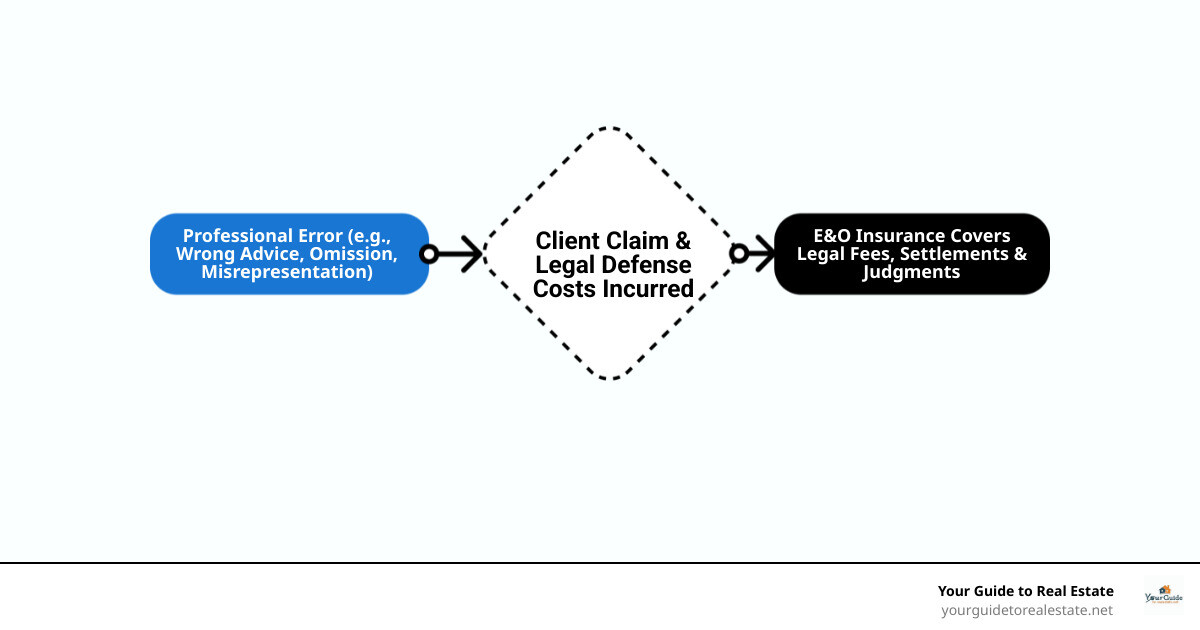
Imagine a client sues you years after a deal, claiming incorrect advice about property permits. Without E&O insurance, your legal defense could cost $20,000 or more, even if the claim is baseless.
E&O insurance (also called professional liability insurance) protects you from these financial disasters. It covers legal defense costs, settlements, and judgments when clients allege your professional services caused them financial harm.
Getting affordable coverage is achievable. This guide shows you how to estimate your costs and reduce your premiums without sacrificing protection.
How much is errors and omissions insurance further reading:
First, Understand What E&O Insurance Is (And Isn’t)
Errors and Omissions (E&O) insurance—often called professional liability insurance or malpractice insurance—is your financial safety net for mistakes in your professional work. Whether it’s an error (doing something wrong) or an omission (forgetting to do something), if it causes a client financial harm, E&O insurance can cover the costs.
Mistakes happen. A missed deadline, outdated advice, or an overlooked contract detail can have massive financial consequences for clients. When they lose money, they often look for someone to hold responsible.
E&O insurance protects you from claims of negligence, misrepresentation, or failure to deliver services as promised. It provides the resources to defend yourself and cover costs, protecting your business and personal assets when clients claim your work cost them money.

Who Needs E&O Insurance?
If you provide advice, guidance, or specialized services for a fee, you need E&O insurance. This is essential for anyone whose expertise influences client decisions.
Real estate agents, brokers, appraisers, and property managers are prime candidates. You guide clients through large transactions where a missed disclosure or incorrect advice can lead to costly claims. Mortgage brokers and real estate consultants also face exposure when their guidance allegedly leads to financial losses.
Beyond real estate, E&O is crucial for IT consultants, accountants, financial planners, and marketing agencies. The common thread is that clients rely on your professional knowledge.
For many, E&O insurance is mandatory. Licensing boards often require minimum coverage. Brokerage firms typically require it for their agents. Furthermore, clients frequently ask for proof of E&O insurance before signing contracts, viewing it as a mark of professionalism.
What E&O Covers vs. What It Excludes
E&O insurance covers the financial fallout from professional mistakes. Key coverages include:
- Legal defense costs: Attorney fees, court costs, and expert witness fees are covered, whether you win or lose. This alone can save your business from bankruptcy, as defending a lawsuit can cost tens of thousands of dollars.
- Settlements and judgments: If a claim is settled or a court finds you liable, the policy covers the financial damages awarded to the plaintiff. This includes claims of breach of professional duty, misrepresentation, and general negligence.
- Media and advertising liabilities: Some policies protect against claims like defamation or libel related to your professional communications.
However, E&O insurance has important exclusions:
- Criminal or fraudulent acts: It protects against honest mistakes, not intentional wrongdoing.
- Bodily injury or property damage: These are covered by General Liability insurance.
- Employee-related claims: Workers’ compensation and employer’s liability claims require separate policies.
- Cyber-attacks: Data breaches require specific Cyber Liability insurance.
- Guaranteed results: E&O won’t cover claims if you simply failed to deliver a guaranteed profit or outcome.
Always read your policy carefully to understand its specific inclusions and exclusions.
E&O vs. General Liability Insurance
Business owners often confuse E&O with General Liability, but they cover different risks.
- E&O insurance covers financial harm from your professional services or advice.
- General Liability insurance covers physical harm (bodily injury) or property damage.
For example, if a client claims your advice on zoning cost them $50,000, that’s an E&O claim. If that same client slips in your office and breaks an arm, that’s a General Liability claim.
Most real estate professionals need both. E&O protects your professional reputation and finances from work-related mistakes, while General Liability covers the everyday physical risks of running a business. They complement each other to provide comprehensive protection. Bundling them often leads to savings.
How Much Is Errors and Omissions Insurance? A Breakdown of Key Cost Factors
So, how much is errors and omissions insurance for your real estate business? While there’s no single answer, your premium is based on a unique mix of risk factors. Basic policies can start as low as $250 annually, but most small businesses and independent real estate professionals should expect annual costs between $500 and $3,000. Larger firms or those in high-risk specialties might pay $5,000 or more. The average monthly cost is around $76, which equals about $735 annually for standalone E&O coverage.
Understanding what drives these costs puts you in control. Let’s break down what insurers evaluate when setting your rate.

Industry and Business Details That Affect Your Premium
Insurers assess how likely you are to face a claim and how expensive it might be. These factors directly shape your premium.
- Industry Risk: Real estate is considered moderate to high-risk due to the large financial transactions involved. Annual costs for agents and brokers typically fall in the $1,000 to $2,000 range. In contrast, notaries might pay just $16-$20 monthly, while engineers average $142.
- Revenue: Higher annual revenue suggests more client interactions and larger projects, increasing potential risk and premiums.
- Team Size: More employees increase the statistical chance of an error, so a solo agent will pay less than a large brokerage.
- Experience: Established businesses with clean track records often receive better rates than new ventures.
- Location: Some states are more litigious, leading to higher legal costs and insurance rates. For example, E&O insurance in Texas might average $71 per month, while in New York or California, it could be $82-$83.
- Claims History: This is a major factor. A history of claims will increase your premiums, while a clean record is your best tool for keeping costs down.
How Policy Choices Influence How Much Errors and Omissions Insurance Is
The policy you choose directly impacts your annual cost.
- Coverage Limits: This is the maximum your insurer will pay. The per-occurrence limit is the cap for a single claim, and the aggregate limit is the total for all claims in a policy period. Higher limits mean higher premiums. A common choice for small businesses is a $1 million per-occurrence/$1 million aggregate limit.
- Deductible: This is what you pay out-of-pocket before insurance pays. A higher deductible (e.g., $5,000 vs. $2,500) lowers your premium but increases your upfront cost if you file a claim. The average E&O deductible is around $2,500.
- Policy Structure: E&O policies are “claims-made,” meaning the policy must be active when the error occurred and when the claim is filed. This is why continuous coverage is vital. If you change insurers or retire, you may need “tail coverage” to protect against future claims from past work.
- Additional Coverages: Adding endorsements like cyber liability will increase your premium.
For a broader perspective, you can explore resources like average costs for E&O insurance, but real estate-specific factors will determine your final rate.
5 Actionable Tips to Get Your Best Price on E&O Insurance
Now that you know what drives E&O costs, let’s focus on how to lower them. You have more control over your premiums than you might think. Insurers reward businesses that demonstrate a lower risk of filing claims. Better yet, the steps that lower your premiums also make you a better business owner.

Tip 1: Implement Strong Risk Management Practices
The best way to reduce how much is errors and omissions insurance costs is to avoid claims. Insurers reward businesses that take risk management seriously with better rates.
- Use Clear Contracts: Define the scope of your work, deliverables, and client expectations in every contract. Ambiguity leads to disputes.
- Document Everything: Keep detailed records of all client communications, decisions made, and advice given. This paper trail is your best defense.
- Establish Communication Protocols: Set clear expectations for communication and be transparent. Confirm important advice in writing to prevent misunderstandings.
- Train Your Team: Ensure all staff understand and follow best practices. Proper supervision helps catch errors before they become costly.
- Stay Current: Keep up with industry regulations and best practices through continuing education to avoid giving outdated advice.
Tip 2: Choose the Right Insurer and Policy Structure
The cheapest policy isn’t always the best. Selecting a reputable insurer and understanding the fine print is crucial.
- Check Financial Health: Choose an insurer with strong financial ratings from agencies like A.M. Best. You can check their financial strength rating to ensure they can pay claims.
- Understand “Claims-Made” Policies: Most E&O policies require coverage to be active when the incident occurred and when the claim is filed. Lapses in coverage can be disastrous.
- Consider Tail Coverage: If you retire, sell your business, or switch insurers, tail coverage (an Extended Reporting Period) allows you to report claims after your policy ends for work done while you were covered.
- Select an Appropriate Deductible: A higher deductible lowers your premium, but ensure you can comfortably afford it. The average is around $2,500.
- Choose Adequate Coverage Limits: Assess your worst-case scenario. A $1 million per occurrence/$1 million aggregate limit is common, but your business may need more.
Tip 3: Compare Quotes to Find Out How Much Errors and Omissions Insurance Is for You
Insurance pricing varies wildly between providers. The only way to find out how much is errors and omissions insurance for your business is to shop around.
Get at least three to five quotes from different insurers. Use online platforms that provide multiple quotes at once, or work with an independent insurance broker who can compare policies for you. When comparing, ensure it’s an apples-to-apples comparison of limits, deductibles, and key terms. A cheaper policy might offer less protection.
For more context, you can explore resources like average costs for E&O insurance.
Tip 4: Bundle Policies for Potential Savings
Insurance companies often offer discounts for bundling multiple policies. This is an easy way to get comprehensive protection while lowering costs.
Consider a Business Owner’s Policy (BOP), which combines General Liability and Commercial Property insurance. You can often add E&O for a discount. Since most real estate professionals need both General Liability and E&O, bundling them makes financial sense. Ask your provider about bundling discounts for other policies like Cyber Liability insurance as well.
Tip 5: Maintain a Clean Claims History
Your claims history is one of the biggest factors in setting your premiums. A clean record can save you thousands over your career.
Address client dissatisfaction immediately and professionally to prevent minor issues from escalating into formal claims. Proactive problem-solving is smart financial management. The fewer claims on your record, the better your rates will be. This reinforces the importance of the risk management practices discussed in Tip 1.
Frequently Asked Questions about E&O Insurance
Here are answers to the most common questions we hear from real estate professionals about E&O insurance.
What are common E&O claim scenarios in real estate?
The combination of high emotions and big money in real estate creates many opportunities for claims. Common scenarios include:
- Misrepresentation: Providing incorrect information that a client relies on, such as outdated zoning details or inaccurate property features.
- Failure to Disclose Defects: Not informing a buyer about known property issues, like a persistent leak or structural problem, that the seller was aware of.
- Contract Errors: Missing a critical contingency deadline, causing a client to lose their earnest money, or incorrectly filling out a purchase agreement.
- Incorrect Property Advice: Advising a client they can make a specific renovation (like adding a rental suite) when local ordinances prohibit it, leading to a financial loss after purchase.
- Lending Discrimination: For mortgage brokers, facing claims of lending discrimination under fair housing laws.
All these fall under the umbrella of negligence, where your actions fell below the expected professional standard. Even if a claim is unfounded, defending it can cost tens of thousands of dollars. This is why knowing how much is errors and omissions insurance is less about the premium and more about the protection it buys.
Is E&O insurance a tax-deductible business expense?
Yes, E&O insurance premiums are generally considered a necessary and ordinary business expense and are tax-deductible. This deduction effectively reduces your taxable income, making the cost of protection more manageable.
However, tax laws are complex and can vary based on your business structure and location. We always recommend consulting a tax professional to understand how to properly apply IRS guidelines to your specific situation and maximize your deductions.
Is E&O insurance mandatory for real estate professionals?
The answer is: it depends. There is no federal mandate, but requirements vary by state and brokerage.
- State Requirements: Many state licensing boards require agents, brokers, or appraisers to carry a minimum level of E&O coverage to maintain their license. You must check with your state’s real estate commission.
- Brokerage Requirements: Nearly all reputable brokerages require their affiliated agents to have E&O insurance to protect both the agent and the firm.
- Client Contracts: Sophisticated clients, especially investors, often require proof of E&O coverage before they will sign a contract, viewing it as a sign of professionalism.
Even where it’s technically optional, E&O insurance has become a practical necessity for any credible real estate professional. It’s about protecting yourself, your clients, and your reputation.
Conclusion: Secure Your Business and Your Peace of Mind
Understanding how much is errors and omissions insurance and managing its cost is essential for your business and your peace of mind. E&O insurance is your financial safety net, covering legal defense costs, settlements, and judgments when a client claims your professional advice caused them financial harm. Even with a baseless claim, defense costs can be crippling without coverage.
The cost is more manageable than many professionals expect. With typical annual premiums for real estate professionals ranging from $1,000 to $2,000, it’s a reasonable investment compared to the devastating cost of an uninsured claim.
You can control your premiums. By implementing strong risk management, comparing quotes, choosing the right policy structure, bundling coverage, and maintaining a clean claims history, you can lower your costs while ensuring you have the protection you need.
At Your Guide to Real Estate, we believe in empowering you with proven frameworks for success. Securing proper E&O insurance is a cornerstone of that success, freeing you to focus on what you do best: helping clients steer the real estate market with confidence.
Protection is just one piece of the puzzle. To sharpen another critical skill, explore our comprehensive guide on mastering valuation and market analysis to improve your professional edge.
Your business deserves protection, and you deserve the peace of mind that comes from knowing you’re covered. That’s what E&O insurance delivers.