
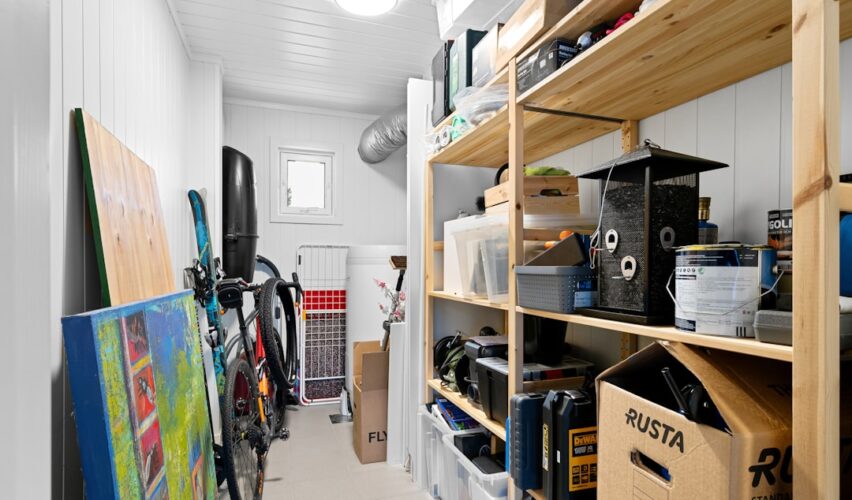
Why Understanding Your Storage Unit Coverage Matters
Does renters insurance cover storage units? Yes, most renters insurance policies provide coverage for belongings in storage units, but with important limitations.
Quick Answer:
- Coverage exists – Your renters insurance typically covers items in storage units.
- Limited amount – Usually only 10% of your total personal property coverage.
- Specific perils only – Fire, theft, and vandalism are covered; floods and earthquakes typically aren’t.
- Check your policy – Look for “off-premises coverage” in your policy documents.
- May need extra coverage – High-value items often require additional protection.
With over 10% of American households renting storage units, understanding your coverage is crucial. Many renters assume they’re fully protected, only to find significant gaps when disaster strikes.
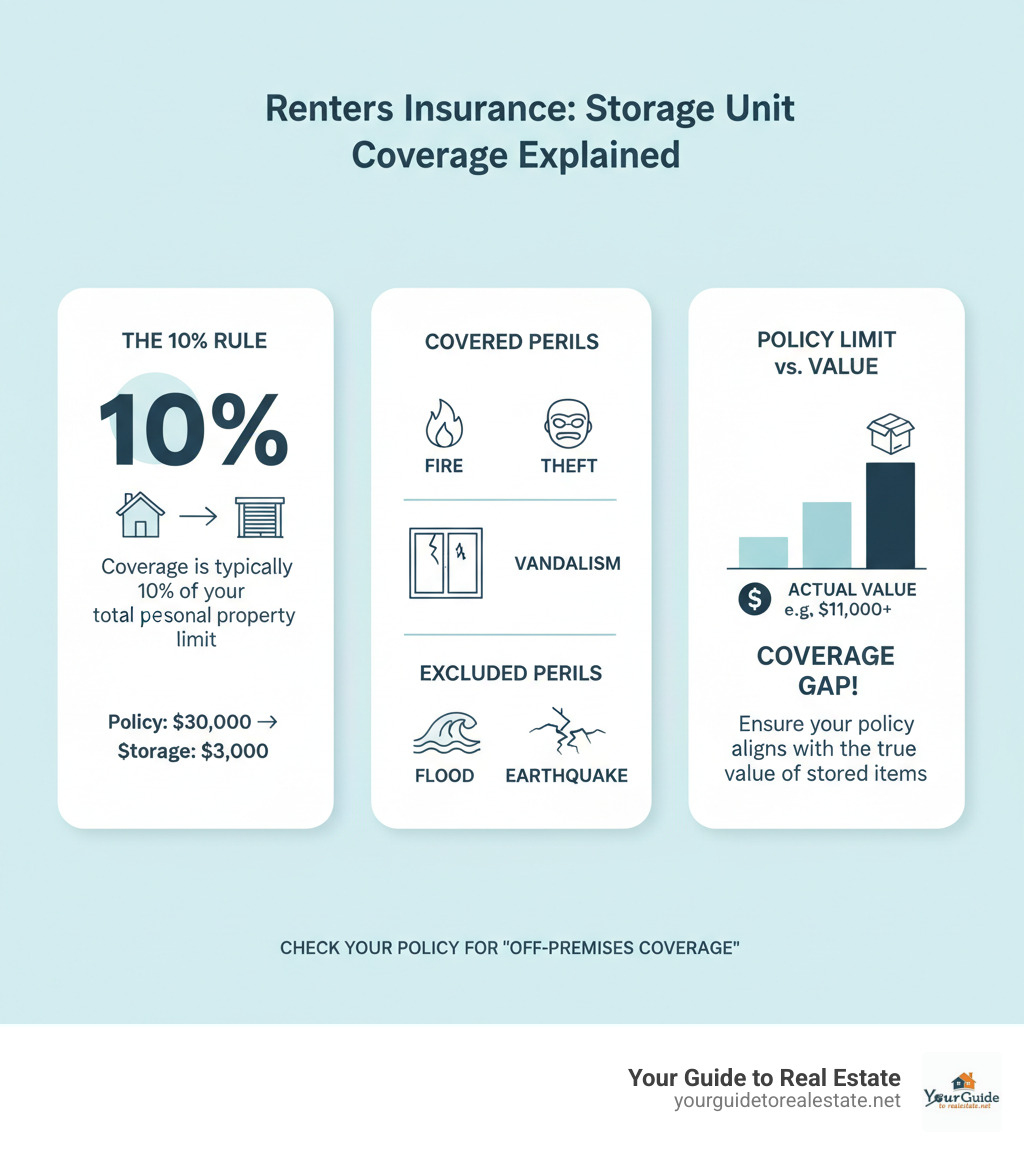
The reality is simple: your renters insurance likely covers your storage unit contents, but probably not as much as you think. If your policy includes $30,000 in personal property coverage, your belongings in a storage unit would usually be covered up to just $3,000. This coverage gap can leave you financially exposed if you’re storing valuable items.
The Simple Answer: Check Your “Off-Premises Coverage”
If you’ve ever wondered does renters insurance cover storage units, the answer lies in your policy’s “off-premises coverage.” This feature extends your Personal Property Coverage (often called “Coverage C”) beyond your apartment walls to protect your belongings wherever they are.
However, there’s a catch: most policies apply the 10% rule. This means your belongings in a storage unit are only covered up to 10% of your total personal property limit.
For example, if your policy has $25,000 in personal property coverage, your stored items are only protected up to $2,500. This standard can catch renters off guard, leaving them underinsured if they have valuable items in storage.
How to Find This Information in Your Policy
To find your specific coverage details, start with your policy declaration page, which summarizes your limits. You can also search your policy documents for terms like “off-premises coverage” or “personal property away from premises.” If you’re still unsure, contact your insurance agent or check your insurer’s online portal. A few minutes of checking now can save you thousands later.
The Temporary Relocation Exception
There is one major exception to the 10% rule. If your home becomes unlivable due to a covered peril (like a fire or major pipe burst) and you must temporarily move your belongings into storage during repairs, your policy typically extends your full personal property limits to those items.
This improved coverage applies only when you’re forced to use storage due to a covered disaster, not for general convenience or moving. Always confirm the details of this exception with your insurer, as policies can vary.
So, Does Renters Insurance Cover Storage Units Completely?
The answer to does renters insurance cover storage units isn’t a simple yes or no. Coverage is limited by “covered perils,” “exclusions,” and “sub-limits” for valuable items. Understanding these terms is key to knowing your actual protection.
Your policy will only pay for damage caused by specific events (perils) listed in your contract, while explicitly denying coverage for others (exclusions).

What Perils Are Covered When Renters Insurance Covers Storage Units?
Your off-premises coverage typically protects against the same “named perils” as the coverage for your home. Common covered events include:
- Theft: The most frequent claim for storage units.
- Fire and smoke damage: Protection from fires, whether accidental or intentional.
- Vandalism: Covers intentional destruction of your property.
- Weather-related events: Includes damage from lightning, windstorms, and hail.
- Water damage from internal sources: Such as a burst pipe within the facility (but not flooding).
For a comprehensive overview of standard policy coverage, you can review what is covered by a standard policy from insurance industry experts.
What Are the Limits When Renters Insurance Covers Storage Units?
Knowing what isn’t covered is just as important. Standard renters policies almost always exclude:
- Floods: Damage from rising water, heavy rain, or storm surge is not covered. You need a separate policy from a source like the National Flood Insurance Program.
- Earthquakes: Like floods, this requires a separate, specialized insurance policy.
- Pests and vermin: Damage from mice, insects, or other pests is considered a preventable maintenance issue.
- Mold and mildew: Gradual damage from humidity or neglect is typically excluded.
- Damage from neglect: If items deteriorate due to improper packing or poor conditions, insurance won’t cover the loss.
Special Coverage Limits for High-Value Items
Even for a covered event, policies place special limits, or “sub-limits,” on how much they will pay for certain categories of valuable items. Common items with sub-limits include:
- Jewelry: Often capped at $1,000 to $2,500 total.
- Firearms: Collections are usually capped at a fraction of their value.
- Art and collectibles: Paintings, sculptures, and rare items face similar low caps.
If you store high-value items, your standard coverage will likely be insufficient. To get full protection, add a “Scheduled Personal Property endorsement” to your policy. This add-on lets you list and insure specific items for their appraised value, closing the coverage gap created by sub-limits.
Renters Insurance vs. Separate Storage Unit Insurance
While the answer to does renters insurance cover storage units is a qualified “yes,” the 10% limit and other restrictions mean it’s not always enough. If the value of your stored items exceeds this limit, you have a significant coverage gap.
Another key consideration is the impact on your premiums. Filing a claim for your storage unit on your main renters policy can increase your rates at renewal. A separate storage insurance policy isolates this risk, so a claim won’t affect your primary insurance. This is especially valuable for long-term storage where the risk of an incident is higher.
| Feature | Renters Insurance (Off-Premises Coverage) | Dedicated Storage Unit Insurance |
|---|---|---|
| Cost | Included in your existing renters insurance premium. | Separate monthly premium (e.g., $12-$16 for $3,000-$5,000 coverage from Public Storage). |
| Coverage Limits | Typically 10% of your total personal property coverage (e.g., $3,000 on a $30,000 policy). Sub-limits for valuables. | Higher limits, customizable to the value of your stored items (e.g., $3,000-$5,000+). |
| Covered Perils | Standard named perils (theft, fire, vandalism, etc.). Excludes floods, earthquakes, pests. | Often broader coverage, sometimes including perils like mold/mildew (check policy). May still exclude floods/earthquakes. |
| Claim Impact | Claim could potentially raise your overall renters insurance premiums. | Claim only impacts the storage unit policy premium, not your main renters insurance. |
| Ease of Acquisition | Already have it, just need to confirm details. | Purchased separately, either from the facility or a third-party provider. |
Understanding the Storage Facility’s Insurance
A common misconception is that the storage facility’s insurance covers your belongings. It does not. The facility’s policy covers their property—the building and their liability—not the contents of your unit.
Much like a landlord’s insurance doesn’t cover a tenant’s possessions, the facility’s insurance won’t replace your items after a fire or theft. Most facilities require you to have your own coverage and may offer their own policies. While convenient, always read the fine print to ensure the coverage is adequate. Protecting your stored belongings is your responsibility.
When to Buy a Separate Storage Insurance Policy
A dedicated storage policy is a smart move if:
- The value of your items exceeds the 10% limit of your renters policy.
- You are storing high-value collections like jewelry, art, or firearms that are subject to low sub-limits.
- You want to avoid claims on your main renters policy to keep your premiums stable.
- You are storing items long-term, which increases the risk of an incident.
Separate storage insurance is affordable, often costing $12-$16 per month for several thousand dollars in coverage. For many, this is a small price for comprehensive protection and peace of mind.
A Renter’s Checklist for Protecting Stored Belongings
Insurance is your safety net, but smart planning is what keeps you from needing it. Whether you’re using your renters policy or separate storage insurance, the steps you take before moving items into storage can make all the difference if you need to file a claim. Let’s walk through the essential actions for the best possible protection.

Create a Detailed Home Inventory
Creating a detailed inventory is the single most important thing you can do to protect yourself. After a fire or theft, this inventory becomes your lifeline. Without documentation, proving what you owned and its value is nearly impossible for an insurance claim.
- Use itemized descriptions. Instead of “desk,” write “antique oak roll-top desk.” For electronics, include the brand, model, and serial number.
- Take photos and videos. A video walkthrough of your packed unit is incredibly valuable, showing the condition of everything before storage.
- Keep receipts and appraisals. Store digital copies in the cloud. For high-value items like jewelry or art, professional appraisals are essential for a claim.
- Use inventory apps. Modern apps can streamline this process, allowing you to attach photos, record details, and estimate values in an organized way.
Choose a Secure Storage Facility
The facility you choose directly impacts your risk level. Good insurance protects your wallet, but a secure facility protects your actual belongings.
- Look for comprehensive security. This includes well-maintained cameras, gated access with individual codes, and good lighting throughout the property.
- Check for on-site management. A manager provides an extra layer of security and can spot unusual activity quickly.
- Opt for climate control. For items sensitive to temperature and humidity (wood furniture, electronics, documents), climate control is your primary defense against gradual damage that insurance won’t cover.
- Read customer reviews. Check online reviews and trust your gut when you visit. A clean, well-maintained, and professionally managed facility is usually a safe bet.
The extra cost of a secure facility is almost always worth it. The best claim is the one you never have to file.
Frequently Asked Questions
Here are answers to the most common questions renters have when they ask does renters insurance cover storage units.
How much does renters insurance for a storage unit cost?
If you already have renters insurance, the basic off-premises coverage is included in your existing premium at no extra cost. The average renters policy costs around $29 per month.
If you need more coverage than the standard 10% limit, you can either increase your overall personal property limits (which will raise your premium) or purchase a separate storage unit insurance policy. A separate policy typically runs between $12 to $16 per month for basic coverage and keeps any claims from affecting your main renters policy rates.
How do I file a claim for items in a storage unit?
Filing a storage unit claim is similar to any other insurance claim. Act quickly and have your documentation ready.
- Ensure safety first. In case of fire or break-in, contact emergency services if needed.
- Contact your insurance company immediately. Most have 24/7 hotlines to start the process.
- Provide your home inventory. This is your proof of loss. Supply photos, videos, receipts, and appraisals.
- File a police report for theft. Your insurer will require a copy of this report.
- Document the damage. Take photos and videos of the damaged unit and contents. Do not throw anything away until your adjuster gives approval.
Does my landlord’s insurance cover my items in a storage unit?
Absolutely not. This is a critical and expensive misconception. Your landlord’s insurance policy protects their investment—the physical building—and has zero coverage for your personal belongings, whether they are in your apartment or a storage unit.
Your personal property is your responsibility. Without your own renters policy or a dedicated storage unit policy, you are completely on your own to replace everything after a disaster.
Conclusion
So, does renters insurance cover storage units? The straightforward answer is usually yes, but with critical limitations that can catch you off guard if you’re not prepared. The key to understanding your protection lies in checking your off-premises coverage, which you’ll typically find nestled within your personal property section.
Here’s what we want you to remember: your renters insurance likely covers storage unit contents up to about 10% of your total personal property limit. If your policy provides $30,000 in personal property coverage, you’re probably looking at just $3,000 in protection for your stored belongings. While this covers common perils like theft, fire, and vandalism, it won’t help you with floods, earthquakes, or damage from pests and neglect.
The real eye-opener comes when you start adding up what you’ve actually stored. That antique dining set from your grandmother, your electronics collection, and those family heirlooms can easily exceed that 10% limit. And if you’re storing jewelry, art, or firearms, those sub-limits can shrink your coverage even further.
We encourage you to take action now, before you need it. Pull out your policy documents and locate that off-premises coverage section. Calculate the true value of what you’re storing. If your treasured possessions exceed that coverage limit, don’t leave yourself vulnerable. Consider options like scheduled personal property endorsements or a separate storage unit insurance policy. These solutions might cost a little extra, but they’re far less expensive than replacing everything out of pocket.
Being proactive makes all the difference. Create that detailed inventory with photos and receipts. Choose a secure, well-maintained storage facility with proper lighting, cameras, and climate control. These steps work hand-in-hand with your insurance to give you the best possible protection.
At Your Guide to Real Estate, we’ve seen too many people learn about their coverage gaps the hard way. Understanding your insurance isn’t just about checking a box—it’s about protecting the things that matter most to you, whether they’re in your home or tucked away in storage.
Find more expert real estate tips for agents for additional guidance on navigating property protection and building your real estate success.