
Why Debt Consolidation Loans Are Changing Lives
A debt consolidation loan combines multiple high-interest debts into one new loan with a single monthly payment and potentially lower interest rates. Here’s what you need to know:
Quick Answer:
- What it is: One loan pays off all your existing debts
- How it works: You get a new loan, pay off creditors, make one monthly payment
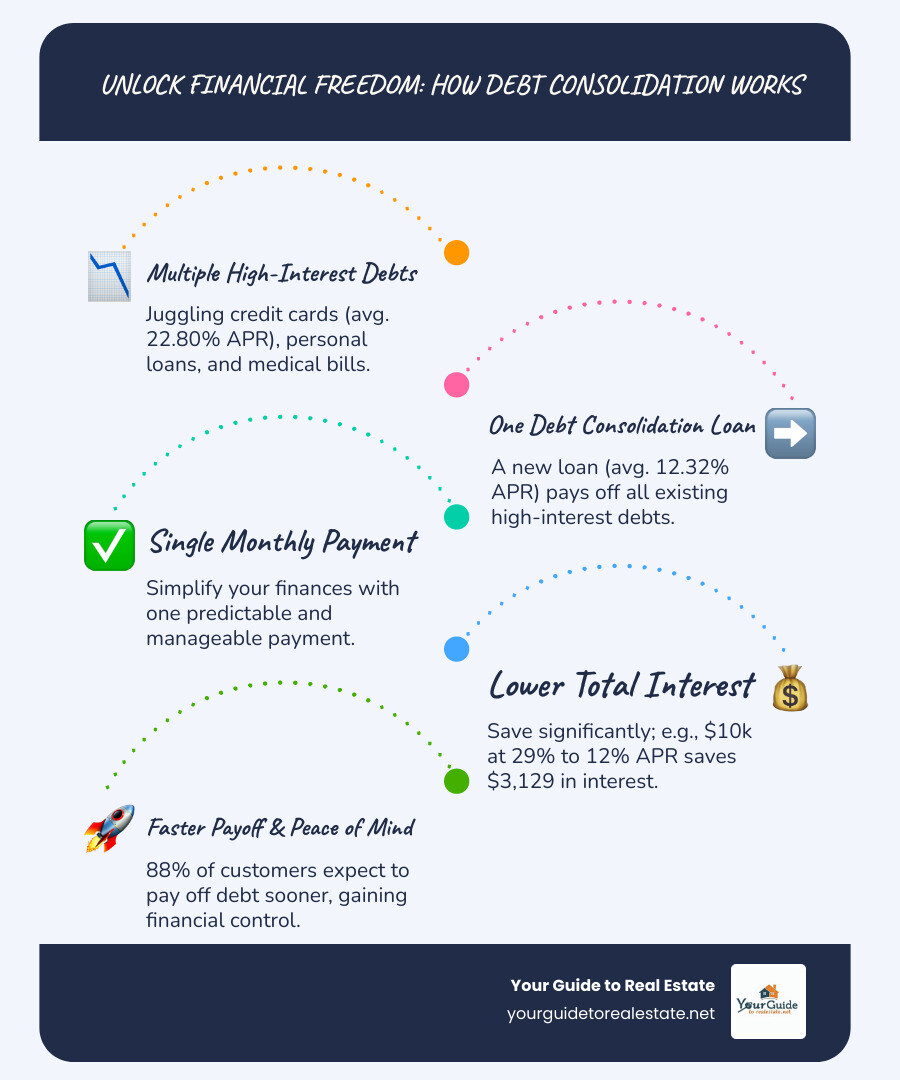
- Average savings: Consolidating $10,000 in credit card debt (29% APR) into a 12% APR loan saves $3,129 in interest
- Best for: People with stable income, good credit, and multiple high-interest debts
- Loan amounts: Typically $2,500 to $150,000
- Terms: Usually 2-7 years with fixed rates
Are you drowning in multiple credit card payments, personal loans, and medical bills? You’re not alone. Many people struggle with what one borrower described as “multiple credit accounts with different balances” where “making separate payments to multiple accounts each month can be difficult, overwhelming, and expensive.”
The numbers tell the story. The average credit card interest rate sits at 22.80%, while personal loans average just 12.32%. If you’re only making minimum payments on a $1,500 credit card balance, it could take up to eight years to pay off.
That’s where debt consolidation comes in. Instead of juggling multiple payments with sky-high interest rates, you combine everything into one manageable loan. 88% of surveyed debt consolidation customers expect to pay off their debt sooner with their new loan.
This guide will walk you through everything you need to know about debt consolidation loans – from understanding how they work to comparing your options and avoiding common mistakes. Whether you’re dealing with credit card debt, medical bills, or multiple loans, we’ll help you determine if consolidation is right for your situation.
Debt consolidation loan vocabulary:
What Is a Debt Consolidation Loan and How Does It Work?
Picture this: you’re sitting at your kitchen table with bills scattered everywhere. There’s a credit card statement demanding $150, a medical bill wanting $75, and another loan payment due for $200. Each has a different due date, different interest rate, and you’re starting to feel like you need a spreadsheet just to keep track of it all.
That’s where a debt consolidation loan becomes your financial lifesaver. Think of it as hitting the reset button on your debt situation – but in a smart, strategic way.
Here’s how it works: you take out one new loan that’s large enough to pay off all your existing debts. Once you’re approved, the lender either sends the money directly to your creditors or deposits it into your account so you can pay everyone off yourself. Suddenly, instead of juggling multiple payments, you have just one monthly bill to worry about.
The magic happens in three key ways:
Simplifying your finances becomes the immediate relief you’ll feel. No more calendar alerts for five different due dates. No more wondering which bill you forgot to pay. Just one payment, one due date, one less headache each month.
Lowering your interest rates is often the biggest money-saver. Remember those average rates we mentioned? Credit cards averaging 22.80% versus personal loans at 12.32%? That difference isn’t just numbers on paper – it’s real money staying in your pocket. When you consolidate $10,000 in credit card debt from a 29% APR down to 12%, you could save over $3,000 in interest charges.
Reducing your monthly payments can free up breathing room in your budget. This might happen because you’re paying less interest, or because you’ve stretched the payments over a longer period. Just remember – longer payment terms can mean more total interest over time, so it’s worth doing the math.
The application process is pretty straightforward. You’ll apply with a bank, credit union, or online lender, and if approved, they’ll handle getting your old debts paid off. Most debt consolidation loans come with repayment terms between two and seven years, giving you a clear finish line for becoming debt-free.
The Pros and Cons of Consolidating Debt
Let’s be honest – debt consolidation isn’t magic. It’s a useful tool, but like any tool, it works best when you understand both its strengths and limitations.
| Advantages of Debt Consolidation | Disadvantages of Debt Consolidation |
|---|---|
| Simplified Payments: One monthly payment instead of many | Doesn’t Fix Spending Habits: Root causes need addressing |
| Potentially Lower Interest Rates: Especially on credit card debt | Potential Fees: Origination fees, balance transfer costs |
| Fixed Payment & Clear Payoff Date: Predictable budgeting | Risk of Paying More Interest: With longer terms |
| Improved Credit Utilization: Lower credit card balances | Risk of Losing Collateral: With secured loans |
The simplified payments advantage can’t be overstated. When you’re only tracking one due date instead of five, you’re much less likely to accidentally miss a payment and get hit with late fees.
Lower interest rates represent the real financial win. If you’re currently paying credit card interest in the 20% range, dropping down to a 12% personal loan rate is like getting a significant raise.
But here’s the catch – and this is important – a debt consolidation loan doesn’t fix spending habits. If you consolidate your credit cards but then start charging them up again, you’ll end up with both the new loan payment and new credit card debt. That’s a recipe for financial disaster.
Fees can also eat into your savings. Many loans come with origination fees ranging from 1% to 12% of the loan amount. A balance transfer might cost 3% to 5% upfront. These aren’t deal-breakers, but they’re costs you need to factor into your decision.
When Should You Consider Consolidating Debt?
So who makes a good candidate for debt consolidation? In our experience helping people steer financial decisions, the ideal person usually checks several boxes.
You have high-interest debt that’s costing you serious money each month. If most of your debt carries interest rates above 15-20%, consolidation could offer meaningful savings.
Your income is stable and sufficient to handle the new monthly payment. Lenders want to see consistent earnings, and honestly, you want that security too. There’s no point consolidating if you can’t reliably make the new payment.
You have decent credit – typically a score of 670 or higher gets you the best rates. Lower scores aren’t automatic disqualifiers, but they might mean higher interest rates that reduce the benefit.
Most importantly, you’re committed to changing your financial habits. This isn’t just about moving debt around – it’s about breaking the cycle that created the debt in the first place.
On the flip side, consolidation might not make sense if your debt balances are relatively small. If you can realistically pay everything off within 12-18 months, the fees and temporary credit impact might not be worth it.
It’s also not ideal if you can’t qualify for a meaningfully lower interest rate. There’s no point in consolidating 18% credit card debt into a 19% personal loan.
Finally, if you haven’t addressed the spending issues that created your debt, you’re setting yourself up for trouble. Without a solid plan to avoid new debt, you could end up worse off than when you started.
Exploring Your Debt Consolidation Options
When it comes to consolidating debt, you have several paths to choose from. Think of it like shopping for a home – each option has its own personality and fits different situations. The key is finding the one that matches your financial picture perfectly.
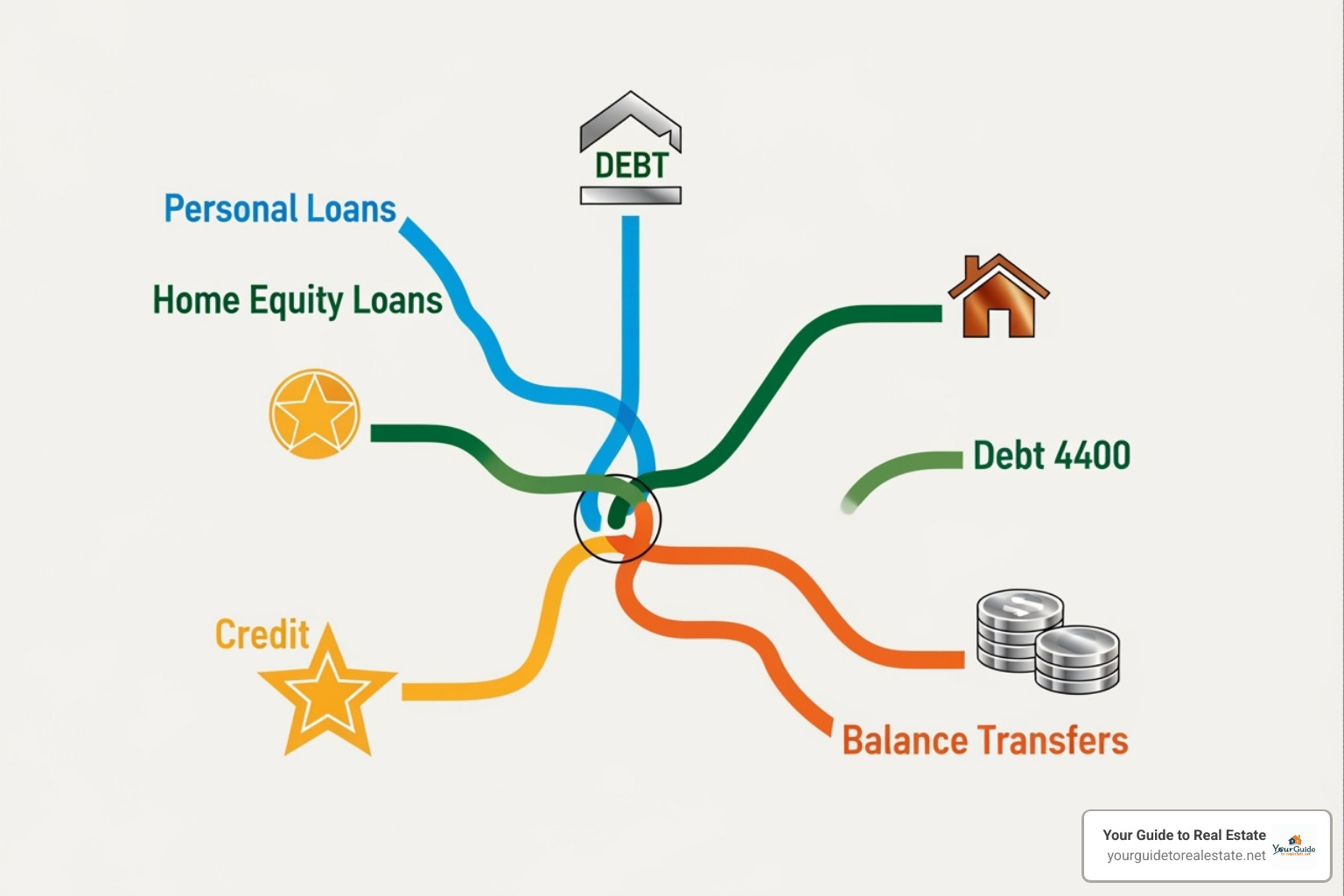
The biggest difference between your options usually comes down to secured versus unsecured loans. An unsecured loan doesn’t require you to put up any collateral – it’s based purely on your creditworthiness and promise to pay. A secured loan uses something valuable you own (like your home) as backup, which typically gets you lower interest rates but puts that asset at risk if you can’t make payments.
When you’re comparing your options, keep your eye on three main factors. Loan terms tell you how long you have to pay everything back – longer terms mean smaller monthly payments but more total interest over time. Interest rates (APR) show you the true cost of borrowing, and lower is almost always better. Fees can sneak up on you, so watch for origination fees, balance transfer fees, or penalties for paying off early.
Unsecured Personal Loans
For most people dealing with debt consolidation, an unsecured personal loan feels like the sweet spot. There’s something reassuring about not having to risk your home or car to get out of debt.
Here’s how they work: You get a lump sum of cash that you use to pay off all those scattered debts. Then you make one fixed monthly payment for a set period, usually between 2 and 7 years. It’s beautifully simple.
Fixed-rate loans are the norm here, which means your payment stays the same every month – no surprises. The interest rate you qualify for depends heavily on your credit score and overall financial health. Think of it as your financial report card determining your loan terms.
These loans shine when you’re consolidating credit card debt, medical bills, or other unsecured loans. They’re perfect if you don’t own a home or simply prefer not to put your assets on the line. Typical loan amounts range from $2,500 to $40,000, though some lenders go as high as $150,000 for borrowers with excellent credit.
The best part? Many lenders let you check your rate with no credit score impact before you commit to anything.
Home Equity Loans and HELOCs
If you’re a homeowner with solid equity built up, you’ve got access to some of the most attractive consolidation options available. Using home equity as collateral typically open ups much lower interest rates than unsecured loans – sometimes half the cost or less.
A Home Equity Loan works like a second mortgage. You get all the money upfront in one lump sum, then pay it back over a fixed term with a fixed interest rate. It’s predictable and straightforward – perfect when you know exactly how much debt you need to eliminate. We dive deeper into this concept in our guide on Cash Out Refinancing Explained.
A HELOC (Home Equity Line of Credit) is more like having a giant credit card backed by your home. You get approved for a credit limit, then borrow what you need when you need it during a “draw period.” The interest rate usually varies with market conditions, which adds some uncertainty to your monthly payments but gives you flexibility.
Here’s the serious part: secured loans mean your home is on the line. If you fall behind on payments, you could face foreclosure. It’s a powerful tool, but one that demands respect and careful planning. As we always tell our clients, think long and hard before securing other debts against your home.
For more context on how home loans work in general, check out our Understanding Mortgages: A Beginner’s Guide to Home Loans.
Balance Transfer Credit Cards
For smaller credit card debts, a balance transfer credit card can be like hitting the pause button on interest charges. These cards offer a 0% introductory APR for anywhere from 12 to 21 months, giving you breathing room to attack the principal balance.
The process is straightforward: you transfer your existing credit card balances to this new card and pay them down without interest during the promotional period. Most cards charge a balance transfer fee of 3% to 5% of the amount you transfer, but that’s often worth it for the interest savings.
Here’s where discipline becomes crucial. You need to pay off the entire transferred balance before that introductory period ends. If you don’t, the remaining balance gets hit with the card’s regular APR, which can be just as high as what you were trying to escape.
Balance transfer cards work best for smaller debts that you can realistically eliminate within the promotional timeframe. They’re also ideal if you’re confident you won’t be tempted to run up new charges on your now-empty credit cards. The last thing you want is to end up with more debt than when you started.
The Step-by-Step Application Process
Getting a debt consolidation loan might feel overwhelming at first, but it’s actually quite straightforward when you break it down. Think of it like planning a home purchase – you wouldn’t jump in without doing your homework first, right? The same careful approach applies here.
The key to success isn’t just getting approved for a loan. It’s setting yourself up for long-term financial health. We’ve seen too many people consolidate their debt only to find themselves in the same situation a year later because they skipped the planning phase.

Step 1: Assess Your Debts and Check Your Credit
Before you even think about filling out an application, you need to know exactly where you stand financially. This is like getting a home inspection before buying – you want to know what you’re dealing with upfront.
Start by gathering every single debt you want to consolidate. Yes, every single one. That means credit cards, personal loans, medical bills, and any other high-interest accounts that are keeping you up at night. For each debt, write down three crucial pieces of information: the total payoff amount, the current interest rate, and your minimum monthly payment.
Once you have everything listed out, add up the total amount. This number tells you exactly how much you need to borrow with your debt consolidation loan. It might be a bit shocking to see it all in one place, but remember – this is the first step toward getting control of your finances.
Now comes the credit check part. Your credit score is the golden ticket to better interest rates. The higher your score, the lower the rate you’ll likely qualify for. Many lenders let you check your potential rate without affecting your credit score, so take advantage of these tools.
Here’s something we always recommend: get your free credit reports from AnnualCreditReport.com. You can access reports from all three major credit bureaus – Equifax, Experian, and TransUnion – weekly at no cost. Look for any errors or outdated information that might be dragging down your score. You’d be surprised how often we find mistakes that are easily fixable.
Step 2: Compare Lenders and Loan Offers
Shopping for a loan is a lot like shopping for anything else – you want to compare your options to get the best deal. The difference is that this decision could save you thousands of dollars, so it’s worth taking your time.
You’ll find debt consolidation loans at several types of institutions. Traditional banks like PNC and U.S. Bank often offer competitive rates, especially if you’re already a customer. Credit unions like UNFCU typically provide even better rates and more personalized service to their members. Online lenders have made the process incredibly convenient, allowing you to compare multiple offers quickly from the comfort of your couch.
When comparing offers, don’t get fooled by advertised interest rates alone. The Annual Percentage Rate (APR) is what really matters because it includes both the interest rate and certain fees. This gives you the true cost of borrowing.
Pay attention to origination fees, which can range from 1% to 12% of your loan amount. Some lenders charge these processing fees, while others don’t. Also check for prepayment penalties – you want the flexibility to pay off your loan early if you can, without getting hit with extra charges.
The loan term is another crucial factor. A shorter term means higher monthly payments but less total interest paid. A longer term means lower monthly payments but more total interest over time. It’s a balancing act between what you can afford monthly and what makes sense long-term.
Most lenders offer prequalification, which lets you see potential loan terms without a hard inquiry on your credit report. This is fantastic because you can shop around risk-free. Our guide on How to Compare Mortgages offers valuable comparison strategies that work for any type of loan.
Step 3: Apply and Create a Post-Consolidation Plan
Once you’ve found the best offer, it’s time to make it official. But here’s where many people make a critical mistake – they think the hard work is over once they get approved. In reality, this is where the real work begins.
The application process itself is pretty straightforward. You’ll need to provide personal information, employment history, and income verification. Have your recent pay stubs and tax returns ready. Some lenders might ask for details about the specific debts you’re consolidating.
After approval, read every single word of your loan documents before signing. We know it’s tempting to just sign and get it over with, but understanding your repayment schedule, interest rate, and any fees is crucial.
Here’s the moment of truth: as soon as you receive your loan funds, use them immediately to pay off your old debts. Don’t let that money sit in your account where it might be tempting to use for something else. Contact each creditor to confirm the accounts are paid in full and properly closed.
Now comes the part that determines whether this debt consolidation loan truly changes your life or just temporarily fixes the problem. Creating a realistic budget is absolutely essential. With one simplified payment, you can now plan your finances more easily. Consider using the 50-30-20 rule: 50% of your income for needs, 30% for wants, and 20% for savings and debt repayment.
Building an emergency fund should be a top priority as you free up cash flow from lower payments. Even a small emergency fund of $500 to $1,000 can prevent you from reaching for high-interest credit cards when unexpected expenses pop up.
Finally, and this cannot be overstated: avoid taking on new debt. If you keep your old credit cards open (which can actually help your credit score), use them sparingly and pay the balance in full each month. As one financial expert wisely advises, “Put away all cards, except one (the lowest interest one), and pay off that one card every month if you use it.”
This commitment to changing your spending habits is what separates people who successfully use debt consolidation from those who end up in an even worse financial position. Your debt consolidation loan is a powerful tool, but like any tool, its effectiveness depends on how you use it.
Frequently Asked Questions about Debt Consolidation
We know that dealing with debt can feel overwhelming, and you probably have questions swirling around in your head. That’s completely normal! We’ve helped countless people steer these waters, and we’re here to address the most common concerns we hear about debt consolidation loans.
How does a debt consolidation loan affect my credit score?
This question keeps many people up at night, and honestly, the answer has some twists and turns. The good news? A debt consolidation loan can actually help your credit score in the long run, even though there might be a small bump in the road initially.
In the short term, you’ll see a couple of minor impacts. When you apply for the loan, lenders will do what’s called a “hard inquiry” on your credit report. This typically drops your score by just a few points – usually five or less. Think of it as a tiny speed bump rather than a roadblock. You’ll also have a new account on your credit report, which slightly lowers the average age of all your accounts.
Here’s where it gets exciting though. The long-term benefits can be substantial. Your payment history makes up a whopping 35% of your credit score, so making those consistent monthly payments on your new loan will steadily boost your score over time.
But the real magic happens with something called credit utilization. When you use your consolidation loan to pay off credit cards, you’re suddenly using much less of your available credit. Since this factor accounts for about 30% of your credit score, you could see a nice improvement relatively quickly.
There’s also the bonus of improving your credit mix. Having different types of credit – like both credit cards and an installment loan – shows lenders you can handle various forms of debt responsibly. This accounts for about 10% of your score.
So yes, you might see a tiny dip at first, but if you manage your new loan responsibly, your credit score could be in much better shape down the road.
What are the alternatives to a debt consolidation loan?
We believe in exploring every option because what works for one person might not be the best fit for another. A debt consolidation loan is powerful, but it’s not your only path forward.
A Debt Management Plan (DMP) might be worth considering. These are offered by non-profit credit counseling agencies, and they work a bit differently. A counselor negotiates with your creditors to potentially lower your interest rates, then you make one payment to the agency each month. They handle distributing the money to your creditors. These plans typically run for three to five years.
Credit counseling itself can be incredibly valuable, even if you don’t go with a formal plan. A certified counselor can sit down with you, look at your entire financial picture, and help you create a realistic budget. They’re not trying to sell you anything – they’re just there to guide you through your options.
Debt settlement is another route, though we generally see this as a last resort. It involves negotiating with creditors to pay less than what you owe, but it can seriously damage your credit score and may have tax consequences.
If you’re the disciplined, hands-on type, you might prefer DIY strategies. The debt snowball method has you paying minimums on everything except your smallest debt, which you attack aggressively. Once that’s gone, you roll that payment into the next smallest debt. It builds momentum and confidence.
The debt avalanche method is more mathematically efficient – you target the highest interest rate debt first while paying minimums on everything else. You’ll save more money on interest this way, but it might take longer to see that first victory.
Can I get a debt consolidation loan with bad credit?
This is probably one of the most heartfelt questions we get, and we want to be honest with you. Getting a debt consolidation loan with bad credit is definitely more challenging, but it’s not impossible. The key is managing your expectations and exploring all your options.
Higher interest rates are almost guaranteed with poor credit. Lenders see you as a higher risk, so they protect themselves by charging more. This can be frustrating because it might mean the interest rate you’re offered isn’t much lower than what you’re already paying. Sometimes the savings just aren’t there.
If you own a home or car, secured loans might be an option. Using your asset as collateral often gets you a better rate, but remember – you’re putting that asset on the line. It’s a serious decision that shouldn’t be taken lightly.
A co-signer can be a game-changer if you have someone in your life with good credit who trusts you completely. They’re essentially promising to pay if you can’t, so this is a big ask. But it can help you get approved and secure better terms.
Sometimes the smartest move is improving your credit score first. Even small improvements can make a difference in the rates you’re offered. Focus on making all your current payments on time, pay down small balances if you can, and check your credit report for errors you can dispute.
We know it’s not the instant relief you might be hoping for, but taking time to strengthen your credit position first often leads to much better loan terms and real savings down the road.
Conclusion: Taking Control of Your Financial Future

If you’re feeling overwhelmed by multiple debts and high interest rates, take heart. You’re not stuck in this situation forever. A debt consolidation loan can be the bridge that carries you from financial stress to financial freedom.
Think of it this way: you’ve just learned how to turn a juggling act into a simple, manageable routine. Instead of keeping multiple balls in the air with different payment dates and interest rates, you now have one clear path forward. The average person saves over $3,000 in interest by consolidating high-interest credit card debt into a lower-rate personal loan.
But here’s what we want you to remember most: the loan is just a tool. The real change happens when you combine this financial fresh start with new habits and a commitment to change. It’s like getting a clean slate – what you write on it next is entirely up to you.
We’ve seen countless people use debt consolidation as their turning point. They simplify their payments, reduce their stress, and create breathing room in their budgets. That extra breathing room often becomes the foundation for building an emergency fund, planning for major purchases, or even saving for a down payment on their first home.
Your financial health connects to every other life goal. When you’re not drowning in high-interest debt, you can start thinking bigger. Maybe it’s finally buying that house you’ve been dreaming about. Maybe it’s starting a business or planning for retirement. Financial stability opens doors you didn’t even know were closed.
At Your Guide to Real Estate, we believe that financial literacy is your superpower. Whether you’re consolidating debt, planning a major purchase, or navigating the real estate market, knowledge gives you confidence. And confidence leads to better decisions.
The journey to financial freedom isn’t always easy, but it’s absolutely worth it. You’ve already taken the hardest step by educating yourself and exploring your options. Now it’s time to take action.
Ready to build the solid financial foundation that can support all your dreams? Learn more with our beginner’s guide to home loans and find how good financial habits today can open up your real estate goals tomorrow.