

Understanding Condo Insurance Costs: Your Essential Investment Protection
Condo insurance cost averages between $400-$700 per year across the United States, or roughly $35-$60 per month. Here’s what you need to know:
Quick Cost Overview:
- National Average: $490-$656 annually ($40-$55 monthly)
- Cheapest States: Wyoming ($272), Vermont ($289), Maine ($362)
- Most Expensive States: Louisiana ($1,093), Oklahoma ($1,071), Texas ($1,007)
- Coverage Factors: Personal property limits, liability amounts, deductibles
- Typical Range: $20-$100+ monthly depending on location and coverage
As a condo owner, you’re navigating a unique insurance landscape. Unlike homeowners who need full property coverage, your condo association’s master policy already covers the building structure and common areas. Your personal policy fills the gaps – protecting your belongings, interior upgrades, and providing liability coverage.
The cost difference is significant. Condo insurance typically costs $880 less per year than standard homeowners insurance because you’re not insuring the entire building. However, many new condo owners don’t realize they need separate coverage beyond their association’s policy.
Your premium depends on several key factors: your location’s risk profile, the value of your personal belongings, your chosen deductible, and even your credit score. States prone to natural disasters like Florida ($1,049 average) cost significantly more than low-risk areas like North Dakota ($355 average).
Understanding these costs upfront helps you budget properly and avoid coverage gaps that could leave you financially exposed. Whether you’re buying your first condo or reviewing your current policy, knowing what drives these costs puts us in control of our insurance decisions.
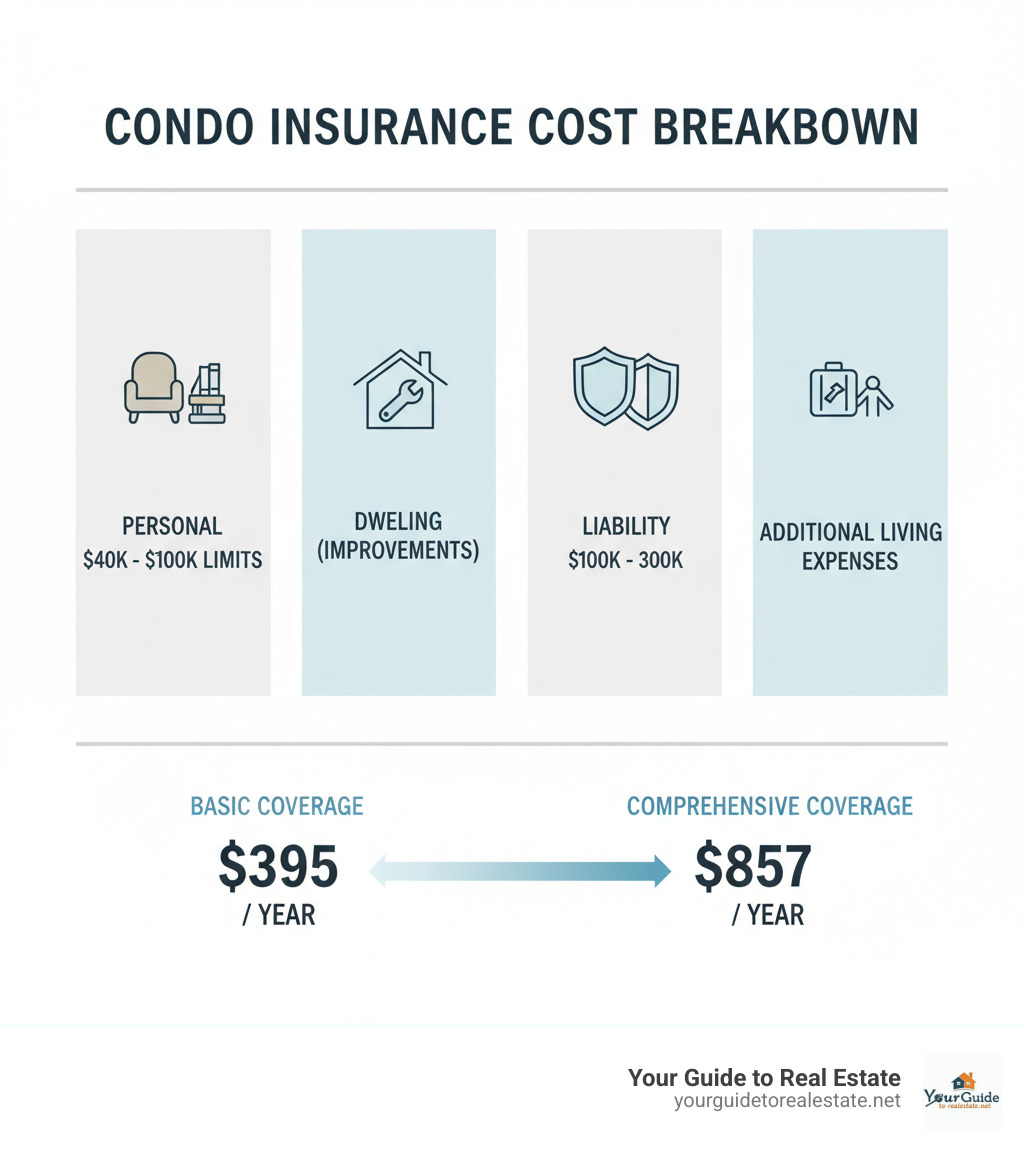
Condo insurance cost terms explained:
Understanding Your Condo Insurance Policy
Picture this: you’re living in your dream condo, and suddenly a pipe bursts in the unit above yours. Water pours through your ceiling, ruining your furniture and damaging your beautiful hardwood floors. Who pays for what? This is where understanding condo insurance gets really important – and honestly, a bit confusing at first.
Here’s the thing: condo insurance cost isn’t just about one policy. You’re actually dealing with two different insurance policies working together. There’s your condo corporation’s master policy (which covers the big stuff like the building structure), and then there’s your personal condo insurance – often called an HO-6 policy – which covers everything else.
Think of it like a sandwich. The master policy is the bread that holds everything together, covering common areas like lobbies, gyms, and the building’s structure. Your personal policy is the filling – it protects your belongings, any upgrades you’ve made to your unit, and covers you if someone gets hurt in your space.
Without your personal HO-6 policy, you’re left with some serious coverage gaps. That water damage scenario? The master policy might cover fixing the building’s plumbing, but your ruined furniture and flooring repairs? That’s on you – unless you have your own coverage.
For more guidance on managing the financial aspects of condo ownership, check out our resources on real estate financing.

What a Standard Policy Covers
Your personal condo insurance cost covers six main areas, each protecting you from different financial headaches. Let’s break them down in plain English.
Personal Property coverage is the most straightforward part. It protects all your stuff – your couch, TV, clothes, kitchen gadgets, and that expensive coffee maker you can’t live without. If a fire destroys everything or thieves break in, this coverage helps you replace what you’ve lost.
Dwelling/Building Property coverage gets a bit trickier. While the master policy covers the building’s bones, your policy covers everything “from the walls in.” This includes your interior walls, floors, ceilings, and any improvements you’ve made. Did you install granite countertops or hardwood floors? This coverage has your back.
Personal Liability coverage is absolutely crucial, even though many people overlook it. If your guest slips and falls in your condo, or if that pipe bursts and floods your neighbor’s unit below, liability coverage steps in. It covers medical expenses, repair costs, and legal fees if you’re found responsible. Most policies offer $100,000 to $300,000 in coverage, but going higher is often smart.
Loss Assessment coverage is unique to condo insurance. Sometimes your condo association faces a big expense – maybe the master policy’s deductible is huge, or there’s damage beyond what the master policy covers. When this happens, they might charge all unit owners a special assessment. This coverage helps pay your share.
Additional Living Expenses (also called Loss of Use coverage) pays for temporary housing if your condo becomes unlivable. Hotel bills, temporary rent, and extra food costs while your unit gets repaired – it’s all covered.
Medical Payments coverage handles minor medical expenses for guests who get hurt in your condo, regardless of who’s at fault. It’s usually a smaller amount, typically $1,000 to $5,000, but it can prevent small accidents from becoming big legal issues.
‘All Perils’ vs. ‘Specified Perils’ Coverage
When shopping for condo insurance, you’ll face a choice that affects both your protection and your condo insurance cost: all perils versus specified perils coverage.
All-risk coverage (also called all perils) is like having a security blanket. It covers damage from any cause unless it’s specifically excluded in your policy. The insurance company has to prove something isn’t covered, rather than you having to prove it is. It’s the broadest protection you can get.
Named perils coverage (or specified perils) only covers damage from causes specifically listed in your policy. Common ones include fire, lightning, windstorm, hail, theft, and vandalism. If the cause isn’t on the list, you’re out of luck.
The cost difference is noticeable. All perils coverage costs more because it protects against more risks. Named perils coverage can lower your condo insurance cost, but you’re trading savings for potentially significant gaps in protection.
Choosing the right type depends on your situation. If you have valuable belongings or want maximum peace of mind, all perils coverage is usually worth the extra cost. If you’re budget-conscious, have minimal valuables, and live in a very secure building, named perils might work for you – just understand what you’re giving up.
Condo Corporation vs. Personal Policy: Who Covers What?
The biggest source of confusion for condo owners is figuring out what the master policy covers versus what they need to cover themselves. Let’s clear this up once and for all:
| Feature | Condo Corporation (Master Policy) | Personal Condo Policy (HO-6) |
|---|---|---|
| What it Covers | Common areas (lobbies, hallways, gyms, pools) | Personal belongings (furniture, clothes, electronics) |
| Building structure (exterior walls, roof, foundation) | Interior of unit (walls, floors, fixtures, upgrades) | |
| Original fixtures within units (standard cabinets, countertops) | Personal liability (injuries to guests, damage to other units) | |
| Liability for common areas | Loss assessment (our share of master policy deductible/shortfall) | |
| Additional living expenses (if unit is uninhabitable) | ||
| Who Pays Premium | Condo association (funded by condo fees) | Individual unit owner |
| Deductible | High deductible, often shared by unit owners via assessment | Our chosen deductible |
| Primary Purpose | Protects the entire building and common property | Protects our personal property, unit interior, and liability |
Here’s what makes this even more important: the type of master policy your building has dramatically affects what you need to cover. Bare-walls coverage means you’re responsible for everything from the paint inward. Single-entity coverage typically includes standard fixtures and finishes. All-inclusive coverage covers almost everything as originally built.
Before you buy any condo insurance, get a copy of your association’s declaration and master policy. Understanding exactly what they cover – and what they don’t – is the only way to make sure you’re not left with dangerous gaps in protection.
The Average Condo Insurance Cost in 2025
Let’s talk numbers. If you’re budgeting for your condo purchase or reviewing your current policy, understanding typical costs helps you plan ahead and spot good deals when you see them.
Condo insurance cost varies significantly depending on where you live, but here’s what most condo owners can expect to pay. Across the United States, the average falls between $490 and $656 annually – that’s roughly $40 to $55 per month. In Canada, you’ll typically see costs between $27 and $33 per month, or about $400 to $600 per year.
The good news? This makes condo insurance quite affordable compared to other property insurance types. You’re not insuring an entire house structure like homeowners do – the condo association’s master policy already covers that big-ticket item.
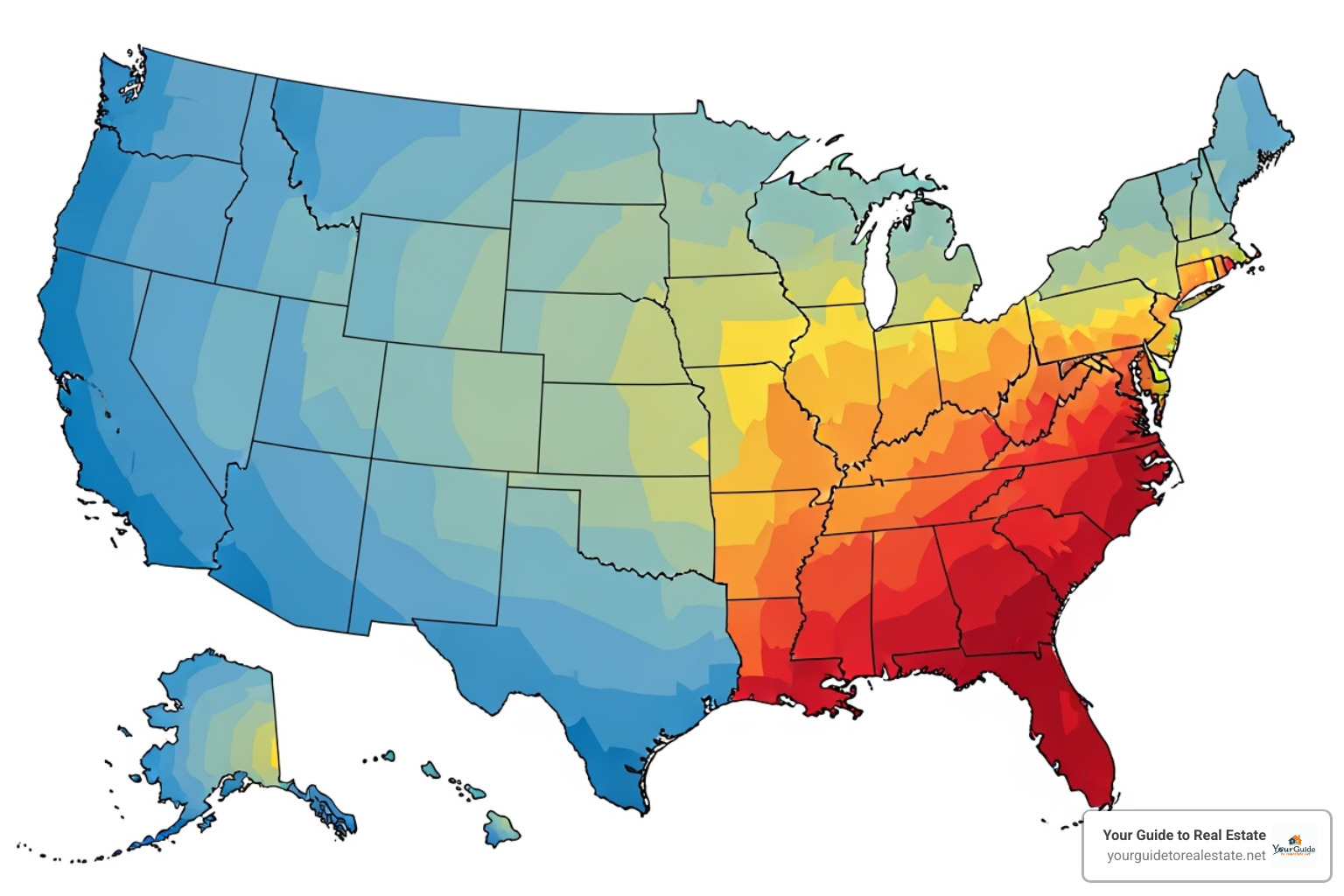
Average condo insurance cost by Location
Where you live makes a huge difference in what you’ll pay. Location affects everything from natural disaster risks to crime rates to local repair costs.
Canadian Costs:
Canadian condo owners generally enjoy lower insurance costs. Toronto residents pay around $26 per month, while Calgary averages about $34 monthly and Edmonton sits at $32 per month. Quebec has seen some changes recently – costs rose to about $610 per year in 2023 and are projected to reach $692 annually by 2025. This increase stems from Bill 141, which requires stricter management frameworks including building assessments every five years.
US Costs:
American condo owners see much wider cost variations. The cheapest states are Wyoming at $272 per year, Vermont at $289, and Maine at $362. On the flip side, Louisiana tops the charts at $1,093 annually, followed by Oklahoma at $1,071 and Texas at $1,007. These higher-cost states typically face greater risks from hurricanes, tornadoes, and other natural disasters.
If you’re in Texas, expect to pay between $855 and $1,257 annually depending on your coverage choices. Oklahoma residents typically see costs ranging from $929 to $1,309 per year.
The National Condominium Report from RE/MAX shows the Canadian condo market slowing in 2023, which can indirectly influence insurance rates as market dynamics shift. For those considering Dallas-area condos, our Dallas real estate market insights provide valuable local context.
How Coverage Limits Affect Your Premium
Here’s where your choices really impact your condo insurance cost. The amount of coverage you select for personal property, dwelling improvements, and liability directly affects your premium.
Personal property coverage makes the biggest difference in cost. Policies covering under $14,000 in belongings might cost around $395 annually, while coverage for $100,000 or more could jump to $857 per year. Don’t just guess at this number – actually walk through your condo and calculate what it would cost to replace everything you own.
Dwelling coverage depends heavily on your condo association’s master policy type. If you have a “bare-walls” master policy, you’ll need more dwelling coverage than someone with an “all-inclusive” policy. Plan on about $50 to $100 per square foot to rebuild your unit’s interior from the wall studs inward.
Liability limits are where many people try to save money, but this can be penny-wise and pound-foolish. Bumping your liability coverage from $100,000 to $300,000 or higher adds relatively little to your premium but provides massive additional protection against lawsuits.
Condo Insurance vs. Other Types of Property Insurance
You might wonder how condo insurance cost stacks up against other property insurance options. The answer depends on what you’re comparing it to.
Compared to homeowners insurance, condo insurance is a bargain – typically about $880 less per year than a standard homeowners policy. That’s because homeowners need coverage for their entire house structure, while your condo association’s master policy already handles the building itself.
Compared to basic tenant insurance, condo insurance costs more because it’s more comprehensive. Tenant insurance mainly covers personal belongings and liability since the landlord insures the building. Your condo policy includes dwelling coverage for your unit’s interior and any improvements you’ve made – protection that tenant insurance doesn’t provide.
Think of condo insurance as a custom solution designed specifically for your unique situation. You’re not paying for coverage you don’t need (like exterior building coverage), but you’re getting protection that other insurance types can’t offer. For a deeper dive into these differences, check out our guide on what is the primary difference between homeowners insurance and renters insurance?
Key Factors That Influence Your Premium
When insurance companies calculate your condo insurance cost, they’re essentially assessing risk. Think of it like this: they’re trying to predict the likelihood that you’ll file a claim and how much that claim might cost them. The good news? Understanding these factors puts you in the driver’s seat to potentially lower your premiums.
Your final premium isn’t just a random number – it’s based on dozens of data points that fall into three main categories: your building’s characteristics, your personal profile, and the policy choices you make. Some of these factors you can’t control (like your building’s age), but others are entirely within your power to influence.

Your Building’s Characteristics
Your condo building itself plays a starring role in determining your premium. Insurance companies look at buildings like they’re evaluating potential dates – they want to know everything about their history, their construction, and whether they’re likely to cause problems down the road.
Location and crime rate top the list of concerns. If your building sits in tornado alley or hurricane territory, expect higher premiums. It’s not personal – it’s just math. Areas with higher crime rates also bump up costs because theft and vandalism claims become more likely.
Construction materials and building age matter more than you might think. A shiny new building constructed with fire-resistant materials and modern plumbing will typically earn you lower rates than a charming 1960s high-rise with original everything. Older buildings aren’t necessarily bad investments, but they do come with higher insurance costs due to increased risks of things like pipe bursts and electrical issues.
Your building’s claims history follows it like a credit report. If your building has had multiple water damage incidents or frequent break-ins, insurance companies take notice. This shared history affects everyone’s premiums, which is why many condo associations work hard to maintain their buildings proactively.
Security features can be your premium’s best friend. Buildings with 24-hour concierge service, monitored fire alarms, and security systems often qualify for discounts. Our research shows that 45% of condo buildings have concierge security and 80% have monitored fire alarms – these aren’t just nice amenities, they’re money-savers on your condo insurance cost.
Your Personal Profile and Policy Choices
While you can’t change your building’s characteristics, you have much more control over the personal factors that influence your premium.
Your claims history is like your insurance report card. File multiple claims, and your rates will likely increase. Stay claims-free for several years, and many insurers reward you with discounts. This is why it’s often wise to handle minor repairs yourself rather than filing small claims.
Here’s something that surprises many people: your credit-based insurance score significantly impacts your condo insurance cost. In most states, insurers use your credit score to help set rates because statistical data shows a correlation between credit responsibility and claim frequency. People with poor credit pay about 54% more on average than those with good credit. It’s another great reason to keep your credit score healthy.
Your deductible amount gives you direct control over your premium. Choose a higher deductible, and your monthly costs drop. It’s a trade-off between paying more upfront when you have a claim versus paying more each month in premiums.
Unit improvements and upgrades add value to your space but also increase your insurance needs. That custom kitchen renovation or hardwood flooring installation means you’ll need higher dwelling coverage limits to protect your investment. While this might slightly increase your premium, it ensures your improvements are properly covered.
For more guidance on managing the financial aspects of condo ownership, including mortgage options, check out our resource on how to shop for a mortgage.
Understanding the Impact of Your Deductible
Your deductible is probably the most powerful tool you have for controlling your condo insurance cost. Think of it as your “skin in the game” – the amount you agree to pay before your insurance kicks in.
How raising your deductible lowers premiums is straightforward economics. When you choose a higher deductible, you’re telling the insurance company, “I’ll handle the small stuff myself.” In return, they reward you with lower monthly premiums because they’re less likely to pay out small claims.
The math is compelling: raising your deductible from $1,000 to $2,500 can save you approximately 7% on your annual premium. Over time, these savings can really add up.
Choosing an affordable deductible amount requires honest self-assessment. A $5,000 deductible will give you the lowest premium, but can you actually come up with $5,000 if disaster strikes? The sweet spot is finding the highest deductible you can comfortably afford to pay out of your emergency fund.
You only pay your deductible when you file a claim. If you never have a covered loss, you never pay it. But if something does happen, you’ll need that money available immediately. It’s about balancing immediate savings with potential future costs.
How to Find the Best Rates and Lower Your Condo Insurance Cost
Finding the perfect balance between comprehensive coverage and an affordable condo insurance cost doesn’t have to feel overwhelming. Think of it like shopping for any major purchase – you want the best value, not just the lowest price. The key is being an informed shopper who knows what to look for and how to ask the right questions.
The most effective strategy is shopping around and comparing quotes from multiple providers. But here’s the thing – not all quotes are created equal. We want to make sure we’re comparing policies with similar coverage limits, deductibles, and features. Otherwise, we might think we’re getting a great deal when we’re actually getting less protection.
Strategies for Lowering Your Premiums
Let’s talk about the practical ways we can reduce our condo insurance cost without sacrificing the protection we need. These strategies have helped countless condo owners save hundreds of dollars annually while maintaining solid coverage.
Bundling policies is one of the easiest wins. Many insurance companies offer significant discounts when we combine our condo insurance with auto insurance. Our research shows that 18% of condo owners take advantage of bundling, and for good reason – the savings can be substantial. It’s always worth asking about multi-policy discounts when getting quotes.
Increasing our deductible remains one of the most effective ways to lower premiums immediately. This is the amount we pay out-of-pocket before insurance kicks in. By raising our deductible from $1,000 to $2,500, we can typically save around 7% on our annual premium. Just make sure we have enough in our emergency fund to cover that higher deductible if needed.
Installing safety devices can open up additional discounts. If our building has monitored burglar alarms, fire alarms, or sprinkler systems, we should definitely mention these when getting quotes. Buildings with 24-hour concierge security often qualify for even better rates. These features reduce risk, and insurance companies reward that with lower premiums.
Maintaining a good credit score is crucial because most states allow insurers to use credit-based insurance scores when calculating rates. Condo owners with poor credit typically pay about 54% more than those with good credit. If we’re married or have a partner, using the person with the better credit score can save 20-30% on our condo insurance cost.
Asking about all available discounts is essential because insurance companies don’t always volunteer this information. Claims-free discounts reward us for not filing claims over a certain period. Loyalty discounts apply when we stick with the same insurer for several years. Retiree discounts are sometimes available for seniors. We might also qualify for professional organization discounts, non-smoker discounts (96% of condo owners are non-smokers according to research), or paperless billing discounts.
The key is to review and update our policy annually. Our needs change, the market changes, and new discounts become available. What worked last year might not be the best option today.
How to Get an Accurate Condo Insurance Quote
Getting an accurate quote requires some homework on our part, but it’s worth the effort. The goal isn’t just finding the cheapest condo insurance cost – it’s finding the right coverage at a fair price.
Reviewing our master policy comes first. We need to obtain a copy of our condo association’s master policy to understand exactly what they cover and what gaps we need to fill. Whether it’s bare-walls, single-entity, or all-inclusive coverage makes a huge difference in how much personal dwelling coverage we need. This document is the foundation for determining our insurance needs.
Calculating our personal property value accurately is crucial for getting realistic quotes. We should create a detailed inventory of our belongings and estimate their replacement cost – what it would cost to buy them new today, not what we paid originally or their current used value. Many online tools and smartphone apps can help with this process. Under-insuring our possessions to save on premiums is a false economy that can leave us financially exposed.
Determining our liability needs requires thinking about our assets and lifestyle. While $100,000 in liability coverage is standard, many experts recommend $300,000 or more to adequately protect our financial future. The difference in premium is often modest compared to the additional protection.
Comparing quotes from multiple providers is where the real work pays off. We recommend getting at least three quotes from different insurance companies. When comparing, we need to ensure we’re looking at policies with similar coverage limits, deductibles, and exclusions. This allows for a true comparison of both coverage and cost.
The process might take some time, but finding the right policy at the right price is worth the effort. The cheapest option isn’t always the best value if it leaves us under-protected when we need coverage most.
For those starting their homeownership journey and want to understand all the financial aspects, our first-time homebuyers toolkit: everything you need to know before you buy offers comprehensive guidance on managing all aspects of property ownership, including insurance considerations.
Frequently Asked Questions about Condo Insurance
Let’s tackle the most common questions we hear from condo owners about their insurance needs. These questions come up time and time again, and understanding the answers can save you both money and stress down the road.
Is condo insurance required?
Here’s where things get a bit tricky. Condo insurance isn’t required by law in most places – there’s no government mandate saying you must have it. But before you think you can skip it entirely, let’s talk about who does require it.
Your mortgage lender absolutely will. If you have a mortgage on your condo (and most of us do), your lender will require you to carry an HO-6 policy as a condition of your loan. They’re protecting their investment, and if you don’t maintain coverage, you could be in breach of your mortgage agreement. That’s a situation none of us want to face.
Your condo association probably requires it too. Most condo associations have bylaws mandating that unit owners carry personal condo insurance. This isn’t them being difficult – it’s smart protection for everyone in the building. If your unit causes damage to neighboring units, there needs to be insurance in place to cover those costs.
So while technically not a legal requirement, practically speaking, you’ll need condo insurance. For more details on what lenders typically require, check out our guide on FHA loan requirements.
What is loss assessment coverage and why do I need it?
Loss assessment coverage might sound complicated, but it’s actually pretty straightforward once you understand what it does. Think of it as protection from surprise bills from your condo association.
Here’s how it works: Your condo association’s master policy has a large deductible – often $25,000, $50,000, or even more. When there’s a major claim (like fire damage to the building or storm damage to the roof), the association has to pay that deductible before their insurance kicks in. Where do they get that money? They assess it to all the unit owners.
Loss assessment coverage pays your share of these unexpected costs. Without it, you could get hit with a bill for thousands of dollars, even though the damage had nothing to do with your unit. We’ve seen assessments range from a few hundred dollars to several thousand per unit, depending on the size of the claim and the building.
Special assessments can happen for other reasons too. If the master policy’s coverage limits are exceeded in a catastrophic event, or if there’s a shared liability claim that affects the whole building, the association might need to assess unit owners for the shortfall. Loss assessment coverage steps in here as well.
Adding this coverage to your policy typically increases your condo insurance cost by just a small amount, but it can save you from a major financial surprise. It’s one of those coverages that you hope you’ll never need, but you’ll be incredibly grateful to have if you do.
How much dwelling coverage do I need for my unit?
This is probably the most technical question we get, and the answer depends entirely on your condo association’s master policy. Getting this wrong can leave you seriously underinsured, so let’s break it down.
The type of master policy determines your needs. There are generally three types: bare-walls coverage, single-entity coverage, and all-inclusive coverage. Each one covers different things, which means your personal policy needs to fill different gaps.
With bare-walls coverage, the master policy only covers the basic building structure – think of it as covering everything from the wall studs outward. This means your personal policy needs to cover everything from the drywall in: paint, flooring, cabinets, appliances, fixtures, and any improvements you’ve made. You’ll need substantial dwelling coverage here.
With all-inclusive coverage, the master policy covers much more of your unit’s interior, including the original fixtures and finishes. Your personal dwelling coverage primarily needs to protect any upgrades or improvements you’ve made beyond what was originally installed.
Calculate based on replacement costs, not current value. To figure out how much dwelling coverage you need, estimate what it would cost to rebuild or replace everything in your unit that isn’t covered by the master policy. A rough guideline is to multiply your unit’s square footage by $50-$100 per square foot, but this varies significantly based on your area and the quality of your finishes.
Get professional help if you have extensive upgrades. If you’ve invested heavily in custom kitchens, luxury flooring, or other high-end improvements, consider getting a professional assessment. The cost of this evaluation is minimal compared to being underinsured when you need coverage most.
Understanding construction and replacement costs can be complex. For broader context on building expenses, our guide on how much it costs to build a house? provides valuable insights into current construction costs.
Conclusion
Understanding condo insurance cost is just the beginning of protecting one of your most valuable investments. We’ve walked through everything from the national averages of $400-$700 annually to the specific coverage gaps that only your personal HO-6 policy can fill. The numbers tell an important story, but the real value lies in knowing you’re fully protected.
Your condo insurance isn’t just another monthly expense – it’s your financial safety net. While your condo association’s master policy covers the building structure and common areas, your personal policy steps in to protect what matters most to you: your belongings, your unit’s interior improvements, and your liability exposure. Without it, a simple water leak or guest injury could cost you thousands out of pocket.
Custom coverage is everything. The cheapest policy isn’t necessarily the best policy for your situation. Whether you’re in Wyoming paying $272 annually or Louisiana facing $1,093 per year, the key is finding coverage that matches your specific needs. Consider your building’s master policy type, calculate your personal property value accurately, and choose deductible amounts you can comfortably afford.
Your condo insurance cost reflects dozens of factors – from your building’s security features to your personal credit score. By bundling policies, maintaining good credit, and shopping around with multiple insurers, you can often reduce your premiums while maintaining excellent protection.
At Your Guide to Real Estate, we believe that smart insurance decisions are part of successful real estate ownership. Your condo represents more than just a place to live – it’s a significant financial investment that deserves proper protection. Take the time to review your current coverage, get multiple quotes, and ensure you’re not leaving any gaps that could cost you later.
The real estate market continues to evolve, and staying informed helps you make better decisions about all aspects of property ownership. For insights into what’s ahead in the housing market, explore the 2025 housing market forecast and stay prepared for the opportunities and challenges ahead.