

Understanding Condo Association Basics
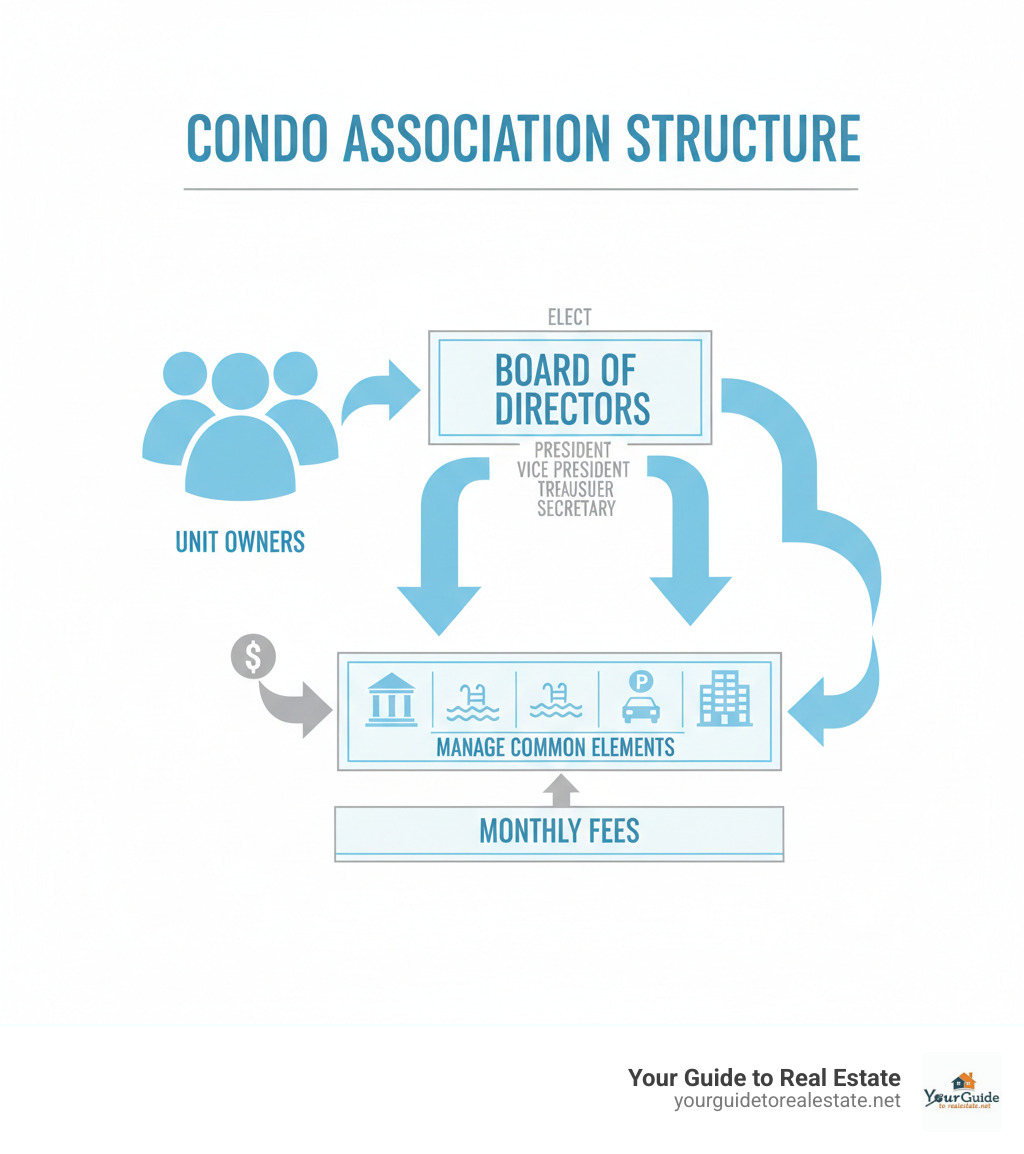
A condo association is an organization made up of all unit owners in a condominium building or development that manages shared spaces, enforces community rules, and handles the building’s finances. Think of it as a mini-government for your building – elected by residents, for residents.
Key Facts About Condo Associations:
- Who runs it: Board of directors elected by unit owners
- What they manage: Common areas like lobbies, pools, parking, and building exteriors
- How it’s funded: Monthly fees from all owners based on ownership percentage
- What they enforce: Rules about noise, pets, parking, and property use
- Main responsibilities: Maintenance, insurance, budgeting, and rule enforcement
When you buy a condo, you automatically become a member of the association. You’ll pay monthly fees that typically cover exterior maintenance, insurance for common areas, water, sewer, trash, and sometimes basic cable or internet.
The association operates under governing documents called CC&Rs (Covenants, Conditions, and Restrictions) that outline the rules for living in the community. These rules exist to protect property values and ensure everyone can enjoy their home peacefully.
Condo associations differ from HOAs in important ways. While HOAs typically manage single-family homes in planned developments, condo associations manage buildings with multiple units where owners share walls, roofs, and common facilities like elevators and pools.
Understanding your condo association before you buy is crucial. A well-managed association maintains property values and creates a pleasant living environment. A poorly managed one can lead to special assessments, declining property values, and community conflicts.
Glossary for condo association:
What is a Condo Association and How Does it Work?
Picture this: you’ve just bought your dream condo with that gorgeous city view and access to a sparkling pool. But who keeps that pool clean? Who makes sure the elevator works and the lobby looks welcoming? Enter the condo association – your new community partner in making condo living work smoothly.
A condo association is basically a team effort made up of everyone who owns a unit in your building or complex. Think of it as a neighborhood watch that actually does something! While you own everything inside your four walls, you and your neighbors collectively own and manage all the shared spaces – from the fancy lobby to the rooftop deck to those hallways you walk through every day.

Here’s where things get interesting. You might hear people use “Homeowners Association” and “condo association” like they’re the same thing, but they’re actually quite different animals. A condo association manages buildings where people share walls, elevators, and amenities. You own your unit, but you’re all in this together when it comes to the common areas.
An HOA, on the other hand, typically oversees neighborhoods of individual houses. Those homeowners own their house and the land underneath it, while the HOA mainly handles shared spaces like community parks or entrance gates. It’s like the difference between managing an apartment building versus managing a subdivision.
If you’re still figuring out what type of home is right for you, understanding the difference between condos and townhouses can help you make the best choice for your lifestyle.
| Feature | Condo Association | HOA |
|---|---|---|
| Property Type | Multi-unit buildings with shared walls | Individual houses in planned communities |
| Ownership | You own your unit interior; everyone shares common areas | You own your house and lot; community shares amenities |
| Fee Structure | Usually higher due to building maintenance responsibilities | Generally lower since you maintain your own home |
The Key Governing Documents
Every condo association runs on a set of important documents that basically serve as the rulebook for your community. These aren’t just suggestions – they’re legally binding agreements that keep everyone on the same page.
The Declaration of Covenants, Conditions, and Restrictions (CC&Rs) is the big kahuna of condo documents. This is where you’ll find the major rules about property use, like whether you can have pets, how many guests can use the pool, and what happens if someone consistently parks in the wrong spot. The CC&Rs also spell out exactly what counts as common area versus private space, which becomes super important when something needs fixing.
The Bylaws are like the operating manual for your condo association. They explain how board members get elected, what each officer does, how meetings work, and the process for making community decisions. If the CC&Rs are the “what,” the Bylaws are definitely the “how.”
Finally, you’ve got the Rules and Regulations – these are the day-to-day guidelines that the board can adjust as needed. Think pool hours, quiet time policies, or where to put your trash bins. These rules help the CC&Rs work in real life.
State laws also play a role in how your condo association operates. For example, California has The Davis-Stirling Act, which sets standards for things like financial transparency and election procedures. These laws protect both the association and individual owners.
Condo Association Fees vs. HOA Fees
Let’s talk about everyone’s favorite topic: monthly fees! Understanding what you’re paying for can help you see why condo association fees often run higher than HOA fees.
When you pay your condo association fee, you’re essentially chipping in for everything outside your unit. This typically covers water, sewer, and trash removal, plus exterior maintenance of the entire building. Need a new roof? That’s covered. Elevator breaks down? Covered. Lobby needs fresh paint? You guessed it – covered.
The association also carries insurance for all the common areas and the building structure itself. If a pipe bursts in the wall between two units, the association’s insurance handles it. This comprehensive coverage is one reason why condo fees tend to be higher than HOA fees.
In contrast, HOA fees usually cover shared amenities and common area maintenance, but you’re still responsible for your own home’s exterior, roof, and major systems. That’s why HOA fees are generally lower – you’re not pooling money for everyone’s roof replacements and exterior maintenance.
The trade-off is pretty sweet though. Higher condo association fees mean less maintenance stress for you. No more weekend roof inspections or scrambling to find a contractor when your siding needs repair. Your association handles all that, leaving you free to enjoy your home and community amenities.
The Board of Directors: Roles, Responsibilities, and Elections
Think of your condo association board like the steering wheel of your community – without it, things would quickly veer off course! These dedicated volunteers are your neighbors who’ve stepped up to handle the complex job of running your building or development.

Board members aren’t just making decisions on a whim. They have what’s called a fiduciary duty to the community, which is a fancy way of saying they’re legally required to act in everyone’s best financial interest, not just their own. It’s a big responsibility that comes with real legal weight.
Their daily work involves financial management – creating budgets, tracking expenses, and making sure your monthly fees are being spent wisely. They’re also the ones enforcing community rules fairly and consistently. When your building needs a new landscaping company or security service, the board handles contract negotiations to get the best deals.
The legal side can get tricky, which is why smart boards stay informed about potential governance pitfalls that could land the association in hot water.
The President and Vice President
Every board needs a leader, and that’s where the President comes in. They’re like the conductor of an orchestra, keeping everyone in sync and moving toward the same goals. The President oversees board meetings, sets agendas, and serves as the official representative when the association needs to speak with lawyers, contractors, or government officials.
It’s not a one-person show, though. The Vice President is always ready to step in, assisting the president with various tasks and filling in when needed. Think of them as the co-pilot who’s ready to take the controls if the captain needs a break or can’t be there.
The Treasurer and Secretary
Money matters, and that’s where the Treasurer shines. This person handles financial oversight for the entire association, which means budgeting for everything from elevator maintenance to pool chemicals. They’re constantly tracking expenditures to make sure the association stays within budget and preparing financial reports that show homeowners exactly where their money is going.
Meanwhile, the Secretary keeps everything organized through careful record keeping. They take meeting minutes that become the official record of board decisions and handle official correspondence between the board and residents. Without a good secretary, important decisions and discussions could easily get lost in the shuffle.
Board Elections and Member Roles
Here’s where democracy meets condo living! The election process gives every homeowner a voice in choosing their representatives. Homeowner voting typically happens annually, and if you can’t attend the meeting, many associations allow proxy voting so your voice still counts.
Board member terms are usually outlined in your association’s bylaws, and understanding HOA elections and proxy procedures can help ensure fair and transparent elections in your community.
Once elected, board members take on specific officer roles based on their skills and interests. Some folks are natural-born leaders who thrive as president, while others prefer the detail-oriented work of treasurer or secretary. The beauty is that it takes all types to make a condo association run smoothly.
Running for the board might seem intimidating, but remember – these are just your neighbors who decided to get more involved in their community. If you’ve got ideas about how things could run better, why not throw your hat in the ring?
Understanding Condo Association Finances: Fees, Funds, and Insurance
Money matters can feel overwhelming, but understanding your condo association‘s finances is like having a roadmap for your investment. When you pay those monthly fees, you’re not just throwing money into a black hole – you’re contributing to a carefully structured financial system that keeps your community thriving and your property values stable.
Think of your condo association‘s budget like your own household finances – there’s money for day-to-day expenses and money set aside for those big-ticket items you know are coming. The difference? Your association is managing this for an entire building or complex, which means the stakes are higher and the planning needs to be rock-solid.
A well-managed condo association maintains detailed budgets that account for everything from lightbulb replacements to major renovations. This financial stability doesn’t happen by accident – it requires careful planning, transparent reporting, and sometimes difficult decisions about spending priorities. For more detailed information about how insurance fits into this picture, check out our guide on condo association insurance.
The Core Financial Components of a condo association
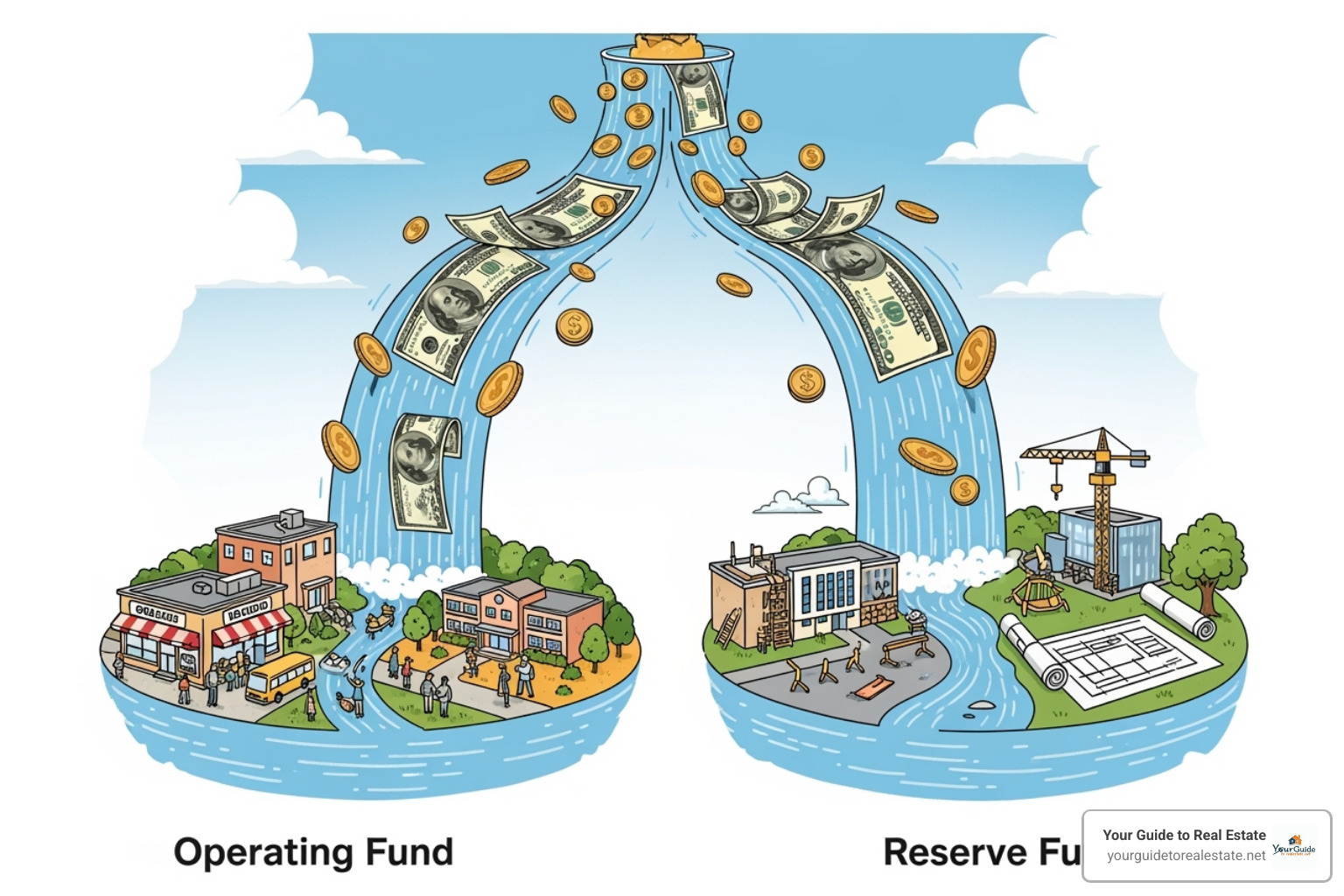
Your monthly condo association fees flow into two main buckets, each serving a distinct purpose in keeping your community running smoothly.
The operating fund is where your everyday expenses live. This fund handles all the routine costs that keep your building functioning – think of it as paying the bills. Landscaping keeps your property looking sharp, while daily maintenance ensures everything from hallway lighting to elevator operations stays on track. Utilities for common areas like lobby heating and pool filtration come from here too.
But here’s where condo living really shines: instead of you personally dealing with trash pickup schedules or worrying about exterior paint touch-ups, your operating fund covers these headaches. The fund also handles administrative costs like property management fees, accounting services, and insurance premiums.
The reserve fund is your community’s safety net and future planning account rolled into one. This is where the condo association saves for those inevitable big expenses that every building faces. Major repairs like fixing a leaky roof or replacing aging plumbing systems can cost tens of thousands of dollars. Roof replacement might seem far off, but roofs don’t last forever, and when the time comes, you’ll be grateful for that long-term savings plan.
Elevator upgrades are another perfect example – these mechanical systems need major overhauls every couple of decades. Pool resurfacing, parking lot repaving, and HVAC system replacements all fall into this category. A healthy reserve fund means these expenses don’t blindside residents with massive bills.
Special Assessments and Insurance
Even the best financial planning can’t predict everything. That’s where special assessments come into play, and while nobody loves them, understanding them helps you prepare.
A special assessment happens when your condo association faces unexpected costs that exceed what’s available in the reserve fund. Maybe a severe storm damages the building’s exterior, or an aging water main bursts and floods the parking garage. These aren’t routine maintenance items – they’re significant, unplanned expenses that require immediate attention.
The implications for owners can be substantial. You might receive a notice that each unit owes $2,000 for emergency roof repairs, payable within 90 days. It’s like your building’s version of a major car repair – necessary but never convenient. This is why reviewing a condo association‘s financial health before buying is so crucial.
Your condo association‘s master insurance policy provides crucial protection for the community. This comprehensive coverage handles common area coverage for spaces like lobbies, pools, and parking areas. Structural coverage protects the building’s bones – the roof, exterior walls, and foundation. Liability protection covers the association if someone gets injured in a common area.
However, this master policy typically stops at your unit’s walls. Your personal belongings, interior improvements, and liability within your unit require your own coverage. To understand exactly what you need to cover yourself, our guide on what condo insurance covers breaks down the details.
The beauty of this insurance arrangement is that major structural coverage gets handled at the association level, often at better rates than individual policies could achieve. You’re essentially pooling risk with your neighbors, which usually works out better for everyone involved.
Life in a Condo Association: Rules, Conflicts, and Participation
When you choose condo living, you’re signing up for more than just a home – you’re joining a community. This lifestyle brings wonderful perks like shared amenities and reduced maintenance responsibilities, but it also means learning to steer community rules and being part of something bigger than yourself.

The beauty of condo living lies in the balance between independence and community. You own your unit and control what happens inside those four walls, but you also share responsibility for keeping the entire property looking great and running smoothly. This shared ownership model is what makes condo associations work, but it also requires everyone to play by the same rules.
Typical Rules and Regulations in a condo association
Every condo association has rules designed to keep the peace and protect everyone’s investment. These aren’t created to be annoying (though they might feel that way sometimes!) – they’re there to make sure everyone can enjoy their home.
The most common rules you’ll encounter revolve around noise levels. Most associations have quiet hours, typically from 10 PM to 8 AM, and restrictions on construction work during weekends. Your upstairs neighbor’s late-night dance parties? The association has rules about that.
Pet policies are another big one. Many condo associations welcome furry friends but with guidelines. You might see restrictions on the number of pets, size limits, or requirements for leashing in common areas. Some buildings are completely pet-free, while others have designated pet relief areas.
Parking rules can make or break your daily routine. Most associations assign specific spots to each unit and have strict policies about guest parking. Don’t be surprised if there are rules about what types of vehicles you can park (sorry, that RV might not be welcome) or restrictions on car repairs in the parking garage.
When it comes to renovation restrictions, your condo association wants to make sure any changes you make don’t affect the building’s structure or your neighbors. Planning to knock down a wall or install new flooring? You’ll likely need approval first, especially if it involves plumbing or electrical work that could impact shared systems.
Common amenity rules keep shared spaces enjoyable for everyone. Pool hours, gym etiquette, and party room reservations all fall under this category. And yes, there are usually garbage disposal rules too – specific days for trash pickup and guidelines for recycling that help keep the property looking its best.
Benefits and Drawbacks of Condo Living
Let’s be honest about what you’re getting into with condo living. Like any housing choice, it comes with both perks and challenges.
The good stuff: You get access to amenities that would cost a fortune to maintain on your own. Swimming pools, fitness centers, party rooms, and sometimes even concierge services are all part of the package. Maintenance becomes someone else’s problem – no more weekend roof repairs or lawn mowing. Many condos offer improved security with gated access or doormen, giving you peace of mind. Plus, there’s something special about the community feeling that develops when neighbors share common spaces and look out for each other.
The reality check: Those monthly fees can be substantial and tend to increase over time. The rules and regulations that keep the community running smoothly can sometimes feel restrictive when you want to paint your front door purple or get a Great Dane. Conflicts happen when you put different people with different lifestyles in close quarters. And those dreaded special assessments can hit your wallet when unexpected repairs come up.
The privacy factor is worth considering too. Sharing walls, floors, and ceilings means you’ll know more about your neighbors’ lives than you might want to, and they’ll know about yours.
Conflict Resolution and Management
Even in the friendliest communities, disagreements happen. Maybe someone’s consistently violating the pool rules, or there’s tension over a recent fee increase. How your condo association handles these situations says a lot about its overall health.
Good condo associations have clear channels for residents to voice concerns without fear of retaliation. The best boards use mediation techniques to find solutions that work for everyone rather than taking a heavy-handed approach. They listen actively and look for common ground.
A solid formal grievance process outlined in the bylaws gives residents a path to appeal decisions they disagree with. This process should be fair and transparent, not something that makes you feel like you’re fighting city hall.
Property management companies often play a crucial role here. They bring professional expertise to complex situations and can serve as neutral mediators when emotions run high. They handle the day-to-day headaches so volunteer board members don’t burn out from constant conflicts.
Some of the biggest challenges condo associations face include underfunded reserves (which lead to those special assessments nobody likes) and board member burnout. Running a condo association is real work, and when the same few people carry all the load, they eventually get exhausted.
How to Effectively Participate
Your condo association works best when residents actually participate. You don’t have to become a board member to make a difference, though that’s certainly an option if you’re feeling ambitious.
Attending meetings is the easiest way to stay in the loop. You’ll learn about upcoming projects, budget discussions, and any issues affecting the community. Don’t be afraid to ask questions or share your thoughts respectfully.
Volunteering for committees lets you contribute your skills to specific areas like landscaping, social events, or reviewing architectural requests. It’s a great way to have input without the full commitment of board service.
If you’re ready to take on more responsibility, running for the board gives you direct influence over decisions that affect your daily life and property value. Just be prepared – it’s more work than most people realize.
Staying informed through newsletters and meeting minutes helps you understand what’s happening even when you can’t attend meetings. And when you do need to communicate with the board, being clear and respectful goes a long way toward getting results.
For board members looking to connect with others facing similar challenges, resources like joining conversations with industry peers can provide valuable insights and solutions.
A thriving condo association doesn’t happen by accident. It takes engaged residents who care about their community and are willing to contribute to its success.
Frequently Asked Questions about Condo Associations
Thinking about condo living? Already navigating the ins and outs of your condo association? You’re not alone in having questions. After years of helping people understand real estate, we’ve noticed the same concerns come up again and again. Let’s explore the most common questions we hear about condo associations and give you the straight answers you need.
What happens if I don’t pay my condo association fees?
Let’s be honest – nobody wants to skip their condo association fees, but sometimes life throws curveballs. Unfortunately, your association won’t just shrug it off. These monthly fees keep your community running, so associations take non-payment seriously.
The consequences start small but escalate quickly. Late fees are usually your first wake-up call, often added within days of missing your due date. If you continue to avoid payment, things get more serious fast.
Your voting rights might disappear, meaning you can’t participate in board elections or community decisions. Some associations will also restrict your access to amenities – imagine losing pool privileges right before summer because of unpaid fees.
The real trouble begins when the condo association places a lien on your property. This legal claim against your unit means you can’t sell or refinance without settling the debt first. From there, the association can pursue legal action, suing you for unpaid fees plus their legal costs.
In extreme cases of persistent non-payment, foreclosure becomes a possibility. Yes, your condo association can actually foreclose on your unit to recover outstanding balances. It’s rare, but it happens.
Here’s our advice: if you’re struggling financially, talk to your property manager or board immediately. Many associations will work with you on payment plans, but only if you communicate before the problem spirals out of control.
Can a condo association tell me what to do inside my unit?
This question hits at the heart of condo ownership – you own your unit’s interior, so shouldn’t you have complete control? The answer is mostly yes, but with some important exceptions that might surprise you.
Inside your unit is your domain. The condo association can’t dictate your furniture, wall colors, or how you arrange your space. Your home is still your castle, even when it shares walls with neighbors.
However, the CC&Rs can impose limitations when your interior choices affect the building’s structure or your neighbors’ enjoyment of their homes. Flooring requirements are common – many associations require carpeting or soundproofing in upper units to reduce noise for downstairs neighbors.
Window covering rules might seem intrusive, but they’re about maintaining the building’s exterior appearance. You can choose any drapes you want, but the side facing outside might need to be white or neutral.
Structural changes always require approval because you don’t own the walls themselves – those are common elements. Want to knock down a wall or move plumbing? You’ll need permission from your condo association first.
Fire safety regulations aren’t negotiable either. Any modifications must comply with safety codes, which the association is legally required to enforce for everyone’s protection.
The key is understanding that while you control your personal space, anything affecting the building’s infrastructure, common elements, or other residents falls under the condo association‘s authority.
How can I review the condo association’s documents before I buy?
Smart question! Reviewing your potential condo association‘s documents before buying is like getting a full medical exam before major surgery – absolutely essential and potentially life-saving for your wallet.
Start with your seller or listing agent – they’re legally obligated to provide these documents in most states. Don’t wait until the last minute; request them as soon as you’re seriously considering the property.
Your purchase agreement should include a contingency period specifically for reviewing condo association documents. This gives you time to thoroughly examine everything and back out penalty-free if you find deal-breakers.
The CC&Rs reveal the community’s personality – all the rules, restrictions, and architectural guidelines you’ll need to follow. The bylaws show you how the association operates – election processes, meeting procedures, and board responsibilities.
Financial statements are your crystal ball into the association’s health. Look at the current budget, income and expense reports, and several years of balance sheets. Red flags include declining reserves or increasing expenses without corresponding fee increases.
The reserve study is pure gold – it assesses common elements’ condition and projects future major repair costs. A well-funded reserve fund means smooth sailing; an underfunded one screams potential special assessments in your future.
Recent meeting minutes tell the real story of community life. You’ll find ongoing issues, major decisions, and any conflicts brewing within the association. Insurance policies clarify what the master policy covers versus what you’ll need to insure personally.
We strongly recommend having a real estate attorney review these documents. They’ll spot red flags that might sail right past you. If you’re considering FHA financing, double-check that the condo appears on the FHA condo approval list before you get too far into the process.
This document review is your best defense against nasty surprises after closing. Take it seriously – your future self will thank you.
Conclusion
Congratulations! You’ve made it through the comprehensive world of condo associations, and we hope you’re feeling much more confident about this unique form of homeownership. What might have seemed like a maze of rules and regulations at the beginning should now feel like a well-organized system designed to protect your investment and create a thriving community.
Think of your condo association as the backbone of your community – it’s there to ensure everyone can enjoy their home while maintaining property values for the long haul. From understanding the difference between a condo association and an HOA to diving deep into board responsibilities and financial management, you now have the knowledge to steer this landscape successfully.
The most important takeaways to remember are surprisingly straightforward. Know your governing documents – those CC&Rs and Bylaws aren’t just legal jargon, they’re your community’s constitution and operating manual rolled into one. Understand where your money goes through monthly fees, operating funds, and reserve funds, because a well-funded reserve is your best protection against surprise special assessments. Appreciate your board members – these volunteers are juggling complex responsibilities to keep your community running smoothly. Most importantly, stay engaged because your voice and participation help shape the place you call home.
Living in a condo offers some pretty sweet perks – imagine having access to a pool, gym, or beautifully maintained grounds without the headache of maintaining them yourself! Yes, you’ll follow community rules and pay monthly fees, but in return, you get reduced personal maintenance responsibilities and often a stronger sense of security and community than you’d find in a detached home.
The beauty of condo association living lies in the balance between individual ownership and collective responsibility. You own your space, but you’re also part of something bigger. By understanding how your association operates, participating in meetings when you can, and staying informed about financial health and community decisions, you’re not just protecting your investment – you’re contributing to a harmonious living environment that benefits everyone.
Whether you’re a first-time buyer considering a condo or a current owner looking to get more involved, knowledge is power in the real estate world. The more you understand about your condo association, the better equipped you’ll be to make smart decisions and enjoy all the benefits of community living.
For expert guidance on navigating the complexities of buying or selling property, explore our virtual real estate brokerage services. We’re here to provide you with a proven framework and stress-free guidance for success in the real estate market.