

Why Understanding Condo Association Insurance is Critical for Every Condo Owner
Condo association insurance is a master policy that covers common areas and shared property in condominium complexes, protecting the association from liability and property damage. Here’s what you need to know:
What It Covers:
- Building exteriors and structure
- Common areas (pools, hallways, elevators)
- General liability for accidents in shared spaces
- Association property and equipment
What It Doesn’t Cover:
- Your personal belongings
- Interior of your unit
- Your personal liability within your unit
- Unit upgrades or improvements
Key Fact: You still need your own HO-6 condo insurance policy even if your association has a master policy.
As a condo owner, you’re part of a shared ownership structure where everyone benefits from community amenities, but everyone also shares the financial responsibility for protecting those common spaces. Most condo association insurance policies provide between $2 million and $5 million in general liability coverage, and condominium owners pay for this protection through their regular dues or assessments.
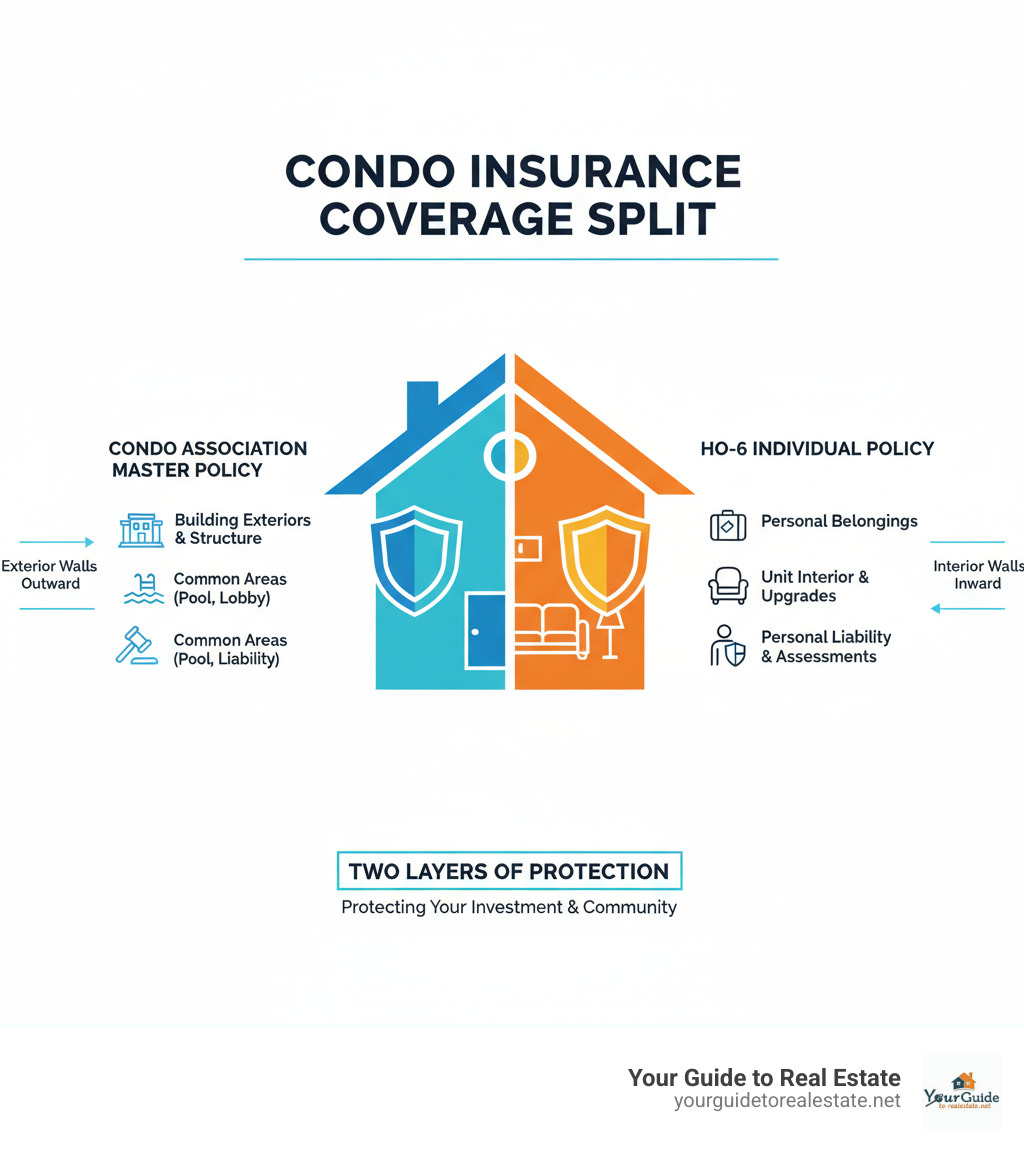
The master policy works alongside your individual condo insurance – think of it as two layers of protection working together. The association’s policy covers everything from the exterior walls outward, while your personal policy covers everything from the interior walls inward.
Understanding this coverage split is crucial because gaps in protection can leave you financially exposed. Whether you’re buying your first condo or serving on an association board, knowing how these policies work together protects both your investment and your community.
Handy condo association insurance terms:
What is a Master Policy and How Does It Differ from Personal Condo Insurance?
Picture this: you’ve just bought your first condo, and you’re trying to wrap your head around who’s responsible for what when it comes to insurance. Don’t worry – this shared ownership thing might seem confusing at first, but once you understand how it works, it actually makes perfect sense.
When you own a condo, you’re part of something pretty unique. You own your individual unit completely, but you also share ownership of common areas with all your neighbors. Think of it like owning a slice of pizza – you get your own piece, but you’re all sharing the same box and table.
This is where the master policy comes in. It’s completely different from your personal condo insurance, and understanding this difference could save you thousands of dollars down the road.
A master policy is basically condo association insurance that your homeowners association (HOA) or condominium owners association (COA) buys to protect everyone’s shared interests. It’s like a big umbrella covering all the stuff you collectively own and are responsible for.
Your personal condo insurance (called an HO-6 policy) is your own smaller umbrella that covers your personal stuff and the inside of your unit. Both umbrellas work together to keep you completely protected.
What is condo association insurance?
Condo association insurance is commercial-grade protection designed specifically for condo and HOA communities. Think of it as your community’s financial bodyguard – it protects the association and all unit owners from getting hit with massive bills when things go wrong in shared spaces.
Here’s what this community protection typically covers:
Building structure and exteriors get full protection under the master policy. If a nasty storm rips shingles off the roof or hail damages the building’s siding, the association’s insurance steps in to cover repairs. You won’t get stuck with a surprise bill for fixing the roof.
All those amenities you love – the pool, fitness center, lobby, hallways, elevators, parking areas, and even the landscaping – are covered too. When the community pool pump breaks or someone vandalizes the lobby, the master policy handles the repair costs.
Liability protection is huge here. Most condo association insurance policies provide between $2 million and $5 million in coverage. If someone slips on a wet lobby floor or gets injured using the community gym equipment, this coverage protects the association (and ultimately, you) from potentially devastating lawsuit costs.
The policy also covers essential building equipment and machinery like HVAC systems, boilers, and elevators that serve the entire community. Plus, any permanent fixtures in common areas are included in the coverage.
Here’s the key thing to remember: the master policy typically covers everything from the exterior walls outward and all shared spaces, but it stops at your unit’s interior walls.
The Critical Role of an Individual HO-6 Policy
Now here’s where many new condo owners make a costly mistake – they assume the master policy covers everything they need. It absolutely doesn’t.
Residents should always have their own individual condo insurance policies, as association coverage does not extend to personal property or the interior of units. This isn’t optional if you want complete protection.
Your personal HO-6 policy covers everything the master policy doesn’t. Your furniture, electronics, clothes, and everything else you own inside your unit needs your own coverage. If a fire damages your kitchen or a pipe bursts and ruins your hardwood floors, the master policy won’t help you.
Interior fixtures and any upgrades you’ve made are on you too. Those granite countertops you installed, your custom lighting, or that expensive flooring – the association isn’t responsible for replacing these if they’re damaged.
Personal liability within your unit is another crucial piece. If someone gets hurt inside your condo, your HO-6 policy provides the liability protection you need.
But here’s the coverage that many people don’t know about: loss assessment coverage. Sometimes the master policy’s limits get exceeded, or there’s a huge deductible on a major claim affecting common areas. When this happens, the association can charge each unit owner their share of the uncovered costs. Your HO-6 policy can help cover these unexpected assessments.
| Feature | Condo Association Insurance (Master Policy) | Individual Condo Insurance (HO-6 Policy) |
|---|---|---|
| Who Pays? | All unit owners (via dues/assessments) | Individual unit owner |
| What it Covers? | Building structure, exterior, common areas (lobbies, pools, roofs, shared walls), association liability | Personal belongings, interior of unit (walls-in), upgrades, personal liability within unit, loss assessments |
| Purpose | Protect the collective property and the association from financial loss and lawsuits | Protect the unit owner’s personal property, interior, and personal liability |
| Required By | Governing documents/bylaws of the association | Mortgage lenders (often), personal financial protection |
| Example Scenario | Roof damage from a storm, slip-and-fall in the hallway, damage to community pool | Fire inside your unit damaging furniture, guest injury in your living room |
The bottom line? Think of the master policy as protecting the “bones” of your building and shared spaces, while your HO-6 policy protects your personal “home” within those bones. You need both working together to sleep soundly at night.
What Does Condo Association Insurance Cover?

Think of condo association insurance as the protective umbrella covering everything you and your neighbors share. It’s designed to keep your community running smoothly without forcing individual owners to dig deep into their pockets when accidents happen or property gets damaged.
The master policy focuses on property coverage that protects the physical building and shared spaces. When a storm damages the roof or vandals spray paint the exterior walls, this coverage handles the repairs. It extends to everything from the foundation supporting your building to the clubhouse where you host community events.
General liability coverage is where things get really important for your peace of mind. Picture this: a delivery driver slips on wet pavement in your parking lot, or a neighbor’s guest takes a tumble near the pool area. Without this protection, your association could face a lawsuit that costs hundreds of thousands of dollars. Most condo association insurance policies provide between $2 million and $5 million in general liability coverage – that’s a substantial safety net protecting every owner in your community.
The policy also covers building equipment that serves everyone, like the elevator that gets you to the fifth floor or the central heating system that keeps common areas comfortable. Even medical payments for minor injuries in shared spaces are typically included, helping avoid small incidents from turning into major legal headaches.
Types of Master Insurance Policies
Not all master policies work the same way, and understanding the differences can save you from expensive surprises. Your association’s governing documents and bylaws spell out exactly which type you have, so it’s worth checking.
Bare-walls coverage (sometimes called studs-out) is the most basic option. It covers your building’s skeleton – the exterior walls, roof, and foundation – plus common areas, but stops right at the studs inside your unit. If fire damages your condo, the association rebuilds the shell, but everything from drywall to light fixtures comes out of your pocket.
Single-entity coverage goes further inside your unit, covering the original fixtures and finishes that came with the building. Those standard kitchen cabinets and basic flooring? Covered. But if you installed granite countertops or hardwood floors after moving in, you’ll need your own HO-6 policy to protect those upgrades.
All-in coverage is the most comprehensive option, protecting even the improvements you’ve made over the years. However, you still need personal coverage for your belongings and liability protection inside your unit.
What are common exclusions in condo association insurance?
Even the best condo association insurance has its limits, and knowing what’s not covered helps you plan better. Your personal belongings are never included – that’s strictly between you and your HO-6 policy. The same goes for significant unit upgrades, unless you have all-in coverage.
Flood damage typically requires separate coverage through the National Flood Insurance Program, while earthquake damage needs its own specialized policy. These natural disasters fall outside standard property insurance, so don’t assume you’re protected.
The policy won’t cover problems caused by negligence or poor maintenance either. If your association ignores a leaking roof for months and water damage spreads, the insurance company might deny the claim. This makes regular upkeep and responsive maintenance crucial for keeping coverage intact.
Wear and tear from normal aging doesn’t qualify for coverage – insurance handles sudden accidents, not routine replacement of old carpeting or outdated appliances. Finally, if someone runs a business from their unit, any related liability or property damage falls outside the master policy’s protection.
Understanding these gaps helps both associations and individual owners make smarter decisions about additional coverage they might need.
Essential Supplemental Coverages for Your Association

Think of your condo association insurance master policy as a solid foundation – but even the strongest foundation needs additional layers of protection to truly safeguard your community. Modern condo associations face risks that go far beyond property damage and slip-and-fall accidents. From lawsuits targeting board decisions to financial fraud, these challenges require specialized coverage that your basic master policy simply wasn’t designed to handle.
The reality is that supplemental coverages aren’t luxury add-ons – they’re essential shields against the unique vulnerabilities every association faces. When you’re managing a multi-million dollar property with dozens or hundreds of owners, effective risk management means thinking beyond the obvious and preparing for scenarios you hope will never happen.
Why Directors and Officers (D&O) Insurance is Non-Negotiable
Picture this: You volunteer your time to serve on your condo board, making thoughtful decisions to benefit your community. Then one day, you’re served with a lawsuit claiming your vote on a special assessment was discriminatory. Suddenly, you’re facing potentially devastating legal costs and personal liability – all for trying to help your neighbors.
This nightmare scenario is exactly why Directors and Officers insurance is absolutely essential for every condo association. Most board members are well-meaning volunteers who never imagined they could be held personally responsible for association decisions. Yet it happens more often than you’d think.
D&O insurance protects board members, officers, and often other volunteers from personal liability when they’re accused of “wrongful acts” while serving the association. These wrongful acts might include mismanaging reserve funds, making decisions that allegedly discriminate against certain owners, or failing to properly maintain common areas that later cause damage.
The protection covers legal defense costs, which can quickly reach tens of thousands of dollars even for frivolous lawsuits. It also helps pay settlements or judgments if the association is found liable. Without this coverage, dedicated volunteers could face personal financial ruin simply for trying to serve their community.
D&O insurance helps protect your association from damages and the defense costs resulting from wrongful act allegations and lawsuits. It’s the safety net that allows good people to step up and lead without risking their personal assets.
Other Important Coverages to Consider
Beyond D&O protection, several other specialized coverages can make the difference between a minor setback and a financial catastrophe for your association.
Crime and Fidelity insurance protects against the unfortunate reality that not everyone who handles association funds can be trusted. This coverage steps in when embezzlement or employee theft occurs, helping recover stolen funds and covering investigation costs. With many associations managing budgets in the hundreds of thousands or millions, this protection is invaluable.
If your association employs anyone – from a part-time maintenance worker to a full-time concierge – Workers’ Compensation insurance is likely required by law. This coverage handles medical expenses and lost wages when association employees are injured on the job. Even if you only use contractors, verifying they carry their own workers’ comp protects you from potential liability gaps.
Umbrella insurance provides that crucial extra liability protection when a major claim exceeds your primary policy limits. Since most condo association insurance policies cap general liability between $2 million and $5 million, a serious accident or lawsuit could easily push beyond these limits. Umbrella coverage kicks in to handle the excess, potentially saving your association from bankruptcy.
Don’t overlook newer risks either. Cyber liability insurance has become increasingly important as associations store sensitive owner information and financial records digitally. Equipment breakdown coverage fills gaps in standard policies when essential building systems like elevators or HVAC units fail due to mechanical problems rather than covered perils.
The key is working with an experienced agent who understands the unique challenges condo associations face. They can help identify which supplemental coverages make sense for your specific community and budget, creating a comprehensive protection plan that lets your board focus on what matters most – building a thriving community.
The Financials and Logistics of Condo Association Insurance

Let’s be honest—nobody gets excited about insurance costs. But understanding how condo association insurance works financially can save you from some unpleasant surprises down the road. Whether you’re a board member trying to budget or a unit owner wondering why your dues went up, these logistics matter to your wallet and your peace of mind.
Who Pays for the Master Policy?
Here’s the straightforward answer: you do. Well, you and all your neighbors together. Condo association insurance is funded through the regular association dues that every unit owner pays. Think of it as splitting the dinner bill—everyone chips in because everyone benefits from the protection.
When your association’s board creates their annual budget, the cost of the master policy gets factored in alongside other shared expenses like landscaping, maintenance, and utilities for common areas. This shared cost structure makes perfect sense when you consider that the insurance protects shared property and spaces that everyone uses and enjoys.
Your monthly or quarterly association fees include your portion of this collective insurance cost. While you’re not writing a check directly to the insurance company, you’re definitely contributing to keeping your community protected. It’s one of those behind-the-scenes expenses that keeps your condo complex running smoothly.
What factors influence the cost of condo association insurance?
The cost of your community’s condo association insurance isn’t pulled from thin air. Several key factors determine how much your association pays, and understanding these can help explain why premiums vary so much between different communities.
Location plays a huge role in determining costs. If your condo is in an area prone to hurricanes, tornadoes, or earthquakes, expect higher premiums. Communities in high-crime areas also face steeper costs. Weather patterns and regional risks directly impact what insurers charge for coverage.
Your building’s age and construction materials significantly affect pricing. Newer buildings with modern safety features and fire-resistant materials often qualify for better rates. Older buildings—especially those with outdated electrical systems, aging roofs, or vintage plumbing—may face higher premiums or requirements for specific upgrades before coverage kicks in.
Property value and replacement costs drive premium calculations. The more valuable your building and amenities, the more expensive it becomes to insure. Insurers base this on what it would cost to rebuild your entire complex from scratch, not just the current market value.
Your association’s claims history matters tremendously. Communities with frequent claims or large payouts in the past signal higher risk to insurance companies. A clean claims record, on the other hand, can help keep costs manageable.
Safety features and proactive maintenance can work in your favor. Associations that invest in sprinkler systems, security cameras, gated access, or professional property management often see lower premiums. Regular maintenance and documented safety protocols show insurers that your community takes risk management seriously.
The number of units and available amenities also influence costs. While larger complexes typically pay higher total premiums, the cost per unit might be more reasonable when spread across many owners. However, extensive amenities like multiple pools, fitness centers, or golf courses increase both property value and potential liability exposure.
Handling Insurance Claims and Working with Agents
When disaster strikes your community, knowing how to handle the claims process can make the difference between a smooth recovery and a prolonged headache. The responsibility for managing claims under the master policy falls squarely on your association’s board or property manager.
Filing a claim requires thorough documentation from the start. This means taking detailed photos and videos of all damage, creating written descriptions of what happened, and gathering any relevant reports. The more documentation you have upfront, the smoother the claims process typically goes.
The board’s role in this process is crucial. Board members need to understand what their policy covers, work with insurance adjusters, obtain repair estimates from qualified contractors, and make decisions about how to proceed with repairs. For liability claims, police reports or incident documentation become essential pieces of the puzzle.
Working with the right insurance professional can make all the difference in both securing appropriate coverage and navigating claims. An independent insurance agent brings valuable expertise to the table. Unlike agents who work for a single insurance company, independent agents can shop around with multiple carriers to find the best coverage and pricing for your specific situation.
These agents understand the nuances of different policy types—whether your association needs bare-walls, single-entity, or all-in coverage. They can identify potential gaps in protection and recommend appropriate supplemental coverages. When claims arise, they act as advocates for your association, helping interpret complex policy language and ensuring you receive fair treatment from the insurance company.
Finding an agent who specializes in condo association insurance and offers consultations can save your community both money and stress. They become partners in protecting your investment and ensuring your community stays financially secure when unexpected events occur.
Frequently Asked Questions about Condo Association Insurance
As real estate professionals, we understand that condo association insurance can feel overwhelming at first. The good news is that most condo owners ask the same questions, and once you understand the basics, everything clicks into place. Let’s walk through the most common concerns we hear from condo owners and board members.
Do I still need my own insurance if my association has a master policy?
This is hands down the most important question we get, and the answer is a resounding yes, absolutely! Think of it this way: the association’s master policy is like having great security for your apartment building’s lobby and hallways, but it doesn’t protect what’s inside your actual apartment.
Your association’s master policy covers the building structure and common areas, but it stops there. It won’t help you if your laptop gets stolen, your kitchen floods and damages your hardwood floors, or if someone gets hurt inside your unit. That’s where your HO-6 policy becomes your financial lifesaver.
Here’s what your individual condo insurance protects that the master policy doesn’t: your personal belongings like furniture, electronics, and clothing; the interior of your unit including walls, flooring, and any upgrades you’ve made; personal liability coverage for accidents that happen inside your space; and loss assessment coverage to help pay special assessments if the association faces costs beyond their policy limits.
Without your own HO-6 policy, you’re essentially gambling with potentially tens of thousands of dollars. Even if your association has the most comprehensive coverage available, it will never extend to your personal property or the interior of your unit.
How do I find out what my condo association’s insurance covers?
You have every right to know what protection you’re paying for through your association dues. The best approach is to start with your governing documents – specifically your condominium’s Declaration, Bylaws, and CC&Rs. These documents spell out what type of master policy your association must carry and often indicate whether it’s bare-walls, single-entity, or all-in coverage.
Next, request a copy of the actual policy from your board of directors or property management company. Don’t be shy about this – as a unit owner, this information belongs to you too. The policy document will show you the exact coverage limits, deductibles, and what’s excluded.
If the insurance language feels like it’s written in a foreign language (and honestly, it often does!), reach out to your property manager or board members for clarification. They should be able to explain the coverage in plain English or connect you with the association’s insurance agent who can walk you through the details.
Understanding your association’s coverage isn’t just about curiosity – it directly impacts how much individual coverage you need and helps you make smart financial decisions about your condo ownership.
What happens if a claim exceeds the association’s policy limit?
This scenario keeps many board members awake at night, and rightfully so. When a major disaster strikes and the damage costs more than the association’s policy covers, someone has to pay the difference – and that someone is typically the unit owners.
The most common solution is a special assessment, where the board divides the uncovered costs among all unit owners. Depending on the severity of the damage, your share could be anywhere from a few hundred to several thousand dollars. Imagine if a major storm causes $2 million in damage but your association only has $1.5 million in coverage – that $500,000 shortfall gets split among everyone.
Some associations might dip into their reserve funds to cover the gap, but this can leave the community financially vulnerable for future needs or planned improvements. It’s not always a viable option, especially for smaller associations or those that haven’t built up substantial reserves.
This is exactly why loss assessment coverage in your HO-6 policy is so valuable. It acts as your personal safety net, helping cover your portion of unexpected special assessments. Additionally, this scenario highlights why many associations invest in umbrella insurance – that extra layer of protection that kicks in when primary policy limits are exhausted.
The key takeaway? Understanding your association’s coverage limits helps you prepare financially and ensures you have adequate personal coverage to protect yourself when the unexpected happens.
Conclusion
Living in a condominium comes with its own unique set of joys and responsibilities – and understanding insurance is definitely one of those responsibilities you can’t ignore. Throughout this guide, we’ve walked through how condo association insurance works as your community’s safety net, protecting everything from the building’s exterior walls to those beautiful shared amenities that drew you to condo living in the first place.
Think of it this way: the master policy takes care of your shared spaces, while your HO-6 policy protects your personal space. The association’s insurance covers that storm-damaged roof and handles liability when someone slips by the pool. Your individual policy steps in when your laptop gets stolen or when a friend gets hurt inside your unit.
The bottom line? Both policies work together like a well-choreographed dance. Neither one alone gives you complete protection, but together they create a comprehensive safety net that lets you enjoy condo living without losing sleep over “what if” scenarios.
As a condo owner, staying informed about these insurance details isn’t just smart – it’s essential for protecting your investment and your peace of mind. Whether you’re serving on your association’s board or simply want to be a responsible neighbor, understanding how these policies work makes you a more engaged community member.
And if you’re considering condo ownership for the first time, don’t let insurance complexity scare you away. With the right knowledge and preparation, you can steer these waters confidently. The key is asking the right questions, reading your governing documents, and making sure you have both layers of protection in place.
An informed condo owner is a protected condo owner. By understanding your condo association insurance landscape, you’re setting yourself up for years of worry-free homeownership in your community.
Ready to take the next step in your real estate journey? Learn more about financing your property with our beginner’s guide to home loans