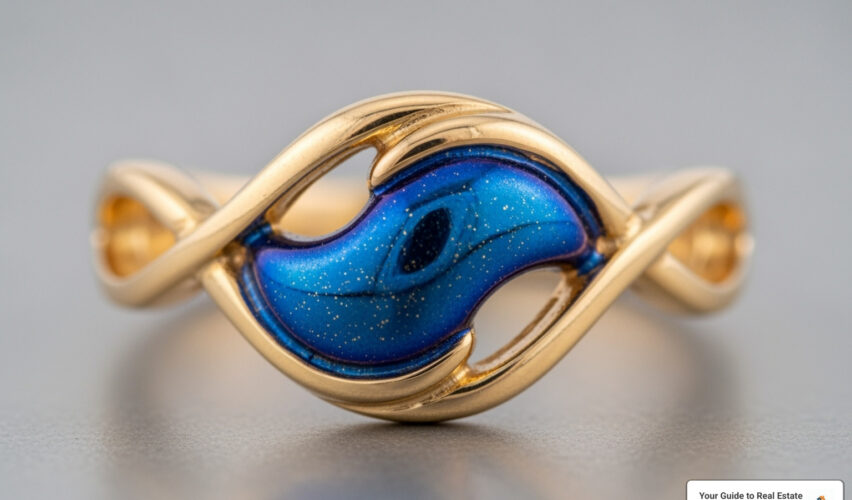
What Makes Blue Gold So Fascinating and Rare
Blue gold represents one of the most intriguing and rare materials in the jewelry world, but the term itself carries multiple meanings that often confuse people. Whether you’re exploring precious metals as an investment or simply curious about this unusual alloy, understanding what blue gold actually is can help you make informed decisions.
What is Blue Gold?
- Jewelry: A rare gold alloy created by mixing pure gold with metals like indium, gallium, or iron
- Metaphor: Water, often called “blue gold” due to its increasing scarcity and value
- Symbolism: The color combination representing institutions like California state colors
Two Main Types of Blue Gold Alloys:
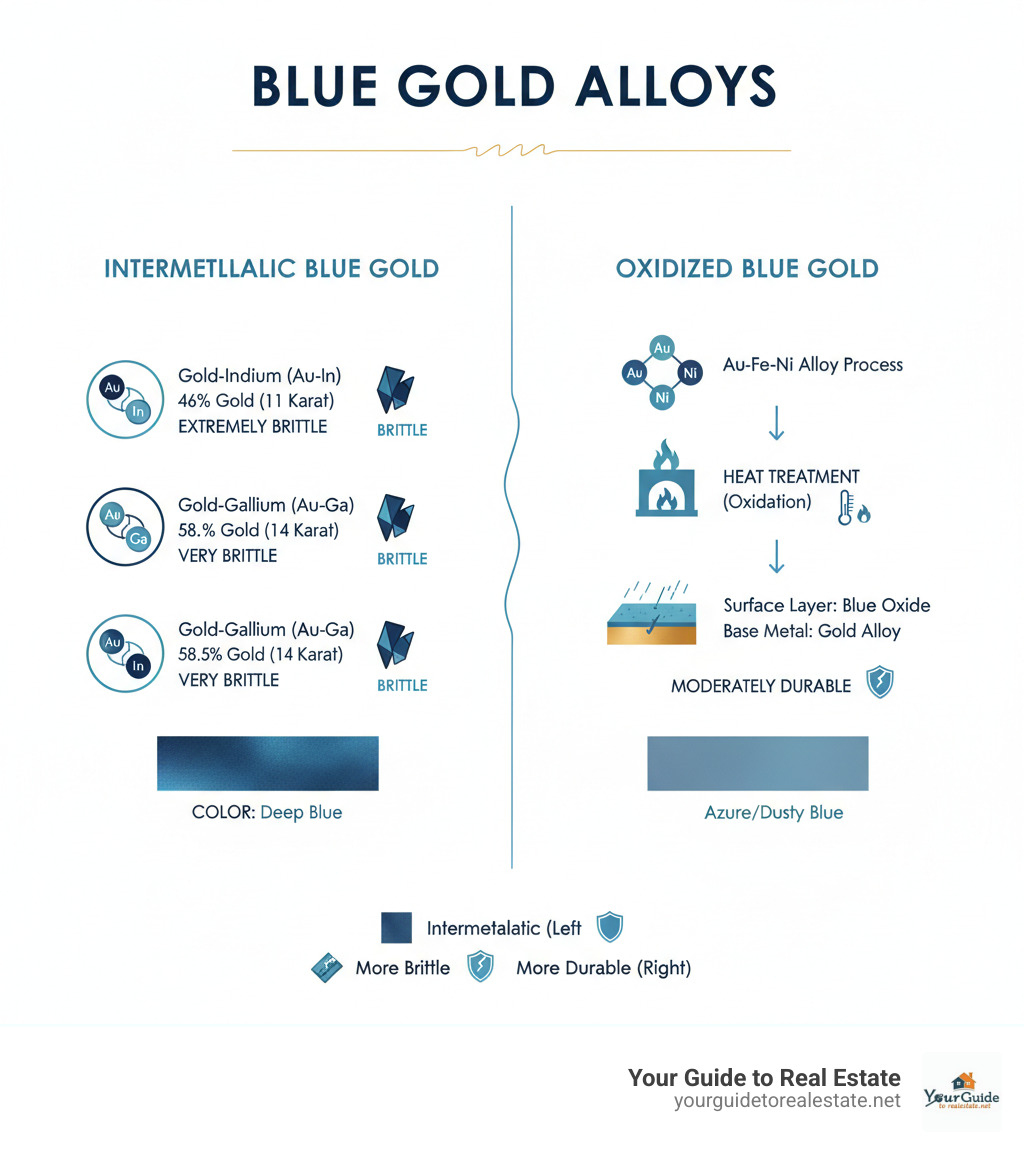
- Intermetallic Blue Gold – Gold mixed with indium (46% gold, ~11 karats) or gallium (58.5% gold, ~14 karats)
- Oxidized Blue Gold – Gold alloyed with iron and nickel, then heat-treated (75-85% gold content)
Blue gold stands as the rarest type of gold color used in jewelry, making it incredibly difficult to find and often expensive when available. The alloy’s brittleness and fragile nature mean most jewelers avoid working with it, contributing to its scarcity in the market.
The challenges don’t stop at rarity. Many products sold as “blue gold” today are actually regular gold plated with blue rhodium – a coating that wears off over time. This makes authentic blue gold pieces even more valuable to collectors and investors who understand the difference.
Just as savvy real estate investors learn to identify valuable properties that others might overlook, understanding the true nature of blue gold can help you spot genuine opportunities in a market filled with imitations.
What is Blue Gold? The Science Behind the Alloy
When we talk about blue gold in jewelry, we’re exploring something truly special in precious metals. Unlike the warm yellow glow of pure gold that we all know and love, blue gold is completely different – it’s an engineered marvel that scientists and jewelers created by mixing gold with other metals.
Think of it like this: pure gold is like a classic vanilla ice cream, but blue gold is more like that exotic flavor you find at a specialty shop. It’s still ice cream at its core, but the experience is completely unique.
The fascinating thing about blue gold is that it keeps gold’s inherent value while completely changing its appearance. We create this stunning blue color through two main scientific processes: forming special metallic compounds or using oxidation treatments. If you’re curious about the technical details, this scientific research on the special colours of gold dives deep into how different gold colors are achieved.
Intermetallic Blue Gold
The first type of blue gold comes from creating what scientists call intermetallic compounds. Don’t let the fancy name scare you – it’s basically a very precise recipe where gold atoms and other metal atoms arrange themselves in perfect patterns, like dancers following choreography.
Gold-indium alloy creates one of the most interesting versions of blue gold. This combination gives you about 46% pure gold, which equals roughly 11 karats. The color tends to be subtle – more like a blue-tinted gray that shifts depending on the lighting. It’s beautiful, but not always as vibrant as you might expect.
Gold-gallium alloy offers a step up in both purity and color intensity. With 58.5% gold content (about 14 karats), this version often shows a more pronounced blue hue that really catches the eye.
Here’s the catch though – both types are incredibly brittle and fragile. Imagine trying to work with something that might crack if you look at it wrong! This brittleness makes these alloys a real challenge for jewelers. Setting stones or doing detailed work becomes nearly impossible, which explains why you don’t see much blue gold jewelry in regular stores.
Oxidized Blue Gold
The second way to create blue gold uses an oxidation process that’s almost like magic. Jewelers start with an alloy of gold mixed with iron and sometimes nickel. Then comes the interesting part – they use heat treatment or chemical exposure to create a thin blue layer on the surface.
This method typically uses 75-85% gold content, making it much more valuable in terms of gold purity. The process was pioneered by innovative jewelers who experimented with different combinations and treatments until they achieved that perfect blue color.
The downside? The blue color is just a surface layer – think of it like a beautiful coat of paint. With regular wear, especially on rings that get bumped and scratched daily, this blue coating can gradually wear away. It’s gorgeous when new, but it comes with durability concerns that limit where it can be used effectively.
This fragile nature reminds me of some investment opportunities – they might look amazing on the surface, but you need to understand what you’re really getting before you commit.
The Allure and Challenges of Blue Gold in Jewelry
There’s something undeniably captivating about blue gold that draws people in. Maybe it’s the way it breaks all the rules of what we expect gold to look like, or perhaps it’s the simple fact that finding a genuine piece feels like finding buried treasure.
Blue gold appeals to those who want something truly different in their jewelry collection. It’s not for everyone – and that’s exactly what makes it special. Just like how we analyze luxury real estate trends in 2025: What high-end buyers want now to understand what drives exclusive markets, blue gold represents that same desire for uniqueness and rarity.
But here’s the catch – this stunning metal comes with serious challenges that explain why you don’t see it in every jewelry store window.
A Brief History: From Patented Alloys to Iconic Watches
The story of blue gold really begins in the mid-20th century with some brilliant minds who refused to accept that gold could only come in yellow, white, or rose. These innovators were like the first real estate developers who looked at empty land and saw possibility where others saw problems.
Ludwig Muller, a Swiss jeweler, became one of the key pioneers by creating and patenting blue-oxidizing alloys using gold, iron, and nickel. Around the same time, Vittorio Antoniazzi, an Argentinian goldsmith, was working on his own pioneering blue gold patent with formulations containing 80% to 88% gold content.
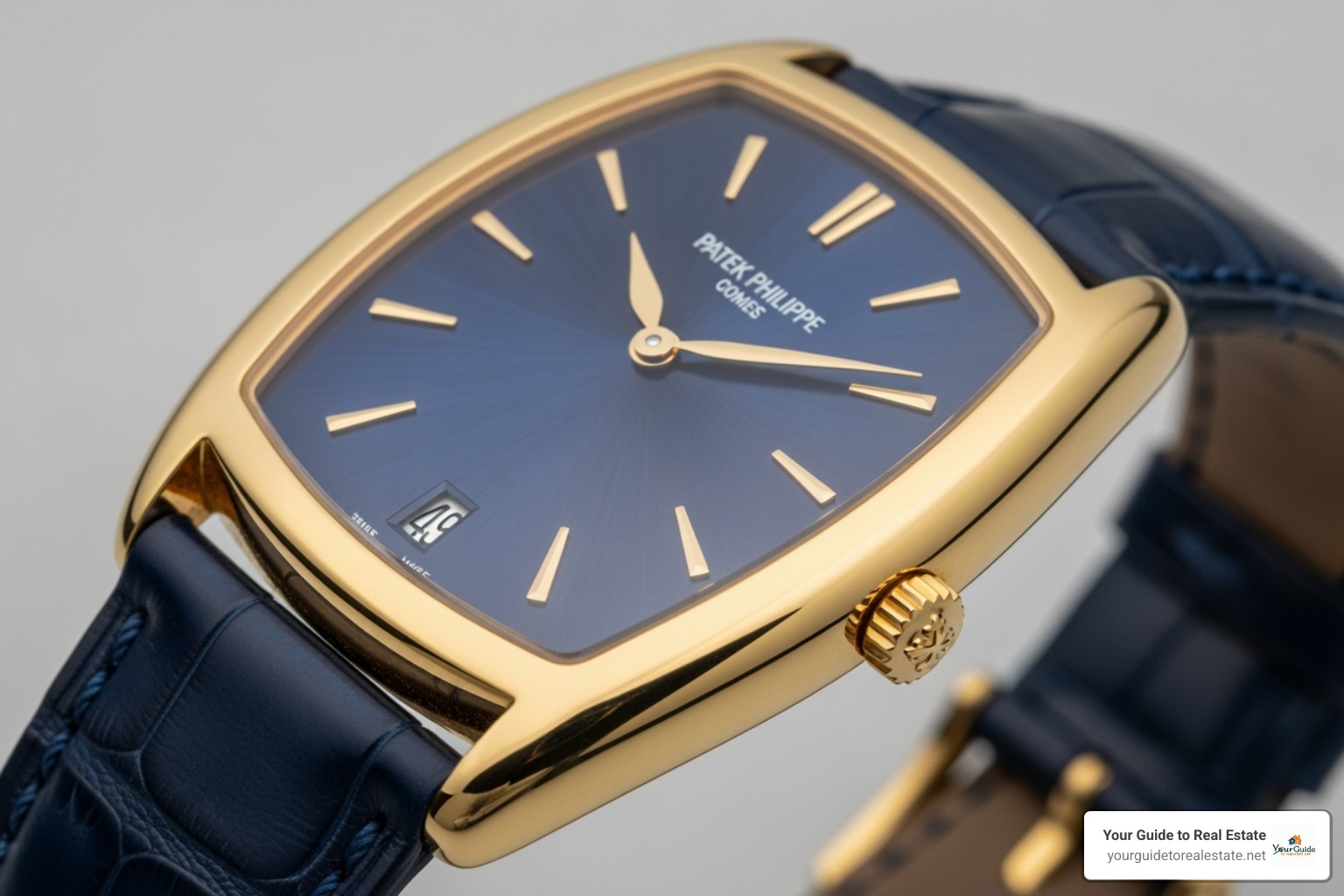
The real breakthrough came in 1968 when Patek Philippe released the Golden Ellipse watch featuring an 18k blue gold dial. This wasn’t just a one-off experiment – the watch became an icon and remains in production today. It proved that blue gold could work in luxury timepieces, even if it couldn’t conquer the broader jewelry market.
Other luxury watchmakers like Andersen Genève and Greubel Forsey have also experimented with blue gold, but success stories remain rare. One notable failure was VA Blue Gold SA, a Swiss company that launched a jewelry line in 1988 using a ruthenium and rhodium blue gold alloy. Despite achieving a strong blue color, the company couldn’t find market traction and eventually closed down.
The Jeweler’s Dilemma: Working with a Brittle Metal
Here’s where blue gold gets tricky – it’s absolutely beautiful, but working with it is like trying to build a house with glass bricks. The metal is incredibly brittle and fragile, making it a nightmare for jewelers to work with.
Imagine trying to cast a ring that might crack just from the cooling process, or attempting to set a diamond in metal that could crumble under pressure. That’s the reality jewelers face with blue gold. The brittleness affects every step of the process – casting, stone setting, and even polishing become major challenges.
This is why most blue gold pieces are limited to delicate inlays or accent work where the metal won’t face much stress. You won’t find many blue gold wedding bands or tennis bracelets because they simply wouldn’t survive daily wear.
These material challenges are similar to understanding different property investment strategies. Some properties require specialized knowledge and extra care – just like blue gold demands jewelers with exceptional skill and patience.
Comparing blue gold to other colored golds
To really understand what makes blue gold special, let’s look at how it stacks up against its more popular cousins – white gold and rose gold.
White gold uses metals like palladium, nickel, or silver and typically comes in 14k or 18k purities. It’s durable, strong, and malleable – everything a jeweler wants to work with. The main maintenance issue is that rhodium plating may need refreshing over time.
Rose gold gets its beautiful pinkish-red color from copper (sometimes with silver) and also comes in 14k or 18k varieties. It’s durable, strong, and often more scratch-resistant than yellow gold, making it perfect for everyday wear.
Then there’s blue gold – available in 11k, 14k (for intermetallic types), or 18k (for oxidized versions), created with indium, gallium, or iron and nickel. Its color ranges from subtle blue-grey to deep blue, but it’s extremely brittle and fragile. The oxidized versions have the added challenge that their blue surface layer can wear off over time.
It’s like comparing a luxury penthouse (white and rose gold) that’s move-in ready to a historic mansion (blue gold) that’s absolutely stunning but requires constant specialized maintenance. Both have their place, but one is definitely more practical for everyday life.
Finding and Identifying Genuine Jewelry
Hunting for genuine blue gold jewelry feels a bit like searching for a hidden gem in the real estate market – you need sharp instincts and solid knowledge to spot the real deal. Just as conducting a thorough real estate valuation requires expertise to separate true value from flashy marketing, finding authentic blue gold demands careful investigation.
The challenge is real: most pieces sold as blue gold today aren’t the genuine article. Instead, they’re clever imitations designed to capture the eye of unsuspecting buyers. Understanding this distinction could save you from making an expensive mistake.
Distinguishing True Alloy from Plated “Blue Gold”
Here’s where things get tricky. Walk into most jewelry stores or browse online retailers, and you’ll find plenty of “blue gold” pieces at surprisingly affordable prices. Your first instinct might be excitement at finding a bargain, but hold on – there’s likely more to the story.
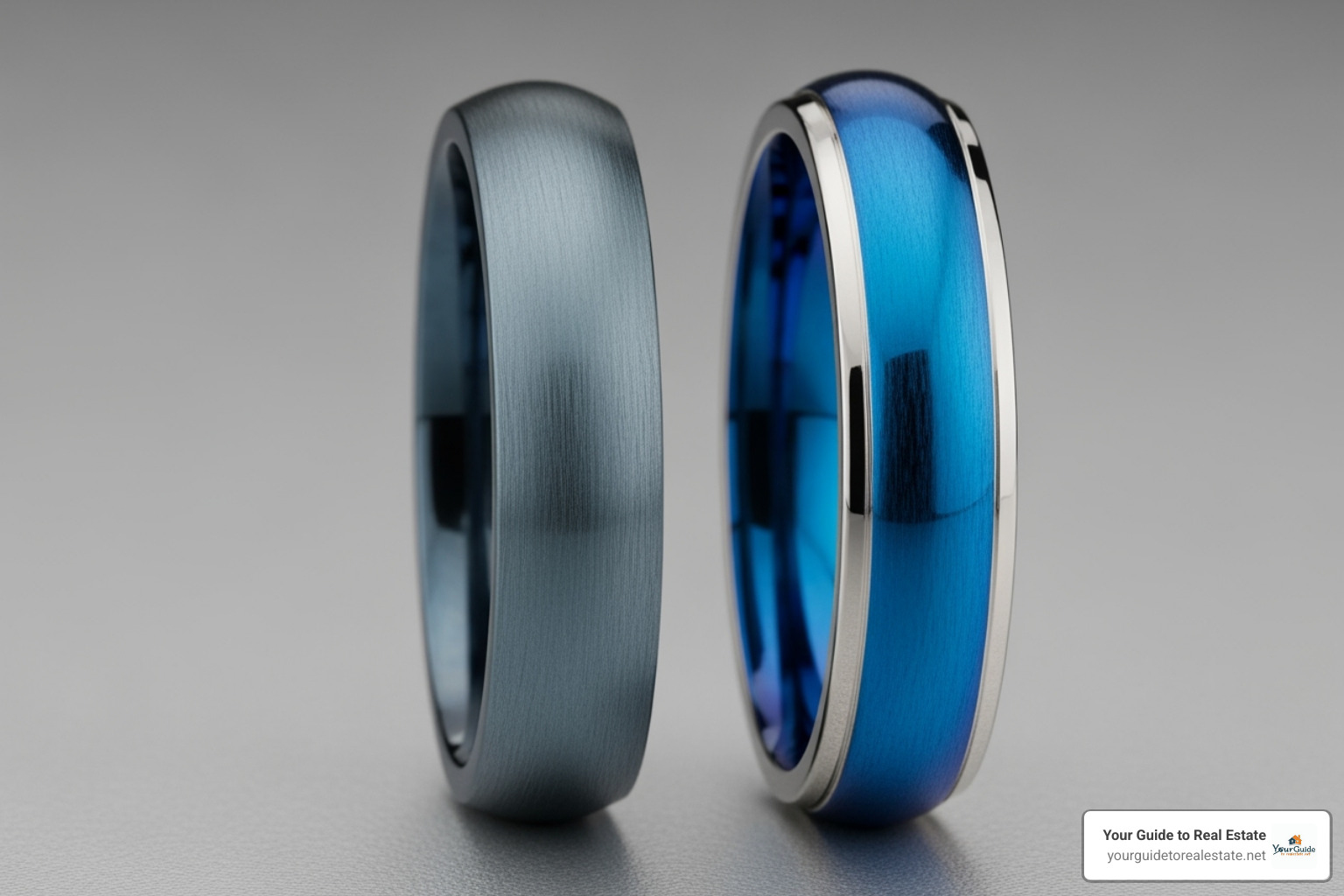
Most of these pieces are actually white gold or sterling silver with blue rhodium plating. Think of rhodium plating like a very thin coat of blue paint applied through an electroplating process. While it creates a gorgeous blue color initially, it’s essentially a surface treatment that will wear off over time.
The telltale signs become obvious with wear. Rhodium plating gradually rubs away, especially on rings and bracelets that experience daily friction. You’ll start seeing the underlying silver or white gold peeking through, particularly around edges and contact points.
True blue gold alloy works differently. With intermetallic compounds, the blue color runs throughout the entire metal structure – it’s not just sitting on top. Even with oxidized blue gold, the color forms through a chemical reaction with the gold itself, creating a more stable bond than simple plating.
The price difference tells the real story. Genuine blue gold commands premium prices due to its rarity and complex manufacturing process. If you’re seeing “blue gold” jewelry at bargain prices, you’re almost certainly looking at plated pieces.
Some sellers also use anodization on metals like titanium to create blue colors. While beautiful, this electrical treatment creates a colored oxide layer on the surface – another form of surface coloring rather than true blue gold alloy.
Where to Find Authentic Pieces
Finding genuine blue gold requires patience and knowing where to look. Unlike popular gold varieties available at every jewelry counter, authentic blue gold pieces are scattered across specialized markets.
Vintage dealers and estate sales offer your best hunting grounds. The mid-20th century marked the golden age of blue gold experimentation, so pieces from this era occasionally surface through estate collections. You might find work by pioneers like Ludwig Muller – perhaps even a rare piece like this Ludwig Muller brooch that showcases his innovative techniques.
Luxury watchmakers present another promising avenue. Patek Philippe continues producing their iconic Golden Ellipse watches featuring blue gold dials, proving there’s still a market for this extraordinary material. Other high-end watch brands like Andersen Genève and Greubel Forsey have also explored blue gold applications.
Auction houses specializing in fine jewelry and timepieces occasionally feature historically significant blue gold pieces. These venues attract serious collectors who understand the rarity and value of authentic examples.
Custom jewelers with exceptional skills might work with blue gold, though expect this route to be expensive and time-consuming. The metal’s brittleness means only the most experienced craftspeople dare attempt working with it.
Authentic blue gold jewelry commands premium prices for good reason. The combination of rarity, difficulty in production, and limited availability means genuine pieces are investment-grade acquisitions rather than casual purchases.
“Blue Gold”: Unpacking Other Meanings of the Term
The term blue gold extends far beyond the jewelry showcase, carrying powerful meanings that touch our daily lives in ways you might not expect. Just as we help clients understand the many facets of how to invest in real estate, exploring these different meanings gives us a richer understanding of why this phrase resonates so deeply across cultures and industries.
Water as the “New Gold”
When environmentalists and economists talk about blue gold, they’re usually referring to something far more essential than any piece of jewelry: water. This comparison isn’t just poetic—it reflects a growing reality that’s reshaping how we think about resources and value.
Water scarcity has become one of the defining challenges of our time. As populations grow and climate patterns shift, freshwater is becoming increasingly precious. The parallel to gold makes perfect sense when you consider that both are finite resources that become more valuable as they become harder to find.
The documentary “Blue Gold: World Water Wars” explores this concept in depth, examining how corporate interests and governments are positioning themselves around water rights. You can learn more about this eye-opening film on its IMDb page. The documentary reveals how water has become a commodity that’s traded, fought over, and controlled—much like gold throughout history.
What makes this metaphor particularly striking is how it highlights our relationship with essential resources. Just as gold rushes once drove entire economies and sparked conflicts, water access is increasingly becoming a source of both opportunity and tension on a global scale.
A Symbolic Color Combination
On a lighter note, blue gold also represents one of the most beloved color combinations in American culture. This pairing carries deep symbolic meaning and shows up in places that might surprise you.
California’s state colors are blue and gold, officially designated in 1951. The blue represents the vast Pacific Ocean and endless California skies, while gold honors the state’s famous Gold Rush heritage. It’s a combination that perfectly captures California’s natural beauty and historical significance. You can read more about this designation on California’s official state colors page.
The story gets even more interesting when you find that these colors actually originated at UC Berkeley around 1871. From there, the combination spread throughout the UC system, including UC San Diego, where the Tritons proudly wear blue and gold.
This use of blue gold is about identity and belonging. Whether you’re cheering for your favorite team or representing your alma mater, these colors create an instant connection. It’s fascinating how a simple color combination can carry so much meaning and unite people across generations.
The beauty of the term blue gold lies in its versatility. Whether we’re discussing rare jewelry alloys, precious water resources, or beloved institutional colors, the phrase captures something special and valuable in each context.
Frequently Asked Questions about Blue Gold
We know blue gold can be confusing – between the science, the rarity, and all those different meanings floating around. Let’s clear up the most common questions we hear about this fascinating material.
Is blue gold considered a rare or valuable metal?
Absolutely! Blue gold is incredibly rare – in fact, it’s the rarest type of gold color you’ll find in jewelry. Think of it like finding a pristine property in the most exclusive neighborhood – except even harder to come by.
The rarity comes down to some serious challenges. Creating blue gold is like trying to bake a soufflé during an earthquake – everything has to be perfect, and one wrong move ruins the whole thing. The metals needed for the alloys, like indium and gallium, aren’t exactly common or cheap. Plus, most jewelers would rather work with materials that don’t crack if they look at them wrong.
Then there’s the market reality. Blue gold has never hit mainstream popularity like white or rose gold. It’s more of a collector’s dream than a everyday jewelry choice. This limited demand means less production, which keeps it rare.
All these factors make genuine blue gold pieces highly valuable. When you do find authentic pieces, they often cost more than similar items in regular gold colors. It’s like owning a piece of jewelry history – beautiful, unique, and definitely not something you’ll see on everyone else.
What is the difference between genuine blue gold alloy and rhodium-plated blue gold?
This is the million-dollar question – literally, in some cases! The difference is huge, and understanding it can save you from expensive mistakes.
Genuine blue gold alloy is the real deal. The blue color comes from mixing gold with metals like indium, gallium, or iron and nickel. The color is baked right into the metal itself. With intermetallic types, the blue is part of the metal’s structure. With oxidized types, it’s a stable layer that forms through chemical reactions. You’re looking at 11 to 18 karats of actual gold content.
Rhodium-plated blue gold is basically regular jewelry wearing a blue costume. It starts as white gold or even sterling silver, then gets a thin blue coating sprayed on top. It’s like painting your house blue versus building it with blue bricks – one washes off, the other doesn’t.
The practical differences matter a lot. That rhodium plating will wear off, especially if you actually wear the piece. You’ll need to get it re-plated to keep the color, which gets expensive fast. Real blue gold alloy keeps its color (though it might be fragile for other reasons).
Value-wise, there’s no contest. Genuine blue gold costs significantly more because of its rarity and the complex process to make it. Plated pieces are much cheaper, but you’re essentially buying the base metal with fancy makeup.
Here’s how to tell the difference: ask about the manufacturing process, check for signs of wear where blue might be chipping off, and remember – if the price seems too good to be true for real blue gold, it probably is.
How does blue gold compare to other colored gold alloys like white or rose gold?
Blue gold is like that brilliant but high-maintenance friend we all know – fascinating, but requires special handling. White and rose gold are more like reliable best friends – they show up when you need them and don’t cause drama.
Durability is where blue gold really shows its quirky side. White and rose gold can handle daily wear, getting knocked around, and general life abuse. You can resize rings, set stones, and polish them without worry. Blue gold, especially the intermetallic types, is incredibly brittle. It’s more suited for delicate pieces or accents rather than your everyday wedding ring.
For everyday wear, white and rose gold win hands down. They’re tough enough for rings that get banged against desks, bracelets that catch on sleeves, and necklaces that get tugged by toddlers. Blue gold is more like fine china – beautiful for special occasions, but you wouldn’t eat cereal out of it every morning.
Color intensity varies quite a bit. White gold gives you that clean, silvery look, while rose gold offers warm, romantic pink tones. Blue gold can range from subtle blue-gray to deeper blue shades, though sometimes it’s more understated than you might expect.
Karat options also differ. White and rose gold commonly come in 14K and 18K, giving you good durability with decent gold content. Blue gold typically maxes out at 11K to 14K for intermetallic types, though oxidized versions can reach 18K.
The biggest difference? Availability and price. White and rose gold are everywhere, with options for every budget. Blue gold remains a rare, often custom-made choice that appeals mainly to collectors and those who want something truly unique. It’s the difference between shopping at a regular store versus hunting for treasure at exclusive auctions.
Conclusion
Blue gold stands as one of the most fascinating materials in the precious metals world, though it’s definitely not your everyday jewelry choice. Think of it as the rare vintage car of the gold family – absolutely stunning, incredibly unique, but requiring special care and expertise to maintain.
Throughout this guide, we’ve uncovered the science behind this extraordinary alloy. Whether created through delicate intermetallic compounds mixing gold with indium or gallium, or through the surface-oxidation process using iron and nickel, blue gold represents true metallurgical artistry. The fact that it’s so brittle and challenging to work with only adds to its mystique – and explains why finding a genuine piece feels like finding buried treasure.
The challenges jewelers face when crafting blue gold pieces aren’t just technical problems; they’re the reason this material remains the rarest colored gold in existence. Most jewelers simply won’t attempt to work with something that might crumble under pressure, making those who do true masters of their craft.
But blue gold isn’t just about jewelry. We’ve seen how this term carries powerful meaning as a metaphor for water – our planet’s most precious resource. Just as genuine blue gold alloy is rare and valuable, clean water is becoming increasingly scarce and contested globally. The symbolic connection between these two “blue golds” reminds us that true value often lies in what’s most difficult to obtain.
The cultural significance of the blue and gold color combination, from California’s state colors to university branding, shows how deeply these hues resonate with our sense of identity and heritage.
For anyone considering blue gold jewelry, remember the golden rule: if the price seems too good to be true, you’re probably looking at a rhodium-plated piece rather than a genuine alloy. True blue gold commands premium prices because of its rarity, production difficulty, and the specialized skills required to create it.
Understanding unique and valuable assets – whether it’s a rare blue gold timepiece or an exceptional property – requires expertise and patience. Just as we help our clients recognize true value in the real estate market, we hope this guide has equipped you with the knowledge to appreciate the remarkable world of blue gold. When you’re ready to steer the complexities of real estate with the same level of detailed guidance, explore our virtual real estate brokerage guide to find how we make the process stress-free and successful.