Why Understanding Bedroom Floor Plans Matters for Your Home
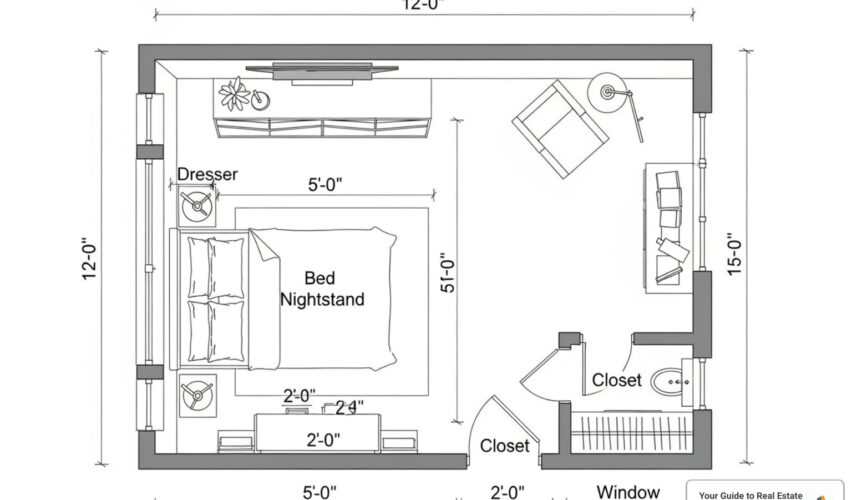
A bedroom floor plan is the blueprint for a functional, comfortable sleeping space that improves daily living and property value. Whether buying, renovating, or building, understanding bedroom layouts is the key to creating a restful sanctuary instead of a cramped, awkward room.
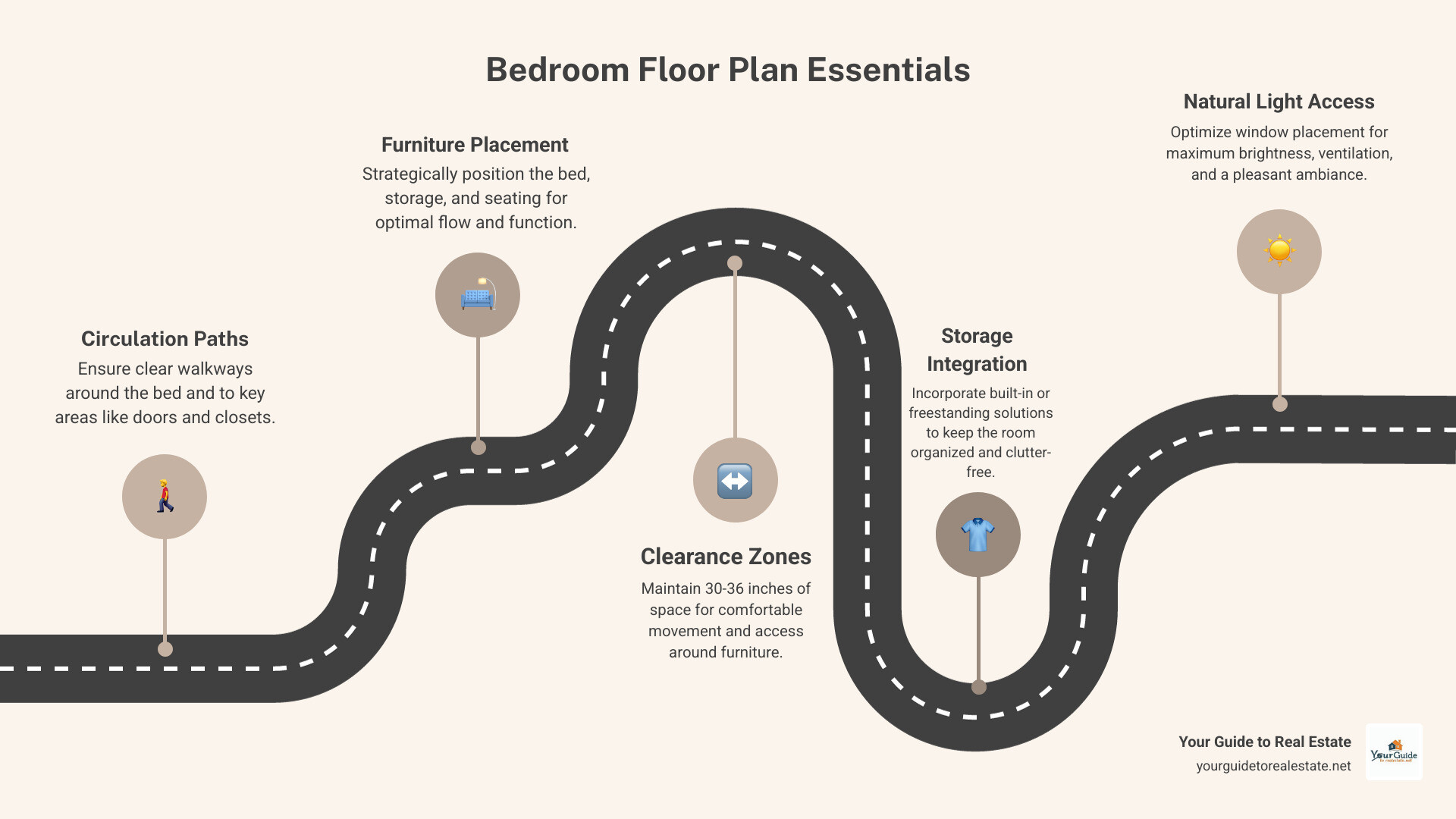
Key Elements of an Effective Bedroom Floor Plan:
- Circulation paths – Clear walkways around the bed and to key areas
- Furniture placement – Strategic positioning of bed, storage, and seating
- Clearance zones – Adequate space (30-36 inches) for movement and functionality
- Storage integration – Built-in or freestanding solutions for clothes and belongings
- Natural light access – Window placement for brightness and ventilation
The research shows that the average master bedroom in the US measures 13×14 feet, providing enough space for a queen-size bed and additional furniture. However, sizes vary dramatically, from compact 10×14 layouts requiring careful planning to spacious master suites with walk-in closets and seating areas.
Modern bedroom design has evolved from medieval multi-purpose rooms to today’s specialized sanctuaries, often integrating work areas and smart technology. Cultural influences are also key, from minimalist Western designs to the multipurpose flow of Eastern approaches.
Understanding these fundamentals helps you make informed decisions when evaluating a home, planning a renovation, or working with designers to create your ideal space.
Glossary for bedroom floor plan:
What Are the Fundamentals of a Good Bedroom Layout?
A great bedroom floor plan creates a space that works for your daily life. A well-designed room makes your morning routine feel natural, not like an obstacle course. This is achieved when three key elements work together: circulation, clearance, and a clear focal point.
Circulation refers to the paths you take to move around the room. Good circulation means you can steer easily from the bed to the closet and door without bumping into furniture.
Furniture clearance is the space needed to use your furniture. You need room to open dresser drawers and make the bed. The general rule is 30-36 inches for main pathways and at least 24 inches for smaller routes.
The focal point of a bedroom should almost always be the bed. The layout should naturally draw attention to it, making it the star of the room.
Bed placement sets the tone. The ideal spot is usually against the longest wall, with space on both sides for nightstands. Consider the view when you wake up and avoid placing the bed where a door will bang into it or where morning sun will be disruptive.
Storage solutions like closets and dressers are crucial for functionality. They should be integrated into the bedroom floor plan to keep clutter at bay and maintain a peaceful vibe. Many of our first-time homebuyers are surprised how much a well-planned bedroom boosts a home’s appeal.
Essential Elements and Their Placement
Getting furniture placement right transforms a room into a cohesive, functional space.
- Bed: As the star, position it with breathing room, ideally with space on both sides for nightstands. Avoid placing it directly under a window to maintain privacy and temperature control.
- Nightstands: Place these within arm’s reach of the bed. Their height should be roughly level with your mattress for comfortable access.
- Wardrobe or Closet: For freestanding wardrobes, place them where doors can open fully without blocking paths. Account for the wardrobe’s depth in your layout.
- Dresser: A dresser often has a mirror, so it needs wall space where you can stand comfortably in front of it. Ensure drawers can open without hitting other furniture.
- Seating Area: If space allows, a cozy armchair or a bench at the foot of the bed adds luxury and function. Keep seating out of high-traffic areas.
- Desk: For a workspace, position a desk near a window for natural light, ensuring there’s enough room for a chair. Bedrooms should primarily feel restful.
The evolution of bedroom design is fascinating, from multi-purpose medieval rooms to today’s specialized sanctuaries. You can explore more about bedroom history to see how we arrived at modern layouts.
Solving Common Layout Challenges
Real bedrooms often come with challenges like awkward shapes or poorly placed doors.
Awkward room shapes, like long, narrow, or L-shaped rooms, require creativity. In a narrow room, place the bed against the longest wall and use wall-mounted shelves as nightstands. Use the smaller section of an L-shaped room for a desk or reading nook.
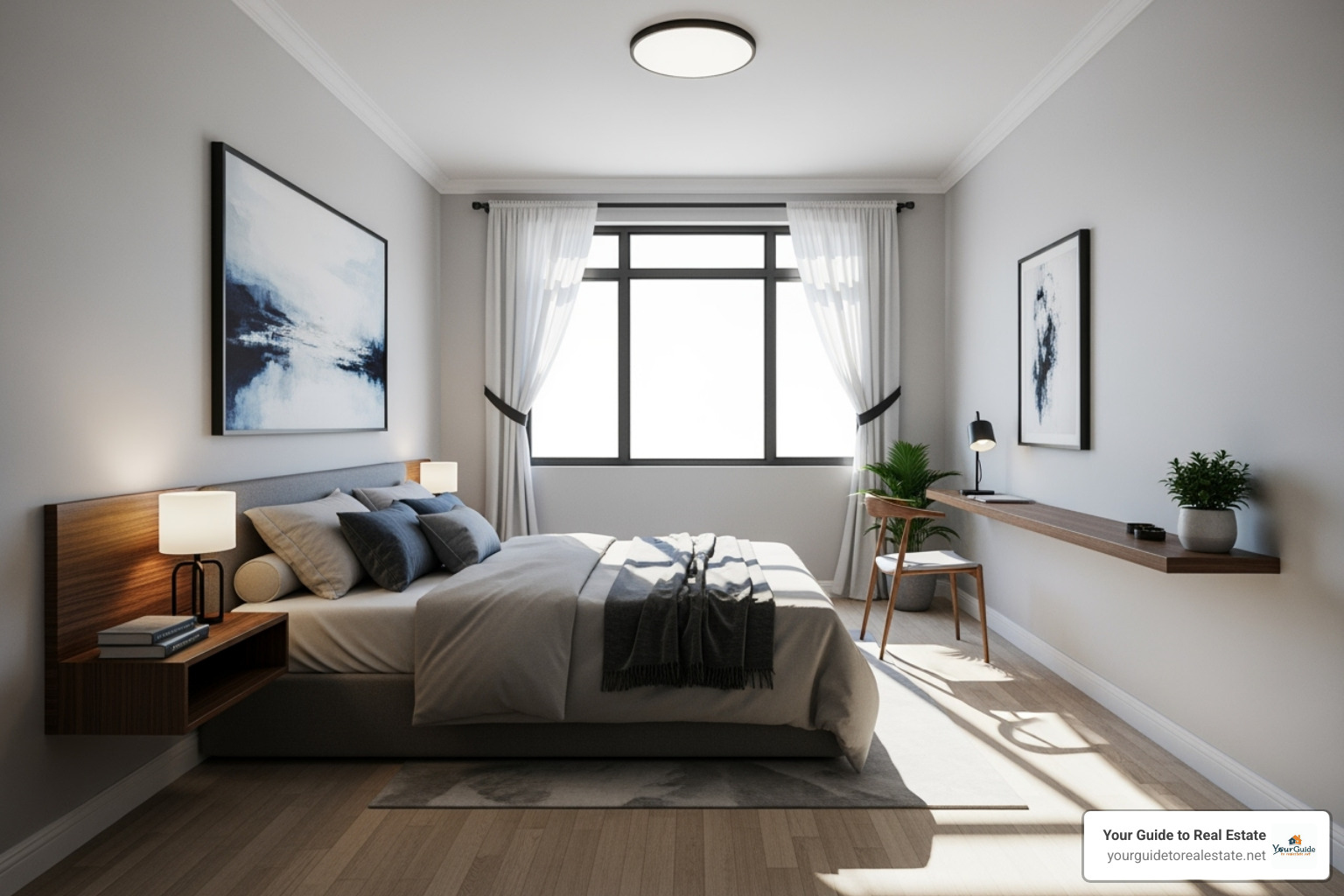
A smart layout makes even a challenging long, narrow bedroom feel spacious and organized.
- Multiple doors can make a room feel like a hallway. Identify the main traffic path and keep it clear. Consider space-saving options like pocket or barn doors.
- Poor traffic flow often means furniture is blocking natural movement. Walk through your room and identify where you’re forced to detour, then adjust accordingly.
- Low ceilings can make a room feel cramped. Choose lower-profile furniture and avoid tall, imposing pieces that draw attention to the low height.
- Insufficient storage is a common issue. Think vertically with tall, narrow storage units and use under-bed storage to capture otherwise wasted space.
- Right-sizing furniture is critical. A king-size bed might sound luxurious, but if it leaves no room to walk, the space will feel cramped. Measure your room and choose furniture that fits the space.
The key is to work with your room’s unique features, not against them.
How Do You Adapt a Bedroom Floor Plan for Different Needs and Sizes?
A bedroom floor plan isn’t one-size-fits-all; it must adapt to different needs, from a couple’s retreat to a child’s playroom. While the average master bedroom is 13×14 feet, even compact 10×14-foot rooms can be stunning with smart planning. The key is understanding that different people need different things from their sleeping spaces. A flexible floor plan is the foundation for creating a room that matches your lifestyle.
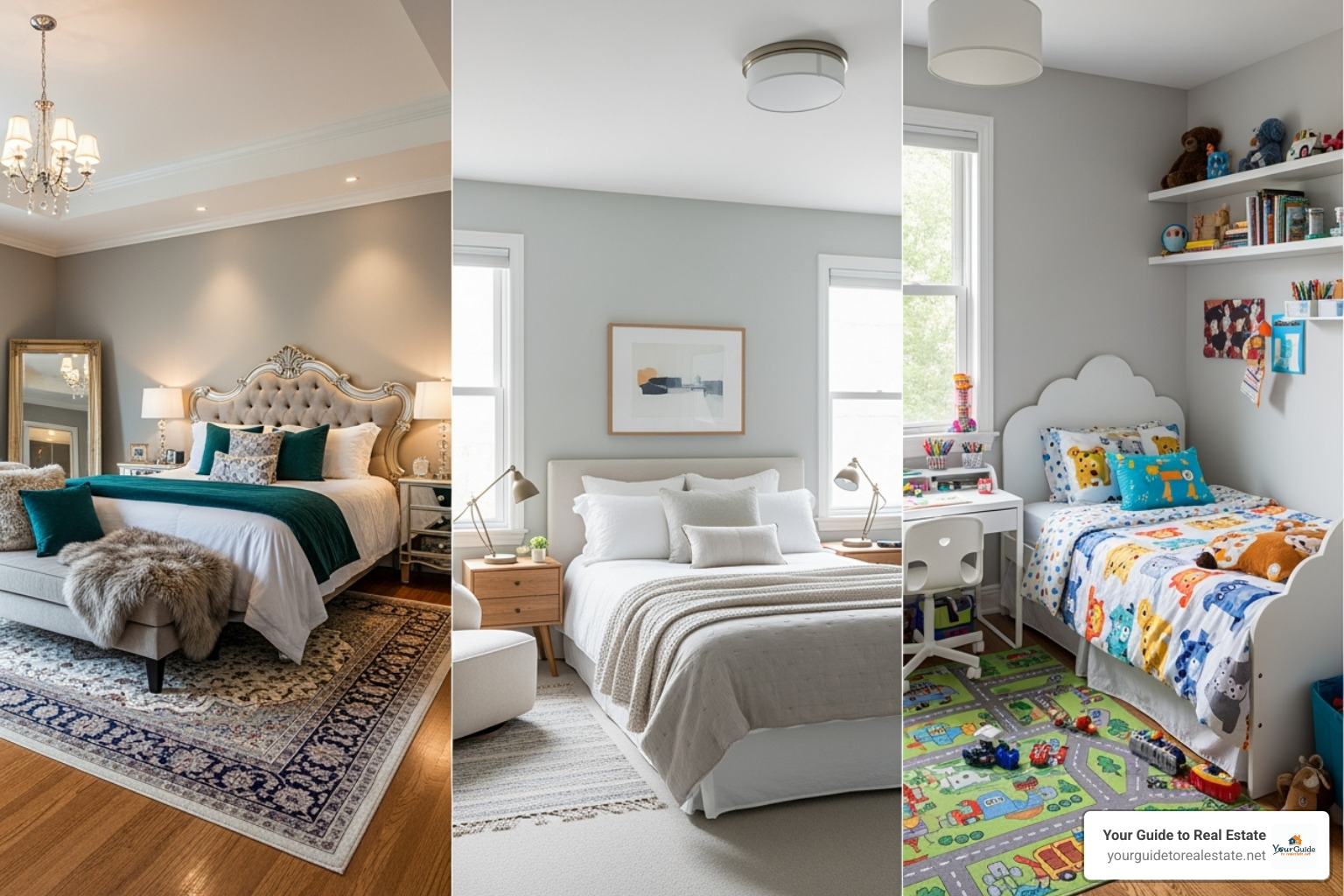
Comparing typical layouts for master, guest, and child’s bedrooms showcases how a floor plan adapts to different occupants.
This flexibility is a key driver in today’s market, as noted in Luxury Real Estate Trends in 2025: What High-End Buyers Want Now.
Adapting Your Bedroom Floor Plan for Different Needs
- Master Bedrooms: These are adult retreats that often extend beyond sleeping. Key features include an en-suite bathroom for privacy, a walk-in closet for ample storage, and sometimes a private balcony for an indoor-outdoor connection. A seating nook or an integrated workspace can also add significant value and function.
- Children’s Bedrooms: These rooms must evolve. Young kids need an open play area, which can later transform into a study zone with a desk. Bunk beds or trundle beds are great for shared rooms or sleepovers, freeing up valuable floor space. Durability and easy-to-clean surfaces are a must.
- Guest Bedrooms: These often serve double duty. Multi-functional furniture is essential, such as a daybed or a Murphy bed that allows the room to be used as an office when not hosting. Provide ample storage for guests to unpack and comfortable bedding to make them feel welcome.
Optimizing a Small Bedroom Floor Plan
Thoughtful planning can make small bedrooms (like 10×14 feet) feel spacious and comfortable.
- Accept minimalism: Focus on essential furniture and purposeful decor to avoid a cluttered feel.
- Use vertical storage: Tall, narrow dressers and floating shelves draw the eye upward and save floor space. Wall-mounted nightstands also keep the floor clear.
- Incorporate mirrors: Placing a large mirror to reflect natural light can make a room feel instantly larger and brighter.
- Choose light color palettes: Light colors on walls and ceilings create an airy, open atmosphere.
- Select multifunctional furniture: A bed with built-in drawers can replace a dresser, while a storage ottoman can serve as seating.
- Place the bed strategically: Pushing the bed against the longest wall or into a corner often creates the most usable floor space.
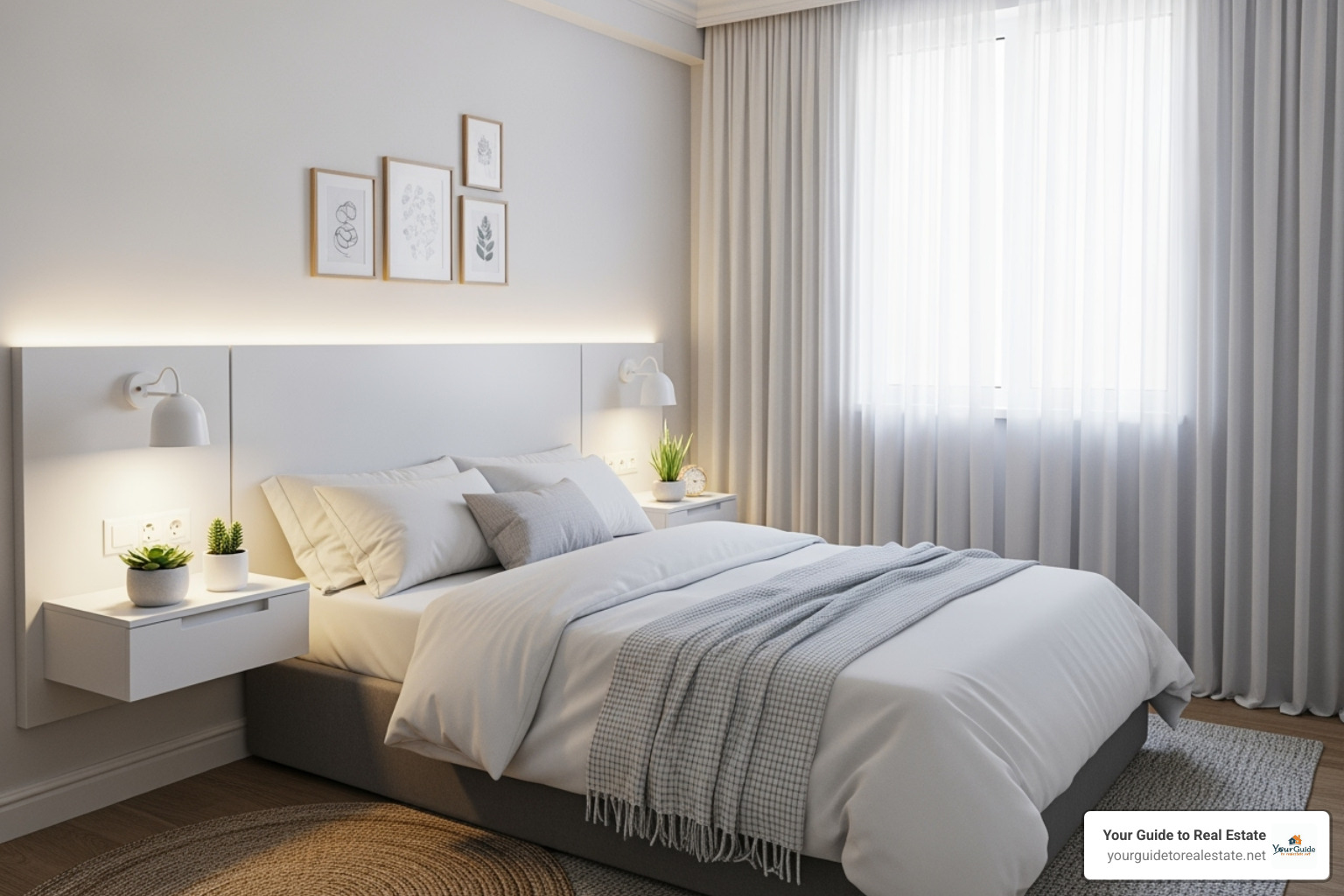
A cleverly designed small bedroom uses a wall-mounted headboard, floating nightstands, and light colors to maximize space.
These strategies are effective for any compact living situation, from a small house bedroom to understanding the Difference Between Condo and Apartment layouts.
What Tools and Resources Can Help You Create Your Plan?
Creating your perfect bedroom floor plan doesn’t require an architecture degree. Whether you’re tech-savvy or prefer a hands-on approach, there’s a tool for you. The key is to start with accurate measurements.
Before planning, grab a measuring tape and note these essentials:
- Room dimensions (length, width, ceiling height)
- Door and window locations and their measurements
- Electrical outlet and switch positions
- Built-in features like closets or radiators
- Your existing furniture dimensions
Measuring twice and planning once saves headaches later. I’ve seen clients design a perfect layout only to find their furniture won’t fit through the door!
Digital Software and Apps
Digital floor planning tools make the design process fun and intuitive. Most feature a drag-and-drop interface to easily move digital furniture and test layouts.
The real magic is 3D visualization, which lets you “walk through” your planned bedroom to spot potential issues, like a door hitting a nightstand. These programs include symbol libraries with standard-sized furniture, ensuring accuracy. Once finished, you have multiple export options (PDF, JPG) to share your plan.
For mobile planning, this Floor planning app for Android offers impressive functionality and can even connect with Bluetooth measuring devices for precision.
Using Templates and Low-Tech Methods
Sometimes the simplest approach is best. Don’t underestimate pre-made templates and traditional methods.
Templates offer time-saving benefits and inspiration by providing proven layouts from design professionals. They also offer guidance on recommended clearance spaces and furniture sizes, helping you avoid common mistakes.
For a hands-on approach, graph paper and pencil are effective. Draw your room to scale (e.g., one square = one foot), then use paper furniture cutouts to physically move pieces around. This tactile method makes it easy to visualize spacing and involve family members in the process.
Visual references like this Example Queen Bedroom Layout can provide an excellent starting point for your own plan. The goal is to find the method that helps you visualize your space and feel confident in your decisions.
How Have Trends and History Shaped the Modern Bedroom?
Your bedroom’s design tells a story about centuries of evolution in how we view rest, privacy, and home life. Understanding this journey can inspire your own bedroom floor plan decisions.
The bedroom as a private sanctuary is a relatively modern concept. For most of history, sleeping was a communal activity. As society changed, so did our need for specialized spaces dedicated to rest. This evolution continues today, with technology and new lifestyles reshaping our expectations, from The Smart Home Boom: How PropTech Is Redefining Real Estate in 2025 to flexible work-from-home spaces.
Historical, Cultural, and Modern Influences
Let’s journey through time to see how sleeping spaces evolved.
- Medieval multi-purpose rooms: The great hall often served as a dining room, living room, and bedroom combined. Beds were simple mattresses shared by multiple family members, and privacy was a luxury.
- The Victorian era: With a growing middle class came a desire for privacy. The bedroom became a private retreat, elaborately decorated and reserved solely for sleeping and dressing. This is when bedroom floor plans began to prioritize the bedroom as a distinct room.
- 20th-century minimalism: As life got busier, the focus shifted to efficiency. Built-in closets became standard, clutter was reduced, and layouts emphasized clean lines and practicality.
- Cultural differences: Western design tends to favor minimalism and a clear separation of spaces. In contrast, Eastern approaches, like Feng Shui, emphasize flow, balance, and multi-functional rooms that can transform throughout the day.
Future Trends in Bedroom Design
Today’s trends offer a glimpse into the bedrooms of tomorrow.
- Smart home integration: Bedrooms are becoming more intuitive, with automated lighting that adjusts to your sleep cycle, climate control that learns your preferences, and beds that monitor sleep quality.
- Sustainability: Future bedroom floor plans will prioritize energy-efficient windows, natural ventilation, and furniture made from recycled or renewable materials.
- Biophilic design: This trend brings nature indoors with living plants, abundant natural light, and organic textures to improve sleep and well-being.
- Indoor-outdoor living: Large glass doors and private balconies accessible from the bedroom create a seamless connection to a private outdoor sanctuary.
- Work-from-home nooks: As remote work continues, bedrooms are integrating clever workspaces that can be hidden away, such as a murphy desk or an office concealed within an armoire.

A vision of the future bedroom, featuring smart lighting, natural materials, and an integrated, hidden workspace.
These trends reflect a shift toward holistic environments that support overall health and productivity.
Frequently Asked Questions about Bedroom Floor Plans
These are the questions that come up time and time again when we help homeowners create their perfect sleeping spaces.
What is the average master bedroom size in the US?
The average master bedroom in the US measures 13×14 feet, or about 182 square feet. This size comfortably fits a queen or king-size bed while leaving enough room for essential furniture like a dresser and nightstands. It provides a sense of spaciousness without feeling so large that it becomes impersonal or inefficient to heat and cool.
What is a split bedroom floor plan?
A split bedroom floor plan is a popular home design that improves privacy. In this layout, the master suite is located on one side of the house, while the other bedrooms are on the opposite side. The common living areas (kitchen, living room, etc.) act as a buffer zone in between. This layout is ideal for families with children or for homeowners who frequently host guests, as it gives everyone their own separate space to retreat and recharge.
How much clearance space is needed around a bed?
Proper clearance is key to a functional and frustration-free bedroom. As a rule of thumb, aim for 30 to 36 inches of clearance for main walking paths, such as the foot of the bed or the route to the door. For secondary paths, like the space between the bed and a wall, 24 inches is usually sufficient. This spacing allows you to move freely, make the bed easily, and access furniture without squeezing through tight spots. A well-planned bedroom floor plan should feel like a retreat, not an obstacle course.
Conclusion
Creating the perfect bedroom floor plan is about thoughtful planning that puts your needs first. Whether you’re designing a cozy 10×14 space or a luxurious master suite, the principles of good design remain the same.
We’ve covered the essentials, from clearance zones and furniture placement to the fascinating evolution of sleeping spaces. Your bedroom should reflect your personal lifestyle, adapting to your needs for rest, work, and relaxation. Planning is everything. A well-designed bedroom floor plan makes daily moments more pleasant and stress-free.
Beyond comfort, a smart bedroom layout significantly boosts your home’s value and appeal to future buyers. It’s a detail that can become a major selling point and deliver a strong return on investment.
At Your Guide to Real Estate, we know that every detail matters. Our proven framework is designed to help you succeed, whether you’re buying, selling, or renovating. Your bedroom should be your sanctuary, where function and comfort meet in perfect harmony.
Ready to take the next step in your real estate journey? Find expert guidance on your real estate journey with us, and let’s turn your property dreams into reality.