

Why AI Floor Plan Generators Are Revolutionizing Real Estate Design
An ai floor plan generator is changing how we approach property design and visualization. These cutting-edge tools use artificial intelligence to create detailed floor plans in seconds, not weeks.
What AI Floor Plan Generators Can Do:
- Generate floor plans instantly from simple text descriptions
- Create both 2D and 3D visualizations of spaces
- Optimize layouts for better space utilization
- Save thousands of dollars on traditional design costs
- Produce hundreds of variations to explore different options
Whether you’re a real estate agent helping clients visualize a property’s potential, a homeowner planning a renovation, or an investor evaluating development opportunities, these AI tools are making professional-quality design accessible to everyone.
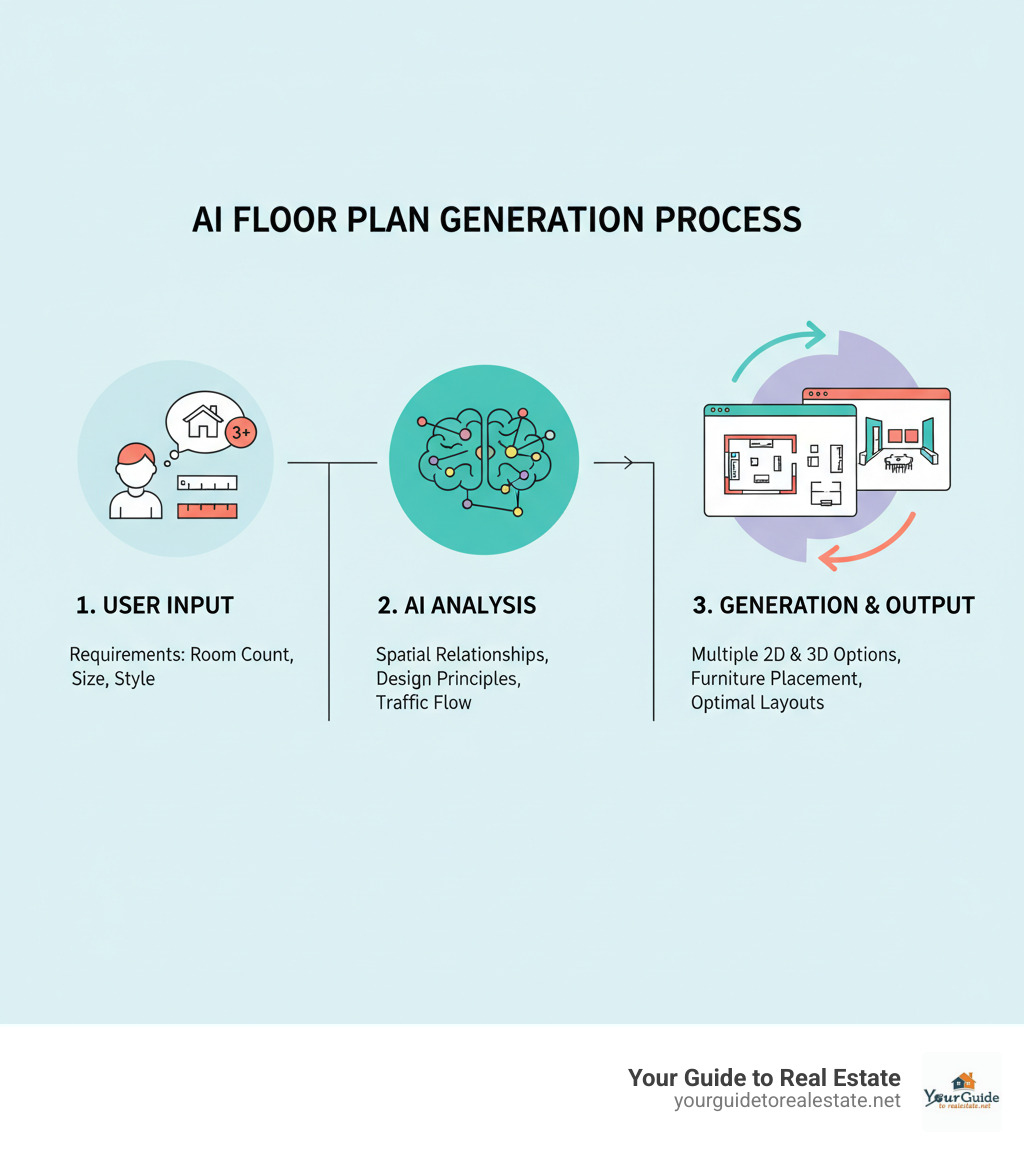
The technology works by analyzing your requirements – like room count, square footage, and style preferences – then instantly generating multiple layout options. What once required hiring an architect and waiting weeks can now be done in minutes from your laptop.
For real estate professionals, this means faster client presentations, better property marketing, and the ability to show potential rather than just existing layouts. Homeowners can experiment with ideas before committing to expensive renovations.
Similar topics to ai floor plan generator:
- app development for startups with garage2global
- Online real estate community
- virtual commercial real estate brokerage
What is an AI Floor Plan Generator and How Does It Work?
Think of an ai floor plan generator as your personal digital architect that never sleeps. These sophisticated tools use generative AI and machine learning algorithms to transform your ideas into professional floor plans faster than you can sketch them on a napkin.
Instead of struggling with complex CAD software or paying thousands for architectural drawings, you simply tell the AI what you want. The technology is remarkably intuitive – you can provide inputs in several ways that feel natural and effortless.
Text prompts work just like having a conversation. You might say “I need a three-bedroom house with an open-plan living area, two bathrooms, and a garage.” The AI understands exactly what you mean and gets to work immediately.
Some advanced tools even accept image uploads. Got a rough sketch on paper? Snap a photo and upload it. The AI can analyze your drawing and create a polished, professional version with proper proportions and details.
You can also specify room parameters with precise requirements. Need the kitchen next to the dining room? Want specific square footage? The AI handles these constraints while creating layouts that actually make sense for real living.
The speed difference compared to traditional methods is genuinely impressive. While conventional CAD software requires extensive training and painstaking manual work, these AI tools generate multiple design variations in seconds. It’s changing how we approach design, as highlighted in How Technology Is Revolutionizing Real Estate: 2025 Trends to Watch.
The AI processes your information by drawing from massive datasets of architectural designs. It understands how rooms should connect, where people naturally walk, and what makes spaces feel comfortable and functional. The result? Both 2D floor plans and stunning 3D visualizations that help you truly understand the space before it exists.
Understanding the Core Technology
The technology powering an ai floor plan generator is like having thousands of experienced architects working together in your computer. These artificial intelligence models use neural networks that have been trained on enormous libraries of existing floor plans.
During training, the AI essentially studies every floor plan it can find. It learns the unwritten rules of good design – like how kitchens typically connect to dining areas, where bathrooms are usually placed, and how to create natural traffic flow through a home.
The neural networks become experts at recognizing spatial relationships. They understand that a master bedroom needs easy access to a bathroom, that kitchens work better with pantries nearby, and that living rooms should feel open and welcoming.
They also master fundamental design principles. The AI learns about balance, symmetry, and efficient space usage. It knows when a hallway is too narrow, when a room feels cramped, or when a layout just doesn’t flow well.
Some systems even learn from user feedback over time. As people use the tool and indicate which designs they prefer, the AI gets smarter about matching individual tastes and styles.
This deep learning creates something remarkable – automated layout creation that feels intelligent and thoughtful. It’s like having a team of digital architects who never get tired, never have bad days, and can explore hundreds of possibilities without breaking a sweat.
From Prompt to Plan: The Generation Process
The journey from your idea to a finished floor plan is surprisingly simple and almost magical to watch. It starts with a prompt – just describe what you want in plain English.
Your prompts can be as simple or detailed as you like. “Generate a studio apartment floor plan with efficient space usage and modern design” works perfectly. So does “Create a luxury home floor plan with five bedrooms, an indoor pool, and a home theater.”
For commercial spaces, you might try “Design a school layout for 200 students, including classrooms, a cafeteria, and a library” or “Draft a restaurant floor plan with a spacious kitchen and a cozy dining area, warm color tones.”
The more specific you get, the better your results. You can specify the number and types of rooms you need, like “two bedrooms, one office, open kitchen-living area.” You can set square footage limits such as “a 1500 sq ft house on a rectangular lot.”
Adjacency requirements help create functional layouts – “master bedroom with en-suite bathroom” ensures these rooms connect properly. Specific features like “large windows, walk-in closet, pantry” add the details that make a house feel like home.
Once you hit enter, the magic happens. The AI interprets your requirements instantly, cross-referencing everything with its vast knowledge of good design. Within moments – sometimes just seconds – you’ll see multiple design variations appear on your screen.
The best part? You often get hundreds of options to explore. You can quickly browse through different layouts, pick the ones that catch your eye, and start refining them immediately. It completely changes the design process from a slow, expensive ordeal into an exciting creative exploration that anyone can enjoy.
The Transformative Benefits of Using AI in Floor Planning
Picture this: you have an idea for your dream home layout, and within minutes, you’re looking at a professional-quality floor plan that would have taken weeks to create just a few years ago. That’s the magic of an ai floor plan generator – it’s not just changing how we design spaces, it’s revolutionizing who gets to participate in the design process.
The most striking benefit is pure speed and efficiency. While traditional architectural drafting might take days or weeks of meticulous work, AI can generate detailed floor plans in mere minutes. This isn’t just convenient – it’s transformative. You can explore dozens of layout variations in the time it once took to sketch a single concept.
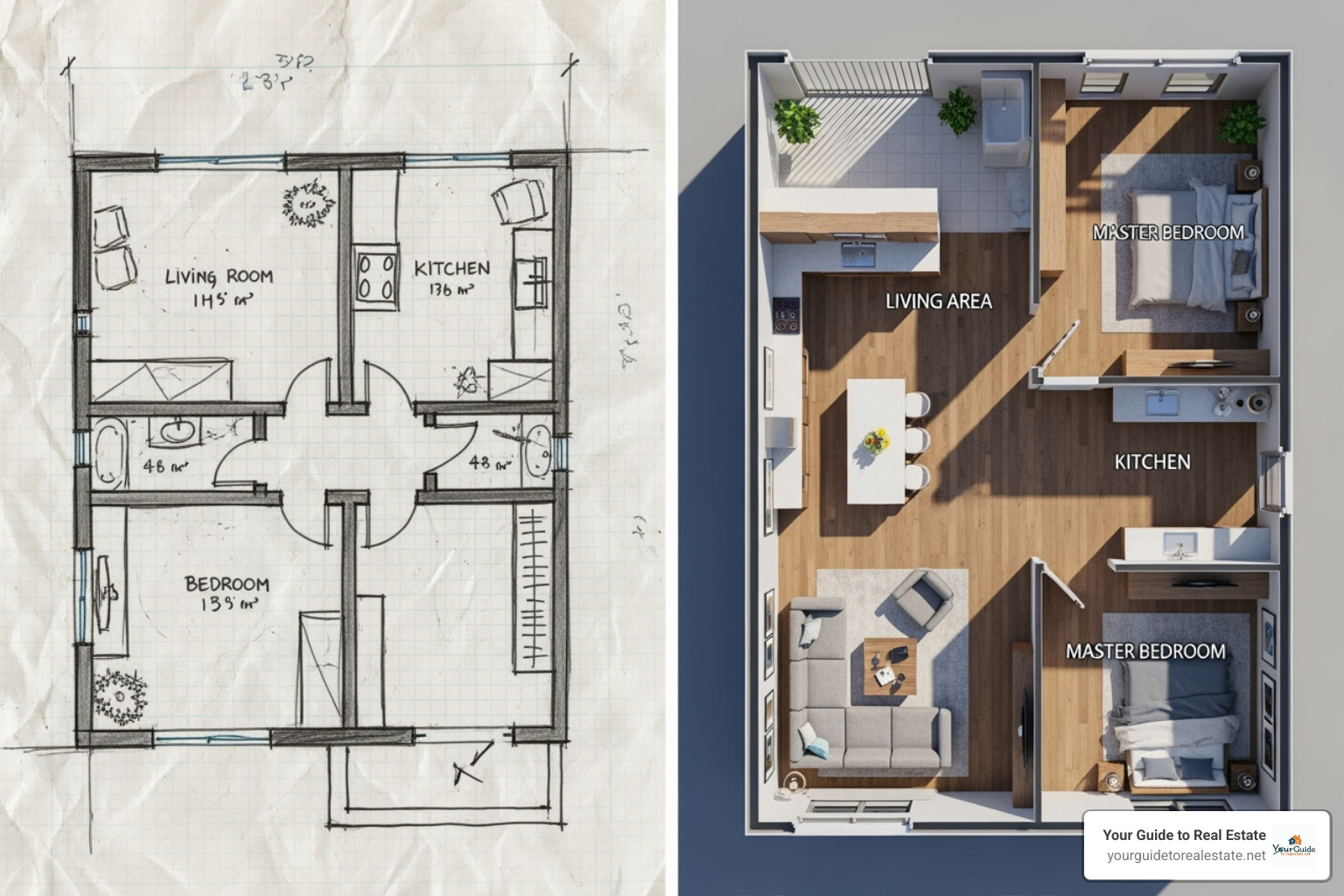
This speed translates directly into cost-effectiveness. By reducing reliance on traditional architectural services for initial concepts, an ai floor plan generator makes professional-grade planning accessible to everyone. You’re not paying hundreds of dollars per hour while an architect sketches out basic ideas – the AI handles that heavy lifting for free or at a fraction of the cost.
But it’s not just about being fast and cheap. These tools excel at space optimization in ways that might surprise even experienced designers. AI algorithms analyze thousands of successful layouts to suggest improvements you might never have considered. They can maximize every square foot while maintaining functionality and flow.
The improved visualization capabilities are perhaps the most exciting benefit. Modern AI tools don’t just create flat floor plans – they generate immersive 3D renderings that let you virtually walk through spaces before they exist. You can see how natural light flows through rooms, understand sight lines, and get a genuine feel for how the space will work in real life.
Most importantly, these tools are driving the democratization of design. You don’t need years of training or expensive software to create professional-looking floor plans. Whether you’re a homeowner planning a renovation or a small business owner designing your first office, you can engage with spatial design in ways that were once reserved for trained professionals.
Who Can Benefit from These Tools?
The beauty of an ai floor plan generator is that it serves virtually everyone involved in creating or selling spaces. Let’s walk through how different professionals and individuals are using these tools to transform their work.
Architects are finding AI to be an incredible creative partner. Rather than replacing their expertise, it amplifies it. They can generate hundreds of initial concepts rapidly, spend more time refining the best ideas, and present options to clients much faster than ever before.
Interior designers love these tools for experimenting with furniture arrangements and room layouts. They can test different configurations instantly, helping clients visualize how spaces will look and function with various design approaches.
Real estate developers use AI to explore multiple unit layouts quickly, optimizing designs for market appeal and construction efficiency. The ability to generate variations helps them find the sweet spot between functionality and cost-effectiveness.
For real estate agents, an ai floor plan generator is becoming a secret weapon. Imagine showing clients an empty property, then instantly creating multiple furnished floor plan options to help them envision its potential. This capability significantly improves property presentations and helps buyers see beyond current limitations. It’s particularly powerful when combined with Valuation and Market Analysis in Real Estate to demonstrate different value propositions.
Homeowners and DIY renovators are perhaps the biggest winners. Planning a kitchen remodel? Considering an addition? Want to rearrange your living space? AI lets you experiment risk-free, visualizing changes before committing time and money to physical alterations.
Commercial planners working on offices, retail spaces, or restaurants find these tools invaluable for optimizing layouts. Whether it’s improving customer flow in a store or maximizing desk space in an office, AI can generate solutions that balance efficiency with user experience.
The common thread across all these users is empowerment. An ai floor plan generator gives everyone – regardless of technical background – the ability to think spatially, communicate ideas clearly, and make better decisions about the spaces they inhabit or create.
Key Features and How to Choose the Right Tool
Choosing the right ai floor plan generator can feel overwhelming with so many options available. The good news? Understanding what features matter most will help you find the perfect tool for your specific needs.
The first thing to look for is input flexibility. The best tools let you start your design in multiple ways – whether that’s typing a simple description like “3-bedroom ranch house,” uploading a rough sketch you drew on paper, or even starting from scratch with manual drawing tools. This versatility means you can work however feels most natural to you.
Customization tools are where the real magic happens. The AI creates your initial design, but you’ll want to tweak things. Can you easily move walls, add windows, or swap out furniture? The ability to fine-tune your AI-generated design is what transforms a good concept into your perfect floor plan.
Most modern tools offer 2D to 3D conversion with just a click. This isn’t just a nice-to-have feature – it’s essential for truly understanding how your space will feel. Walking through your design in 3D can reveal issues you’d never spot in a flat 2D view.
When it comes to export options, think about how you’ll use your finished design. Need to share it with a contractor? Look for DXF format compatibility with professional CAD software. Want to post it on social media or include it in a presentation? PNG and JPG exports are your friends.
Architectural style variety matters more than you might think. Whether you’re designing a sleek modern apartment or a cozy farmhouse, your chosen tool should understand different design languages and adapt accordingly.
For teams working together, collaboration features can be game-changers. Real-time editing, shared workspaces, and version control keep everyone on the same page – literally.
| Feature | Free AI Plan Generators | Premium AI Plan Generators |
|---|---|---|
| Input Methods | Basic text prompts, some image-to-plan | Advanced text prompts, detailed image-to-plan, manual drawing |
| Customization | Limited editing, basic furniture placement | Extensive editing, comprehensive furniture libraries, fine-tuning |
| 2D/3D Views | Standard 2D, basic 3D visualization | High-quality 2D/3D renders, virtual walkthroughs |
| Export Options | PNG, JPG, sometimes PDF | DXF, PNG, JPG, SVG, OBJ, various architectural formats |
| Architectural Styles | Limited predefined styles | Broad range of styles, customizable style parameters |
| Collaboration | Often none, or basic sharing | Real-time co-editing, cloud storage, version control |
| Credit System/Usage | Limited free generations, trial credits | More credits, unlimited usage, advanced models |
| Support | Community forums, basic FAQs | Email support, chat support, tutorials |
Essential Capabilities of a Modern AI Floor Plan Generator
A truly powerful ai floor plan generator should feel intuitive from the moment you start using it. Text-to-plan generation is often the most popular starting point – simply describe what you want and watch your vision come to life in seconds.
Image-to-plan conversion bridges the gap between old-school sketching and digital design beautifully. Got a rough idea scribbled on a napkin? Snap a photo, upload it, and let the AI transform your concept into a polished, editable floor plan.
Even with AI doing the heavy lifting, you’ll want to make adjustments. That’s where drag-and-drop editors shine. Moving walls, repositioning doors, or rearranging furniture should feel as natural as moving pieces on a game board.
Furniture libraries bring your designs to life. The best tools offer thousands of realistic furniture pieces, from sofas and dining tables to kitchen appliances and bathroom fixtures. This isn’t just about pretty pictures – seeing furniture in place helps you understand how the space will actually function.
Realistic rendering capabilities transform your floor plan from a technical drawing into something that looks like a magazine photo. These high-quality visualizations are invaluable whether you’re presenting to clients, sharing with family, or marketing a property.
Many platforms let you dip your toes in the water with free basic features. Some offer unlimited generations on simple models, while others provide trial credits for premium features. If you’re just getting started, you might want to try exploring free tools online to see what’s possible.
Understanding Pricing and Accessibility
The world of ai floor plan generator pricing can seem confusing at first, but most platforms follow similar patterns that make sense once you understand them.
Freemium models are perfect for testing the waters. You get basic functionality at no cost, which lets you experiment and see if the tool fits your workflow. Think of it as a test drive before committing to anything more substantial.
Credit-based systems work like arcade tokens – each generation costs credits, with more complex requests costing more. A simple 2D floor plan might cost one credit, while a high-resolution 3D render could cost five or ten. You can usually buy credit packs as needed, making this approach flexible for occasional users.
Subscription plans make sense for regular users. Monthly or annual plans typically open up unlimited generations, premium features, larger furniture libraries, and priority customer support. These plans often come in different tiers, so you can choose the level that matches your needs and budget.
One-time purchase options are less common but can offer great value for the right user. Some platforms offer lifetime access or large credit bundles for a single payment. For those interested in premium features, there are options like exploring premium options that provide substantial credit packages.
When choosing between pricing options, think honestly about how often you’ll use the tool. Casual users exploring home renovation ideas might be perfectly happy with free versions. Real estate professionals presenting to clients weekly will likely find that premium subscriptions pay for themselves quickly through improved presentations and faster workflows.
The key is matching the tool’s capabilities to your actual needs – not what you think you might need someday, but what you’ll realistically use this month.
A Practical Guide to Creating Your Perfect Floor Plan
Think of working with an ai floor plan generator like having a brainstorming session with a really smart friend who happens to know everything about architecture. The magic happens when you accept the iterative design process – you won’t get your dream floor plan on the first try, and that’s perfectly okay!
The real power comes from refining AI outputs through multiple rounds of feedback. Start with your basic requirements, see what the AI creates, then use those results to spark new ideas. Maybe the AI suggests a layout you hadn’t considered, or perhaps it shows you why your original idea needs tweaking.
This is where combining AI with human expertise becomes crucial. The AI handles the heavy lifting of spatial relationships and design principles, while you bring the personal touch – your lifestyle needs, aesthetic preferences, and practical considerations that only you understand.
One critical step many people skip is verifying dimensions. AI-generated plans can sometimes look perfect visually but have rooms that are too small for actual furniture or hallways that feel cramped in real life. Always double-check measurements against your real-world needs.
Best Practices for Using an AI Floor Plan Generator
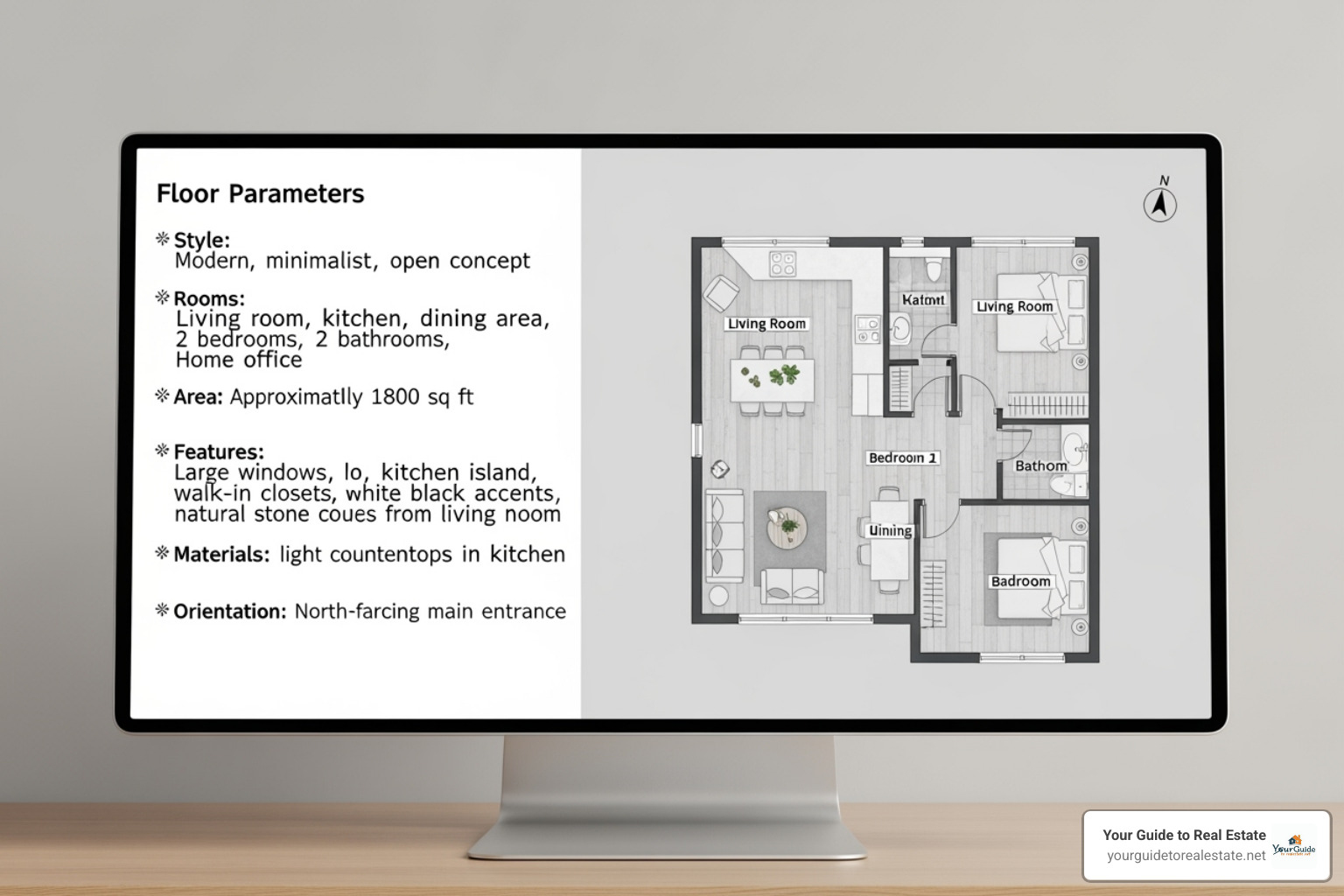
The secret to getting amazing results from your ai floor plan generator starts with writing effective prompts. Instead of saying “design a house,” try something like “create a cozy 2-bedroom cottage with an open kitchen-living area, large windows for natural light, and a covered front porch.” The AI loves details!
Defining space and dimensions gives your AI partner the boundaries it needs to work within. Mention your total square footage, lot constraints, or specific room sizes when you know them. Think “1,200 square foot ranch-style home” rather than just “small house.”
When identifying essential rooms, consider your daily routine. Do you work from home and need an office? Love cooking and want a pantry? Have pets that need a mudroom? The AI can only include what you tell it about.
Prioritizing aesthetics helps the AI understand your style preferences. Words like “modern farmhouse,” “minimalist,” or “traditional” guide the design choices. Don’t be afraid to mention specific features you love, like “exposed beams” or “large kitchen island.”
The real fun begins with experimenting with layouts. Generate multiple versions by tweaking your prompts slightly. Change “three bedrooms” to “two bedrooms plus office” and see how the AI adapts. You might find a layout that works better than your original vision.
This approach is changing how professionals work, as we’re seeing in From Listings to Closings: How AI Is Powering the Real Estate Pipeline. The key is treating the AI as a creative partner, not just a tool.
Real-World Applications and Use Cases
The beauty of an ai floor plan generator shines brightest when you see how real people use it to solve actual problems. Take residential new builds – developers can quickly test dozens of layout variations to find what appeals most to their target buyers, all before breaking ground.
Home renovations become less scary when you can visualize changes first. Upload your current floor plan or describe your space, then experiment with knocking down that wall between the kitchen and dining room. You’ll know if it works before calling the contractor.
Office space planning has gotten so much easier. Whether you’re designing a startup’s first office or reconfiguring space for hybrid work, AI helps you balance collaboration areas with quiet zones, making sure everything flows naturally.
Retail layouts benefit enormously from AI assistance. Store owners can test different arrangements to improve customer flow and maximize sales per square foot. The AI understands traffic patterns and can suggest layouts that guide shoppers naturally through your space.
One of the most exciting applications is virtual staging for listings. Real estate agents can show empty houses with multiple furnished layout options, helping buyers envision the possibilities. It’s like having a professional stager available 24/7.
Client presentations become more compelling when you can show multiple design options quickly. Whether you’re an architect presenting to a committee or a homeowner discussing plans with your spouse, visual options make conversations more productive.
The versatility extends to unexpected areas too – from planning restaurant seating arrangements to designing efficient warehouse layouts. Once you start thinking spatially, you’ll find uses for your ai floor plan generator everywhere.
The Future of AI in Architecture and Real Estate
The ai floor plan generator we know today is really just scratching the surface of what’s possible. Think of it as the flip phone of architectural AI – functional and impressive, but nothing compared to what’s coming next.
We’re already seeing early glimpses of AI-assisted regulatory compliance in development. Picture this: you design your dream home layout, and within seconds, the AI tells you exactly which parts might not meet local building codes. No more surprise rejections from the planning department or costly redesigns halfway through your project.
Zoning code analysis is another game-changer on the horizon. Instead of hiring expensive consultants to interpret complex regulations, AI will soon read through municipal codes faster than you can say “setback requirements” and flag any potential issues before you even submit plans.
The integration with smart home technology is particularly exciting. Future AI tools won’t just design rooms – they’ll optimize layouts specifically for smart devices. Imagine an AI that knows exactly where to place your smart thermostat for maximum efficiency, or designs traffic patterns that work perfectly with your robot vacuum’s cleaning schedule.
Some developers are even working toward fully automated design – where you could theoretically input your needs, budget, and lot specifications, then receive complete construction-ready plans. While we’re not quite there yet, the progress has been remarkable. This change is part of the broader shift we’re seeing in How AI and Automation Are Changing the Real Estate Workforce in 2025.

Navigating the Challenges and Limitations
Now, before we get too carried away with visions of robot architects, let’s talk reality. Every ai floor plan generator has its limitations, and understanding these helps you use the technology more effectively.
The biggest issue is practicality of designs. AI might create a gorgeous layout that completely ignores the fact that your house sits on a slope, or that moving the bathroom would require relocating plumbing through a concrete foundation. The AI doesn’t know about that weird structural beam in your living room or the easement running through your backyard.
This is why human oversight remains absolutely essential. Think of AI as an incredibly fast and creative assistant, not a replacement for professional expertise. A good architect or designer brings years of real-world experience, problem-solving skills, and the ability to spot issues that even the smartest AI might miss.
Creativity and critical thinking present another interesting challenge. While AI can generate hundreds of variations on a theme, it’s still working within patterns it learned from existing designs. True innovation – like Frank Lloyd Wright’s Fallingwater or the Sydney Opera House – comes from human imagination and the willingness to break rules in meaningful ways.
Data privacy concerns are worth considering too. When you upload property information or detailed requirements to any online platform, make sure you understand their privacy policies. Most reputable tools handle data responsibly, but it’s always smart to check.
Finally, there’s the potential for inaccuracies. AI-generated measurements might be slightly off, or spatial relationships could be impractical in real life. Always double-check dimensions and have a professional review any plans before breaking ground on actual construction.
The key is finding the sweet spot – using AI to boost your creativity and efficiency while keeping human expertise in the driver’s seat for the important decisions.
Frequently Asked Questions about AI Floor Plan Generators
People often wonder how these innovative tools fit into real estate and design work. Let’s tackle the most common questions we hear about using an ai floor plan generator.
Can AI completely design a house for me?
While an ai floor plan generator can create incredibly detailed layouts and stunning 3D visualizations, it works best as your creative partner rather than a complete replacement for human expertise. Think of it like having a brilliant assistant who can sketch out hundreds of ideas in minutes.
The AI excels at generating functional layouts, optimizing space usage, and helping you visualize different possibilities. But the role of human creativity and professional oversight remains crucial. You’ll still need architects and engineers to ensure your dream home is structurally sound and meets all safety requirements.
Professional oversight becomes especially important when it comes to building codes, structural integrity, and the countless real-world details that make a house actually livable. The AI provides the creative spark and initial framework – human experts turn that vision into reality.
Can I use AI-generated floor plans for commercial purposes?
This is where reading the fine print becomes your best friend. Most ai floor plan generator platforms do allow commercial use, especially if you’re paying for their service. But the specifics vary significantly between platforms.
Some require you to give credit to their platform when you use the designs commercially. Others might have different rules for free versus paid accounts. A few platforms grant you complete ownership of anything you create using their tools.
Terms of service can be dry reading, but they’re essential before you start using AI-generated plans for client presentations, marketing materials, or any business purpose. When in doubt, reach out to the platform’s support team – they’re usually happy to clarify their commercial use licenses.
How accurate are AI-generated floor plans?
Here’s where we need to set realistic expectations. An ai floor plan generator is remarkably good at understanding how spaces should flow together and creating layouts that make practical sense. The AI has learned from thousands of real floor plans, so it knows that kitchens work better near dining areas and that you probably don’t want the master bedroom next to the garage.
For space planning utility and getting a feel for how a layout might work, these tools are excellent. They’re perfect for exploring ideas, presenting concepts to clients, or helping homeowners visualize renovation possibilities.
However, when it comes to actual construction, think of AI-generated plans as your starting point rather than your finish line. Professional refinement is essential before any real building begins. An architect or engineer needs to verify measurements, ensure the design meets local building codes, and address structural considerations that the AI might not fully understand.
The conceptual accuracy is there – the practical details still need human expertise to get them just right.
Conclusion
The ai floor plan generator represents one of the most exciting developments in real estate and design technology we’ve seen in years. These tools are fundamentally changing how we think about space, making professional-quality design accessible to everyone from first-time homebuyers to seasoned developers.
What strikes us most is how these AI tools democratize the design process. You no longer need years of architectural training or expensive software to visualize your dream home or investment property. Whether you’re planning a kitchen renovation, staging a vacant listing, or exploring different layouts for a new development, AI puts powerful design capabilities right at your fingertips.
The speed and efficiency gains are remarkable, but what we find most valuable is how AI improves human creativity rather than replacing it. These tools excel at generating ideas, optimizing space usage, and helping you visualize possibilities you might never have considered. They’re like having a brainstorming partner who never gets tired and always has fresh suggestions.
For real estate professionals, the impact is particularly significant. Improved client presentations, faster property marketing, and the ability to show potential rather than just existing layouts are game-changers in a competitive market. Homeowners benefit equally, with the freedom to experiment with ideas risk-free before committing to expensive renovations.
Of course, professional oversight remains essential. AI generates the raw material, but human expertise shapes it into something buildable, safe, and truly functional. The best results come from combining AI’s efficiency with human judgment and creativity.
At Your Guide to Real Estate, we believe in leveraging technology to make real estate success more achievable for everyone. The ai floor plan generator is just one example of how innovation is creating new opportunities in our industry. To explore more ways technology is changing real estate, check out our comprehensive guide to Virtual Real Estate Brokerage.
The future of design isn’t just smarter—it’s more accessible, more creative, and more exciting than ever before.