

Who Pays Realtor Fees: The Simple Answer You Need
Who pays realtor fees is one of the most common questions in real estate, and for good reason – these fees can represent thousands of dollars in any transaction.
The simple answer: In most real estate transactions, the seller pays realtor fees from the proceeds of the home sale at closing.
Here’s the basic breakdown:
- Seller pays the total commission (typically 3-7% of sale price)
- Commission gets split between the listing agent and buyer’s agent
- Money comes from the home’s sale proceeds, not out of pocket
- Buyer indirectly pays since commission is factored into the home’s price
But like most things in real estate, there’s more to the story. Recent industry changes, regional differences, and special circumstances can affect who actually pays these fees.
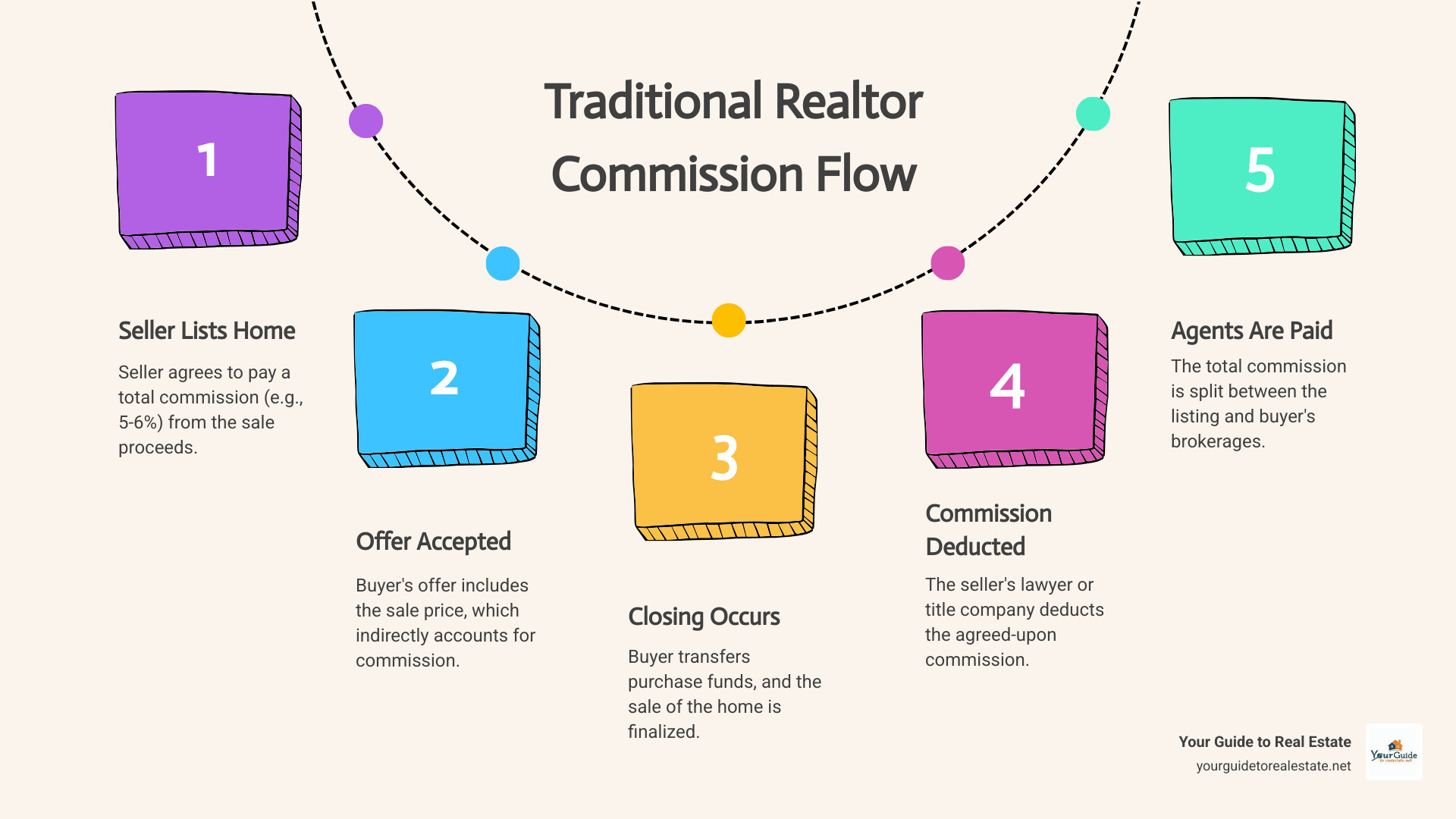
The traditional model has sellers covering both agents’ commissions as part of closing costs. This happens automatically through the sale proceeds – the seller’s lawyer or title company deducts the commission before sending the remaining money to the seller.
However, buyers aren’t completely off the hook. Since commission costs are typically built into the home’s listing price, buyers indirectly contribute to these fees through their purchase price. Think of it like this: if there were no realtor fees, that $500,000 house might be listed for $470,000 instead.
Recent changes in the industry, particularly the NAR settlement, are shifting how these fees work. Some buyers now negotiate to pay their own agent directly, especially in competitive markets or unique transaction types.
Common who pays realtor fees vocab:
The Traditional Model: How Realtor Commissions Work
Understanding who pays realtor fees starts with grasping the traditional commission model that’s been the backbone of real estate transactions for decades. Think of it as a “no sale, no pay” system – agents only earn their commission when your home actually sells and closes.
Here’s how it works: The commission is calculated as a percentage of your home’s final sale price. This money doesn’t come out of anyone’s pocket upfront. Instead, it’s automatically deducted from the seller’s proceeds at closing, right alongside other closing costs like legal fees and property taxes.
The beauty of this system is that it aligns everyone’s interests. Your agents are motivated to get your home sold at the best possible price because their payday depends on it. No successful sale means no commission for anyone involved.
Commission rates typically fall between 3-7% in Canada and 5-6% in Florida, but these aren’t set in stone. Every commission is negotiable – there are no laws dictating what you must pay your real estate team.
The total commission gets split between two main players: the listing agent (who represents the seller) and the buyer’s agent (who represents the buyer). But it doesn’t stop there – each agent shares a portion of their earnings with their brokerage to cover things like office space, marketing tools, and administrative support.
Want to know what agents actually take home after all these splits? Check out our detailed breakdown in How Much Do Real Estate Agents Really Make? With Real Numbers.

How Commissions Are Structured and Split
When you sign a listing agreement with a real estate agent, you’re essentially creating a contract that spells out the terms of your working relationship. One of the most important details in this agreement is the total commission rate you’ll pay when your home sells.
This total commission includes what’s called a cooperating commission – the portion that goes to the buyer’s agent’s brokerage. Think of it as an incentive for buyer’s agents to show your home to their clients. Without this cooperating commission, buyer’s agents might steer their clients toward other properties where they know they’ll be compensated.
Let’s say you agree to a 5% total commission. Typically, this splits evenly – 2.5% goes to your listing brokerage and 2.5% goes to the buyer’s brokerage. But the individual agents don’t keep all of that money. Each agent has their own agreement with their brokerage that determines how much they actually take home.
New agents might keep 50-60% of their portion, while experienced top performers could negotiate to keep 80-90% or more. The brokerage uses its share to cover overhead costs like office rent, marketing materials, legal compliance, and support staff.
This system might seem complicated, but it ensures that both sides of the transaction have professional representation. To better understand how these business structures work, read our guide on What is a Real Estate Brokerage? A Beginner’s Complete Guide.
Typical Commission Rates Across North America
Commission rates vary significantly depending on where you live, local market conditions, and the level of service you’re receiving. Regional differences in who pays realtor fees often come down to local customs and market competition.
In Ontario, Canada, the standard arrangement typically sees a 5% total commission split equally between both sides. Alberta takes a different approach with a tiered structure – 7% on the first $100,000 of the sale price, then 3% on the remaining amount. This means on a $400,000 home, you’d pay $16,000 in total commission ($7,000 on the first $100K plus $9,000 on the remaining $300K).
Florida follows the broader U.S. pattern with 5-6% total commission rates, usually split between the listing and buyer’s agents. These rates have been fairly consistent across American markets, though recent industry changes are starting to shake things up.
The key thing to remember is that all commission rates are negotiable. There are no federal or provincial laws that set these rates – they’re simply market customs that have developed over time. Some agents might offer lower rates with reduced services, while others might charge premium rates for white-glove service.
Your local market conditions also play a role. In hot seller’s markets, you might have more leverage to negotiate lower rates. In buyer’s markets, full-service representation might be worth every penny of a standard commission.
For a deeper understanding of how these commission structures impact your bottom line, check out our comprehensive article on Understanding how real estate commissions work.
Who Pays Realtor Fees? A Breakdown for Sellers and Buyers
Now that we understand how commissions work, let’s tackle the core question that brings most people here: who pays realtor fees in a real estate transaction? The answer involves understanding the flow of money from both perspectives.

Think of it like this: when you buy a coffee, the price includes the cost of the beans, the barista’s wages, and the shop’s rent. Similarly, when a home sells, the price includes various costs – including realtor fees. The seller writes the check, but everyone involved contributes to that final number.
The Seller’s Role: Negotiating and Paying the Commission
As a seller, you’re the one who directly handles the commission payment. This happens through your listing agreement – the contract you sign with your real estate agent that spells out all the terms of your working relationship.
The negotiation process starts right here. Many sellers don’t realize that commission rates aren’t set in stone. Can sellers negotiate commission rates? Absolutely! These rates are always negotiable, and smart sellers ask questions about what they’re getting for their money.
Several factors influence your negotiating power. In a hot seller’s market, you might have more room to negotiate lower rates since homes sell quickly. Your property’s price point matters too – a higher-priced home might justify a slightly lower percentage since the dollar amount is still substantial for the agent.
Your agent’s service level plays a huge role in this conversation. An agent who offers professional photography, staging consultation, comprehensive marketing, and strong negotiation skills brings real value. On the flip side, if you’re willing to handle some tasks yourself or if your home is likely to sell quickly, you might negotiate a reduced rate.
Tax implications add another layer to consider. In Canada, you’ll pay HST or GST on top of the commission – that’s 13% in Ontario or 5% in Alberta, for example. In the U.S., sales tax on real estate services is less common, but it’s worth checking with a tax professional about your specific situation.
When closing day arrives, you’ll see everything laid out clearly on your seller’s statement of adjustments. This document shows exactly where every dollar goes, including the total commission and taxes. The commission gets deducted from your sale proceeds before the remaining money lands in your account.
The impact on your net proceeds can be significant. On a $500,000 home with a 5% total commission, you’re looking at $25,000 in fees. That’s why understanding and negotiating these costs upfront matters so much. For more comprehensive selling guidance, check out The Ultimate Guide to Selling Your Home: Tips, Timelines, and Tools.
The Buyer’s Role: Indirect Costs and Direct Payment Scenarios
Here’s where who pays realtor fees gets more nuanced. While sellers write the commission check, buyers aren’t getting a free ride. Those commission costs are typically baked into the home’s listing price, just like the coffee shop example.
Think about it this way: if there were no realtor fees involved, that $400,000 house might be listed for $380,000 instead. You’re indirectly paying through your purchase price, and if you’re financing the home, you’re spreading that cost over the life of your mortgage.
The Buyer Representation Agreement (BRA) is your key document here. This contract between you and your buyer’s agent spells out exactly how your agent will be paid. Traditionally, it states that the seller covers your agent’s commission. But here’s the important part – it usually includes a backup clause.
That backup clause protects your agent if the seller doesn’t offer enough commission (or any at all). In those cases, you’d be responsible for making up the difference. This might sound scary, but it’s actually protection for you too – it ensures your agent can represent your interests even when the seller isn’t offering competitive compensation.
Do buyers ever pay their real estate agent directly? Yes, and it’s becoming more common. Here are the main scenarios where this happens:
For Sale By Owner properties often don’t include buyer agent compensation. If you want professional representation (and you should!), you’ll typically pay your agent directly. Off-market deals sometimes work similarly – when there’s no traditional listing, there might not be traditional commission arrangements either.
Specific buyer agreements can also create direct payment situations. Maybe you’re looking for a very specific type of property that requires extra research and networking. Or perhaps you want services beyond what a typical buyer’s agent provides. In these cases, you might negotiate to pay your agent directly for their specialized work.
Post-NAR settlement changes (which we’ll dive into later) are making direct buyer payment much more common in the U.S. This shift puts more control in your hands but also requires more upfront planning and budgeting.
The key is having transparent conversations with your agent from the start. Ask how they prefer to be compensated, what happens if the seller doesn’t offer commission, and how this affects your overall buying budget. A good agent will walk you through all scenarios so there are no surprises.
Understanding your options helps you make informed decisions. Some buyers prefer paying their agent directly because it creates a clearer relationship – you’re the client, you’re paying the bills, and your agent’s loyalty is crystal clear. Others prefer the traditional model where costs are rolled into the purchase price.
For guidance on finding an agent who fits your needs and budget, see How to Find a Good Buyer’s Agent.
Navigating Different Commission Structures and Scenarios
The traditional model of who pays realtor fees is evolving, and today’s real estate market offers more flexibility than ever before. Gone are the days when one-size-fits-all commission structures were your only option.
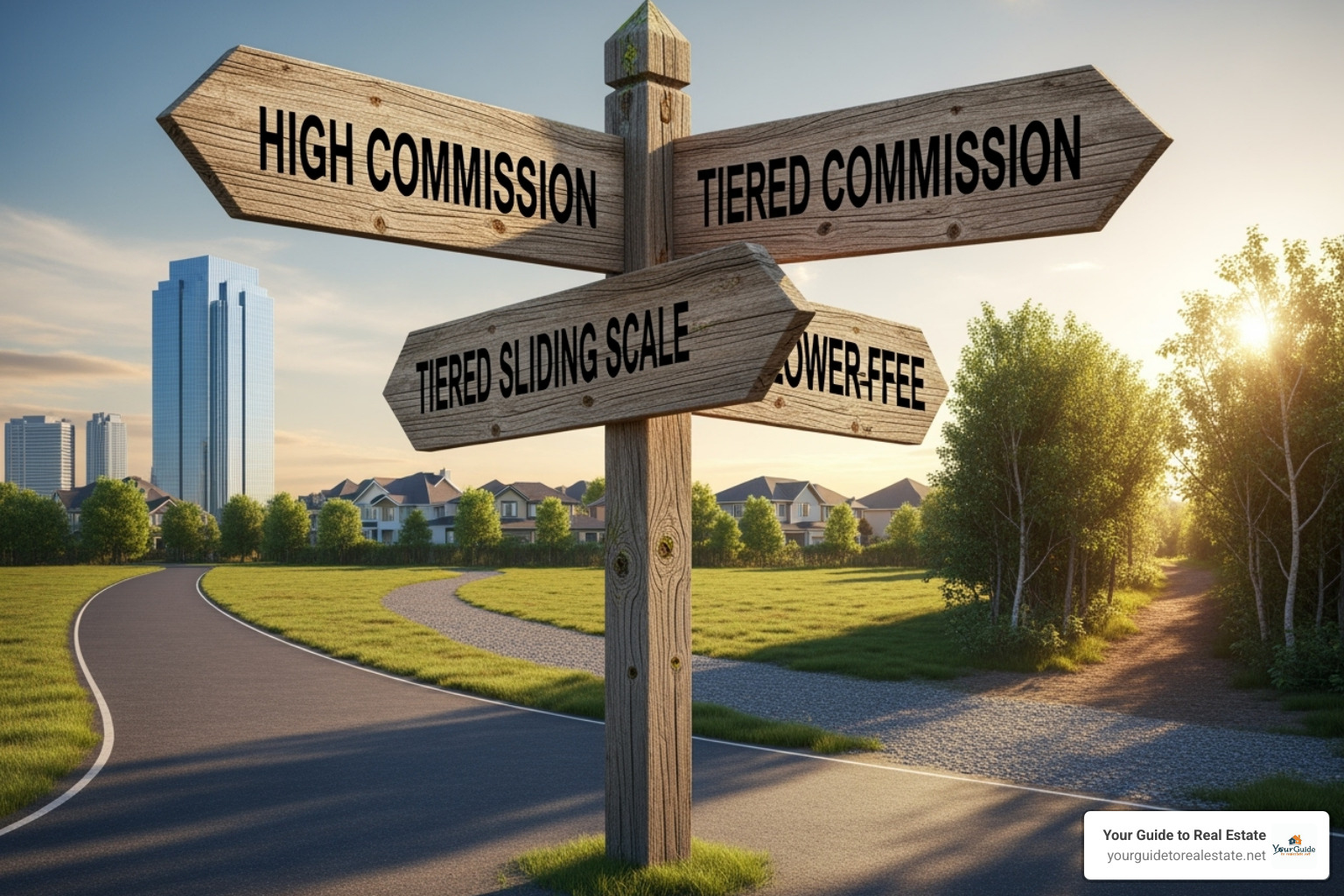
Alternative Models: Custom Fee Arrangements
Think of commission structures like ordering at a restaurant – you can go with the traditional full-service experience, or choose something more customized to your needs and budget.
Flat-fee services have become increasingly popular, especially for sellers who want more control over their transaction. Instead of paying a percentage, you pay a fixed amount upfront to get your home listed on the MLS. In Florida, some flat-fee packages start as low as $99, though the level of service varies dramatically. Some providers simply get your listing online and leave everything else to you. Others offer comprehensive packages that include professional photography, marketing materials, and limited agent support for a higher flat fee.
Discount brokerages take a middle-ground approach. They typically charge lower percentage rates than traditional full-service agents – maybe 1% instead of 2.5% for the listing side. The trade-off? You might not get professional staging advice, extensive marketing campaigns, or as much hand-holding through the process.
Service packages offer another creative solution. Some agents now provide tiered options where your commission rate adjusts based on what services you actually want. If you’re comfortable handling your own photography and open houses, you might pay less than someone who wants the full white-glove treatment.
The key with any alternative model is understanding exactly what you’re getting – and what you’re giving up. While these options can definitely impact who pays realtor fees in your favor, they often require more time and effort on your part. When exploring different structures, our Picking Brokerage: Ultimate Guide can help you compare what different companies offer.
Special Cases: Dual Agency, Pre-Construction, and Rebates
Real estate transactions sometimes throw curveballs that completely change the commission game. Let’s walk through the most common scenarios you might encounter.
Dual agency (also called multiple representation) happens when one agent represents both the buyer and seller in the same deal. While this might seem convenient – and the agent does receive the full commission from both sides – it creates a serious conflict of interest. How can one person truly fight for the lowest price for the buyer while simultaneously pushing for the highest price for the seller?
Different regions handle this differently. Florida has banned dual agency entirely, recognizing the inherent problems. In parts of Canada where it’s still allowed, agents must get written consent from both parties and clearly explain the limitations. You’ll have less advocacy, but the transaction might move more smoothly since there’s only one agent coordinating everything.
Pre-construction homes operate under their own rules entirely. When you’re buying directly from a builder, the builder typically pays your agent’s commission – usually around 3% to 4%. Builders build these costs into their pricing because they want agents bringing them qualified buyers. This means you generally don’t need to worry about paying your buyer’s agent directly, even though they’re working for you.
Cashback rebates represent an interesting twist where some agents return a portion of their commission to you after closing. Think of it as a loyalty reward for choosing their services. The obvious benefit is extra cash in your pocket at closing, which can help offset other costs. The potential downside? Some high-volume, low-margin agents might provide less personalized service to make these rebates work financially.
The legality of cashback programs varies by region, so always check local regulations. When done transparently, these incentives can be a great way to stretch your real estate budget further. For more insights into real estate terminology and processes, check out What Does Contingent Mean in Real Estate?.
The Shifting Landscape: How Recent Changes Impact Who Pays Realtor Fees
The real estate world never sits still, and lately, it’s been moving faster than ever. Technology, changing buyer expectations, and major legal developments are reshaping how we think about who pays realtor fees. What worked for decades is suddenly up for debate, and if you’re buying or selling in the next few years, these changes will likely affect you directly.
The biggest shake-up? A move toward transparency. For too long, many buyers didn’t fully understand how their agents got paid, leading to confusion and sometimes unpleasant surprises. The industry is finally addressing this head-on, though it’s creating some growing pains along the way.
These shifts aren’t just academic – they’re changing real transactions for real people. Whether you’re in a hot market like Dallas or a more balanced one, understanding these changes can save you thousands of dollars and a lot of stress. For a broader look at what’s reshaping the industry, check out our guide on Top 7 Real Estate Trends Shaping 2025 and Beyond.
The NAR Settlement and Its Impact on Who Pays Realtor Fees
Here’s the big one: the National Association of Realtors (NAR) settlement. This isn’t just industry insider news – it’s a game-changer that affects everyone buying or selling a home in the United States.
For nearly a century, the system worked like this: sellers would offer to pay both their agent and the buyer’s agent through the Multiple Listing Service (MLS). It seemed simple enough, but lawsuits argued this setup was actually anti-competitive and artificially inflated commission rates.
The NAR settlement, which took effect in 2024, flipped this system upside down. The most significant change? Listing agents can no longer advertise compensation offers to buyer’s agents on the MLS. This “decoupling” of commissions means sellers now primarily focus on paying their own agent, while buyers need to figure out how to compensate theirs.
This shift puts increased buyer negotiation power front and center. Buyers can now directly negotiate with their agents about fees, potentially leading to more competitive rates. However, it also means buyers need to be more proactive about understanding and budgeting for these costs.
The settlement also introduced new MLS rule changes that require greater transparency in how agents are compensated. No more assumptions or unclear arrangements – everything needs to be spelled out clearly. You can dive deeper into the specifics in our detailed breakdown of The NAR settlement.
What This Means for the Future of Real Estate Transactions
These changes are creating a new reality for both buyers and sellers, and honestly, it’s still evolving. Here’s what we’re seeing so far and what you should prepare for.
For buyers, the biggest shift is budgeting for agent fees. You can no longer assume the seller will automatically cover your agent’s commission. This means factoring these costs into your overall home-buying budget, which could impact affordability – especially tough for first-time buyers who are already stretching every dollar.
The good news? You now have more control. New negotiation strategies are emerging where buyers can negotiate their agent’s fees directly, potentially getting better value for the services they actually need. Some buyers are asking sellers to contribute to their agent fees as part of the purchase negotiations, similar to how they might request help with closing costs.
The evolving role of the buyer’s agent is becoming clearer too. Agents know they need to prove their worth more than ever, leading to more detailed service agreements and clearer value propositions. This transparency benefits everyone, even if it makes the initial conversations a bit more complex.
Sellers are adapting as well. They’re focusing more on their net proceeds and making strategic decisions about whether to offer buyer agent compensation as a competitive advantage. In a buyer’s market, offering to pay the buyer’s agent might help attract more offers. In a seller’s market, they might choose to let buyers handle their own agent fees.
The real estate market has always been about adaptation, and these changes are just the latest evolution. Working with experienced professionals who understand these shifts becomes even more crucial. For insights into what these trends might mean for property values and market dynamics, our Housing Market Forecast provides helpful context for planning your next move.
Frequently Asked Questions about Realtor Fees
You’re not alone if you have questions about who pays realtor fees – it’s one of the biggest financial decisions in real estate, and the landscape is changing rapidly. Let’s tackle the most common concerns we hear from buyers and sellers.
Can I avoid paying realtor fees altogether?
The short answer? It’s complicated, and it might not save you as much as you think.
For sellers, going the “For Sale By Owner” (FSBO) route means you won’t pay a listing agent’s commission. Sounds great, right? But here’s the reality: you’ll still likely need to offer compensation to attract buyer’s agents, unless you’re only targeting unrepresented buyers (which significantly limits your pool).
You’ll also take on responsibilities that can be overwhelming – professional photography, marketing, scheduling showings, negotiating offers, and handling complex paperwork. Many FSBO sellers end up hiring an agent partway through after realizing the time commitment and stress involved.
Don’t forget about legal fees for contracts and closing costs either. These add up quickly, and one mistake in negotiations could cost you far more than an agent’s commission would have.
For buyers, the traditional approach meant your agent was “free” since sellers paid their commission. But with recent industry changes, especially post-NAR settlement, you might find yourself paying your agent directly more often. Going without representation means navigating inspections, negotiations, and contracts alone – risky territory when you’re making such a large purchase.
Are realtor commission rates fixed by law?
Absolutely not! This might be the biggest myth in real estate.
Commission rates are always negotiable – period. In fact, anti-trust laws actively prevent agents and brokerages from setting standard rates together. That would be illegal price-fixing.
When we mention rates like 5-6% in the U.S. or 3-7% in Canada, these are just typical market ranges, not legal requirements. Think of them like suggested retail prices – they’re starting points for negotiation.
Your agent’s commission should reflect the value they bring to your transaction. An agent offering comprehensive marketing, expert negotiation skills, and full-service support might justify higher rates. Meanwhile, you might negotiate lower rates if you’re handling some responsibilities yourself or if market conditions favor your position.
The key is having an honest conversation with your agent about what services you need and what you’re comfortable paying for them.
How do regional differences affect who pays realtor fees?
Location makes a huge difference in who pays realtor fees, and these differences are becoming more pronounced.
Canada vs. U.S. practices have traditionally been similar, with sellers paying total commissions that get split between both agents. However, the recent NAR settlement is creating a major shift in U.S. markets, pushing more direct payment responsibility toward buyers. Canadian practices haven’t undergone this same regulatory change yet, though market forces are creating similar pressures.
Within Canada, each province has its own personality. Ontario commonly sees that 5% total commission split evenly between agents. Alberta sticks with its traditional tiered structure – 7% on the first $100,000 and 3% on the remainder. British Columbia agents often adjust their rates based on the province’s higher property values.
In the United States, state-level variations add another layer of complexity. Florida prohibits dual agency due to conflict of interest concerns, which changes how agents operate there. In our operating markets like Dallas and Oklahoma City, commission rates typically fall within that 5-6% range, but how buyer representation agreements work post-NAR settlement is still evolving differently across states.
This is exactly why local expertise matters so much. A real estate professional who knows your specific market – whether that’s Dallas, Oklahoma City, or anywhere else – understands the customary practices, legal requirements, and negotiation strategies that work in your area. They can guide you through the local nuances that could save you thousands of dollars and plenty of headaches.
Conclusion
The journey through who pays realtor fees reveals a landscape that’s both familiar and rapidly changing. While the traditional answer remains simple – sellers pay from their home’s proceeds at closing – the reality has become beautifully complex, offering more choices and transparency than ever before.
The traditional model isn’t disappearing overnight. In most transactions, sellers still negotiate a total commission in their listing agreement, and that money gets split between both agents through the sale proceeds. This system has worked for decades because it aligns everyone’s interests around successfully closing the sale.
But here’s what’s exciting about where we’re headed: the industry is shifting toward more direct buyer negotiation and clearer fee structures. The NAR settlement has opened doors for buyers to have real conversations about their agent’s value and compensation. This isn’t something to fear – it’s actually empowering both buyers and sellers to make more informed decisions.
For buyers entering this new landscape, understanding your Buyer Representation Agreement becomes crucial. You’ll want to discuss upfront how your agent gets paid and budget accordingly. This might mean factoring agent fees into your home-buying budget or negotiating with sellers to cover these costs as part of your offer.
Sellers, meanwhile, gain more control over their commission expenses. You can focus primarily on your listing agent’s fee while strategically deciding whether to offer buyer agent compensation based on market conditions and your selling goals.
Understanding your options is crucial for a stress-free transaction. Whether you’re buying your first home in Dallas, selling a family property in Oklahoma City, or investing anywhere across North America, knowledge truly is power. The commission structures, regional differences, and emerging alternatives we’ve covered give you the foundation to make confident decisions.
At Your Guide to Real Estate, we believe in empowering you with this knowledge because informed clients make better decisions. The real estate market will continue evolving, but with the right resources and professional guidance, you can steer these changes successfully.
Your next step? Take time to understand the specific practices in your area and don’t hesitate to ask questions. Whether you’re exploring choosing a real estate broker or diving deeper into market trends, every successful real estate journey starts with understanding the fundamentals – and now you’ve got them.